John Banville - The Blue Guitar
Здесь есть возможность читать онлайн «John Banville - The Blue Guitar» весь текст электронной книги совершенно бесплатно (целиком полную версию без сокращений). В некоторых случаях можно слушать аудио, скачать через торрент в формате fb2 и присутствует краткое содержание. Год выпуска: 2015, Издательство: Knopf, Жанр: Современная проза, на английском языке. Описание произведения, (предисловие) а так же отзывы посетителей доступны на портале библиотеки ЛибКат.
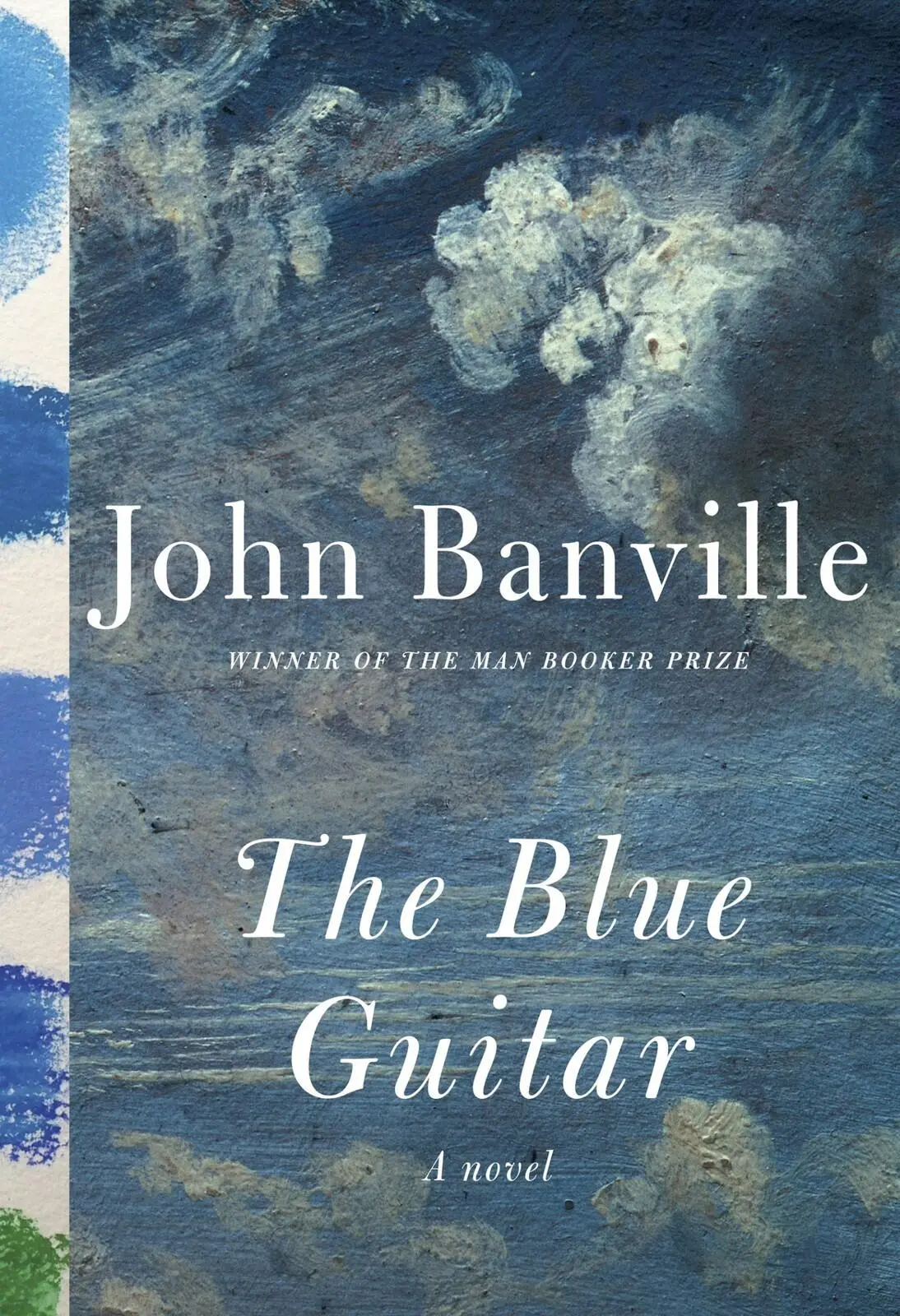
- Название:The Blue Guitar
- Автор:
- Издательство:Knopf
- Жанр:
- Год:2015
- ISBN:нет данных
- Рейтинг книги:4 / 5. Голосов: 1
-
Избранное:Добавить в избранное
- Отзывы:
-
Ваша оценка:
The Blue Guitar: краткое содержание, описание и аннотация
Предлагаем к чтению аннотацию, описание, краткое содержание или предисловие (зависит от того, что написал сам автор книги «The Blue Guitar»). Если вы не нашли необходимую информацию о книге — напишите в комментариях, мы постараемся отыскать её.
and
a new novel-at once trenchant, witty, and shattering-about the intricacies of artistic creation and theft, and about the ways in which we learn to possess one another, and to hold on to ourselves. Equally self-aggrandizing and self-deprecating, our narrator, Oliver Otway Orme, is a painter of some renown, and a petty thief who does not steal for profit and has never before been caught. But he's pushing fifty, feels like a hundred, and things have not been going so well lately. Having recognized the "man-killing crevasse" that exists between what he sees and any representation he might make of it-any attempt to make what he sees his own-he's stopped painting. And his last purloined possession-aquired the last time he felt the "secret shiver of bliss" in thievery-has been discovered. The fact that it was the wife of the man who was, perhaps, his best friend, has compelled him to run away: from his mistress, his home, his wife, from whatever remains of his impulse to paint and from the tragedy that haunts him, and to sequester himself in the house where he was born, trying to uncover in himself the answer to how and why things have turned out as they did. Excavating memories of family, of places he's called home, and of the way he has apprehended the world around him ("no matter what else is going on, one of my eyes is always swivelling towards the world beyond"), Ollie reveals the very essence of a man who, in some way, has always been waiting to be rescued from himself.
The Blue Guitar — читать онлайн бесплатно полную книгу (весь текст) целиком
Ниже представлен текст книги, разбитый по страницам. Система сохранения места последней прочитанной страницы, позволяет с удобством читать онлайн бесплатно книгу «The Blue Guitar», без необходимости каждый раз заново искать на чём Вы остановились. Поставьте закладку, и сможете в любой момент перейти на страницу, на которой закончили чтение.
Интервал:
Закладка:
I walked down the drive, sloshing through the rain happily enough and whistling “The Rakes of Mallow.” I think escape is all I really yearn for, everything being contingent on the simple premise of being at large. Janey had found for me a splendid hat, a sort of sou’wester, with a sloping flap at the back and an elastic string to go under my chin, and an oilskin coat that reached almost to my ankles. Also she produced a pair of stout black boots; they were a perfect fit, which, I thought, could only be a signal of encouragement from the household deities whose task it is to arrange such small, happy congruences. I took a walking-stick, too, from among a bristling bundle of them in an elephant’s foot receptacle in the hall. Come, Olly, I bade myself, step forth and claim the freedom of the road.
The rain somehow negated whatever utilitarian aspect that being on a walk might have had, and so, as I went along, I was free to look about me with a lively interest. Here was a field of cabbages, each coarse and leathery leaf bestrewn with wobbling jewels of rain. The wet branches of the trees were almost black, though underneath they were of a lighter shade, a darkish grey; when the wind gusted they let fall clatters of big, random drops, and I thought of the priest at my father’s funeral and the short, thick, ornate metal thing with a perforated knob on the end of it that he dunked repeatedly in a silver bucket and scattered holy water from, over the coffin, and over the mourners, too, the ones standing most closely round. Decaying leaves squelched and squirmed under my tramping boots. I felt a cold drop trembling at the tip of my nose, I wiped it away and a minute later another one had formed. All this was curiously pleasant and cheering. At heart I am I think a simple organism, with simple desires that I keep on foolishly elaborating to the point where they get me into impossible fixes.
I was glad, in the end, that our child turned out to be a daughter. True, I had set my heart on having a boy. However, there is something at once absurd and slightly grotesque in the spectacle of a father and his son, especially when there is a marked resemblance between them. It’s as if the father had set out to make a creature in his own image, an exact scale-model of himself, but through lack of skill and general clumsiness had managed to produce, in this tottering homunculus, only a comic parody. My little girl was very bonny, oh, yes, and looked nothing like her whey-faced, freckled and spheroid papa, or not that I could see, anyway. I was particularly taken by her upper lip, which was perfectly the shape of those stylised seagulls children draw with crayons, and had in the middle of it a little bleb of flesh that was almost colourless, that was almost indeed transparent, and that delighted me, I don’t quite know why. How well I remember her face, which is a foolish claim to make, since any face, especially a child’s, is in a gradual but relentless process of change and development, so that what I carry in my memory can be only a version of her, a generalisation of her, that I have fashioned for myself, as an evanescent keepsake. There are photographs of her, of course, but photographs of children are no good. I think it’s because of the artless way in which they gaze into the lens, without that giveaway flash of vanity, defensiveness, truculence, that in an adult’s portrait reveals so much.
I never tried to paint her, in life or afterwards. All the same I seem to see a trace of her in this or that of my things — not a likeness, no no, but a certain, what shall I say, a certain echoing softness of tone, a certain tenderness of colour or form, or just the slope of a line, or even a perspective, shading off into infinity. They leave so little trace, our lost ones; a sigh on the air and they’re gone.
What did my father make of me, I wonder, what did he feel for me, the last of his children? Love? There’s that difficult word again. I’m sure he did cherish me, let’s put it no more strongly than that, but that’s not what I mean. What had he hoped for, from life, overall? Whatever it was I’m sure it can’t have been personified in me, or anyone else, for that matter. Gloria told me, long after he was dead, that one day he had turned to her without warning or cause and had said, forcefully, angrily, even, that he, too, could have been a painter, like me, had there been the means for him to be educated and trained. I was startled. If other people are a puzzle, a parent is an unfathomable mystery. I stepped over both of mine, stepped on them, rather, as if they were stones in a river, the deep and swollen river separating me from that far bank where I imagined real life was being carried on. How had he said it, I asked Gloria, what had been his tone, his look? Her only answer was one of those smiles of hers, gentle, pitying, not unfond.
By the time I got to the gates at the end of the drive the rain had stopped, which rather disappointed me. I had fancied the notion of myself braving the elements, an old sea-dog lubbered on land, in my sou’wester and seven-league boots, heedless of rain and gale. After I stopped being a painter I noticed that I had to keep verifying myself, had to keep knocking a knuckle against myself, as it were, to check that I was still a person of at least some substance, and that often, getting back only a hollow sound, I would slip into imagining another role for myself, another identity, even. Polly’s lover, for instance, was something for me to be, as was the ingrate son, the false friend, even the failed artist. The alternatives I conjured up didn’t have to be impressive, didn’t have to be good or decent, didn’t have to feed my self-esteem, so long as they seemed real, so long as they could pass for real, by which I mean authentic, I suppose. Authentic: there’s another word that always worries me. The notable thing in this strategy of setting up new selves was that the results didn’t feel much different from how things had been with me before, in the days when I was still a painter and didn’t doubt, or didn’t realise I doubted, my essential selfness. It’s a rum business, being me. But then it would be rum being anyone, I’m sure that must be so.
From the gates I turned on to the road and walked along the sodden verge, astray in my thoughts of many things, and nothing. The rained-on tarmac before me gleamed in the failing light. Now and then a bird, disturbed by my passing, would burst from the hedge beside me and go skimming off, calling out a strident warning. They tell us of the welter of other worlds we shall never see, but what of the worlds we do see, the worlds of birds and beasts, what could be more other from us than these? And yet we were of those worlds, once, a long time ago, and frolicked in those happy fields, all the evidence assures us it’s the case, though I find it hard to credit. I am more inclined to think we came about spontaneously, sprung from the roots of the mandrake, perhaps, and were set despite ourselves to wander over the earth, blinking, bewildered autochthons.
I hadn’t eaten anything at lunch, yet I wasn’t hungry. The belly knows when it’s not going to be fed and, like an old dog, settles down to sleep. That’s how it is, I find, with the creature and its comforts, so that all is not ill, and sometimes the Lord does temper the wind to the shorn lamb.
Now came the strangest thing — even yet I do not know what to make of it, or if it even happened. I began to hear ahead of me a mingled, musical dinning that grew steadily louder, until presently there appeared from around a bend in the road a little tribe of what I took to be merchants, or peddlers, or the like, got up in eastern apparel. I stopped, and drew close in to the hedge and watched, as slowly they advanced through the gathering dusk, a trundling procession of half a dozen caravans painted blue and bright red, with curved black roofs, drawn by sturdy little horses, like those tin clockwork ones we used to get for Christmas presents, their nostrils flared and the whites of their eyes gleaming. Lean, dark-skinned men in long robes and ornate sandals — sandals, in this weather! — padded along beside the horses at a loose-limbed, swinging stride, holding on to the bridles, while from within the dimness of the caravans their plump, veiled women looked silently out. At the rear came a straggle of ragged children playing a cacophonous, whining music on fifes and bagpipes and little brightly coloured finger drums. I watched them go past, the men with scarred, narrow faces, and the women, what I could glimpse of them, all huge, kohl-rimmed eyes, their hands tattooed with henna in intricate arabesques. None took notice of me, not even the children glanced my way. Perhaps they did not see me, perhaps I only saw them. And so they passed on, the clinking, variegated troupe, along the wet and shadowed road. I followed them with my gaze until I could see them no longer. Who were they, what were they? Or were they, at all? Had I chanced upon some crossing point where universes intersect, had I broken through briefly into another world, far from this one in place and time? Or had I simply imagined it? Was it a vision, or a waking dream?
Читать дальшеИнтервал:
Закладка:
Похожие книги на «The Blue Guitar»
Представляем Вашему вниманию похожие книги на «The Blue Guitar» списком для выбора. Мы отобрали схожую по названию и смыслу литературу в надежде предоставить читателям больше вариантов отыскать новые, интересные, ещё непрочитанные произведения.


Обсуждение, отзывы о книге «The Blue Guitar» и просто собственные мнения читателей. Оставьте ваши комментарии, напишите, что Вы думаете о произведении, его смысле или главных героях. Укажите что конкретно понравилось, а что нет, и почему Вы так считаете.