John Banville - The Blue Guitar
Здесь есть возможность читать онлайн «John Banville - The Blue Guitar» весь текст электронной книги совершенно бесплатно (целиком полную версию без сокращений). В некоторых случаях можно слушать аудио, скачать через торрент в формате fb2 и присутствует краткое содержание. Год выпуска: 2015, Издательство: Knopf, Жанр: Современная проза, на английском языке. Описание произведения, (предисловие) а так же отзывы посетителей доступны на портале библиотеки ЛибКат.
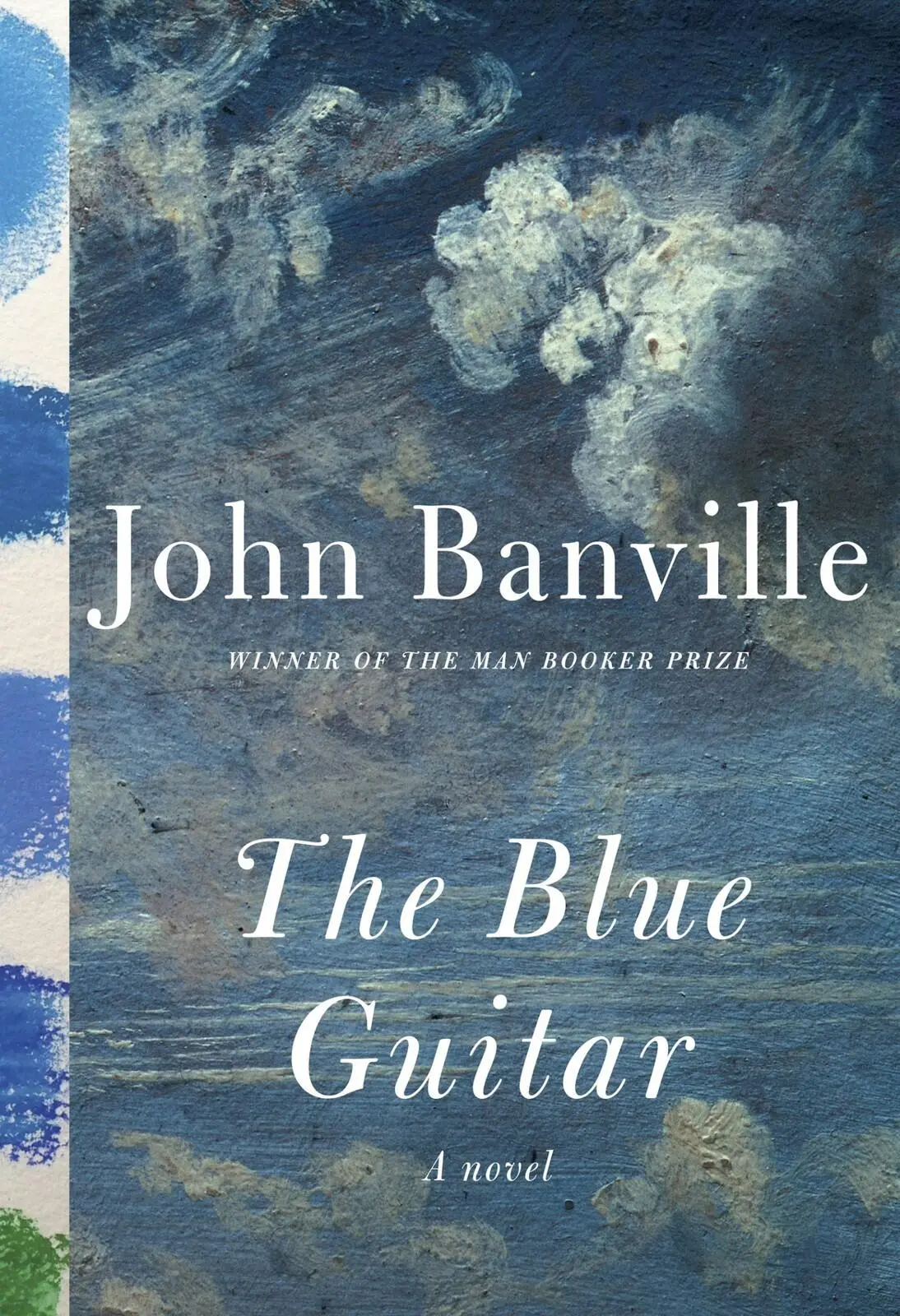
- Название:The Blue Guitar
- Автор:
- Издательство:Knopf
- Жанр:
- Год:2015
- ISBN:нет данных
- Рейтинг книги:4 / 5. Голосов: 1
-
Избранное:Добавить в избранное
- Отзывы:
-
Ваша оценка:
The Blue Guitar: краткое содержание, описание и аннотация
Предлагаем к чтению аннотацию, описание, краткое содержание или предисловие (зависит от того, что написал сам автор книги «The Blue Guitar»). Если вы не нашли необходимую информацию о книге — напишите в комментариях, мы постараемся отыскать её.
and
a new novel-at once trenchant, witty, and shattering-about the intricacies of artistic creation and theft, and about the ways in which we learn to possess one another, and to hold on to ourselves. Equally self-aggrandizing and self-deprecating, our narrator, Oliver Otway Orme, is a painter of some renown, and a petty thief who does not steal for profit and has never before been caught. But he's pushing fifty, feels like a hundred, and things have not been going so well lately. Having recognized the "man-killing crevasse" that exists between what he sees and any representation he might make of it-any attempt to make what he sees his own-he's stopped painting. And his last purloined possession-aquired the last time he felt the "secret shiver of bliss" in thievery-has been discovered. The fact that it was the wife of the man who was, perhaps, his best friend, has compelled him to run away: from his mistress, his home, his wife, from whatever remains of his impulse to paint and from the tragedy that haunts him, and to sequester himself in the house where he was born, trying to uncover in himself the answer to how and why things have turned out as they did. Excavating memories of family, of places he's called home, and of the way he has apprehended the world around him ("no matter what else is going on, one of my eyes is always swivelling towards the world beyond"), Ollie reveals the very essence of a man who, in some way, has always been waiting to be rescued from himself.
The Blue Guitar — читать онлайн бесплатно полную книгу (весь текст) целиком
Ниже представлен текст книги, разбитый по страницам. Система сохранения места последней прочитанной страницы, позволяет с удобством читать онлайн бесплатно книгу «The Blue Guitar», без необходимости каждый раз заново искать на чём Вы остановились. Поставьте закладку, и сможете в любой момент перейти на страницу, на которой закончили чтение.
Интервал:
Закладка:
The princely arrival was announced by the sound of tyres on gravel and a volley of Barney’s deep-throated barks. Polly and her father went to the front door to greet their noble visitor, while I hung back in the hallway, feeling like an assassin sullenly in wait with a fizzing bomb under his coat. Freddie was driving, I saw, what used to be called a shooting-brake, a high-set antiquated vehicle that looked more like a well-appointed tractor than a car. He climbed down from the driving seat and advanced across the gravel, removing his leather gauntlets and smiling his sad, strained smile. He wore a woollen coat of seaweed-green and a short tweed cape, a cap with a peak, and rubber galoshes over a pair of patent-leather shoes as dainty as dancing-pumps. He does dress the princely part, I’ll say that much for him. “Ah, good day, good day,” he murmured, removing his cap and gravely taking Polly’s hand and then her father’s, bending towards them each in turn his long, narrow face and showing his slightly tarnished teeth in an equine grimace. Glancing beyond them he spotted me, Gavrilo Princip himself, lurking in the shadows. We hadn’t met since our encounter outside the jakes that long-ago day of the fête at Hyland Heights when he delivered his unwittingly acute criticism of my drawings, and I could see that once more he had forgotten who I was. Polly introduced us. Barney padded about among our legs, grinning and panting. We walked along the hall, the four of us, followed by the dog. No words to be spoken, and all aware of panic in face of the social abyss. How peculiar a contraption it is, the human concourse.
Lunch was served in the high brown vault of the dining room, at a long brown table. The table was scarred and pitted with age, and I kept running my fingers lightly over the wood to get the burnished, silky feel of it. I like things when they are smoothed and softened by time like that. All we have are surfaces, surfaces and the self’s puny interiority; that’s a fact too often and too easily forgotten, by me as well as by everyone else. Through two high windows I could see the sky, where the wind was bunching up the fleecy, new-born clouds and driving them before it in a flock. Strange to have the eye and the urge to paint and not be able to do it. I stand stooped before the world like an agued old man in impotent contemplation of a naked and shamelessly willing girl. Rue and rheum, that’s my lot, poor pained painster that I am.
Conversation, I think I may fairly say, did not flow. The weather and its vagaries sustained us for a while — or sustained them, I should say, since I was for the most part a silent presence at the table. I am a sulker, as you will have gathered by now; it’s another of my unappealing traits. Polly’s father and the Prince spoke desultorily of poets obscure and long dead — obscure to me, anyway. Pip in her high-chair banged and burbled — amazing how much clamour so small a creature can make — beaming about her in delight, charmed that we should all have gathered here to attend her musical recital. Yes, it would not be long now until her consciousness stubbed itself against the hard fact that she is not the fulcrum of the world. The new science teaches, if I understand it rightly, that every tiniest particle behaves as if it were — as in a sense it is — the central point upon which all creation turns. Welcome, runner, to the human race.
What a type he is, dear old Freddie. I could hardly take my eyes off him, his exquisite suit, tailored surely by captive dwarfs in one of the subterranean workshops of high Alpinia, his silken neckwear of royal blue, the discreet little pin in his lapel that is the sign of his membership of the Knights of the Rosy Cross, or the Brotherhood of Wotan, or some-such elect and secret consistory. Add to all that his bloodless cheeks and phthisic frame, the weary stoop and the infinite sadness of his eye, and what have you but the very figure of a dying lineage. How would I portray him, if I were asked to? A listing iron helmet on a painted stick. He suffers from dandruff, I notice — there is always a scatter of powdery flakes on his collar; it is as if he were shedding himself, steadily, stealthily, in this unceasing fall of wax-white scurf. Though all his attention was directed towards the Plomers, Vater und Tochter, his glance on occasion drifted in my direction with hesitant surmise. Polly’s mother, too, was showing a keener interest in me than heretofore, and watched me with a considering eye, like a visitor to a museum circling some particularly enigmatic piece in order to get the look of it from every angle. No doubt somewhere in the labyrinthine caverns of what passed in her for consciousness there lingered still the recent image of a dim shape draped in a blanket doing something highly suspect at a pitch-dark window. Polly seemed as remote from me now as her mother, and for the first time in a long time I found myself pining for Gloria. Well, not Gloria, exactly, or not her alone, but all she represented, hearth and home, in other words the old ground, which, after all, if not a bower of bliss, had for many years suited me well enough, in its way. When I was a surly schoolboy I spent many a day on the mitch, little recking every time that a moment would come, usually around noon, when the attractions of being at large while others were held captive would pall, and despite myself I would fall into yearning for the fusty classroom with motes of chalk in the air and the pitiless face of the big clock on the wall and even the teacher’s dreary drone, and eventually I would straggle home, where my mother, knowing full well what I had been about, would consent to be lied to. That’s me all over, no fortitude, no sticking-power; no grit.
Gloria. Once more I wondered, as I wonder yet, why she had not come for me when I was at the gate-lodge. Even she would not be able to guess where I had landed up now, here with the Plomers and their Prince.
“Ah!” Freddie suddenly said, making the rest of us start, even Polly’s mother, who raised her eyebrows and blinked. He was looking at me, with what in him passed for animation. “I know who you are,” he said. “Forgive me, I’ve been trying to remember. You’re that painter, Oliver.”
“Orme,” I murmured. “Oliver is my first—”
“Yes yes, Orme, of course.”
He was tremendously pleased with himself to have remembered me at last, and slapped his hands flat on the table before him and leaned back, beaming.
Mr. Plomer cleared his throat, making a sort of extended rolling bass trill. “Mr. Orme,” he said, a trifle over-loudly, as if it were we who were hard of hearing, “is a great admirer of the poets.” He turned to me invitingly, as though to give me the floor. “Isn’t that so, Mr. Orme?”
What was I to say? — picture a helpless fish-mouth and a wildly swivelling eye. Pip, perhaps mistaking the slight tension of the moment for a wordless rebuke directed at her, began to wail.
“Polly needs changing,” Mrs. Plomer announced, gazing complacently at the red-faced infant.
“Oh, there there,” Mr. Plomer said, leaning across the table towards his granddaughter, baring his dentures in a desperate smile.
Extraordinary what a crying child can do to a room. It was like that moment in the ape-house when one of the big males sets up a howl, leaning forwards on his knuckles and turning his lips inside out, and all the animals in their cages round about begin to gibber and shriek. As Pip screamed on, we all, except Polly’s mother, did something, moved, or spoke, or lifted hands in helpless alarm. Even Janey appeared, popping into the doorway with a wooden spoon in her fist, like the goddess of chastisement made balefully manifest. Polly rose exasperatedly from her chair, surging up like some great fish, and fairly flung herself at the child and plucked her from the high-chair and dashed with her from the room. I, stumbling, trotted after, Jack to her Jill.
Читать дальшеИнтервал:
Закладка:
Похожие книги на «The Blue Guitar»
Представляем Вашему вниманию похожие книги на «The Blue Guitar» списком для выбора. Мы отобрали схожую по названию и смыслу литературу в надежде предоставить читателям больше вариантов отыскать новые, интересные, ещё непрочитанные произведения.





Обсуждение, отзывы о книге «The Blue Guitar» и просто собственные мнения читателей. Оставьте ваши комментарии, напишите, что Вы думаете о произведении, его смысле или главных героях. Укажите что конкретно понравилось, а что нет, и почему Вы так считаете.