John Banville - The Blue Guitar
Здесь есть возможность читать онлайн «John Banville - The Blue Guitar» весь текст электронной книги совершенно бесплатно (целиком полную версию без сокращений). В некоторых случаях можно слушать аудио, скачать через торрент в формате fb2 и присутствует краткое содержание. Год выпуска: 2015, Издательство: Knopf, Жанр: Современная проза, на английском языке. Описание произведения, (предисловие) а так же отзывы посетителей доступны на портале библиотеки ЛибКат.
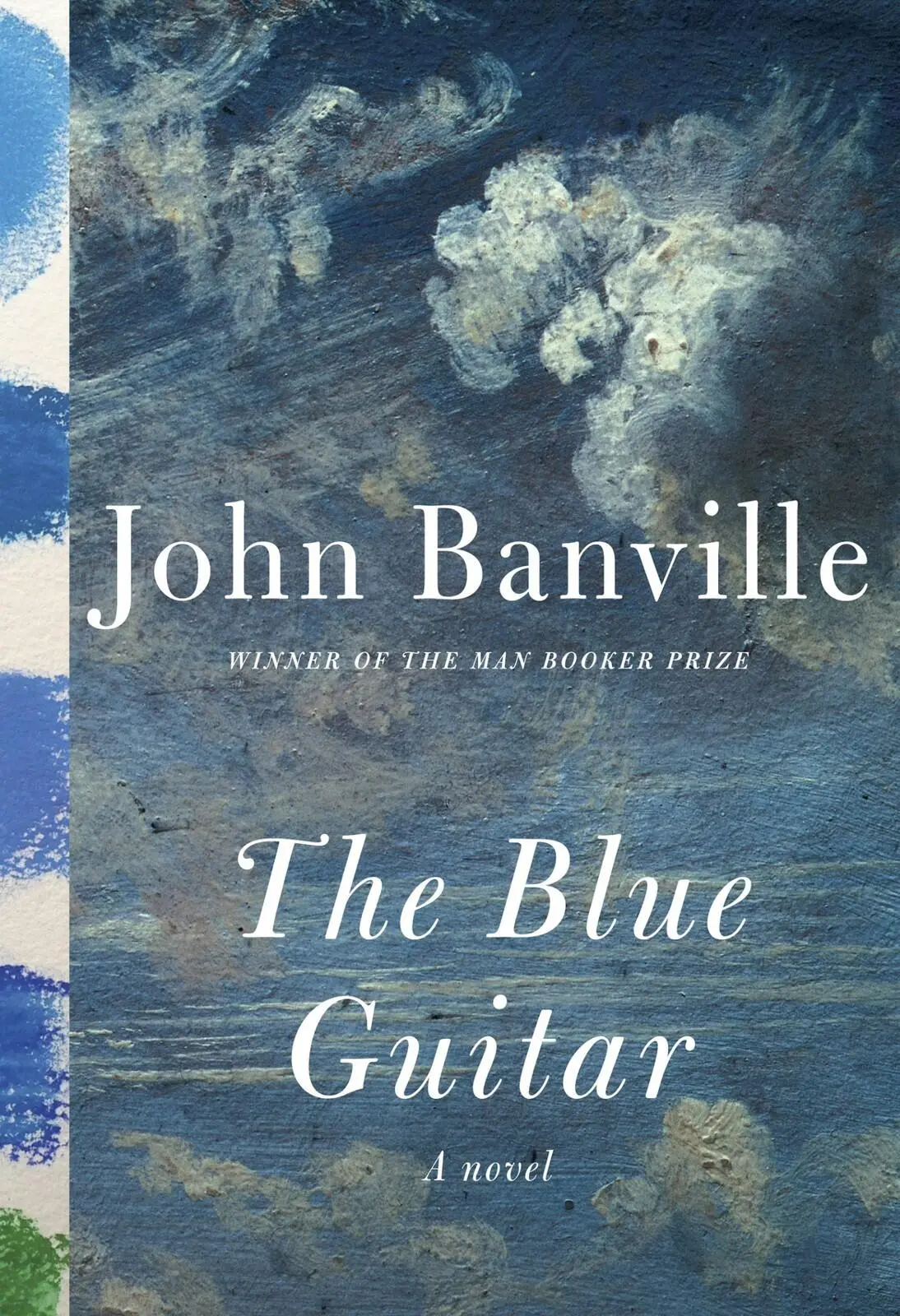
- Название:The Blue Guitar
- Автор:
- Издательство:Knopf
- Жанр:
- Год:2015
- ISBN:нет данных
- Рейтинг книги:4 / 5. Голосов: 1
-
Избранное:Добавить в избранное
- Отзывы:
-
Ваша оценка:
The Blue Guitar: краткое содержание, описание и аннотация
Предлагаем к чтению аннотацию, описание, краткое содержание или предисловие (зависит от того, что написал сам автор книги «The Blue Guitar»). Если вы не нашли необходимую информацию о книге — напишите в комментариях, мы постараемся отыскать её.
and
a new novel-at once trenchant, witty, and shattering-about the intricacies of artistic creation and theft, and about the ways in which we learn to possess one another, and to hold on to ourselves. Equally self-aggrandizing and self-deprecating, our narrator, Oliver Otway Orme, is a painter of some renown, and a petty thief who does not steal for profit and has never before been caught. But he's pushing fifty, feels like a hundred, and things have not been going so well lately. Having recognized the "man-killing crevasse" that exists between what he sees and any representation he might make of it-any attempt to make what he sees his own-he's stopped painting. And his last purloined possession-aquired the last time he felt the "secret shiver of bliss" in thievery-has been discovered. The fact that it was the wife of the man who was, perhaps, his best friend, has compelled him to run away: from his mistress, his home, his wife, from whatever remains of his impulse to paint and from the tragedy that haunts him, and to sequester himself in the house where he was born, trying to uncover in himself the answer to how and why things have turned out as they did. Excavating memories of family, of places he's called home, and of the way he has apprehended the world around him ("no matter what else is going on, one of my eyes is always swivelling towards the world beyond"), Ollie reveals the very essence of a man who, in some way, has always been waiting to be rescued from himself.
The Blue Guitar — читать онлайн бесплатно полную книгу (весь текст) целиком
Ниже представлен текст книги, разбитый по страницам. Система сохранения места последней прочитанной страницы, позволяет с удобством читать онлайн бесплатно книгу «The Blue Guitar», без необходимости каждый раз заново искать на чём Вы остановились. Поставьте закладку, и сможете в любой момент перейти на страницу, на которой закончили чтение.
Интервал:
Закладка:
Now she shed her dressing-gown with a vexed shrug and, chilled from wherever she had taken her mother to, clambered hurriedly into bed in her pyjamas — winceyette, I believe that stuff is called, another notable word — and pulled the bedclothes to her chin and lay on her side with her legs drawn up and her knees pressed to her chest, shivering a little, and ignoring me as thoroughly as her mother had when she turned away from me on the stairs. I wonder if women realise how alarming they are when they go tight-lipped and mute like that? I suspect they do, I suspect they’re very well aware of it, although if they are, why don’t they use it more, as a weapon? I sat down beside her carefully, as if the bed were a boat and I were afraid of capsizing it, and adjusted the blanket around my shoulders. Have I said how cold I was by now, despite the woolly warmth there in the room? I gazed at Polly’s cheek, which used to glow so hotly when she lay with me on the sofa in the studio of old. The lamp-light gave to her skin a rough-grained, papery texture. Her eyes were closed but I could tell she was far from sleep. I groped around on the eiderdown — that crackly satin giving me the creeps again — until I found the outline of one of her feet, and pressed it in my hand. She said something that I didn’t catch, still with her eyes closed, then cleared her throat and said it again. “Such a get-up! My mother. I don’t know what goes through her head.” No comment seemed required of me and so I said nothing; as far as I was concerned, Mrs. Plomer was beyond discussion. I could feel the warmth returning to Polly’s foot. Was a time I would have grovelled in the dust before this young woman just for the privilege of taking one of her little pink toes in my mouth and sucking it — oh, yes, I had my moments of adoration and abjection. And now? And now the old desire had been replaced by a different kind of ache, one that would not be assuaged in her arms, if it could be assuaged at all. What was it, this thing gnawing at my heart, as in former times quite other things had gnawed at quite other of my organs? As I sat there turning over this question there came to me, to my great consternation, the thought that the person lying beside me under the bedclothes with her knees clutched to her breast might be — I hesitate to say it — might be my daughter. Yes, my lost daughter, brought back by some bright magic from the land of the dead and given all the attributes, commonplace and precious, of a lived life. This was a very strange notion, even by the standards of the extraordinary and turbulent times I was passing through. I let go of her foot and sat back, light-headed and aghast. It sometimes occurs to me that everything I do is a substitute for something else, and that every venture I embark on is a botched attempt at reparation for a thing done or left undone — don’t ask me to explain it. Outside in the night it began to rain again, I heard it, a gathering murmur, like the sound of many voices in the distance speaking together in hushed tones.
Slightly salty to the taste, those toes of hers were, when I sucked them. Salty like salt tears.
She stirred now and opened her eyes and put a hand under her cheek and sighed. “Do you know what it was that first attracted me to Marcus?” she said. “His weak eyesight. Isn’t that strange? His eyes were affected by all that close-up work he had to do for so many years when he was an apprentice. You know that’s why he seems so awkward, why he moves so slowly and so carefully? It was sweet to see the way he touched things, getting the feel of them, as if that was the only way he could trust what he was doing. That’s the way he would touch me, too, the barest touch, just with the tips of his fingers.” She sighed again. Her hair always smells a little like musty biscuits; I used to love to bury my face in it and snuffle up that soft fawn odour. She stirred, extending her legs under the covers, and turned over and lay on her back, with her hand behind her head now, looking up at me calmly. The way she was lying made the skin at the outer corners of her eyes became slightly stretched and shiny, which gave to her features a curiously lacquered, Oriental cast. “Tell me why you ran off,” she said. I didn’t attempt to reply, only shrugged and shook my head. She pulled her mouth sideways in a grimace. “You can’t have known how humiliated I would be — at least, I hope you didn’t, or you’re even more of a monster than I thought.” I said I didn’t know what she meant — I did, of course — and she made that moue again with her mouth. “Don’t you? Look at all you were, all you had, all that you’d done, and look at what I was, a watchmaker’s wife whiling away her days in a no-hope backwater.” This was spoken with such a sudden harshness that it took me aback, I who by now was driven so far back it had seemed there was no further I could go. But I nodded, trying to look as if I understood and sympathised. Nodding, it struck me, was an apt way, in this instance, of repeatedly hanging my head. Shame, though, I find, even at its most burningly intense, is always somewhat detached, as if there were a secret escape clause written into it. Or maybe it’s just me, maybe I’m incapable of true shame. After all, I’m incapable of so much. Polly was regarding me now with a sort of rueful scepticism, almost smiling. “I thought you were a god,” she said, and at once, of course, I thought of Dionysus taking pity on poor abandoned Ariadne and plucking her up from Naxos and making her immortal, whether she wanted it or not; the mighty ones of Mount Olympus always had a soft spot for a girl in distress. But they have all departed, those gods, into their twilight. And I was no god, dear Polly; I was hardly a man.
Now, at this moment, in this late afternoon, as my pen scratches away crabbedly at these futile pages, somewhere outside on Hangman’s Hill a solitary bird is singing, I hear its passionate song, limpid and bright. Do birds sing at this late time of year? Maybe their kind also has its bards, its rhapsodes, its solitary poets of desolation and lament, who know no seasons. The day wanes, the night comes on, soon I’ll have to light my lamp. For now, though, I am content to sit here in the October gloaming, brooding on my loves, my losses, my paltry sins. What’s to become of me, of my dry, my desiccated, heart? Why do I ask, you ask? Don’t you understand yet, even yet, that I don’t understand anything? See how I grope my way along, like a blind man in a house where all the lights are blazing.
The day wanes.
—
As I squat here, vainly flapping my tinsel wing, I feel like putting down the heading A Treatise on Love, and following it with a score or so of blank pages.
—
We talked for half of what remained of that night, or Polly talked while I did my best to listen. What did she talk about? The usual, the sad and angry usual. She had pulled herself up to a sitting position, the better to have at me, and since her pyjamas were no match for the cold she wrapped herself in the eiderdown — there in the tepee of lamp-light we must have looked like a pair of Red Indians engaged in an interminable, rancorous and one-sided powwow. I was tempted to reach out and take her in my arms, winceyetted as she was, but I knew she wouldn’t let me. That is another of my versions of Hell, sitting for all eternity in a freezing bedroom under an inadequate blanket being railed at for my lack of ordinary human sentiment, for my indifference to other people’s pain and my refusal to offer the commonest crumb of comfort, for my callousness, my neglect, my heartless betrayals — in a word, for my simple inability to love. Everything she said was true, I admit it, yet at the same time it was all mistaken, all wrong. But what would have been the point of arguing with her? The trouble is that in these matters there is no end to the round of dispute, and however deep the disputants go there will always be another un-dived-into depth. When it comes to casuistry there is nothing like a pair of quarrelling and soon to be parted lovers debating on which side lies the greater guilt. Not that there was much in the way of debate that night. And in fact my silence, which I considered forbearing, was only making Polly all the more angry. “Jesus Christ, you’re impossible,” she cried. “I may as well be talking to this pillow!”
Читать дальшеИнтервал:
Закладка:
Похожие книги на «The Blue Guitar»
Представляем Вашему вниманию похожие книги на «The Blue Guitar» списком для выбора. Мы отобрали схожую по названию и смыслу литературу в надежде предоставить читателям больше вариантов отыскать новые, интересные, ещё непрочитанные произведения.



Обсуждение, отзывы о книге «The Blue Guitar» и просто собственные мнения читателей. Оставьте ваши комментарии, напишите, что Вы думаете о произведении, его смысле или главных героях. Укажите что конкретно понравилось, а что нет, и почему Вы так считаете.