John Banville - The Blue Guitar
Здесь есть возможность читать онлайн «John Banville - The Blue Guitar» весь текст электронной книги совершенно бесплатно (целиком полную версию без сокращений). В некоторых случаях можно слушать аудио, скачать через торрент в формате fb2 и присутствует краткое содержание. Год выпуска: 2015, Издательство: Knopf, Жанр: Современная проза, на английском языке. Описание произведения, (предисловие) а так же отзывы посетителей доступны на портале библиотеки ЛибКат.
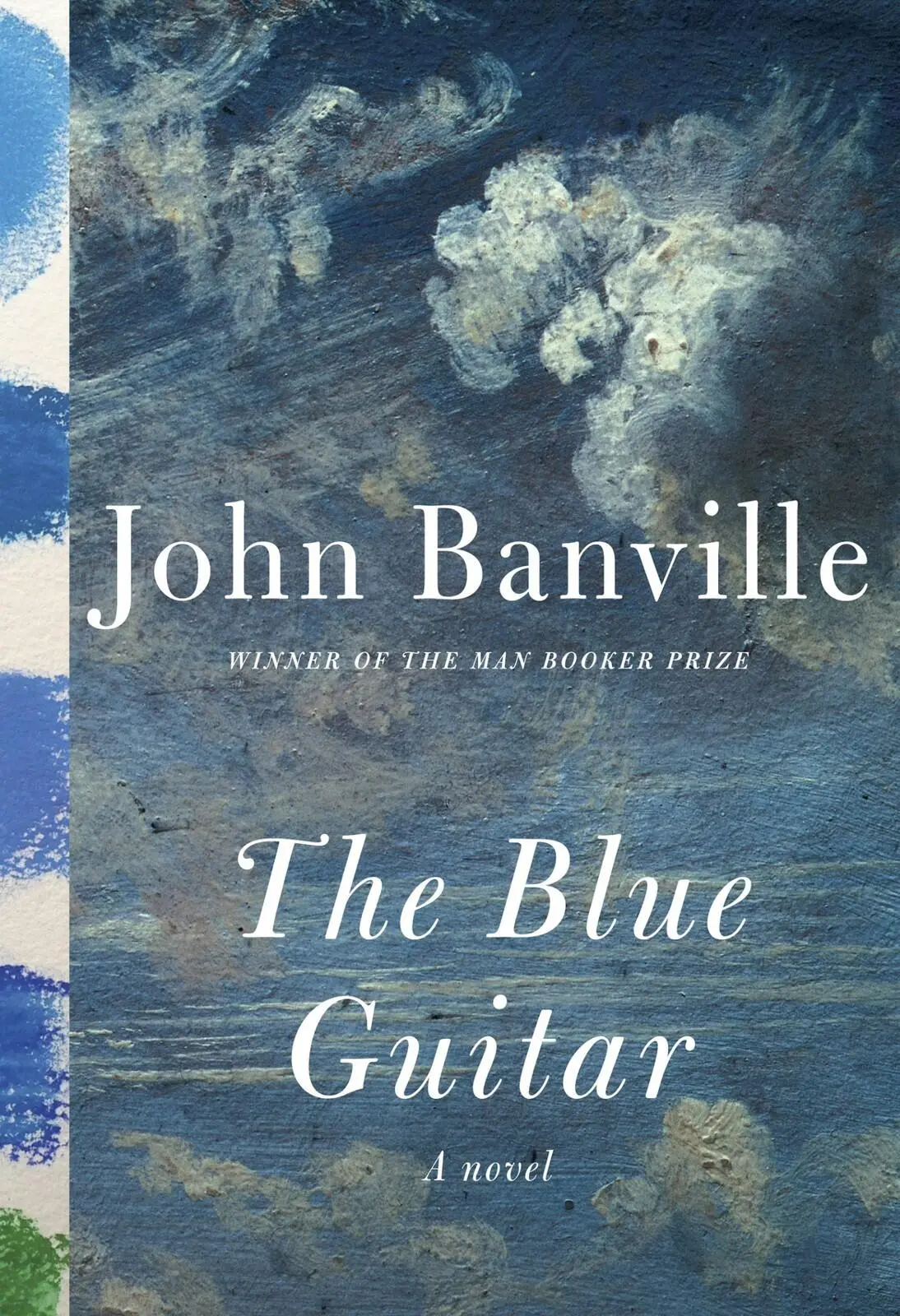
- Название:The Blue Guitar
- Автор:
- Издательство:Knopf
- Жанр:
- Год:2015
- ISBN:нет данных
- Рейтинг книги:4 / 5. Голосов: 1
-
Избранное:Добавить в избранное
- Отзывы:
-
Ваша оценка:
The Blue Guitar: краткое содержание, описание и аннотация
Предлагаем к чтению аннотацию, описание, краткое содержание или предисловие (зависит от того, что написал сам автор книги «The Blue Guitar»). Если вы не нашли необходимую информацию о книге — напишите в комментариях, мы постараемся отыскать её.
and
a new novel-at once trenchant, witty, and shattering-about the intricacies of artistic creation and theft, and about the ways in which we learn to possess one another, and to hold on to ourselves. Equally self-aggrandizing and self-deprecating, our narrator, Oliver Otway Orme, is a painter of some renown, and a petty thief who does not steal for profit and has never before been caught. But he's pushing fifty, feels like a hundred, and things have not been going so well lately. Having recognized the "man-killing crevasse" that exists between what he sees and any representation he might make of it-any attempt to make what he sees his own-he's stopped painting. And his last purloined possession-aquired the last time he felt the "secret shiver of bliss" in thievery-has been discovered. The fact that it was the wife of the man who was, perhaps, his best friend, has compelled him to run away: from his mistress, his home, his wife, from whatever remains of his impulse to paint and from the tragedy that haunts him, and to sequester himself in the house where he was born, trying to uncover in himself the answer to how and why things have turned out as they did. Excavating memories of family, of places he's called home, and of the way he has apprehended the world around him ("no matter what else is going on, one of my eyes is always swivelling towards the world beyond"), Ollie reveals the very essence of a man who, in some way, has always been waiting to be rescued from himself.
The Blue Guitar — читать онлайн бесплатно полную книгу (весь текст) целиком
Ниже представлен текст книги, разбитый по страницам. Система сохранения места последней прочитанной страницы, позволяет с удобством читать онлайн бесплатно книгу «The Blue Guitar», без необходимости каждый раз заново искать на чём Вы остановились. Поставьте закладку, и сможете в любой момент перейти на страницу, на которой закончили чтение.
Интервал:
Закладка:
The station when we pulled up at it was in darkness, and I clambered down from the cab and he drove away, the exhaust pipe at the back of that absurd machine puttering out gasps of night-blue smoke.
Now what should I do? I walked along the quayside, holding on to my trawler-man’s hat. It was a raw and gusty night, and the heaving sea off to my left was as black and shiny as patent leather, with now and then a white bird swooping in ghostly silence through the darkness. My brain was barely functioning — perhaps this is what walks are for, to dull the mind and still its restless speculations? — and my feet, seemingly of their own will, turned me away from the harbour, and presently, to my mild surprise, I found myself standing in the street in front of the laundry and the door to the steep stairway that led up to the studio. It occurred to me that I could stay there for the night, sleeping on the sofa, old faithful itself. I was searching my pockets for the key when a figure slipped out of the darkness of the laundry doorway. I started back in fright, then saw that it was Polly. She was wearing a beret and a great black overcoat that was too big to have been her father’s and must have been left behind by some mighty yeoman ancestor. I was confused by her appearing so suddenly like that. I asked her how she had got there, noting the high-pitched, panicky warble in my voice. She ignored my question, however, and demanded that I open the door at once, for she was, she said, perishing with the cold. We trudged up the stairs in silence; I thought, as so often, of the gallows.
In the studio the big window in the ceiling was throwing a complicated cage of starlight across the floor. I switched on a lamp. It seemed colder in here than it had been outside, though my feet, in those borrowed boots, were unpleasantly and damply hot. I looked about at familiar things, that slanting window, the table with its pots and brushes, the canvases stacked with their faces to the wall. I felt more estranged than ever from the place, and curiously ill at ease, too, as if I had burst in crassly on someone else’s private doings. Polly in her giant’s coat stood with her eyes on the floor, clasping herself in her arms. She had taken off her beret and now she threw it on the table. I looked at her hair, and remembered how in the old days I would wind a thick swatch of it around my hand and pull her head far back and sink my vampire’s teeth into her pale, soft, excitingly vulnerable throat. I asked if she would take some brandy, to warm her up, but then I remembered that Marcus and I had finished the bottle. I enquired again, carefully, diffidently, how she had got here. “I drove, of course,” she said, in a tone of haughty contempt. “You didn’t see the car in the street? But of course you didn’t. You never notice anything that’s not yourself.”
I often think, in puzzlement and vague dismay, of my pictures, the ones that are in galleries, mostly minor ones, all over the world, from Reykjavik to the Republic of New South Wales, from Novy Bug to the Portlands, those sadly separated twins of coastal Oregon and Maine. The pictures have, in my mind, a hovering, liminal existence. They are like things glimpsed in a dream, vivid yet without substance. I know they are connected to me, I know that I produced them, yet I don’t feel for them in any existential way — I don’t register their distant presence. It was the same, now, with Polly. Somehow she had lost something essential, to my outward eye but more so to the inward one. Which was the greater mystery: that she had been for me what she had been once, or that she had ceased to be it now? Yet here she was before me, unavoidably herself. And of course that was it, that she was herself at last, and not what I had made of her. How dull and dulling they can be, these sudden insights. Better not to have them, perhaps, and cleave to a primordial bumpkinhood.
I started to apologise for having run off yet again, but I had hardly got going before she turned on me in a fury.
“How could you?” she said, with her chin tucked in and her wounded, furious eyes blazing at me accusingly. “How could you insult us like that?”
Us? Did she mean the two of us, her and me? It seemed not; it seemed decidedly not. Terror twanged in me like a gut string jerked tight. I said I didn’t know what she meant. I said I had gone for a walk — she had seen me going out at the front door, after all. I told her of my encounter, if encounter it really was, with the strange caravan of dark-skinned folk, and of how Freddie Hyland had come along and in his princely way had offered me a lift, and how I had thought to take the opportunity to pop into the studio here and check that all was—
She sprang at me. “Where is it?” she demanded, in a very loud voice, almost shouting in my face, and a speck of her saliva landed on my wrist; surprising how quickly spit cools, once it’s out.
“What?” I responded, a frightened quack. “Where is what?”
“You know very well what. The book — his book. The book of poems by what’s-his-name. Where is it?”
I said again that I didn’t know what she meant, that I had no idea of what she was talking about. My voice now had become light and tearful and sort of tottery, the voice in which the guilty always protest their blamelessness. There followed the inevitable back-and-forth music-hall routine of accusation and denial. I blustered and fussed, but in the end she refused to listen to any more of my bleatings, and shook her head and held up a hand to silence me, with her eyes lightly closed and her eyebrows lifted.
“You took it,” she said. “I know you did. Now give it back.”
Oh, dear. Oh, double dear. My life, it often seems to me, is a matter not of forward movement, as in time it must be, but of constant retreat. I see myself driven backwards by a throng of furiously shaking fists, my lip bleeding and my coat torn, stumbling over broken paving and whimpering piteously. Yet in this instance what impressed me most, I think, was not Polly’s rage, and outrage, impressive as they were, but the simple, plain dislike she was displaying towards me, the lip-curling distaste she seemingly felt at merely being in my presence. She had a withdrawing look, as of a person shrinking away from something unclean. This was new; this was wholly new.
“Come on, give it to me,” she said, in the tone of a tough policeman, putting out her hand with palm upturned. “I know you have it.”
Yes, I could see she did, and I felt something contracting inside me to the size and wrinkly texture of a not quite deflated party balloon.
“How do you know?” I asked, old rodent that I was, looking for a crack to escape through.
“Pip told me. She saw you take it.”
“What do you mean, Pip?” I cried. “She can’t even talk!”
“She can, to me.”
I was all in a muddle by now. Had the child really seen me take the book, had she really managed to betray me? If she had, and I must believe it, or accept it, at least, then the game was up. I reached under my oilskin coat and fumbled the book out of my jacket pocket and handed it to her. “I was only borrowing it,” I said, in a whine, sounding like a sulky little boy caught pilfering the gifts at a birthday party.
“Ha!” she said, with angry disdain. “Like you borrowed all the other things, I suppose?”
I peered at her. My heart was going now at a syncopated patter. “All what other things?”
“All the things you’ve taken from all of us!” She snorted, throwing back her head. “You think we don’t know about your stealing? You think we’re all blind, and fools, into the bargain?” She opened the book and riffled through the pages. “You don’t even speak German, do you?” she said, shaking her head in bitter sadness.
Читать дальшеИнтервал:
Закладка:
Похожие книги на «The Blue Guitar»
Представляем Вашему вниманию похожие книги на «The Blue Guitar» списком для выбора. Мы отобрали схожую по названию и смыслу литературу в надежде предоставить читателям больше вариантов отыскать новые, интересные, ещё непрочитанные произведения.





Обсуждение, отзывы о книге «The Blue Guitar» и просто собственные мнения читателей. Оставьте ваши комментарии, напишите, что Вы думаете о произведении, его смысле или главных героях. Укажите что конкретно понравилось, а что нет, и почему Вы так считаете.