John Banville - The Blue Guitar
Здесь есть возможность читать онлайн «John Banville - The Blue Guitar» весь текст электронной книги совершенно бесплатно (целиком полную версию без сокращений). В некоторых случаях можно слушать аудио, скачать через торрент в формате fb2 и присутствует краткое содержание. Год выпуска: 2015, Издательство: Knopf, Жанр: Современная проза, на английском языке. Описание произведения, (предисловие) а так же отзывы посетителей доступны на портале библиотеки ЛибКат.
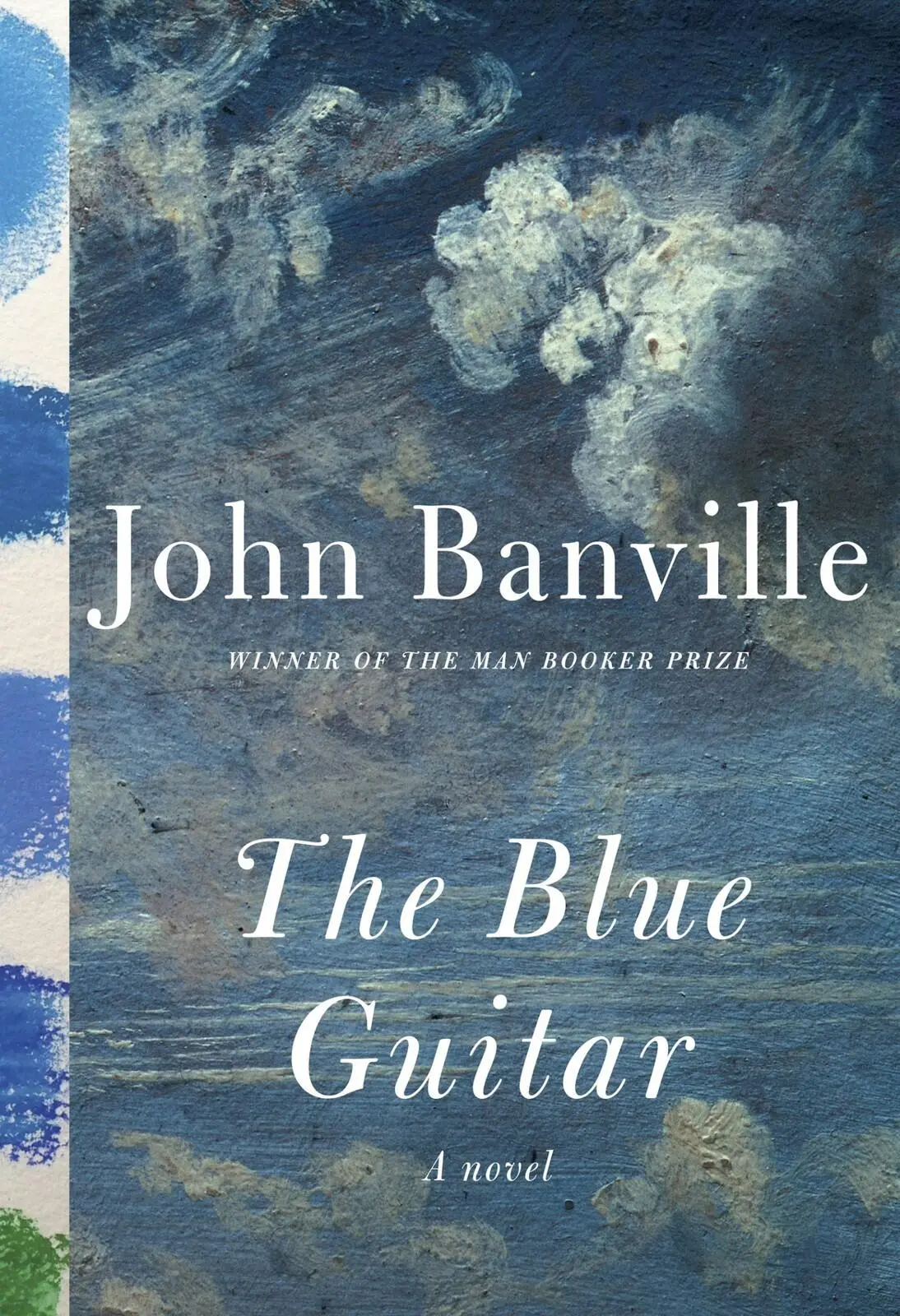
- Название:The Blue Guitar
- Автор:
- Издательство:Knopf
- Жанр:
- Год:2015
- ISBN:нет данных
- Рейтинг книги:4 / 5. Голосов: 1
-
Избранное:Добавить в избранное
- Отзывы:
-
Ваша оценка:
The Blue Guitar: краткое содержание, описание и аннотация
Предлагаем к чтению аннотацию, описание, краткое содержание или предисловие (зависит от того, что написал сам автор книги «The Blue Guitar»). Если вы не нашли необходимую информацию о книге — напишите в комментариях, мы постараемся отыскать её.
and
a new novel-at once trenchant, witty, and shattering-about the intricacies of artistic creation and theft, and about the ways in which we learn to possess one another, and to hold on to ourselves. Equally self-aggrandizing and self-deprecating, our narrator, Oliver Otway Orme, is a painter of some renown, and a petty thief who does not steal for profit and has never before been caught. But he's pushing fifty, feels like a hundred, and things have not been going so well lately. Having recognized the "man-killing crevasse" that exists between what he sees and any representation he might make of it-any attempt to make what he sees his own-he's stopped painting. And his last purloined possession-aquired the last time he felt the "secret shiver of bliss" in thievery-has been discovered. The fact that it was the wife of the man who was, perhaps, his best friend, has compelled him to run away: from his mistress, his home, his wife, from whatever remains of his impulse to paint and from the tragedy that haunts him, and to sequester himself in the house where he was born, trying to uncover in himself the answer to how and why things have turned out as they did. Excavating memories of family, of places he's called home, and of the way he has apprehended the world around him ("no matter what else is going on, one of my eyes is always swivelling towards the world beyond"), Ollie reveals the very essence of a man who, in some way, has always been waiting to be rescued from himself.
The Blue Guitar — читать онлайн бесплатно полную книгу (весь текст) целиком
Ниже представлен текст книги, разбитый по страницам. Система сохранения места последней прочитанной страницы, позволяет с удобством читать онлайн бесплатно книгу «The Blue Guitar», без необходимости каждый раз заново искать на чём Вы остановились. Поставьте закладку, и сможете в любой момент перейти на страницу, на которой закончили чтение.
Интервал:
Закладка:
So here it was at last, the reckoning, and all so unexpected. As far as I knew, I had never been caught in the act before, never in all my years as a thief. Gloria, I had supposed, would have her suspicions — there’s not much one can keep from a wife — but I believed she had never actually witnessed me pinching something, and even if she had it wouldn’t have counted, somehow. But that I should have been found out by Polly, that indeed she should have known all along about my thieving, that was a great shock and humiliation, though humiliation and shock are inadequate terms in which to describe my state. I seemed to have suffered a physical attack; it was as if a stick had been stuck into my innards and waggled violently about, and I thought for a second I might be sick on the spot. Something had been taken from me; now I was the one who had lost something secret and precious. The little crimson-covered volume, that in my pocket had throbbed with a dark, erotic fullness, had become, as I handed it over to her, inert and exhausted, another sad little leaking balloon.
One thing I think I can safely say: I shall not steal again.
And yet there was more — yes, more! — for Polly herself had suffered another, a final, transformation in my eyes. There she stood, in that big rough coat, wearing no make-up, her hair misshapen from the beret, her calves bare and her feet planted flat on the floor, and she might have been, I don’t know, something carven, a figure at the base of a totem pole, a tribal effigy that no one venerated any more. As a deity, the deity of my desiring, she had been perfectly comprehensible, my very own little Venus reclining in the crook of my arm; now, as what she really was, herself and nothing more, a human creature made of flesh and blood and bone, she was terrifying. But what terrified me was not her anger, the recriminations she was hurling at me, the lip curled in contempt. What I felt most strongly from her now was plain indifference. And at that, finally, finally of finallys, I knew she was gone from me for good.
Gone for good? Gone for bad.
That, then, was the end, if one may speak of an ending, given the unbreakable continuum that is the world. Oh, inevitably it went on for some time, there in the studio, the redoubled outbursts of anger and the floods of tears, the accusations and denials, the how-could-you’s and how-can-I’s, the don’t-touch-me’s and don’t-you-dare’s, the cries of anguish, the stammered apologies. But underneath it all, I could see, she cared for none of it, and was going through it only for form’s sake, fulfilling the necessary ritual. And to think how lofty was the regard she used to hold me in! She thought I was a god, once, she said so, remember? When she saw me first, in Marcus’s workshop that day when I brought in my father’s watch for repair — it’s here on the table before me now, ticking away accusingly — she went to the library, she told me afterwards, and took out a book on my work — Morden’s monograph, I imagine, a paltry thing, for all its earnest bulk — and sat with it open on her lap by the window in her parlour, running her fingers over the reproductions, imagining that the surface of the cool glossy paper was me, was my skin. “Have you any idea what a fool I feel,” she asked now, mildly, wearily, “admitting such a thing?” I hung my head and said nothing. “And all the time you were just a thief,” she said, “a thief, and you never loved me.” Still I held my peace. Sometimes it’s an indecency to speak, even I acknowledge that.
The lamp-light shone on the floor at our feet, the star-light shone in the window above our heads. Night and night-wind and flitters of cloud. A very storm, outdoors and in. O world, O worlding world, and so much of it lost to me, now.
When at length Polly ran out of things to say, and with a last rueful shake of the head turned towards the door, I flew into a belated sort of panic and tried to stop her going. She paused for the briefest moment and looked at my hand on her arm with mild distaste, aloof as a stage heroine, then stepped away from me and walked out. I stood in a dither, my heart aflutter and my blood racing. I felt like one who, strolling along the harbour’s edge at twilight, has taken it into his head to leap at the last moment on to the deck of a departing ship, and stands now in the stern, watching in giddy disbelief as the known country steadily recedes, its roofs and spires, its winding roads, its smooth cliffs and sandy margins, all growing small, and faint, and fainter, in the fading light of evening, while behind him, in the far sky, malignant blue-black clouds roll and roil.
III
WONDERFUL WEATHER WE had for the funeral, yes, a positively sumptuous day. How callous the world can be. Foolish to say so, of course. The world feels nothing for us — how many times do I have to remind myself of the fact? — we don’t even enter its ken except perhaps as a stubborn parasite, like the mites that used to infest Gloria’s myrtle tree. It is late November and yet autumn has come back, the days smeared all over with sunlight dense and shiny as apricot jam, heady fragrances of smoke and rich rot in the air and everything tawny or bluely agleam. In the night the temperature plunges and by morning the roses, flourishing still, are laced with hoarfrost; then comes the sun and they hang their heads and weep for an hour. Despite gales earlier in the season the last of the leaves have yet to fall. At the faintest zephyr the trees rustle excitedly, like girls shimmying in their silks. Yet there is a tinge of darkness to things, the world is shadowed, dimmed as it seems by death. Above the cemetery the sky looked more steeply domed than usual, and was of a more than usually intense tint — cerulean? cyan? simple cornflower? — and a transparent wafer of full moon, the sun’s ghost, was set just so atop the spire of a purple pine. I never know where to position myself at funerals, and always seem to end up treading on some poor unfortunate’s last long home. Today I hung well back, hiding among the headstones. Made sure I had a view of the two widows, though — for there are two of them, or as good as — standing on opposite sides of the grave, avoiding each other’s eye. They appeared very stark and dramatic in their swoop-brimmed black hats, Polly, with a markedly bigger Little Pip — how they grow! — who looked self-important and cross — children do hate a funeral — while Gloria stood with a hand pressed under her heart, like I don’t know what: like the Winged Victory of Samothrace or some such grand figure, damaged and magnificent. There was no coffin, just an urn containing the ashes, but still they dug a grave, at Polly’s insistence, so I’m told. The urn made me think of Aladdin’s magic lamp. Someone should have given it a rub; you never know. Still the penchant for tasteless jokes, as you see, nothing will kill that. They buried the urn along with the ashes. It seemed in bad taste, somehow.
There is a constant ticking in my head. I am my own time bomb.
It strikes me that what I have always done was to let my eye play over the world like weather, thinking I was making it mine, more, making it me, while in truth I had no more effect than sunlight or rain, the shadow of a cloud. Love, too, of course, working to transform, transfigure, the flesh made form. All in vain. The world, and women, are what they always were and will be, despite my most insistent efforts.
We have had quite a time of it, quite a time. I move, when I move, in a daze of bafflement. It’s as if I had been standing for all my life in front of a full-length mirror, watching the people passing by, behind and in front of me, and now someone had taken me roughly by the shoulders and spun me about, and behold! There it was, the unreflected world, of people and things, and I nowhere to be seen in it. I might as well have been the one who died.
Читать дальшеИнтервал:
Закладка:
Похожие книги на «The Blue Guitar»
Представляем Вашему вниманию похожие книги на «The Blue Guitar» списком для выбора. Мы отобрали схожую по названию и смыслу литературу в надежде предоставить читателям больше вариантов отыскать новые, интересные, ещё непрочитанные произведения.



Обсуждение, отзывы о книге «The Blue Guitar» и просто собственные мнения читателей. Оставьте ваши комментарии, напишите, что Вы думаете о произведении, его смысле или главных героях. Укажите что конкретно понравилось, а что нет, и почему Вы так считаете.