John Banville - The Blue Guitar
Здесь есть возможность читать онлайн «John Banville - The Blue Guitar» весь текст электронной книги совершенно бесплатно (целиком полную версию без сокращений). В некоторых случаях можно слушать аудио, скачать через торрент в формате fb2 и присутствует краткое содержание. Год выпуска: 2015, Издательство: Knopf, Жанр: Современная проза, на английском языке. Описание произведения, (предисловие) а так же отзывы посетителей доступны на портале библиотеки ЛибКат.
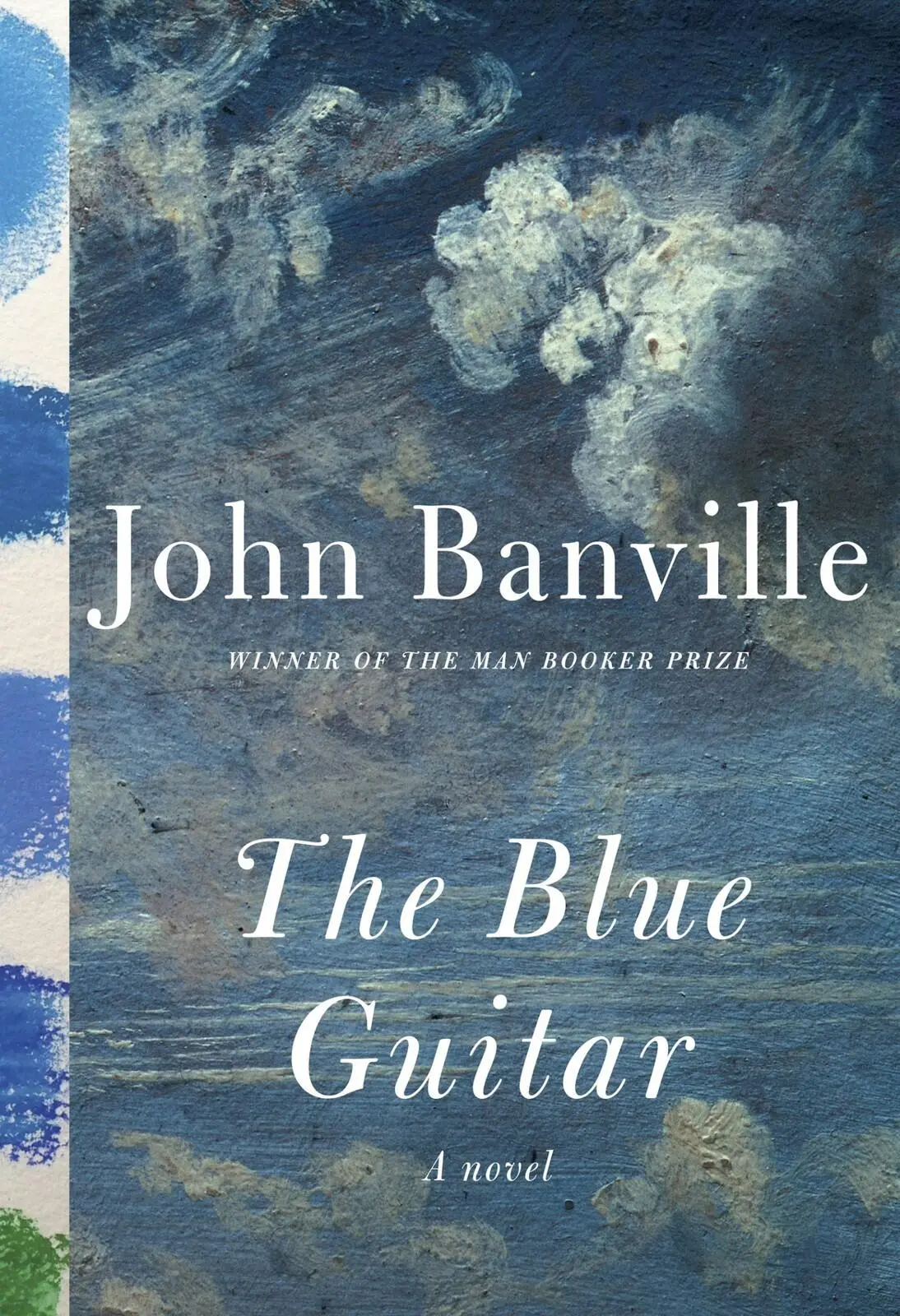
- Название:The Blue Guitar
- Автор:
- Издательство:Knopf
- Жанр:
- Год:2015
- ISBN:нет данных
- Рейтинг книги:4 / 5. Голосов: 1
-
Избранное:Добавить в избранное
- Отзывы:
-
Ваша оценка:
The Blue Guitar: краткое содержание, описание и аннотация
Предлагаем к чтению аннотацию, описание, краткое содержание или предисловие (зависит от того, что написал сам автор книги «The Blue Guitar»). Если вы не нашли необходимую информацию о книге — напишите в комментариях, мы постараемся отыскать её.
and
a new novel-at once trenchant, witty, and shattering-about the intricacies of artistic creation and theft, and about the ways in which we learn to possess one another, and to hold on to ourselves. Equally self-aggrandizing and self-deprecating, our narrator, Oliver Otway Orme, is a painter of some renown, and a petty thief who does not steal for profit and has never before been caught. But he's pushing fifty, feels like a hundred, and things have not been going so well lately. Having recognized the "man-killing crevasse" that exists between what he sees and any representation he might make of it-any attempt to make what he sees his own-he's stopped painting. And his last purloined possession-aquired the last time he felt the "secret shiver of bliss" in thievery-has been discovered. The fact that it was the wife of the man who was, perhaps, his best friend, has compelled him to run away: from his mistress, his home, his wife, from whatever remains of his impulse to paint and from the tragedy that haunts him, and to sequester himself in the house where he was born, trying to uncover in himself the answer to how and why things have turned out as they did. Excavating memories of family, of places he's called home, and of the way he has apprehended the world around him ("no matter what else is going on, one of my eyes is always swivelling towards the world beyond"), Ollie reveals the very essence of a man who, in some way, has always been waiting to be rescued from himself.
The Blue Guitar — читать онлайн бесплатно полную книгу (весь текст) целиком
Ниже представлен текст книги, разбитый по страницам. Система сохранения места последней прочитанной страницы, позволяет с удобством читать онлайн бесплатно книгу «The Blue Guitar», без необходимости каждый раз заново искать на чём Вы остановились. Поставьте закладку, и сможете в любой момент перейти на страницу, на которой закончили чтение.
Интервал:
Закладка:
I asked her if she was all right. At this she dilated her already large blue eyes.
“What do you mean, am I all right?”
“Just that. I haven’t seen you for a while.”
Now she snorted. “A while!” Her voice was not quite steady.
“Gloria,” I said.
“What?” She glared at me, then crushed the last of her cigarette on one of my paint-encrusted palettes, nodding angrily, as if she had succeeded in confirming something to herself, at last.
I said I wanted to come home. It was only when I was saying it that I knew it was the case, as it had been all along. Home. Oh, my Lord!
—
So it was as simple as that: me, tail between legs, back in the dog-house. It seemed I had hardly been away. Or, no, that’s not quite true; in fact, it’s not true at all, I don’t know why I said it. Years ago, when we were living in Cedar Street, Gloria and I were motoring back one afternoon from somewhere down the country and got caught in a freak summer storm, the tail-end of a hurricane that against all the forecasts had come whipping in from the Atlantic, knocking things down and causing havoc on the roads. There were floods and felled trees, and we were forced to make four or five complicated detours that added hours to the journey. When at last we got home we were in a state of trembling exhilaration, like children at the end of an unsupervised and gloriously disorderly birthday party. The house, too, although it had suffered nothing more than a couple of broken slates, had a tousled, dizzied air, as if it, like us, had been out in the storm, battling through wind and rain, and, though it had gained once more the shelter of itself, would never be quite the same again, after its wild adventure. That’s how Fairmount seemed, when Gloria brought me home, at the close of my brief but tempestuous frolic.
We settled down as best we could, not, as I say, to life as it had been before, but to something that to a stranger’s eye would have looked very like it. I kept indoors. I saw nothing of Polly, of course, and certainly not of Marcus, and heard nothing from them. Their names weren’t mentioned in the house. I thought of the Prince and his poetry and the fragment of it that Polly’s father had recited. World, invisible! I felt that something had been imparted, that something had been delivered specially to me. Wasn’t that what I had struggled towards always, wasn’t that the mad project I had devoted my life to, the invisibling of the world?
After leaving it I stayed away altogether from the studio, for reasons that were not as obvious as may seem.
Presently there appeared, as threatened, the unavoidable Perry Percival. He landed his plane out by the estuary, on the disused famine road that the farmer who owns the fields round about, thinking to make his fortune, had transformed into a makeshift airstrip in the days when everybody was still flying. It was a blustery morning and the little machine buzzed down out of a lead-blue cloud bucking and swaying, the tips of its propellers flashing lipstick-red in the pallid sunlight, then settled as delicately as a moth, ran on gaily for some way, and bumped to a stop. Gloria and I were waiting in the shelter of the wooden hangar that used to be a barn. Perry, with his leather helmet in his hand, descended daintily from the cockpit. Farmer Wright’s two under-sized sons, in cardboard-coloured boiler-suits, one of them trailing a set of chocks, scuttled out to the plane and began swarming all over it, checking and tapping. Perry, a compact chrysalis, was peeling off his airman’s overalls as he tripped his way towards us, revealing in stages, from top to bottom, as if by an act of conjuring, his short, plump, immaculately suited self in all its burnished, dove-grey glory. I’m certain that in the depths of Hell, where he and I shall most likely end up together, Perry will manage to find a decent tailor. He wore a blue silk shirt and an electric-blue silk tie. I noticed his shoes of dark suede; he could have done with a lend of Freddie Hyland’s galoshes.
He called out a greeting, and came up and kissed Gloria quickly, rising on tiptoe to do it. For me he had only a deprecating frown, by which I knew Gloria must have told him all about my latest escapades. “I have”—he drew back a cuff and consulted a watch that was almost as big as his hand—“some hours. I’m due in Paris at eight, to dine with — well, never mind who with.” It is Perry’s policy to be always on the way to somewhere else, a place much more important than here. Every time I see him I’m impressed anew by the show of lofty magnificence he affects. He is ageless, and very short, with stubby arms and legs, like mine only even shorter, and a paunch in the shape of a good-sized Easter egg sliced in half lengthways. He has a disproportionately large head, which might have been fashioned from pounds and pounds of well-worked putty, and a large, smooth face, slightly livid and always with a moist, greyish sheen. His eyes are palely protuberant, and when he blinks the lids come down with a snap, like a pair of moulded metal flanges. His manner is brisk to the point of crossness, and he treats everything he encounters as if it were a hindrance. I’m fond of him in principle, although he never fails to vex me.
We turned towards the car. Perry stepped between Gloria and me and put an arm at both our backs, drawing us along with but slightly ahead of him, like a conductor at the triumphal end of a concert sweeping his soloists forwards into a storm of applause. He smelt of engine oil and expensive cologne. The wind from the estuary was ruffling everything except his hair, which, I noticed, he has started to dye; it was plastered back over his skull, tight and gleaming, like a carefully applied coat of shellac. “Damn fool air controllers tried to stop me landing here,” he said. “Now they’ll think I’ve crashed, of course, or gone into the drink.” He has a plummily refined accent with a faint Scots burr — his father was something high up in the Kirk of Canongate — and the barest trace of a Frankish lisp from his Merovingian mother. Very proud of his grand origins, is Perry.
Behind us, Orville and Wilbur were wheeling the plane effortfully towards the barn, one pushing while the other pulled.
In the car I sat in the back seat, feeling like a child being punished for naughtiness. The sunlight was gone now, and luminous veils of what was barely rain were drifting aslant the streets. As we went along, Perry, perched sideways in the front seat, turned his neat round head this way and that, taking in everything with appalled fascination, exclaiming and sighing. “Was that your name I saw over that shop?” he asked. I told him it used to be my father’s print shop, and that my studio was upstairs — my studio as was, I didn’t say. Perry turned all the way round and gave me a long look, shaking his head sadly. “You came home, Oliver,” he said. “I would never have thought it of you.” Gloria gave a soft laugh.
I encountered Perry Percival for the first time in Arles, I think, or was it Saint-Rémy? No, it was Arles. I was very young. I had come down from Paris, at the end of that summer of study, so-called, and was morosely wandering in the steps of the great ones who would never, I was gloomily convinced, invite me up to join them, sitting before their easels on the slopes of Mount Parnassus. There was a market on and the town was busy. I had been amusing myself by strolling from one crowded café to the next, swiping the tips that departing customers had left behind on the tables. It was a thing I had become adept at — talk about sleight of hand — and even the sharpest-eyed waiters missed me as I flitted among them with a muffled, tell-tale jingle. Although I was penniless, I wasn’t taking the money because I needed it; if I had, I would have tried to make it by some other means. It was at the Café de la Paix — don’t know why I’ve remembered the name — as I was pocketing a fistful of centimes, that I happened to glance up and caught, through the open doorway, deep in the brownish darkness of the interior, Perry’s sharp bright eye fixed on me. To this day I don’t know if he spotted what I was up to; if he did, he certainly never said so, and I’ve assumed he didn’t. My instinct was to run away — isn’t it always my instinct? — but instead I went into the café and approached Perry and introduced myself; when one is threatened with discovery, effrontery is the best defence, as any thief will tell you. I hadn’t a shred of a reputation yet, but Perry must have heard my name somewhere, for he claimed to be familiar with my work, which was patently a lie, though I chose to believe him. He was wearing the usual rig-out of the northerner holidaying in the south — short-sleeved cotton shirt, absurdly, indeed indecently, wide-legged khaki shorts, open-toed sandals and, bless your heart, stout woollen socks — yet still he managed to convey a lordly hauteur. You see me here mingling among tourists and other riff-raff, his manner said, but even as we speak, my man is laying out tie and tails for me in my suite at the Grand Hôtel des Bains. “Yes yes,” he drawled, “Orme, I know your things, I’ve seen them.” He invited me to sit, and ordered for us both a glass of white. To think that from this chance encounter there developed one of the most significant and — etc., etc.
Читать дальшеИнтервал:
Закладка:
Похожие книги на «The Blue Guitar»
Представляем Вашему вниманию похожие книги на «The Blue Guitar» списком для выбора. Мы отобрали схожую по названию и смыслу литературу в надежде предоставить читателям больше вариантов отыскать новые, интересные, ещё непрочитанные произведения.



Обсуждение, отзывы о книге «The Blue Guitar» и просто собственные мнения читателей. Оставьте ваши комментарии, напишите, что Вы думаете о произведении, его смысле или главных героях. Укажите что конкретно понравилось, а что нет, и почему Вы так считаете.