Leopoldo Marechal - Adam Buenosayres
Здесь есть возможность читать онлайн «Leopoldo Marechal - Adam Buenosayres» весь текст электронной книги совершенно бесплатно (целиком полную версию без сокращений). В некоторых случаях можно слушать аудио, скачать через торрент в формате fb2 и присутствует краткое содержание. Год выпуска: 2015, Издательство: McGill-Queen's University Press, Жанр: Классическая проза, на английском языке. Описание произведения, (предисловие) а так же отзывы посетителей доступны на портале библиотеки ЛибКат.
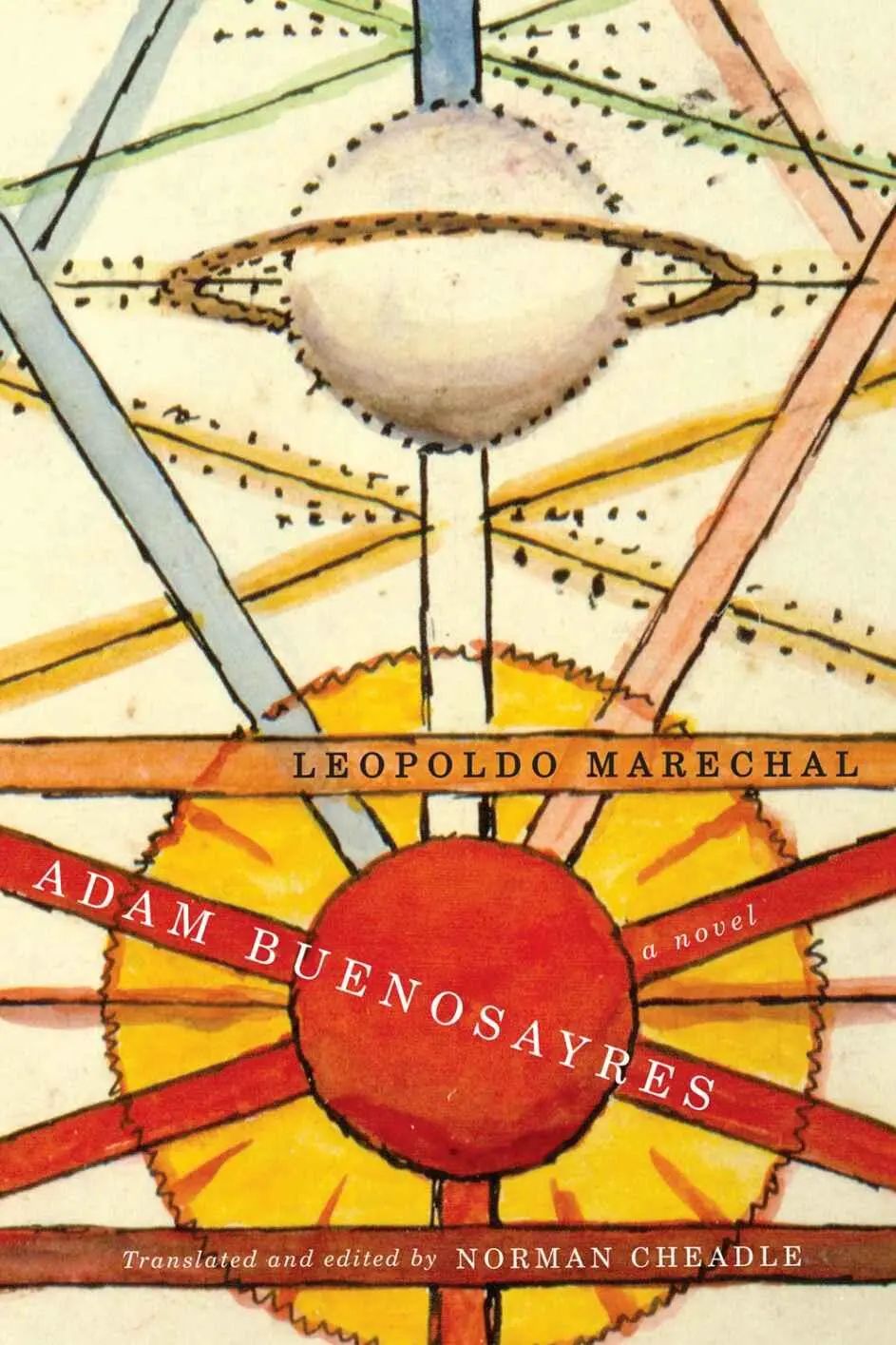
- Название:Adam Buenosayres
- Автор:
- Издательство:McGill-Queen's University Press
- Жанр:
- Год:2015
- ISBN:нет данных
- Рейтинг книги:5 / 5. Голосов: 1
-
Избранное:Добавить в избранное
- Отзывы:
-
Ваша оценка:
Adam Buenosayres: краткое содержание, описание и аннотация
Предлагаем к чтению аннотацию, описание, краткое содержание или предисловие (зависит от того, что написал сам автор книги «Adam Buenosayres»). Если вы не нашли необходимую информацию о книге — напишите в комментариях, мы постараемся отыскать её.
Adam Buenosayres — читать онлайн бесплатно полную книгу (весь текст) целиком
Ниже представлен текст книги, разбитый по страницам. Система сохранения места последней прочитанной страницы, позволяет с удобством читать онлайн бесплатно книгу «Adam Buenosayres», без необходимости каждый раз заново искать на чём Вы остановились. Поставьте закладку, и сможете в любой момент перейти на страницу, на которой закончили чтение.
Интервал:
Закладка:
— Sure, sure, I uttered, swallowing hard. Just a case of delirium.
— Delirium? he whined. I want my hunnerd grand and my world-champeen’s belt!
Sweating like a pig, I fled from the insistent Anabaruse. I staggered past two or three figures who were sobbing their names at me, and finally came upon a big, husky fellow. When he felt me run into him, he hit the roof:
— Hey! he growled at me. Don’t be fallin’ on top of me like that, like a chickenhawk swoopin’ for eggs. Nobody shoves Don Brandán Esoseyúa around!
Wide baggy trousers, accordion boots, broad-brimmed hat turned up at the front, silver-handled riding whip, wide belt, and a silver buckle packing more ounces of metal than a magnate, the homunculus’s get-up suggested a rancher from the south. And once I’d identified him, I stammered, crimson with shame:
— Señor Don Brandán…
— So you recognize me, he said, at once ironic and sorrowful. The pampa is still unpopulated. Where are the ideal settlements, the wonderful ranches I founded or might’ve founded in the south, distributing my land amongst settlers who worked like angels and proliferated like beasts, while neither function kept them so busy that they didn’t have time to read a little Virgil and meditate on Aristotle’s Politics ?
— A mad fantasy inspired by patriotic intentions, I excused myself, my voice faltering.
— The road to hell is paved with good intentions, retorted Don Brandán. But I saw or might’ve seen the prairie covered with towns purling like wheat fields in the wind.
At that point, a bereaved though authoritarian voice was heard:
— Who speaks of towns? Have you forgotten that Bruno de San Yasea lives on?
I moved closer to the man who had so proclaimed his name, and beheld the most curious sight: an old man of flowing beard, Mosaic horns on his brow, and vestments at once civil, military, and priestly. Recognizing him, I trembled like a leaf:
— No! I implored him. Not you! It would be too ridiculous!
— Ridiculous? enunciated the apostle, elegiac. I, Bruno de San Yasea, in this the twentieth century, assumed, or might have assumed, the government of the Republic; and for forty years I ruled their destinies with one hand of iron and the other hand lily-soft. Thanks to me, the migrant workers from Tucumán and the Chaco, the wretched who harvest the sugar plantations, the damned of the quebracho plantations, established themselves, or would have, in a land that until then had been their stepmother. They set up, or would have, impeccable families; and the sons of their sons bless me today, or would do so, in folksy Castilian Spanish. You think this ridiculous? I am the one who organized bright and shiny corporations for the ranchers of the south, the farmers of the central region, the wine growers of Cuyo, and the tobacco, mate , and cotton farmers in the tropical north. I instituted their jobs in regal eight-line stanzas, I myself wrote their amazing codes of law, I designed their badges and emblems, determined their festivals, wrote their allusive songs and legislated their liturgical dance forms. And you find this ridiculous? On hill and dale, in villages and burghs, I tempered and harmonized the social classes as if they were strings on a lute, so that together and without discord they might raise the unitarian chord of life. And for you this is too ridiculous? 111
— No, no, poor ghost, I answered. But one’s creations ad intra …
San Yasea interrupted me with a sad gesture:
— I haven’t yet got to the sublime part, he said. I got all of the nation’s inhabitants to recover, through happiness and well-being, the lost notion of their dignity. But I didn’t achieve this by sweet-talking them with the false illusion of a Terrestrial Paradise. Instead, I gave them the necessary otius , the opportunity to rediscover within themselves the image of the Creator. And so it was that, once I’d got, or would’ve got, the land of Argentina to be a “great earthly province,” I managed at the same time to turn it into a “great heavenly province.” Then it was seen how sixty million souls undertook the delectable road of metaphysics and progressed through every stage of contemplation!…
— Enough! I implored, overwhelmed.
— And it was seen how people deserted the city and, like the anchorites of Egyptian Thebes, built their solitary retreats in the wilderness of Santiago del Estero, the puna in Atacama, or the desert in San Luis. Great God, the cathedrals sprouted up like grass!
— Be quiet! I insisted. Not another word!
— Shall I ever forget the day I died? added Bruno de San Yasea in a fanatical voice. Millions of faces were gathered round my catafalque, sobbing…
I ran him over, made him spin like a weathervane, and fled in desperation. Now a foppish-looking homunculus tried to talk to me:
— I am Urbano de Sasaney, doctor in Eros…
But I knocked him over in passing — hapless celluloid puppet! — and continued punching and head-butting my way through those loathsome entities. I was already taking heart, convinced that no force could stop me now, when suddenly my legs went weak: the sweet, ascetic figure of a monk was fixing a lachrymose gaze upon me. I tried not to look at his face, emaciated by fasts and mortifications; I wanted to sink into the earth like a worm. But — alas! — I knew very well there was no escape from the impending converstion with Fra Darius Anenae (OSB). 112
— Father! I implored him. Allow me to appeal to your immense charity and ask you to spare me this embarrassment…
Not even hearing me, Fra Darius began to speak, tearful and exalted:
— In the province of Corrientes, on the shores of the mysterious Lake Iberá, there is an inhospitable region seemingly abandoned by the hand of God. Do you remember the spot?
— Father, Father! I begged him again.
— It was in that zone where, called by the Lord to the hard road of penitence, I built or might have built my hermitage, a pigsty of mud and straw, practically sinking into the bog. The implacable sun, the noxious vapours of the lagoon, and the insects punished all flesh; so I, Fra Darius Anenae (OSB), dedicated or would have dedicated my days and my nights to cleaning the sores of lepers, burying the dead, drying the tears of widows, and feeding orphaned children. Ah! All that under a sky weighing down upon men and beasts like a terrible, wrathful gaze. One night…
— Father! I interrupted, sweating with anguish. Why reveal the wanderings of an imagination more poetic than contrite?
Fra Darius showed no sign of having heard me:
— That night I was visiting a shack in the area. I’d swept the earthen floor, and was now watching a pot of stew cooking over a cow-flap fire. Inside the darkened cabin various sounds could be heard: the dying man’s hoarse gasps, a woman’s voice wailing in delirium, the irrepressible sobbing of old women, the innocent laughter of children playing in the corners. But worst of all was the stench emanating from the running pustules, the caked and cracked scabs, the fetid breath, the rags damp with saliva and sweat. And I, Fra Darius, inhaled that bitter aroma of penitence. Stirring my pot, I persisted in a prayer, ongoing by then for years, which in my view would soon force open the sluicegates of heaven. Suddenly I saw the whole cabin being filled with a very soft light; and in the air I caught whiffs of a Sabaean perfume, as if invisible numina had begun to swing fragrant thuribles. Great God! At the same time I saw how the dying rose to their feet, how the women exulted, and how the children became sore afraid. All eyes were upon me, and the voices cried out: “Father Darius! Father Darius!” I was disoriented for a moment, put my hand to my brow. And, Great God! When I drew my hand away and saw how it glowed, I realized the light and the scent were coming from my body: I was the beacon emitting that light, the thurible of that perfume.
Читать дальшеИнтервал:
Закладка:
Похожие книги на «Adam Buenosayres»
Представляем Вашему вниманию похожие книги на «Adam Buenosayres» списком для выбора. Мы отобрали схожую по названию и смыслу литературу в надежде предоставить читателям больше вариантов отыскать новые, интересные, ещё непрочитанные произведения.








Обсуждение, отзывы о книге «Adam Buenosayres» и просто собственные мнения читателей. Оставьте ваши комментарии, напишите, что Вы думаете о произведении, его смысле или главных героях. Укажите что конкретно понравилось, а что нет, и почему Вы так считаете.