Теодор Драйзер - The Genius
Здесь есть возможность читать онлайн «Теодор Драйзер - The Genius» весь текст электронной книги совершенно бесплатно (целиком полную версию без сокращений). В некоторых случаях можно слушать аудио, скачать через торрент в формате fb2 и присутствует краткое содержание. Год выпуска: 2014, Издательство: epubBooks Classics, Жанр: Классическая проза, на английском языке. Описание произведения, (предисловие) а так же отзывы посетителей доступны на портале библиотеки ЛибКат.
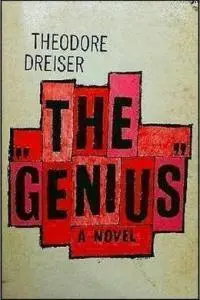
- Название:The Genius
- Автор:
- Издательство:epubBooks Classics
- Жанр:
- Год:2014
- ISBN:нет данных
- Рейтинг книги:4 / 5. Голосов: 1
-
Избранное:Добавить в избранное
- Отзывы:
-
Ваша оценка:
The Genius: краткое содержание, описание и аннотация
Предлагаем к чтению аннотацию, описание, краткое содержание или предисловие (зависит от того, что написал сам автор книги «The Genius»). Если вы не нашли необходимую информацию о книге — напишите в комментариях, мы постараемся отыскать её.
The Genius — читать онлайн бесплатно полную книгу (весь текст) целиком
Ниже представлен текст книги, разбитый по страницам. Система сохранения места последней прочитанной страницы, позволяет с удобством читать онлайн бесплатно книгу «The Genius», без необходимости каждый раз заново искать на чём Вы остановились. Поставьте закладку, и сможете в любой момент перейти на страницу, на которой закончили чтение.
Интервал:
Закладка:
"Well," he said, pretending to look at the picture on the easel for the first time, "we might as well begin to look at these things. I see you have one here. Very good, I think, quite forceful. What others have you?"
Eugene was afraid this one hadn't appealed to him as much as he hoped it would, and set it aside quickly, picking up the second in the stock which stood against the wall, covered by a green curtain. It was the three engines entering the great freight yard abreast, the smoke of the engines towering straight up like tall whitish–grey plumes, in the damp, cold air, the sky lowering with blackish–grey clouds, the red and yellow and blue cars standing out in the sodden darkness because of the water. You could feel the cold, wet drizzle, the soppy tracks, the weariness of "throwing switches." There was a lone brakeman in the foreground, "throwing" a red brake signal. He was quite black and evidently wet.
"A symphony in grey," said M. Charles succinctly.
They came swiftly after this, without much comment from either, Eugene putting one canvas after another before him, leaving it for a few moments and replacing it with another. His estimate of his own work did not rise very rapidly, for M. Charles was persistently distant, but the latter could not help voicing approval of "After The Theatre," a painting full of the wonder and bustle of a night crowd under sputtering electric lamps. He saw that Eugene had covered almost every phase of what might be called the dramatic spectacle in the public life of the city and much that did not appear dramatic until he touched it—the empty canyon of Broadway at three o'clock in the morning; a long line of giant milk wagons, swinging curious lanterns, coming up from the docks at four o'clock in the morning; a plunging parade of fire vehicles, the engines steaming smoke, the people running or staring open–mouthed; a crowd of polite society figures emerging from the opera; the bread line; an Italian boy throwing pigeons in the air from a basket on his arm in a crowded lower West–side street. Everything he touched seemed to have romance and beauty, and yet it was real and mostly grim and shabby.
"I congratulate you, Mr. Witla," finally exclaimed M. Charles, moved by the ability of the man and feeling that caution was no longer necessary. "To me this is wonderful material, much more effective than the reproductions show, dramatic and true. I question whether you will make any money out of it. There is very little sale for American art in this country. It might almost do better in Europe. It ought to sell, but that is another matter. The best things do not always sell readily. It takes time. Still I will do what I can. I will give these pictures a two weeks' display early in April without any charge to you whatever." (Eugene started.) "I will call them to the attention of those who know. I will speak to those who buy. It is an honor, I assure you, to do this. I consider you an artist in every sense of the word—I might say a great artist. You ought, if you preserve yourself sanely and with caution, to go far, very far. I shall be glad to send for these when the time comes."
Eugene did not know how to reply to this. He did not quite understand the European seriousness of method, its appreciation of genius, which was thus so easily and sincerely expressed in a formal way. M. Charles meant every word he said. This was one of those rare and gratifying moments of his life when he was permitted to extend to waiting and unrecognized genius the assurance of the consideration and approval of the world. He stood there waiting to hear what Eugene would say, but the latter only flushed under his pale skin.
"I'm very glad," he said at last, in his rather commonplace, off–hand, American way. "I thought they were pretty good but I wasn't sure. I'm very grateful to you."
"You need not feel gratitude toward me," returned M. Charles, now modifying his formal manner. "You can congratulate yourself—your art. I am honored, as I tell you. We will make a fine display of them. You have no frames for these? Well, never mind, I will lend you frames."
He smiled and shook Eugene's hand and congratulated Angela. She had listened to this address with astonishment and swelling pride. She had perceived, despite Eugene's manner, the anxiety he was feeling, the intense hopes he was building on the outcome of this meeting. M. Charles' opening manner had deceived her. She had felt that he did not care so much after all, and that Eugene was going to be disappointed. Now, when this burst of approval came, she hardly knew what to make of it. She looked at Eugene and saw that he was intensely moved by not only a sense of relief, but pride and joy. His pale, dark face showed it. To see this load of care taken off him whom she loved so deeply was enough to unsettle Angela. She found herself stirred in a pathetic way and now, when M. Charles turned to her, tears welled to her eyes.
"Don't cry, Mrs. Witla," he said grandly on seeing this. "You have a right to be proud of your husband. He is a great artist. You should take care of him."
"Oh, I'm so happy," half–laughed and half–sobbed Angela, "I can't help it."
She went over to where Eugene was and put her face against his coat. Eugene slipped his arm about her and smiled sympathetically. M. Charles smiled also, proud of the effect of his words. "You both have a right to feel very happy," he said.
"Little Angela!" thought Eugene. This was your true wife for you, your good woman. Her husband's success meant all to her. She had no life of her own—nothing outside of him and his good fortune.
M. Charles smiled. "Well, I will be going now," he said finally. "I will send for the pictures when the time comes. And meanwhile you two must come with me to dinner. I will let you know."
He bowed himself out with many assurances of good will, and then Angela and Eugene looked at each other.
"Oh, isn't it lovely, Honeybun," she cried, half giggling, half crying. (She had begun to call him Honeybun the first day they were married.) "My Eugene a great artist. He said it was a great honor! Isn't that lovely? And all the world is going to know it soon, now. Isn't that fine! Oh dear, I'm so proud." And she threw her arms ecstatically about his neck.
Eugene kissed her affectionately. He was not thinking so much of her though as he was of Kellner and Son—their great exhibit room, the appearance of these twenty–seven or thirty great pictures in gold frames; the spectators who might come to see; the newspaper criticisms; the voices of approval. Now all his artist friends would know that he was considered a great artist; he was to have a chance to associate on equal terms with men like Sargent and Whistler if he ever met them. The world would hear of him widely. His fame might go to the uttermost parts of the earth.
He went to the window after a time and looked out. There came back to his mind Alexandria, the printing shop, the Peoples' Furniture Company in Chicago, the Art Students League, the Daily Globe . Surely he had come by devious paths.
"Gee!" he exclaimed at last simply. "Smite and MacHugh'll be glad to hear this. I'll have to go over and tell them."
Chapter VII
The exhibition which followed in April was one of those things which happen to fortunate souls—a complete flowering out before the eyes of the world of its feelings, emotions, perceptions, and understanding. We all have our feelings and emotions, but lack the power of self–expression. It is true, the work and actions of any man are to some degree expressions of character, but this is a different thing. The details of most lives are not held up for public examination at any given time. We do not see succinctly in any given place just what an individual thinks and feels. Even the artist is not always or often given the opportunity of collected public expression under conspicuous artistic auspices. Some are so fortunate—many are not. Eugene realized that fortune was showering its favors upon him.
Читать дальшеИнтервал:
Закладка:
Похожие книги на «The Genius»
Представляем Вашему вниманию похожие книги на «The Genius» списком для выбора. Мы отобрали схожую по названию и смыслу литературу в надежде предоставить читателям больше вариантов отыскать новые, интересные, ещё непрочитанные произведения.





Обсуждение, отзывы о книге «The Genius» и просто собственные мнения читателей. Оставьте ваши комментарии, напишите, что Вы думаете о произведении, его смысле или главных героях. Укажите что конкретно понравилось, а что нет, и почему Вы так считаете.