Теодор Драйзер - The Genius
Здесь есть возможность читать онлайн «Теодор Драйзер - The Genius» весь текст электронной книги совершенно бесплатно (целиком полную версию без сокращений). В некоторых случаях можно слушать аудио, скачать через торрент в формате fb2 и присутствует краткое содержание. Год выпуска: 2014, Издательство: epubBooks Classics, Жанр: Классическая проза, на английском языке. Описание произведения, (предисловие) а так же отзывы посетителей доступны на портале библиотеки ЛибКат.
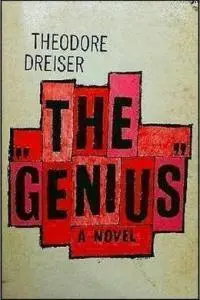
- Название:The Genius
- Автор:
- Издательство:epubBooks Classics
- Жанр:
- Год:2014
- ISBN:нет данных
- Рейтинг книги:4 / 5. Голосов: 1
-
Избранное:Добавить в избранное
- Отзывы:
-
Ваша оценка:
The Genius: краткое содержание, описание и аннотация
Предлагаем к чтению аннотацию, описание, краткое содержание или предисловие (зависит от того, что написал сам автор книги «The Genius»). Если вы не нашли необходимую информацию о книге — напишите в комментариях, мы постараемся отыскать её.
The Genius — читать онлайн бесплатно полную книгу (весь текст) целиком
Ниже представлен текст книги, разбитый по страницам. Система сохранения места последней прочитанной страницы, позволяет с удобством читать онлайн бесплатно книгу «The Genius», без необходимости каждый раз заново искать на чём Вы остановились. Поставьте закладку, и сможете в любой момент перейти на страницу, на которой закончили чтение.
Интервал:
Закладка:
"I am," replied Eugene. "I expect to have a show of my own one of these days."
He called Angela, who had wandered away to look at a piece of statuary, and introduced her.
"I was just telling your husband how much I like his picture," Overman informed her.
Angela was flattered that her husband was so much of a personage that he could have his picture hung in a great exhibition such as this, with its walls crowded with what seemed to her magnificent canvases, and its rooms filled with important and distinguished people. As they strolled about Eugene pointed out to her this well known artist and that writer, saying almost always that they were very able. He knew three or four of the celebrated collectors, prize givers, and art patrons by sight, and told Angela who they were. There were a number of striking looking models present whom Eugene knew either by reputation, whispered comment of friends, or personally—Zelma Desmond, who had posed for Eugene, Hedda Anderson, Anna Magruder and Laura Matthewson among others. Angela was struck and in a way taken by the dash and beauty of these girls. They carried themselves with an air of personal freedom and courage which surprised her. Hedda Anderson was bold in her appearance but immensely smart. Her manner seemed to comment on the ordinary woman as being indifferent and not worth while. She looked at Angela walking with Eugene and wondered who she was.
"Isn't she striking," observed Angela, not knowing she was anyone whom Eugene knew.
"I know her well," he replied; "she's a model."
Just then Miss Anderson in return for his nod gave him a fetching smile. Angela chilled.
Elizabeth Stein passed by and he nodded to her.
"Who is she?" asked Angela.
"She's a socialist agitator and radical. She sometimes speaks from a soap–box on the East Side."
Angela studied her carefully. Her waxen complexion, smooth black hair laid in even plaits over her forehead, her straight, thin, chiseled nose, even red lips and low forehead indicated a daring and subtle soul. Angela did not understand her. She could not understand a girl as good looking as that doing any such thing as Eugene said, and yet she had a bold, rather free and easy air. She thought Eugene certainly knew strange people. He introduced to her William McConnell, Hudson Dula, who had not yet been to see them, Jan Jansen, Louis Deesa, Leonard Baker and Paynter Stone.
In regard to Eugene's picture the papers, with one exception, had nothing to say, but this one in both Eugene's and Angela's minds made up for all the others. It was the Evening Sun , a most excellent medium for art opinion, and it was very definite in its conclusions in regard to this particular work. The statement was:
"A new painter, Eugene Witla, has an oil entitled 'Six O'clock' which for directness, virility, sympathy, faithfulness to detail and what for want of a better term we may call totality of spirit, is quite the best thing in the exhibition. It looks rather out of place surrounded by the weak and spindling interpretations of scenery and water which so readily find a place in the exhibition of the Academy, but it is none the weaker for that. The artist has a new, crude, raw and almost rough method, but his picture seems to say quite clearly what he sees and feels. He may have to wait—if this is not a single burst of ability—but he will have a hearing. There is no question of that. Eugene Witla is an artist."
Eugene thrilled when he read this commentary. It was quite what he would have said himself if he had dared. Angela was beside herself with joy. Who was the critic who had said this, they wondered? What was he like? He must be truly an intellectual personage. Eugene wanted to go and look him up. If one saw his talent now, others would see it later. It was for this reason—though the picture subsequently came back to him unsold, and unmentioned so far as merit or prizes were concerned—that he decided to try for an exhibition of his own.
Chapter V
The hope of fame—what hours of speculation, what pulses of enthusiasm, what fevers of effort, are based on that peculiarly subtle illusion! It is yet the lure, the ignis fatuus of almost every breathing heart. In the young particularly it burns with the sweetness and perfume of spring fires. Then most of all does there seem substantial reality in the shadow of fame—those deep, beautiful illusions which tremendous figures throw over the world. Attainable, it seems, must be the peace and plenty and sweet content of fame—that glamour of achievement that never was on sea or land. Fame partakes of the beauty and freshness of the morning. It has in it the odour of the rose, the feel of rich satin, the color of the cheeks of youth. If we could but be famous when we dream of fame, and not when locks are tinged with grey, faces seamed with the lines that speak of past struggles, and eyes wearied with the tensity, the longings and the despairs of years! To bestride the world in the morning of life, to walk amid the plaudits and the huzzahs when love and faith are young; to feel youth and the world's affection when youth and health are sweet—what dream is that, of pure sunlight and moonlight compounded. A sun–kissed breath of mist in the sky; the reflection of moonlight upon water; the remembrance of dreams to the waking mind—of such is fame in our youth, and never afterward.
By such an illusion was Eugene's mind possessed. He had no conception of what life would bring him for his efforts. He thought if he could have his pictures hung in a Fifth Avenue gallery much as he had seen Bouguereau's "Venus" in Chicago, with people coming as he had come on that occasion—it would be of great comfort and satisfaction to him. If he could paint something which would be purchased by the Metropolitan Museum in New York he would then be somewhat of a classic figure, ranking with Corot and Daubigny and Rousseau of the French or with Turner and Watts and Millais of the English, the leading artistic figures of his pantheon. These men seemed to have something which he did not have, he thought, a greater breadth of technique, a finer comprehension of color and character, a feeling for the subtleties at the back of life which somehow showed through what they did. Larger experience, larger vision, larger feeling—these things seemed to be imminent in the great pictures exhibited here, and it made him a little uncertain of himself. Only the criticism in the Evening Sun fortified him against all thought of failure. He was an artist.
He gathered up the various oils he had done—there were some twenty–six all told now, scenes of the rivers, the streets, the night life, and so forth—and went over them carefully, touching up details which in the beginning he had merely sketched or indicated, adding to the force of a spot of color here, modifying a tone or shade there, and finally, after much brooding over the possible result, set forth to find a gallery which would give them place and commercial approval.
Eugene's feeling was that they were a little raw and sketchy—that they might not have sufficient human appeal, seeing that they dealt with factory architecture at times, scows, tugs, engines, the elevated roads in raw reds, yellows and blacks; but MacHugh, Dula, Smite, Miss Finch, Christina, the Evening Sun , Norma Whitmore, all had praised them, or some of them. Was not the world much more interested in the form and spirit of classic beauty such as that represented by Sir John Millais? Would it not prefer Rossetti's "Blessed Damozel" to any street scene ever painted? He could never be sure. In the very hour of his triumph when the Sun had just praised his picture, there lurked the spectre of possible intrinsic weakness. Did the world wish this sort of thing? Would it ever buy of him? Was he of any real value?
Читать дальшеИнтервал:
Закладка:
Похожие книги на «The Genius»
Представляем Вашему вниманию похожие книги на «The Genius» списком для выбора. Мы отобрали схожую по названию и смыслу литературу в надежде предоставить читателям больше вариантов отыскать новые, интересные, ещё непрочитанные произведения.




Обсуждение, отзывы о книге «The Genius» и просто собственные мнения читателей. Оставьте ваши комментарии, напишите, что Вы думаете о произведении, его смысле или главных героях. Укажите что конкретно понравилось, а что нет, и почему Вы так считаете.