Теодор Драйзер - The Genius
Здесь есть возможность читать онлайн «Теодор Драйзер - The Genius» весь текст электронной книги совершенно бесплатно (целиком полную версию без сокращений). В некоторых случаях можно слушать аудио, скачать через торрент в формате fb2 и присутствует краткое содержание. Год выпуска: 2014, Издательство: epubBooks Classics, Жанр: Классическая проза, на английском языке. Описание произведения, (предисловие) а так же отзывы посетителей доступны на портале библиотеки ЛибКат.
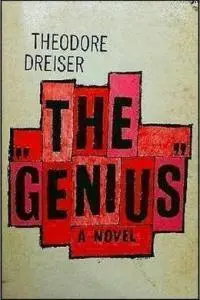
- Название:The Genius
- Автор:
- Издательство:epubBooks Classics
- Жанр:
- Год:2014
- ISBN:нет данных
- Рейтинг книги:4 / 5. Голосов: 1
-
Избранное:Добавить в избранное
- Отзывы:
-
Ваша оценка:
The Genius: краткое содержание, описание и аннотация
Предлагаем к чтению аннотацию, описание, краткое содержание или предисловие (зависит от того, что написал сам автор книги «The Genius»). Если вы не нашли необходимую информацию о книге — напишите в комментариях, мы постараемся отыскать её.
The Genius — читать онлайн бесплатно полную книгу (весь текст) целиком
Ниже представлен текст книги, разбитый по страницам. Система сохранения места последней прочитанной страницы, позволяет с удобством читать онлайн бесплатно книгу «The Genius», без необходимости каждый раз заново искать на чём Вы остановились. Поставьте закладку, и сможете в любой момент перейти на страницу, на которой закончили чтение.
Интервал:
Закладка:
"No," said Eugene, surprised that there should be any.
"Two hundred dollars for two weeks. We do not take exhibitions for less than that time."
Eugene's countenance fell. He had expected quite a different reception. Nevertheless, since he had brought them, he untied the tape of the portfolio in which the prints were laid.
M. Charles looked at them curiously. He was much impressed with the picture of the East Side Crowd at first, but looking at one of Fifth Avenue in a snow storm, the battered, shabby bus pulled by a team of lean, unkempt, bony horses, he paused, struck by its force. He liked the delineation of swirling, wind–driven snow. The emptiness of this thoroughfare, usually so crowded, the buttoned, huddled, hunched, withdrawn look of those who traveled it, the exceptional details of piles of snow sifted on to window sills and ledges and into doorways and on to the windows of the bus itself, attracted his attention.
"An effective detail," he said to Eugene, as one critic might say to another, pointing to a line of white snow on the window of one side of the bus. Another dash of snow on a man's hat rim took his eye also. "I can feel the wind," he added.
Eugene smiled.
M. Charles passed on in silence to the steaming tug coming up the East River in the dark hauling two great freight barges. He was saying to himself that after all Eugene's art was that of merely seizing upon the obviously dramatic. It wasn't so much the art of color composition and life analysis as it was stage craft. The man before him had the ability to see the dramatic side of life. Still—
He turned to the last reproduction which was that of Greeley Square in a drizzling rain. Eugene by some mystery of his art had caught the exact texture of seeping water on gray stones in the glare of various electric lights. He had caught the values of various kinds of lights, those in cabs, those in cable cars, those in shop windows, those in the street lamp—relieving by them the black shadows of the crowds and of the sky. The color work here was unmistakably good.
"How large are the originals of these?" he asked thoughtfully.
"Nearly all of them thirty by forty."
Eugene could not tell by his manner whether he were merely curious or interested.
"All of them done in oil, I fancy."
"Yes, all."
"They are not bad, I must say," he observed cautiously. "A little persistently dramatic but—"
"These reproductions—" began Eugene, hoping by criticising the press work to interest him in the superior quality of the originals.
"Yes, I see," M. Charles interrupted, knowing full well what was coming. "They are very bad. Still they show well enough what the originals are like. Where is your studio?"
"61 Washington Square."
"As I say," went on M. Charles, noting the address on Eugene's card, "the opportunity for exhibition purposes is very limited and our charge is rather high. We have so many things we would like to exhibit—so many things we must exhibit. It is hard to say when the situation would permit—If you are interested I might come and see them sometime."
Eugene looked perturbed. Two hundred dollars! Two hundred dollars! Could he afford it? It would mean so much to him. And yet the man was not at all anxious to rent him the show room even at this price.
"I will come," said M. Charles, seeing his mood, "if you wish. That is what you want me to do. We have to be careful of what we exhibit here. It isn't as if it were an ordinary show room. I will drop you a card some day when occasion offers, if you wish, and you can let me know whether the time I suggest is all right. I am rather anxious to see these scenes of yours. They are very good of their kind. It may be—one never can tell—an opportunity might offer—a week or ten days, somewhere in between other things."
Eugene sighed inwardly. So this was how these things were done. It wasn't very flattering. Still, he must have an exhibition. He could afford two hundred if he had to. An exhibition elsewhere would not be so valuable. He had expected to make a better impression than this.
"I wish you would come," he said at last meditatively. "I think I should like the space if I can get it. I would like to know what you think."
M. Charles raised his eyebrows.
"Very well," he said, "I will communicate with you."
Eugene went out.
What a poor thing this exhibiting business was, he thought. Here he had been dreaming of an exhibition at Kellners which should be brought about without charge to him because they were tremendously impressed with his work. Now they did not even want his pictures—would charge him two hundred dollars to show them. It was a great come down—very discouraging.
Still he went home thinking it would do him some good. The critics would discuss his work just as they did that of other artists. They would have to see what he could do should it be that at last this thing which he had dreamed of and so deliberately planned had come true. He had thought of an exhibition at Kellner's as the last joyous thing to be attained in the world of rising art and now it looked as though he was near it. It might actually be coming to pass. This man wanted to see the rest of his work. He was not opposed to looking at them. What a triumph even that was!
Chapter VI
It was some little time before M. Charles condescended to write saying that if it was agreeable he would call Wednesday morning, January 16th, at 10 A. M., but the letter finally did come and this dispelled all his intermediary doubts and fears. At last he was to have a hearing! This man might see something in his work, possibly take a fancy to it. Who could tell? He showed the letter to Angela with an easy air as though it were quite a matter of course, but he felt intensely hopeful.
Angela put the studio in perfect order for she knew what this visit meant to Eugene, and in her eager, faithful way was anxious to help him as much as possible. She bought flowers from the Italian florist at the corner and put them in vases here and there. She swept and dusted, dressed herself immaculately in her most becoming house dress and waited with nerves at high tension for the fateful ring of the door bell. Eugene pretended to work at one of his pictures which he had done long before—the raw jangling wall of an East Side street with its swarms of children, its shabby push–carts, its mass of eager, shuffling, pushing mortals, the sense of rugged ground life running all through it, but he had no heart for the work. He was asking himself over and over what M. Charles would think. Thank heaven this studio looked so charming! Thank heaven Angela was so dainty in her pale green gown with a single red coral pin at her throat. He walked to the window and stared out at Washington Square, with its bare, wind–shaken branches of trees, its snow, its ant–like pedestrians hurrying here and there. If he were only rich—how peacefully he would paint! M. Charles could go to the devil.
The door bell rang.
Angela clicked a button and up came M. Charles quietly. They could hear his steps in the hall. He knocked and Eugene answered, decidedly nervous in his mind, but outwardly calm and dignified. M. Charles entered, clad in a fur–lined overcoat, fur cap and yellow chamois gloves.
"Ah, good morning!" said M. Charles in greeting. "A fine bracing day, isn't it? What a charming view you have here. Mrs. Witla! I'm delighted to meet you. I am a little late but I was unavoidably detained. One of our German associates is in the city."
He divested himself of his great coat and rubbed his hands before the fire. He tried, now that he had unbent so far, to be genial and considerate. If he and Eugene were to do any business in the future it must be so. Besides the picture on the easel before him, near the window, which for the time being he pretended not to see, was an astonishingly virile thing. Of whose work did it remind him—anybody's? He confessed to himself as he stirred around among his numerous art memories that he recalled nothing exactly like it. Raw reds, raw greens, dirty grey paving stones—such faces! Why this thing fairly shouted its facts. It seemed to say: "I'm dirty, I am commonplace, I am grim, I am shabby, but I am life." And there was no apologizing for anything in it, no glossing anything over. Bang! Smash! Crack! came the facts one after another, with a bitter, brutal insistence on their so–ness. Why, on moody days when he had felt sour and depressed he had seen somewhere a street that looked like this, and there it was—dirty, sad, slovenly, immoral, drunken—anything, everything, but here it was. "Thank God for a realist," he said to himself as he looked, for he knew life, this cold connoisseur; but he made no sign. He looked at the tall, slim frame of Eugene, his cheeks slightly sunken, his eyes bright—an artist every inch of him, and then at Angela, small, eager, a sweet, loving, little woman, and he was glad that he was going to be able to say that he would exhibit these things.
Читать дальшеИнтервал:
Закладка:
Похожие книги на «The Genius»
Представляем Вашему вниманию похожие книги на «The Genius» списком для выбора. Мы отобрали схожую по названию и смыслу литературу в надежде предоставить читателям больше вариантов отыскать новые, интересные, ещё непрочитанные произведения.





Обсуждение, отзывы о книге «The Genius» и просто собственные мнения читателей. Оставьте ваши комментарии, напишите, что Вы думаете о произведении, его смысле или главных героях. Укажите что конкретно понравилось, а что нет, и почему Вы так считаете.