Теодор Драйзер - The Genius
Здесь есть возможность читать онлайн «Теодор Драйзер - The Genius» весь текст электронной книги совершенно бесплатно (целиком полную версию без сокращений). В некоторых случаях можно слушать аудио, скачать через торрент в формате fb2 и присутствует краткое содержание. Год выпуска: 2014, Издательство: epubBooks Classics, Жанр: Классическая проза, на английском языке. Описание произведения, (предисловие) а так же отзывы посетителей доступны на портале библиотеки ЛибКат.
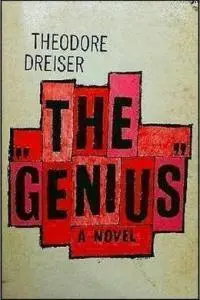
- Название:The Genius
- Автор:
- Издательство:epubBooks Classics
- Жанр:
- Год:2014
- ISBN:нет данных
- Рейтинг книги:4 / 5. Голосов: 1
-
Избранное:Добавить в избранное
- Отзывы:
-
Ваша оценка:
The Genius: краткое содержание, описание и аннотация
Предлагаем к чтению аннотацию, описание, краткое содержание или предисловие (зависит от того, что написал сам автор книги «The Genius»). Если вы не нашли необходимую информацию о книге — напишите в комментариях, мы постараемся отыскать её.
The Genius — читать онлайн бесплатно полную книгу (весь текст) целиком
Ниже представлен текст книги, разбитый по страницам. Система сохранения места последней прочитанной страницы, позволяет с удобством читать онлайн бесплатно книгу «The Genius», без необходимости каждый раз заново искать на чём Вы остановились. Поставьте закладку, и сможете в любой момент перейти на страницу, на которой закончили чтение.
Интервал:
Закладка:
"No, artist heart!" one might have answered, "of no more value than any other worker of existence and no less. The sunlight on the corn, the color of dawn in the maid's cheek, the moonlight on the water—these are of value and of no value according to the soul to whom is the appeal. Fear not. Of dreams and the beauty of dreams is the world compounded."
Kellner and Son, purveyors of artistic treasures by both past and present masters, with offices in Fifth Avenue near Twenty–eighth Street, was the one truly significant firm of art–dealers in the city. The pictures in the windows of Kellner and Son, the exhibitions in their very exclusive show rooms, the general approval which their discriminating taste evoked, had attracted the attention of artists and the lay public for fully thirty years. Eugene had followed their shows with interest ever since he had been in New York. He had seen, every now and then, a most astonishing picture of one school or another displayed in their imposing shop window, and had heard artists comment from time to time on other things there with considerable enthusiasm. The first important picture of the impressionistic school—a heavy spring rain in a grove of silver poplars by Winthrop—had been shown in the window of this firm, fascinating Eugene with its technique. He had encountered here collections of Aubrey Beardsley's decadent drawings, of Helleu's silverpoints, of Rodin's astonishing sculptures and Thaulow's solid Scandinavian eclecticism. This house appeared to have capable artistic connections all over the world, for the latest art force in Italy, Spain, Switzerland, or Sweden, was quite as likely to find its timely expression here as the more accredited work of England, Germany or France. Kellner and Son were art connoisseurs in the best sense of the word, and although the German founder of the house had died many years before, its management and taste had never deteriorated.
Eugene did not know at this time how very difficult it was to obtain an exhibition under Kellner's auspices, they being over–crowded with offers of art material and appeals for display from celebrated artists who were quite willing and able to pay for the space and time they occupied. A fixed charge was made, never deviated from except in rare instances where the talent of the artist, his poverty, and the advisability of the exhibition were extreme. Two hundred dollars was considered little enough for the use of one of their show rooms for ten days.
Eugene had no such sum to spare, but one day in January, without any real knowledge as to what the conditions were, he carried four of the reproductions which had been made from time to time in Truth to the office of Mr. Kellner, certain that he had something to show. Miss Whitmore had indicated to him that Eberhard Zang wanted him to come and see him, but he thought if he was going anywhere he would prefer to go to Kellner and Son. He wanted to explain to Mr. Kellner, if there were such a person, that he had many more paintings which he considered even better—more expressive of his growing understanding of American life and of himself and his technique. He went in timidly, albeit with quite an air, for this adventure disturbed him much.
The American manager of Kellner and Son, M. Anatole Charles, was a Frenchman by birth and training, familiar with the spirit and history of French art, and with the drift and tendency of art in various other sections of the world. He had been sent here by the home office in Berlin not only because of his very thorough training in English art ways, and because of his ability to select that type of picture which would attract attention and bring credit and prosperity to the house here and abroad; but also because of his ability to make friends among the rich and powerful wherever he was, and to sell one type of important picture after another—having some knack or magnetic capacity for attracting to him those who cared for good art and were willing to pay for it. His specialties, of course, were the canvases of the eminently successful artists in various parts of the world—the living successful. He knew by experience what sold—here, in France, in England, in Germany. He was convinced that there was practically nothing of value in American art as yet—certainly not from the commercial point of view, and very little from the artistic. Beyond a few canvases by Inness, Homer, Sargent, Abbey, Whistler, men who were more foreign, or rather universal, than American in their attitude, he considered that the American art spirit was as yet young and raw and crude. "They do not seem to be grown up as yet over here," he said to his intimate friends. "They paint little things in a forceful way, but they do not seem as yet to see things as a whole. I miss that sense of the universe in miniature which we find in the canvases of so many of the great Europeans. They are better illustrators than artists over here—why I don't know."
M. Anatole Charles spoke English almost more than perfectly. He was an example of your true man of the world—polished, dignified, immaculately dressed, conservative in thought and of few words in expression. Critics and art enthusiasts were constantly running to him with this and that suggestion in regard to this and that artist, but he only lifted his sophisticated eyebrows, curled his superior mustachios, pulled at his highly artistic goatee, and exclaimed: "Ah!" or "So?" He asserted always that he was most anxious to find talent—profitable talent—though on occasion (and he would demonstrate that by an outward wave of his hands and a shrug of his shoulders), the house of Kellner and Son was not averse to doing what it could for art—and that for art's sake without any thought of profit whatsoever. "Where are your artists?" he would ask. "I look and look. Whistler, Abbey, Inness, Sargent—ah—they are old, where are the new ones?"
"Well, this one"—the critic would probably persist.
"Well, well, I go. I shall look. But I have little hope—very, very little hope."
He was constantly appearing under such pressure, at this studio and that—examining, criticising. Alas, he selected the work of but few artists for purposes of public exhibition and usually charged them well for it.
It was this man, polished, artistically superb in his way, whom Eugene was destined to meet this morning. When he entered the sumptuously furnished office of M. Charles the latter arose. He was seated at a little rosewood desk lighted by a lamp with green silk shade. One glance told him that Eugene was an artist—very likely of ability, more than likely of a sensitive, high–strung nature. He had long since learned that politeness and savoir faire cost nothing. It was the first essential so far as the good will of an artist was concerned. Eugene's card and message brought by a uniformed attendant had indicated the nature of his business. As he approached, M. Charles' raised eyebrows indicated that he would be very pleased to know what he could do for Mr. Witla.
"I should like to show you several reproductions of pictures of mine," began Eugene in his most courageous manner. "I have been working on a number with a view to making a show and I thought that possibly you might be interested in looking at them with a view to displaying them for me. I have twenty–six all told and—"
"Ah! that is a difficult thing to suggest," replied M. Charles cautiously. "We have a great many exhibitions scheduled now—enough to carry us through two years if we considered nothing more. Obligations to artists with whom we have dealt in the past take up a great deal of our time. Contracts, which our Berlin and Paris branches enter into, sometimes crowd out our local shows entirely. Of course, we are always anxious to make interesting exhibitions if opportunity should permit. You know our charges?"
Читать дальшеИнтервал:
Закладка:
Похожие книги на «The Genius»
Представляем Вашему вниманию похожие книги на «The Genius» списком для выбора. Мы отобрали схожую по названию и смыслу литературу в надежде предоставить читателям больше вариантов отыскать новые, интересные, ещё непрочитанные произведения.




Обсуждение, отзывы о книге «The Genius» и просто собственные мнения читателей. Оставьте ваши комментарии, напишите, что Вы думаете о произведении, его смысле или главных героях. Укажите что конкретно понравилось, а что нет, и почему Вы так считаете.