Теодор Драйзер - The Genius
Здесь есть возможность читать онлайн «Теодор Драйзер - The Genius» весь текст электронной книги совершенно бесплатно (целиком полную версию без сокращений). В некоторых случаях можно слушать аудио, скачать через торрент в формате fb2 и присутствует краткое содержание. Год выпуска: 2014, Издательство: epubBooks Classics, Жанр: Классическая проза, на английском языке. Описание произведения, (предисловие) а так же отзывы посетителей доступны на портале библиотеки ЛибКат.
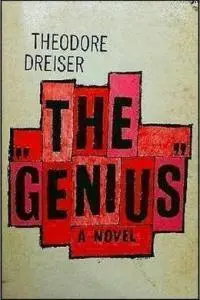
- Название:The Genius
- Автор:
- Издательство:epubBooks Classics
- Жанр:
- Год:2014
- ISBN:нет данных
- Рейтинг книги:4 / 5. Голосов: 1
-
Избранное:Добавить в избранное
- Отзывы:
-
Ваша оценка:
The Genius: краткое содержание, описание и аннотация
Предлагаем к чтению аннотацию, описание, краткое содержание или предисловие (зависит от того, что написал сам автор книги «The Genius»). Если вы не нашли необходимую информацию о книге — напишите в комментариях, мы постараемся отыскать её.
The Genius — читать онлайн бесплатно полную книгу (весь текст) целиком
Ниже представлен текст книги, разбитый по страницам. Система сохранения места последней прочитанной страницы, позволяет с удобством читать онлайн бесплатно книгу «The Genius», без необходимости каждый раз заново искать на чём Вы остановились. Поставьте закладку, и сможете в любой момент перейти на страницу, на которой закончили чтение.
Интервал:
Закладка:
He stood at the window of his studio one day while the exhibition was still in progress, Angela by his side, thinking of all the fine things that had been said. No picture had been sold, but M. Charles had told him that some might be taken before it was all over.
"I think if I make any money out of this," he said to Angela, "we will go to Paris this summer. I have always wanted to see Paris. In the fall we'll come back and take a studio up town. They are building some dandy ones up in Sixty–fifth Street." He was thinking of the artists who could pay three and four thousand dollars a year for a studio. He was thinking of men who made four, five, six and even eight hundred dollars out of every picture they painted. If he could do that! Or if he could get a contract for a mural decoration for next winter. He had very little money laid by. He had spent most of his time this winter working with these pictures.
"Oh, Eugene," exclaimed Angela, "it seems so wonderful. I can hardly believe it. You a really, truly, great artist! And us going to Paris! Oh, isn't that beautiful. It seems like a dream. I think and think, but it's hard to believe that I am here sometimes, and that your pictures are up at Kellner's and oh!—" she clung to him in an ecstasy of delight.
Out in the park the leaves were just budding. It looked as though the whole square were hung with a transparent green net, spangled, as was the net in his room, with tiny green leaves. Songsters were idling in the sun. Sparrows were flying noisily about in small clouds. Pigeons were picking lazily between the car tracks of the street below.
"I might get a group of pictures illustrative of Paris. You can't tell what we'll find. Charles says he will have another exhibition for me next spring, if I'll get the material ready." He pushed his arms above his head and yawned deliciously.
He wondered what Miss Finch thought now. He wondered where Christina Channing was. There was never a word in the papers yet as to what had become of her. He knew what Norma Whitmore thought. She was apparently as happy as though the exhibition had been her own.
"Well, I must go and get your lunch, Honeybun!" exclaimed Angela. "I have to go to Mr. Gioletti, the grocer, and to Mr. Ruggiere, the vegetable man." She laughed, for the Italian names amused her.
Eugene went back to his easel. He was thinking of Christina—where was she? At that moment, if he had known, she was looking at his pictures, only newly returned from Europe. She had seen a notice in the Evening Post .
"Such work!" Christina thought, "such force! Oh, what a delightful artist. And he was with me."
Her mind went back to Florizel and the amphitheatre among the trees. "He called me 'Diana of the Mountains,'" she thought, "his 'hamadryad,' his 'huntress of the morn.'" She knew he was married. An acquaintance of hers had written in December. The past was past with her—she wanted no more of it. But it was beautiful to think upon—a delicious memory.
"What a queer girl I am," she thought.
Still she wished she could see him again—not face to face, but somewhere where he could not see her. She wondered if he was changing—if he would ever change. He was so beautiful then—to her.
Chapter VIII
Paris now loomed bright in Eugene's imagination, the prospect mingling with a thousand other delightful thoughts. Now that he had attained to the dignity of a public exhibition, which had been notably commented upon by the newspapers and art journals and had been so generally attended by the elect, artists, critics, writers generally, seemed to know of him. There were many who were anxious to meet and greet him, to speak approvingly of his work. It was generally understood, apparently, that he was a great artist, not exactly arrived to the fullness of his stature as yet, being so new, but on his way. Among those who knew him he was, by this one exhibition, lifted almost in a day to a lonely height, far above the puny efforts of such men as Smite and MacHugh, McConnell and Deesa, the whole world of small artists whose canvases packed the semi–annual exhibition of the National Academy of Design and the Water color society, and with whom in a way, he had been associated. He was a great artist now—recognized as such by the eminent critics who knew; and as such, from now on, would be expected to do the work of a great artist. One phrase in the criticisms of Luke Severas in the Evening Sun as it appeared during the run of his exhibition remained in his memory clearly—"If he perseveres, if his art does not fail him." Why should his art fail him?—he asked himself. He was immensely pleased to hear from M. Charles at the close of the exhibition that three of his pictures had been sold—one for three hundred dollars to Henry McKenna, a banker; another, the East Side street scene which M. Charles so greatly admired, to Isaac Wertheim, for five hundred dollars; a third, the one of the three engines and the railroad yard, to Robert C. Winchon, a railroad man, first vice–president of one of the great railroads entering New York, also for five hundred dollars. Eugene had never heard of either Mr. McKenna or Mr. Winchon, but he was assured that they were men of wealth and refinement. At Angela's suggestion he asked M. Charles if he would not accept one of his pictures as a slight testimony of his appreciation for all he had done for him. Eugene would not have thought to do this, he was so careless and unpractical. But Angela thought of it, and saw that he did it. M. Charles was greatly pleased, and took the picture of Greeley Square, which he considered a masterpiece of color interpretation. This somehow sealed the friendship between these two, and M. Charles was anxious to see Eugene's interests properly forwarded. He asked him to leave three of his scenes on sale for a time and he would see what he could do. Meanwhile, Eugene, with thirteen hundred added to the thousand and some odd dollars he had left in his bank from previous earnings, was convinced that his career was made, and decided, as he had planned to go to Paris, for the summer at least.
This trip, so exceptional to him, so epoch–making, was easily arranged. All the time he had been in New York he had heard more in his circle of Paris than of any other city. Its streets, its quarters, its museums, its theatres and opera were already almost a commonplace to him. The cost of living, the ideal methods of living, the way to travel, what to see—how often he had sat and listened to descriptions of these things. Now he was going. Angela took the initiative in arranging all the practical details—such as looking up the steamship routes, deciding on the size of trunks required, what to take, buying the tickets, looking up the rates of the different hotels and pensions at which they might possibly stay. She was so dazed by the glory that had burst upon her husband's life that she scarcely knew what to do or what to make of it.
"That Mr. Bierdat," she said to Eugene, referring to one of the assistant steam–ship agents with whom she had taken counsel, "tells me that if we are just going for the summer it's foolish to take anything but absolute necessaries. He says we can buy so many nice little things to wear over there if we need them, and then I can bring them back duty free in the fall."
Eugene approved of this. He thought Angela would like to see the shops. They finally decided to go via London, returning direct from Havre, and on the tenth of May they departed, arriving in London a week later and in Paris on the first of June. Eugene was greatly impressed with London. He had arrived in time to miss the British damp and cold and to see London through a golden haze which was entrancing. Angela objected to the shops, which she described as "punk," and to the condition of the lower classes, who were so poor and wretchedly dressed. She and Eugene discussed the interesting fact that all Englishmen looked exactly alike, dressed, walked, and wore their hats and carried their canes exactly alike. Eugene was impressed with the apparent "go" of the men—their smartness and dapperness. The women he objected to in the main as being dowdy and homely and awkward.
Читать дальшеИнтервал:
Закладка:
Похожие книги на «The Genius»
Представляем Вашему вниманию похожие книги на «The Genius» списком для выбора. Мы отобрали схожую по названию и смыслу литературу в надежде предоставить читателям больше вариантов отыскать новые, интересные, ещё непрочитанные произведения.




Обсуждение, отзывы о книге «The Genius» и просто собственные мнения читателей. Оставьте ваши комментарии, напишите, что Вы думаете о произведении, его смысле или главных героях. Укажите что конкретно понравилось, а что нет, и почему Вы так считаете.