Теодор Драйзер - The Genius
Здесь есть возможность читать онлайн «Теодор Драйзер - The Genius» весь текст электронной книги совершенно бесплатно (целиком полную версию без сокращений). В некоторых случаях можно слушать аудио, скачать через торрент в формате fb2 и присутствует краткое содержание. Год выпуска: 2014, Издательство: epubBooks Classics, Жанр: Классическая проза, на английском языке. Описание произведения, (предисловие) а так же отзывы посетителей доступны на портале библиотеки ЛибКат.
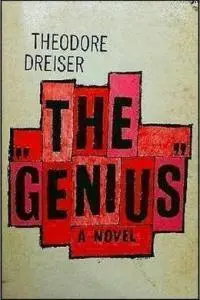
- Название:The Genius
- Автор:
- Издательство:epubBooks Classics
- Жанр:
- Год:2014
- ISBN:нет данных
- Рейтинг книги:4 / 5. Голосов: 1
-
Избранное:Добавить в избранное
- Отзывы:
-
Ваша оценка:
The Genius: краткое содержание, описание и аннотация
Предлагаем к чтению аннотацию, описание, краткое содержание или предисловие (зависит от того, что написал сам автор книги «The Genius»). Если вы не нашли необходимую информацию о книге — напишите в комментариях, мы постараемся отыскать её.
The Genius — читать онлайн бесплатно полную книгу (весь текст) целиком
Ниже представлен текст книги, разбитый по страницам. Система сохранения места последней прочитанной страницы, позволяет с удобством читать онлайн бесплатно книгу «The Genius», без необходимости каждый раз заново искать на чём Вы остановились. Поставьте закладку, и сможете в любой момент перейти на страницу, на которой закончили чтение.
Интервал:
Закладка:
Angela had come to marriage through years of self–denial, years of bitter longing for the marriage that perhaps would never be, and out of those years she had come to the marriage bed with a cumulative and intense passion. Without any knowledge either of the ethics or physiology of sex, except as pertained to her state as a virgin, she was vastly ignorant of marriage itself; the hearsay of girls, the equivocal confessions of newly married women, and the advice of her elder sister (conveyed by Heaven only knows what process of conversation) had left her almost as ignorant as before, and now she explored its mysteries with abandon, convinced that the unrestrained gratification of passion was normal and excellent—in addition to being, as she came to find, a universal solvent for all differences of opinion or temperament that threatened their peace of mind. Beginning with their life in the studio on Washington Square, and continuing with even greater fervor now in Paris, there was what might be described as a prolonged riot of indulgence between them, bearing no relation to any necessity in their natures, and certainly none to the demands which Eugene's intellectual and artistic tasks laid upon him. She was to Eugene astonishing and delightful; and yet perhaps not so much delightful as astonishing. Angela was in a sense elemental, but Eugene was not: he was the artist, in this as in other things, rousing himself to a pitch of appreciation which no strength so undermined by intellectual subtleties could continuously sustain. The excitement of adventure, of intrigue in a sense, of discovering the secrets of feminine personality—these were really what had constituted the charm, if not the compelling urge, of his romances. To conquer was beautiful: but it was in essence an intellectual enterprise. To see his rash dreams come true in the yielding of the last sweetness possessed by the desired woman, had been to him imaginatively as well as physically an irresistible thing. But these enterprises were like thin silver strands spun out across an abyss, whose beauty but not whose dangers were known to him. Still, he rejoiced in this magnificent creature–joy which Angela supplied; it was, so far as it was concerned, what he thought he wanted. And Angela interpreted her power to respond to what seemed his inexhaustible desire as not only a kindness but a duty.
Eugene set up his easel here, painted from nine to noon some days, and on others from two to five in the afternoon. If it were dark, he would walk or ride with Angela or visit the museums, the galleries and the public buildings or stroll in the factory or railroad quarters of the city. Eugene sympathized most with sombre types and was constantly drawing something which represented grim care. Aside from the dancers in the music halls, the toughs, in what later became known as the Apache district, the summer picnicking parties at Versailles and St. Cloud, the boat crowds on the Seine, he drew factory throngs, watchmen and railroad crossings, market people, market in the dark, street sweepers, newspaper vendors, flower merchants, always with a memorable street scene in the background. Some of the most interesting bits of Paris, its towers, bridges, river views, façades, appeared in backgrounds to the grim or picturesque or pathetic character studies. It was his hope that he could interest America in these things—that his next exhibition would not only illustrate his versatility and persistence of talent, but show an improvement in his art, a surer sense of color values, a greater analytical power in the matter of character, a surer selective taste in the matter of composition and arrangement. He did not realize that all this might be useless—that he was, aside from his art, living a life which might rob talent of its finest flavor, discolor the aspect of the world for himself, take scope from imagination and hamper effort with nervous irritation, and make accomplishment impossible. He had no knowledge of the effect of one's sexual life upon one's work, nor what such a life when badly arranged can do to a perfect art—how it can distort the sense of color, weaken that balanced judgment of character which is so essential to a normal interpretation of life, make all striving hopeless, take from art its most joyous conception, make life itself seem unimportant and death a relief.
Chapter IX
The summer passed, and with it the freshness and novelty of Paris, though Eugene never really wearied of it. The peculiarities of a different national life, the variations between this and his own country in national ideals, an obviously much more complaisant and human attitude toward morals, a matter–of–fact acceptance of the ills, weaknesses and class differences, to say nothing of the general physical appearance, the dress, habitations and amusements of the people, astonished as much as they entertained him. He was never weary of studying the differences between American and European architecture, noting the pacific manner in which the Frenchman appeared to take life, listening to Angela's unwearied comments on the cleanliness, economy, thoroughness with which the French women kept house, rejoicing in the absence of the American leaning to incessant activity. Angela was struck by the very moderate prices for laundry, the skill with which their concierge—who governed this quarter and who knew sufficient English to talk to her—did her marketing, cooking, sewing and entertaining. The richness of supply and aimless waste of Americans was alike unknown. Because she was naturally of a domestic turn Angela became very intimate with Madame Bourgoche and learned of her a hundred and one little tricks of domestic economy and arrangement.
"You're a peculiar girl, Angela," Eugene once said to her. "I believe you would rather sit down stairs and talk to that French–woman than meet the most interesting literary or artistic personage that ever was. What do you find that's so interesting to talk about?"
"Oh, nothing much," replied Angela, who was not unconscious of the implied hint of her artistic deficiencies. "She's such a smart woman. She's so practical. She knows more in a minute about saving and buying and making a little go a long way than any American woman I ever saw. I'm not interested in her any more than I am in anyone else. All the artistic people do, that I can see, is to run around and pretend that they're a whole lot when they're not."
Eugene saw that he had made an irritating reference, not wholly intended in the way it was being taken.
"I'm not saying she isn't able," he went on. "One talent is as good as another, I suppose. She certainly looks clever enough to me. Where is her husband?"
"He was killed in the army," returned Angela dolefully.
"Well I suppose you'll learn enough from her to run a hotel when you get back to New York. You don't know enough about housekeeping now, do you?"
Eugene smiled with his implied compliment. He was anxious to get Angela's mind off the art question. He hoped she would feel or see that he meant nothing, but she was not so easily pacified.
"You don't think I'm so bad, Eugene, do you?" she asked after a moment. "You don't think it makes so much difference whether I talk to Madame Bourgoche? She isn't so dull. She's awfully smart. You just haven't talked to her. She says she can tell by looking at you that you're a great artist. You're different. You remind her of a Mr. Degas that once lived here. Was he a great artist?"
"Was he!" said Eugene. "Well I guess yes. Did he have this studio?"
"Oh, a long time ago—fifteen years ago."
Eugene smiled beatifically. This was a great compliment. He could not help liking Madame Bourgoche for it. She was bright, no doubt of that, or she would not be able to make such a comparison. Angela drew from him, as before, that her domesticity and housekeeping skill was as important as anything else in the world, and having done this was satisfied and cheerful once more. Eugene thought how little art or conditions or climate or country altered the fundamental characteristics of human nature. Here he was in Paris, comparatively well supplied with money, famous, or in process of becoming so, and quarreling with Angela over little domestic idiosyncrasies, just as in Washington Square.
Читать дальшеИнтервал:
Закладка:
Похожие книги на «The Genius»
Представляем Вашему вниманию похожие книги на «The Genius» списком для выбора. Мы отобрали схожую по названию и смыслу литературу в надежде предоставить читателям больше вариантов отыскать новые, интересные, ещё непрочитанные произведения.






Обсуждение, отзывы о книге «The Genius» и просто собственные мнения читателей. Оставьте ваши комментарии, напишите, что Вы думаете о произведении, его смысле или главных героях. Укажите что конкретно понравилось, а что нет, и почему Вы так считаете.