Gyula Krudy - Sunflower
Здесь есть возможность читать онлайн «Gyula Krudy - Sunflower» весь текст электронной книги совершенно бесплатно (целиком полную версию без сокращений). В некоторых случаях можно слушать аудио, скачать через торрент в формате fb2 и присутствует краткое содержание. Город: New York, Год выпуска: 2007, Издательство: New York Review Books, Жанр: Классическая проза, на английском языке. Описание произведения, (предисловие) а так же отзывы посетителей доступны на портале библиотеки ЛибКат.
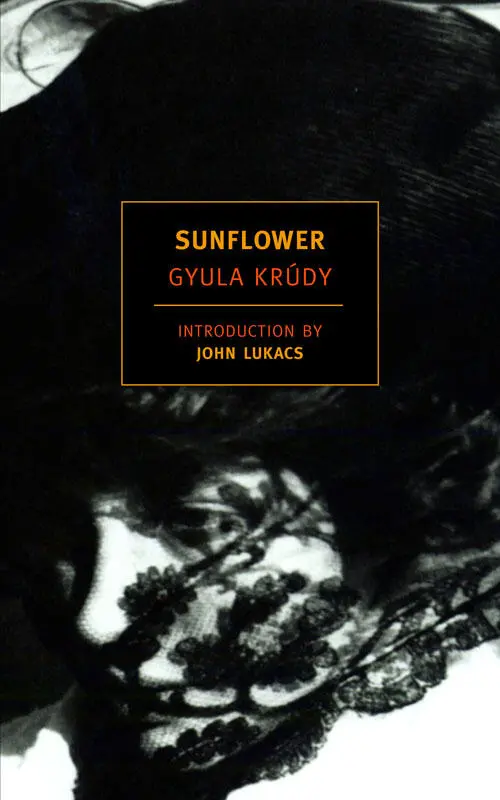
- Название:Sunflower
- Автор:
- Издательство:New York Review Books
- Жанр:
- Год:2007
- Город:New York
- ISBN:нет данных
- Рейтинг книги:4 / 5. Голосов: 1
-
Избранное:Добавить в избранное
- Отзывы:
-
Ваша оценка:
Sunflower: краткое содержание, описание и аннотация
Предлагаем к чтению аннотацию, описание, краткое содержание или предисловие (зависит от того, что написал сам автор книги «Sunflower»). Если вы не нашли необходимую информацию о книге — напишите в комментариях, мы постараемся отыскать её.
In
young Eveline leaves the city and returns to her country estate to escape the memory of her desperate love for the unscrupulous charmer Kálmán. There she encounters the melancholy Álmos-Dreamer, who is languishing for love of her, and is visited by the bizarre and beautiful Miss Maszkerádi, a woman who is a force of nature. The plot twists and turns; elemental myth mingles with sheer farce: Krúdy brilliantly illuminates the shifting contours and acid colors of the landscape of desire.
John Bátki’s outstanding translation of
is the perfect introduction to the world of Gyula Krúdy, a genius as singular as Robert Walser, Bruno Schulz, or Joseph Roth.
Sunflower — читать онлайн бесплатно полную книгу (весь текст) целиком
Ниже представлен текст книги, разбитый по страницам. Система сохранения места последней прочитанной страницы, позволяет с удобством читать онлайн бесплатно книгу «Sunflower», без необходимости каждый раз заново искать на чём Вы остановились. Поставьте закладку, и сможете в любой момент перейти на страницу, на которой закончили чтение.
Интервал:
Закладка:
Kálmán felt a voice humming in his throat, a psalm that would have to be sung as soon as the organist gave the signal:
“Eveline, Eveline…Pure virgin, sweet Eveline.”
But he held his peace, for she was the sole treasure of his life.
Lovers, every last one of them, these strange participants in the card game of life, tend to see all other men as inferior knaves.
While Mr. Diamant mused over his wasted life like a melancholy jack of diamonds, Kálmán, in his jaunty heart and cocky complacence, reflected that he happened to possess the very woman whose praises the wise fat man just sang.
An upsurge of woes and sorrows, to a lover’s ears, sounds like mere lyrical plashing of white-capped waves.
What a fool, the Hungary of his day deemed the poet Kisfaludy, when he sounded his plaintive lover’s lyre! The blue hill of Badacsony, the dreamy, fleecy cumulus clouds evoked sadness only in a few similarly afflicted hearts. Few folks had cared to remember that, wandering through the greengage woods on the vineyard-studded mountain, was an unhappy swain for whom all of life, the entire universe depended on the whim of a young girl’s eyes.
Even the man in love is always ready to laugh at another one — apart from his own emotions, are there still other varieties of that fancy ivy that entangles the heart? Love can be a most ridiculous and childish thing, as long as it amuses or torments others.
It is the clown’s pancake makeup daubed on our fellow men’s faces.
Or a flamboyantly long pheasant feather stuck in a dunce’s cap.
Or worthless filberts used by children and old men in games of chance.
Everyone appears ridiculous when in love.
Only the daring ones admit the extent of their torments over a woman. Therefore the lyric poet is actually surrounded by a hostile audience when he sings of his folly. And as for an overweight, barrel-toned, beer-bellied and prickly-chinned man, already suffering from all kinds of bodily ills, to talk about love, why, the weary corners of his mouth are more suited for obscene or scornful phrases than plaintive verses…
That dawn Kálmán made a silent vow that he would never again hold forth about love. Henceforth he would only hum to himself, “Eveline, I love you so,” like some solitary autumnal fly droning among reeds and rushes. — Kálmán was a redblooded young man, who would have died rather than be heard singing those songs crooned daily by tenors the world over (songs that women never tire of hearing).
“Damn!” exclaimed Mr. Diamant who in his thoughts had been making wedding arrangements with Inner City misses at the Franciscans’ Church and would have gladly approved the young maiden’s wearing long, laced knickers, such as her grandmother had worn to the fair on St. Gellért’s Hill. Possibly deep down in his heart he had desired a wife who would knit her stockings herself — just as the same men who profess to set things right in the world end up guzzling booze from dancing girls’ shoes.
“Damn, something spilled on me…”
His feathered green hunting hat indeed showed traces of a suspect fluid, flung from above into the early morning Inner City street; at the same time a white-curtained window was quietly closed on the second floor.
(It would have been easy to go into flights of fancy about the white hand and the lace-frilled nightgown, the sleepy little face, the snowy shoulders, and the long eyelashes stuck in a thousand-and-one-nights’ narcosis by sleep, heavy sighs exhaled into the pillows, thoughts aflutter like moths in the night while the stockings were being pulled off, the fairy dust of sweet reveries sprinkled on the brow, the orphaned little hand of the sleeping woman, her heel peeping out from the silk quilt in telltale exposure of the dreaming virgin in the dawn light — but Mr. Diamant was past his serenading mood. Interjecting brief curses, he explained to Kálmán that certain irate old bachelors in the Inner City poured water from upper stories on the heads of the early dawn passersby whose footfalls, resounding in the deathly silence of the neighborhood, disturbed the citizens’ sleep.)
These were the circumstances preceding their arrival at The Veteran, a rare all-night tavern in the Inner City of old Pest, permitted by the police to stay open all night. And so the nightlife was lively here, even though the tavern sign showed a Hat Street janitor decked out in the uniform, complete with feather, sword and other insignia, of a Mexican campaign volunteer from Emperor Maximilian’s time.
The vaulted rooms belonged to a building on Franciscans’ Place; printers, newspapermen, women of easy virtue and other such nocturnal refugees camped out here, so many tumbleweeds, transients blown by the whistling autumn winds and left stuck on the cemetery steps. Misplaced lives found a nook here, much as wanderers’ wet cloaks are spread out to dry on a roadside kiln. The pilgrims left the crosses they had toted this far, resting them against the wall outside, before stepping from the night into the alcoholic fumes of this musty tavern. They dropped in here for one last hour of merrymaking, shouting, table-thumping, arguing, maybe a song or two — before laying themselves down to a sleep from which there might be no awakening. All around in the big city, the Budapest of myriad lives, people were asleep. Groaning in their dreams of lottery numbers, white-legged girls, nightmarish hags, tomorrow’s cares, money turned to ash — as if they had all fled the city for night’s distant province. Sleepers don’t pay taxes, don’t litigate, they lie tranquil, stretched out, wonderfully silent. Of the city’s legions of voices, feelings, longings, only The Veteran’s patrons remained awake. If the sleepers were never to wake again, The Veteran’s patrons would remain as Budapest’s sole survivors, having stayed up carefree, gay, open-eyed, keeping the watch during the night when archangels came to lay waste apartment houses whose gateposts were marked with the blood of the lamb.
Here they sat, tippled their wine, downed their beer, and consumed freshly boiled meats and palate-tingling seafood, the folks who would have nothing to do with the city’s daytime, who had exiled themselves into the night, having found no daytime faces worth facing. Those who, without this tavern, would have been forced to become magic hunters, galloping ghosts astride dry twigs, wanderers gliding over the highway, blurry patches of moonlight on the roof ridge, stuck-in-the-doghouse, doorway-lurking shadows, stray smoke rings wreathed around the moon, starbeams’ loosely flung motes, persuaders lurking at the foot of the suicide’s bed, pied pipers wearing the trickster’s tall hat, disembodied bawdy thoughts sneaking in to tempt sleepless virgins. They sat dipping their beards into tankards, as befits liberated, formerly bewitched spirits who have nothing else left to do at night in the city. Executioners and victims, trembling sinners and meek fishermen flocked together under night’s shelter. Those whom a faithful wife’s chaste kiss and undefiled limbs awaited in a warm bed had already left the premises, the way a dragonfly soars away, apparently aimless, toward the sun’s rays.
These desperate, sad pub crawlers respected Mr. Diamant, whose form emanated at least as much bitter experience as the pyramids of Egypt. A separate table was secured for the melancholy man who proceeded to salute by first name a few individuals who looked like coachmen, after being greeted by them.
“Boiled beef…and, if you happen to have one, a marrow bone,” said Diamant to the spindle-shanked tavernkeeper, all the while emanating an air of official ceremoniousness, as if the job of food inspection had been what made him stay up nights.
The teeth had hardly begun masticating the meat, Diamant had barely downed a single stein of barley-brew (his eyes fixed vacantly on a far-off point), when the front door’s glass, veiled by steam like the women’s compartment in Purgatory, flew open.
Читать дальшеИнтервал:
Закладка:
Похожие книги на «Sunflower»
Представляем Вашему вниманию похожие книги на «Sunflower» списком для выбора. Мы отобрали схожую по названию и смыслу литературу в надежде предоставить читателям больше вариантов отыскать новые, интересные, ещё непрочитанные произведения.











Обсуждение, отзывы о книге «Sunflower» и просто собственные мнения читателей. Оставьте ваши комментарии, напишите, что Вы думаете о произведении, его смысле или главных героях. Укажите что конкретно понравилось, а что нет, и почему Вы так считаете.