Gyula Krúdy - Life Is A Dream
Здесь есть возможность читать онлайн «Gyula Krúdy - Life Is A Dream» весь текст электронной книги совершенно бесплатно (целиком полную версию без сокращений). В некоторых случаях можно слушать аудио, скачать через торрент в формате fb2 и присутствует краткое содержание. Год выпуска: 2010, Издательство: Penguin Classics, Жанр: Современная проза, на английском языке. Описание произведения, (предисловие) а так же отзывы посетителей доступны на портале библиотеки ЛибКат.
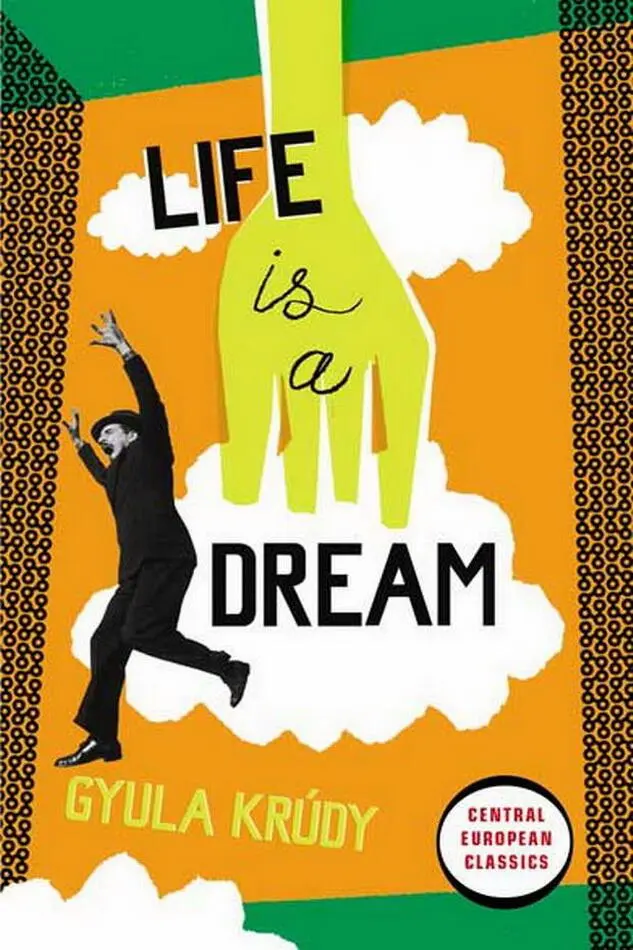
- Название:Life Is A Dream
- Автор:
- Издательство:Penguin Classics
- Жанр:
- Год:2010
- ISBN:нет данных
- Рейтинг книги:3 / 5. Голосов: 1
-
Избранное:Добавить в избранное
- Отзывы:
-
Ваша оценка:
Life Is A Dream: краткое содержание, описание и аннотация
Предлагаем к чтению аннотацию, описание, краткое содержание или предисловие (зависит от того, что написал сам автор книги «Life Is A Dream»). Если вы не нашли необходимую информацию о книге — напишите в комментариях, мы постараемся отыскать её.
Life is a Dream
Life Is A Dream — читать онлайн бесплатно полную книгу (весь текст) целиком
Ниже представлен текст книги, разбитый по страницам. Система сохранения места последней прочитанной страницы, позволяет с удобством читать онлайн бесплатно книгу «Life Is A Dream», без необходимости каждый раз заново искать на чём Вы остановились. Поставьте закладку, и сможете в любой момент перейти на страницу, на которой закончили чтение.
Интервал:
Закладка:
Gyula Krúdy
Life Is A Dream
About the Authors
Gyula Krúdy (1878–1933) was born in the small town of Nyíregyháza. Krúdy moved to Budapest at the age of eighteen and lived there ‘by his pen’ for the rest of his life. Starting out as a precocious journalist, he soon turned to writing short stories and novels. After 1919, despite publishing many of his greatest works, he lived in reduced circumstances with his second wife and young daughter, and died in poverty and obscurity. Sándor Márai’s novel Szindbad Goes Home (1943), a fictional account of the last day of Krúdy’s life, jump-started the revival of interest in his oeuvre, which is now recognized as one of the outstanding monuments of Hungarian literature.
John Batki was born in Miskolc, Hungary, and has lived in the United States since the age of fourteen. He has published several volumes of translations from twentieth-century Hungarian literature, including the poems of Attila József, and prose by Gyula Krúdy, Ernö Szép, Géza Ottlik, Iván Mándy and others.
~ ~ ~
The translator wishes to thank the editors of Southwest Review and Subtropics , where two of these stories, ‘The Waiter’s Nightmare’ and ‘The Landlady, or the Bewitched Guests’ first appeared. ‘Last Cigar at the Grey Arabian’ and ‘The Journalist and Death’ first appeared in Hungarian Quarterly (Budapest), and special thanks go to the editor, Zsofia Zachar.
Translator’s Note
Az élet álom ( Life Is a Dream ), Gyula Krúdy’s last volume to appear in his lifetime, was self-published by the author in December 1931.
In October 1931 the English press tycoon Lord Rothermere donated the sum of £1,000 to the Hungarian PEN Club, to be awarded to the author of the year’s most outstanding literary work. The poet Dezsö Kosztolányi, president of the Hungarian PEN, originally intended the prize for the fifty-three-year-old Gyula Krúdy, author of more than fifty volumes. Formerly a celebrated writer of bestsellers, Krúdy at the time lived in obscure poverty with wife and daughter in a crumbling hovel in Obuda on the outskirts of Budapest. Since he had no book published that year, and no publisher, Krúdy selected nine of his finest stories from recent years and had them published at his own expense, to qualify for the prize. On 23 December the printer contracted to produce 1,000 copies of the 254-page book, fifty copies to be delivered by noon on 31 December.
The stories Krúdy chose for this ‘most beloved book’ of his draw upon his ‘dearest and finest imaginings … about eating, digestion, wine, illness, life’s real dreams’, written in 1925–8, including one story from the Szindbad cycle (‘The Undead’, 1925), plus ‘The Green Ace’, a novella from 1930.
Received with great critical acclaim, Life Is a Dream assured the author’s eligibility for the prize. Literary politics and dissension among the directors of the Hungarian PEN Club resulted in the division of the prize money into two halves, to be disbursed over two years, and to be shared by two authors each year. To further diminish his pittance, Krúdy was requested to ‘voluntarily’ relinquish 10 per cent of the award to be disbursed to needy writers. Nearly half of the £225 he ultimately received was swallowed up by the printer’s bill. The municipal utility authority also claimed its share for unpaid electric bills …
In 1957 the book was reissued by Szepirodalmi Konyvkiado in Budapest, with the addition of a tenth piece, ‘Last Cigar at the Grey Arabian’. This memorable story, a complementary ‘twin’ to ‘The Journalist and Death’, was most likely left out of the first edition because of lack of space. These two stories are probably Krúdy’s best known and most anthologized works, and are followed by a succession of tales that delight and astonish by opening the hidden dimensions of dream behind the seemingly ordinary events of everyday life.
John Batki,
Syracuse, New York
December 2008
Life Is a Dream
Last Cigar at the Grey Arabian
On this day the Colonel had to shoot someone, on behalf of the Casino’s directors; the decision had been made in the English Room (so named after a visit by the Prince of Wales).
The duel was to take place in the barracks that afternoon, and the man who had insulted the Casino was not to leave the premises alive.
‘Very well, I’ll shoot the journalist,’ the Colonel said with a shrug.
But he was becoming devilishly hungry. This was the sum total of his nervousness on the day of the deadly duel. An abominable, unprecedented hunger now overpowered him. His stomach hungered, and so did his mouth; still half asleep, his lolling tongue explored his mouth, savouring comestibles he had never tried, never tasted before. He had been told that the journalist condemned to death in the Casino’s English Room — the sentence to be executed by the Colonel, the deadliest shot in the land — this journalist was reputed to be such a pauper that he ate his evening meal of crackling with his fingers, from a paper bag, the salt kept in a vest pocket, the radishes and onions waiting in a desk drawer until the crackling was gone. Naturally the man could not afford decent wine, and so he would have to walk a long distance to find a cheap dive where he could slosh down some cold wine to quench the flames in his stomach.
The Colonel, who normally gave questions of life and death about as much thought as a bishop does in a game of chess, was dreadfully hungry now and overcome by cravings usually attributed to pregnant women. ‘I’ll be eating quicklime before long!’ he brooded.
Today he wore civilian clothes under a roomy rain-cape and his canary yellow shoes creaked; for this pre-duel stroll in the rainy city he carried an umbrella-cane, and kept glancing into closed hackney cabs, convinced that no one would recognize him wearing mufti. Since he would never speak of these hours to anyone, after a certain amount of hesitation and cautious reconnaissance he decided at last to enter a butcher’s shop in an outlying district of the city. His greying moustache drew an unenthusiastic greeting from the butcher’s wife — the typical butcher’s wife in her greasy white apron, sleeves rolled up to the elbows, revealing sour-smelling forearms. The wedding band on her finger had long ago cut deeply into the flesh, attesting that here was a housewife of some experience, just as the rings of former seasons recede into the trunk of a tree. Freshly fried crackling steamed, fragrant and tempting, in front of her small nose. The Colonel pointed at the platter.
‘I’ll take a pound of that.’
‘That will be too much, sir,’ said the woman. The intelligence of her intonation startled the Colonel. ‘A few ounces of this crackling will be plenty for a snack. Otherwise I can’t take responsibility for your stomach. This isn’t light food.’
‘Well, in that case give me twenty kreuzers’ worth,’ growled the Colonel, who did not go in for too much chit-chat. The butcher’s wife reached for a volume of poems and tore out a few pages to form a paper cone. This reminded the Colonel of his journalist, who was rumoured to write poems.
‘Whose poems are these?’ he inquired, as if his civilian disguise demanded that he disguise his profession too, in front of the butcher’s wife.
‘We used to have a bearded old man come around here and he brought me poetry books. Perhaps you know him. His name was Vajda … Janos Vajda.’
‘I know him,’ said the Colonel, blushing to have to tell a lie. But no one could expect him to engage in a lengthy discussion with a butcher’s wife on outer Ulloi Road.
Читать дальшеИнтервал:
Закладка:
Похожие книги на «Life Is A Dream»
Представляем Вашему вниманию похожие книги на «Life Is A Dream» списком для выбора. Мы отобрали схожую по названию и смыслу литературу в надежде предоставить читателям больше вариантов отыскать новые, интересные, ещё непрочитанные произведения.





Обсуждение, отзывы о книге «Life Is A Dream» и просто собственные мнения читателей. Оставьте ваши комментарии, напишите, что Вы думаете о произведении, его смысле или главных героях. Укажите что конкретно понравилось, а что нет, и почему Вы так считаете.