Gyula Krúdy - Life Is A Dream
Здесь есть возможность читать онлайн «Gyula Krúdy - Life Is A Dream» весь текст электронной книги совершенно бесплатно (целиком полную версию без сокращений). В некоторых случаях можно слушать аудио, скачать через торрент в формате fb2 и присутствует краткое содержание. Год выпуска: 2010, Издательство: Penguin Classics, Жанр: Современная проза, на английском языке. Описание произведения, (предисловие) а так же отзывы посетителей доступны на портале библиотеки ЛибКат.
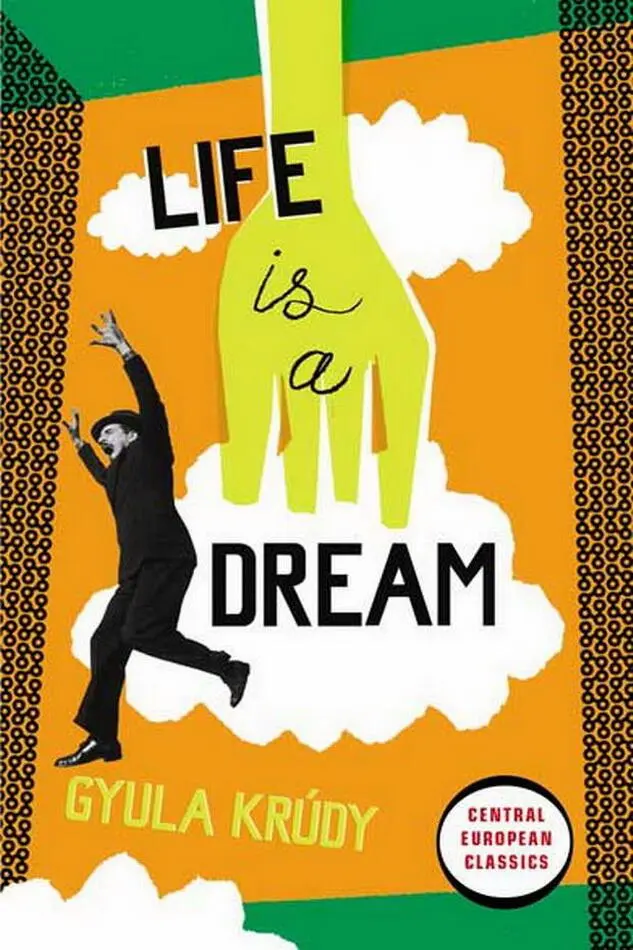
- Название:Life Is A Dream
- Автор:
- Издательство:Penguin Classics
- Жанр:
- Год:2010
- ISBN:нет данных
- Рейтинг книги:3 / 5. Голосов: 1
-
Избранное:Добавить в избранное
- Отзывы:
-
Ваша оценка:
Life Is A Dream: краткое содержание, описание и аннотация
Предлагаем к чтению аннотацию, описание, краткое содержание или предисловие (зависит от того, что написал сам автор книги «Life Is A Dream»). Если вы не нашли необходимую информацию о книге — напишите в комментариях, мы постараемся отыскать её.
Life is a Dream
Life Is A Dream — читать онлайн бесплатно полную книгу (весь текст) целиком
Ниже представлен текст книги, разбитый по страницам. Система сохранения места последней прочитанной страницы, позволяет с удобством читать онлайн бесплатно книгу «Life Is A Dream», без необходимости каждый раз заново искать на чём Вы остановились. Поставьте закладку, и сможете в любой момент перейти на страницу, на которой закончили чтение.
Интервал:
Закладка:
‘Let me have some of that brandy,’ the Colonel now spoke, as if against his own will, for by now he had come to feel somewhat ashamed of identifying himself to such an extent with his opponent, who could only be that journalist, wearing an embroidered white vest for a duel with pistols.
Janos at first did not understand these words, for he was not a writer of short stories who anticipates the thoughts inside a Colonel’s head, but slowly recovered his wits and poured brandy into a shot glass that could have been the one dropped by the young man a little earlier. After a quick sniff or two the Colonel tossed back the drink with a firm hand. Indeed, it was unusually strong brandy — obviously a favourite with cab-drivers who arrive here at the outskirts of town in a winter blizzard after spending the whole day driving around all sorts of worthless gadabouts. Or this brandy was the favourite of coachmen who transported cadavers to the post-mortem room of the neighbouring clinic. But in fact the Grey Arabian’s plum brandy was famous throughout the whole neighbourhood — so why shouldn’t a Colonel like it.
‘Well, we might as well get going,’ announced the Colonel, after surreptitiously clearing his throat once or twice, for he wouldn’t have let on for the whole world that the coachmen’s brandy had slightly befuddled him. But he downed it in lieu of that wretched scribbler.
When he asked for the bill, it was the tavern-keeper’s wife who came out of the kitchen bringing a slate writing board and chalk, to the Colonel’s keen amusement. He imagined what a capital prank it would be if Stettner, the head waiter at the Casino, pulled out a writing slate to add up the bill, and gave change out of a skirt pocket instead of on a silver salver. To show his gratitude to the woman, the Colonel fished in his wallet for the crispest banknote that was ironed as starchy smooth as if it were a leftover from last month’s pension. Her head bowed, as always, respectful of money, the woman did her addition, earnestly, naively, as if she were performing the most important act entrusted to her in her life.
‘I do hope everything was to your liking?’ she asked after handing over the change and snapping the crisp banknote one last time before filing it away in her manly wallet. — ‘But perhaps that stoo …’
‘The stee-ew … was most delicious,’ replied the Colonel testily, for he was starting to suspect the woman invented that pronunciation expressly to annoy him.
Next, he rummaged through his cigar case, inspecting one by one his treasures, the various cigars that he sometimes saved for weeks for the suitable and proper occasion to light them up. He quickly found a short cigar for the barman, and bestowed it as if it were some badge of honour, but he had considerable difficulty finding a cigar for himself. Finally his choice fell on a Havana shaped like a bludgeon, a cigar the like of which had never been lit here in the entire history of the Grey Arabian.
Under no circumstances did the Colonel wish to resemble that worthless buffoon, now that he believed he had seen the man. He felt sure that the young man dropped the shot glass because he had recognized the Colonel. For the Colonel supposed that the whole city knew him — especially his opponents. No, that look of preternatural terror could not have appeared on anyone but his opponent’s face.
Gravely and ceremoniously the Colonel lit up his miniature bludgeon, after scornfully ripping off the red and gold paper band. How foolish of him to try to forget, even if only for the duration of one afternoon, his rank, his social position, the circles he moved in and his customary way of life, just to ‘lower himself’ to the level of an unknown person and his supposed habits, as if in atonement for shooting that man before the day was over, and thereby liberating him from the torments of earthly existence. ‘He who asks forgiveness is the biggest fool, for we cannot speak of true forgiveness,’ said the Colonel, as he lit his little club of a cigar. ‘Back off, if you fear for your life,’ ballooned the Colonel’s first billow of smoke, which he proceeded to blow away and disperse about him, as if he had meant to obliterate everything that had happened that afternoon.
The Havana indeed proved to be savoury, proper and fitting for a last cigar.
Given this tableau of the lit cigar, we are just about done at the Grey Arabian, and the diverse gentlemen who were about to arrive there from all over the city, impelled by various inner motivations. We may be sure that the assistants from the clinic showed up at long last, because not even pathology labs conduct autopsies day and night. Hearse-drivers from all over the city will have arrived, for even the transport of cadavers must pause at times. And as evening fell the gentlemen who owned hansom cabs pulled up in front of the building, for their stables were nearby. The bar became busy, and every time the kitchen door opened a scent of fresh ‘stoo’ wafted out. Janos and the tavern-keeper’s wife, as well as the others, had by then plenty of time to forget the Colonel who had rolled his goggle eyes so formidably around the premises that afternoon, but who turned out to be quite a sociable fellow, after all, and did not mind chatting with the barman. At some point in the evening a belated hearse-driver showed up at the bar, and stood gruffly in front of the counter, as one who is disgruntled with his profession. Standing, he rubbed one foot against the other leg, and said not a word before he downed two shots of strong brandy.
‘I had to haul some Colonel wearing civilian clothes,’ he announced, wiping his moustache with a filthy kerchief, and even Janos looked up to listen. ‘These gentlemen wear shiny uniforms all their lives and we never have any business with them because the military handles all that. That is, if they die in uniform. But my load went and dressed in civilian clothes before he died, just to give us some business. They said he was shot in a duel at the barracks, and no one knew what to do with him until now. But that’s what we are here for, to take anyone. So he’s at the morgue at last.’
The bartender did not respond to the hearse-driver because an Inner City cabbie had just entered and the man had a lot of friends here, so you had to listen closely to his order, for this customer liked to make trouble at the drop of a hat.
Around midnight, when the patrons were beginning to thin out, Janos the bartender at last had a chance to catch his breath and with his back against the cupboard reflected on the odd customer he had served that afternoon. And no, it never occurred to him that the cadaver so recently transported had been that same customer. The one who left that fancy cigar band lying in the corner.
(1927)
The Journalist and Death
The journalist Titusz Finedwell was sentenced to death by the Casino’s board of directors in the chamber where members held their confidential meetings, sessions of the court of honour and tribunals of the duelling code — the chamber where, once upon a time, at the festivities held in honour of Albert, Prince of Wales, gentlemen ended up going at each other with champagne bottles, and grabbed the Gypsy musicians’ violins and wind instruments to beat each other. After that dark event the chamber saw no further carousing, and became dedicated to the service of honour. The destinies of rooms can change just like those of their human occupants. Only women can be as shamelessly fickle as rooms.
In his newspaper Finedwell had published an article offensive to the Casino, and for this he had to die. To execute the sentence the Casino delegated from among its members a retired colonel of Hussars, P. E. G., known as the best shot in all of Hungary. With that, the fate of the journalist was sealed. He might as well start giving away his worldly goods (if he possessed any), for soon he would no longer need anything.
Читать дальшеИнтервал:
Закладка:
Похожие книги на «Life Is A Dream»
Представляем Вашему вниманию похожие книги на «Life Is A Dream» списком для выбора. Мы отобрали схожую по названию и смыслу литературу в надежде предоставить читателям больше вариантов отыскать новые, интересные, ещё непрочитанные произведения.










Обсуждение, отзывы о книге «Life Is A Dream» и просто собственные мнения читателей. Оставьте ваши комментарии, напишите, что Вы думаете о произведении, его смысле или главных героях. Укажите что конкретно понравилось, а что нет, и почему Вы так считаете.