Gyula Krudy - Sunflower
Здесь есть возможность читать онлайн «Gyula Krudy - Sunflower» весь текст электронной книги совершенно бесплатно (целиком полную версию без сокращений). В некоторых случаях можно слушать аудио, скачать через торрент в формате fb2 и присутствует краткое содержание. Город: New York, Год выпуска: 2007, Издательство: New York Review Books, Жанр: Классическая проза, на английском языке. Описание произведения, (предисловие) а так же отзывы посетителей доступны на портале библиотеки ЛибКат.
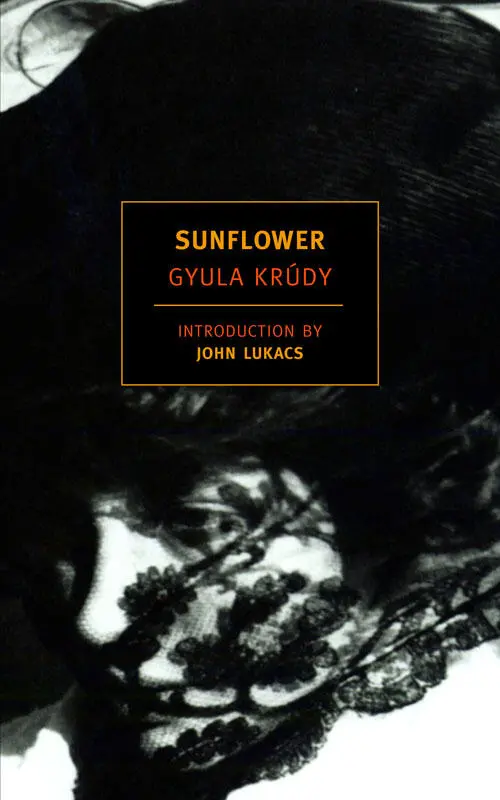
- Название:Sunflower
- Автор:
- Издательство:New York Review Books
- Жанр:
- Год:2007
- Город:New York
- ISBN:нет данных
- Рейтинг книги:4 / 5. Голосов: 1
-
Избранное:Добавить в избранное
- Отзывы:
-
Ваша оценка:
Sunflower: краткое содержание, описание и аннотация
Предлагаем к чтению аннотацию, описание, краткое содержание или предисловие (зависит от того, что написал сам автор книги «Sunflower»). Если вы не нашли необходимую информацию о книге — напишите в комментариях, мы постараемся отыскать её.
In
young Eveline leaves the city and returns to her country estate to escape the memory of her desperate love for the unscrupulous charmer Kálmán. There she encounters the melancholy Álmos-Dreamer, who is languishing for love of her, and is visited by the bizarre and beautiful Miss Maszkerádi, a woman who is a force of nature. The plot twists and turns; elemental myth mingles with sheer farce: Krúdy brilliantly illuminates the shifting contours and acid colors of the landscape of desire.
John Bátki’s outstanding translation of
is the perfect introduction to the world of Gyula Krúdy, a genius as singular as Robert Walser, Bruno Schulz, or Joseph Roth.
Sunflower — читать онлайн бесплатно полную книгу (весь текст) целиком
Ниже представлен текст книги, разбитый по страницам. Система сохранения места последней прочитанной страницы, позволяет с удобством читать онлайн бесплатно книгу «Sunflower», без необходимости каждый раз заново искать на чём Вы остановились. Поставьте закладку, и сможете в любой момент перейти на страницу, на которой закончили чтение.
Интервал:
Закладка:
She was smartly dressed, fresh and perfumed, as if all night she had preened in front of her mirror, instantly replenishing evaporated essences. She shimmered and hovered like a beauteous woman in a ruined gambler’s imagination, the one he could have bought had his luck taken a different turn. Her vanished youth, expired like a swallow on African shores, now returned for this one night. She was woman, a jealous tigress maddened by pains surpassing those of childbirth. She was the ruddy disk of the sun dying behind the hills, mirroring the wrestling twins: the moon’s leggy, breezy, flute-playing daughter and the sun’s hammersmith son.
One of her eyes had a cast, as if there, behind iron-barred windows, cried out the prisoners condemned to death row: love, youth, song and recklessness.
Her other eye stared fixed at Kálmán Ossuary like a gold-tipped arrow seeking the bulls-eye.
Kálmán, paralyzed, could merely look on at this fiery sallying forth of bustle, ostrich-feathered hat, sweet perfume: la dolce vita itself, on parade like some superannuated circus steed that, come tomorrow, might be harnessed to a hearse.
But Diamant had his wits about him.
He flew toward the onrushing lady and addressed her in the unctuous, churchwarden-like tones of a village uncle:
“Madam, this place is most unsuitable…”
“I want to be near my betrothed,” replied Ninon, who had had plenty of time on this sleepless night to rehearse her say.
“But this is a cabdrivers’ club,” Diamant insisted, expending considerable energy to achieve a kind of asthmatic emphasis. “Men may go anywhere, even to a morgue if they feel like being diverted by the sight of a woman beaten to death. But you are a refined lady, men kiss your hand wherever you go.”
“That used to be the case, but this man proved to be my undoing,” she faltered.
“Let’s go, my lady,” Diamant replied relentlessly, and at once took the hysterical woman by the arm.
In two strides he led her out of The Veteran, and seated her in a cab waiting by the curb.
“Please go home now…” he said.
(“And feel free to read your old love letters, my unhappy child,” he added, in his mind.)
When he returned, he addressed Kálmán in a more familiar manner.
“Son, you must get away from here. Only misery and the sufferings of hell lie in store for you here. And lest you forget, the prisons are empty nowadays, just waiting to be filled…Get away from here, go someplace where there’s fresh air and a breeze. Where you can hear whoops from a long way off, and the heartbeat’s steady like a bull’s low-key, casual bellowing. You’re still young, you’re master of your own fate. Find some innocent, saintly woman who will pray away your sins and will gladly suffer anything for your sake, be it a toothache or martyrdom. Times are getting tough around here.”
Ossuary hung his head.
A slew of melancholy images came to his mind with cruel alacrity. A narrow Inner City street, the flickering street lamp, in the light of which he examines the rope before looping it around his neck…A miserable, endless day, the sun showing no sign of ever intending to sink behind St. Gellért’s Hill, and all afternoon spent looking the pistol’s barrel in the eye…The penitentiary, full of rats and close-cropped old inmates… Buried alive in the stench…
He felt utterly miserable.
“I’ll make arrangements for your departure by daybreak,” continued Diamant, and gritting his teeth, he swallowed a mouthful of beer after chewing on it as if it were some adversary.
Soon afterward Kálmán Ossuary left The Veteran’s heart-lulling and soul-soothing vaulted chambers. He had experienced a miraculous transformation deep down in his heart. No more loitering around gambling casinos; on the street he would steer clear of his worthless, easygoing chums who casually fraternized with death; he would reconcile with his uncle, a prickly village gentleman out of whom he could no longer squeeze a single farthing; he would take his law exams and establish himself as a lawyer in the Inner City of Pest. Any life deficient in the family pleasures must, of necessity, be aimless and troubled. He would find himself a wife in the Josephstadt, where he had met Eveline. He would have the doors fitted with secure locks, be always on the qui vive, take his wife out only to the National Theater and for daily constitutionals on the Buda esplanade, soon with heads bent they would be leaning over a small cradle, enjoying the quiet life, no thought hidden from each other; they would have their photograph taken together, and on Sunday afternoons visit the Farkasrét Cemetery where the relatives rest in peace. Time to enjoy the pleasures of a fine kitchen, the rich roast, clean table linen, a soft bed and the alarm clock — quiet, happy days, with plenty of time to observe all the beauty of autumn and spring. No loud word would ever scare the silent bird of tranquility from their house. Only the sewing machine will whirr, the mailman will ring the doorbell to deliver a money order, and a retired old neighbor might amble over after dinner to regale them with tales of the Prussian campaign. The family doctor would make house calls, but mostly to discuss politics, and afternoon coffee would be sipped by his wife’s dearest friends: old Josephstadt ladies who are never seen without shopping bags. The clock’s hands would show the midnight hours in vain in a house where everyone sleeps through the night. The garbage collector’s bell, or the dawn revelers’ footfalls, would be heard from a great distance, as if from far-off lands. The oil lamp always lit under the holy icon, until the woman of the house begins to resemble the Virgin Mary herself, her face not yet broken by pain; if overheard talking in her dream, she would always speak of household and domestic matters, serving maid stuff: “Marie, mind the gentleman’s caraway-seed soup…”
And since only sadness has the right to lie, they would never tell each other an untruth as long as they lived, Kálmán and Eveline, or whoever would substitute for Eveline (who would nonetheless be consulted and asked for her blessing).
Until now, each and every dawn had seen a similarly resolved, joyous and purified Kálmán turn in to sleep until nightfall, when all of the upright resolutions were again promptly forgotten. Chaotic dreams sprang at him their desperate madhouse surprises as soon as he shut his eyes in sleep, and helped to neglect those matutinal vows. When he periodically awoke from these horrible images, his heart beat like a syphilitic’s who had stumbled upon the nature of his disease. Had he been a writer, he would have set down his dreams, the mendacious acts committed in his sleep, his conscious self-deceptions, his dreamland swindles — he would have had enough material for a lifetime…No wonder his dazed brain was reluctant to give serious thought to changing his way of life. One after another, his days flew by like migrating cranes across the sky’s vault. At the age of twenty-five he still imagined that Eveline (if she actually refused to marry him) would find a wife for him, forgive him all his trespasses and also provide for his future. He believed Eveline to be a supernatural, goddesslike being whose generosity surpassed even a mother’s.
Now, on this new morning of resolve, he stepped on the sidewalk and set out half awake on the winding Inner City streets toward the small residential hotel where during the last season (ever since Eveline had left Pest) Ninon de Lenclos had more than once settled his debts. She had also replenished his supply of underwear and clothes, until at last Kálmán deigned to return to Ninon’s miniature palazzo, to a bed on the mezzanine that was as capacious as any king or voluptuary’s — without meaning any offense against Eveline’s sacred personage, for the girl’s marvelous face always floated before his eyes, like Jesus Christ’s in front of the penitent on holy pilgrimage, giving strength and endurance on the endless march…
Читать дальшеИнтервал:
Закладка:
Похожие книги на «Sunflower»
Представляем Вашему вниманию похожие книги на «Sunflower» списком для выбора. Мы отобрали схожую по названию и смыслу литературу в надежде предоставить читателям больше вариантов отыскать новые, интересные, ещё непрочитанные произведения.












Обсуждение, отзывы о книге «Sunflower» и просто собственные мнения читателей. Оставьте ваши комментарии, напишите, что Вы думаете о произведении, его смысле или главных героях. Укажите что конкретно понравилось, а что нет, и почему Вы так считаете.