Gyula Krudy - Sunflower
Здесь есть возможность читать онлайн «Gyula Krudy - Sunflower» весь текст электронной книги совершенно бесплатно (целиком полную версию без сокращений). В некоторых случаях можно слушать аудио, скачать через торрент в формате fb2 и присутствует краткое содержание. Город: New York, Год выпуска: 2007, Издательство: New York Review Books, Жанр: Классическая проза, на английском языке. Описание произведения, (предисловие) а так же отзывы посетителей доступны на портале библиотеки ЛибКат.
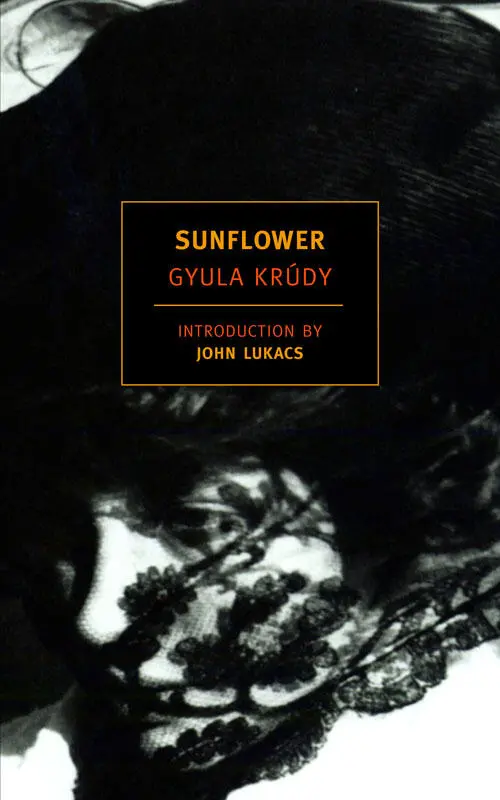
- Название:Sunflower
- Автор:
- Издательство:New York Review Books
- Жанр:
- Год:2007
- Город:New York
- ISBN:нет данных
- Рейтинг книги:4 / 5. Голосов: 1
-
Избранное:Добавить в избранное
- Отзывы:
-
Ваша оценка:
Sunflower: краткое содержание, описание и аннотация
Предлагаем к чтению аннотацию, описание, краткое содержание или предисловие (зависит от того, что написал сам автор книги «Sunflower»). Если вы не нашли необходимую информацию о книге — напишите в комментариях, мы постараемся отыскать её.
In
young Eveline leaves the city and returns to her country estate to escape the memory of her desperate love for the unscrupulous charmer Kálmán. There she encounters the melancholy Álmos-Dreamer, who is languishing for love of her, and is visited by the bizarre and beautiful Miss Maszkerádi, a woman who is a force of nature. The plot twists and turns; elemental myth mingles with sheer farce: Krúdy brilliantly illuminates the shifting contours and acid colors of the landscape of desire.
John Bátki’s outstanding translation of
is the perfect introduction to the world of Gyula Krúdy, a genius as singular as Robert Walser, Bruno Schulz, or Joseph Roth.
Sunflower — читать онлайн бесплатно полную книгу (весь текст) целиком
Ниже представлен текст книги, разбитый по страницам. Система сохранения места последней прочитанной страницы, позволяет с удобством читать онлайн бесплатно книгу «Sunflower», без необходимости каждый раз заново искать на чём Вы остановились. Поставьте закладку, и сможете в любой момент перейти на страницу, на которой закончили чтение.
Интервал:
Закладка:
One fall day Andor Álmos-Dreamer at long last stopped in at Bujdos.
“I’ve been waiting for you so long,” said Eveline, offering her hand.
“And I’ve been meaning to come for a long time,” replied Andor. His voice and gestures were solemn, tranquil and deliberate. He seemed as dreamy as if he had stepped out of an old photograph.
The wind rattled the empty poppy heads, red-brown shadows played in the garden, the shingles topping the stonewall fence creaked, crumbling under the damp moss.
“There is much that needs to be repaired here before winter,” Álmos-Dreamer said. “Wouldn’t you like me to take care of one or two things around the house?”
“I would be most grateful.”
“I think your stoves could use a cleaning. The old men are predicting a long winter, and you haven’t had a supply of firewood put in. And what about your storehouse?’
“That, Andor, is taken care of. I’m a pretty good housekeeper.”
“All right, I’ll make arrangements with the carpenter and stonemason, I’m better at that,” continued Álmos-Dreamer. “Make sure your rose bushes are covered with straw. We’ll have to set traps, this year there are a lot of foxes around. And I better look over your watchdogs. I think I’ll send you a couple of my wolfhounds. They’ll guard your backyard.”
“And perhaps you could check on me too, from time to time.”
“As for your beehives, toolshed and stables, I’ll have to see what condition they’re in. Your granaries, wine cellar, pigsties… I’ll see to everything before winter’s on us.”
“Already the afternoons are shorter, and the evenings are getting long.”
“I want you to have everything, as long as you’ve decided to stay the year in the village, like all your ancestors and kinsfolk. I’ll see to the walnuts, filberts and apples spread out to dry in the attic, the hams smoking in the chimney. I’ll make sure the ice cream and soda contraptions are put in good repair. And order the latest sheet music and games. If you have a visit from those two Budapest journalists sporting hunting hats and outlandish jackets, the ones who sell books published by Aufrecht and Goldschmidt, go ahead and sign the subscription sheets. Books are indispensable company in the countryside. I find myself consulting the encyclopedia and dictionary every day.”
“Still, I’ll be lonely.”
“If you feel like it, you can come hunt with me later in the fall when it gets drearier. You’ll find the afternoons pass more quickly outdoors, in the yawning meadows and sleepy woods, among meditative, wild marshes. Of course you’ll have to write letters, and all those dogcarts, britskas and antique carriages will gladly set out from all over the neighborhood to bring visiting ladies, young and old, to your house. The Nyírség roads never get too muddy for family visits. You know even the fireplace snaps brighter sparks when there’s a guest in the house, the hours pass more quickly, the servants are sprightlier, the days friendlier. In the evenings you play dominoes or a game of hearts, as in old Russia. At times the young folks feel like dancing, so you just take up the carpets. For the old gentlemen, you must have plenty of Tokay wine, you can serve your Szerednyei to the curate, and for the more distant kin, there’s the local wine. The hunters will get homemade brandy, the ladies cherry pálinka , there’ll be rum for the cartomancers, soda water for the young ones, and Parád bitters for myself, thank you. You’ll see how quickly the time will pass.”
“But I won’t always have guests, and then I’ll be rather sad.”
“When you find yourself alone, and feel endless sorrow nearing your soul’s gates, melancholy rearing up near the keyhole…well, I’ll visit you then, and sit down quietly in a corner. You’ll play the piano for me, something new or one of the classics. And I’ll read you passages from the books I love. Or else we’ll have a calm chat about life, like two people who meet in a cemetery, by a graveside. I would recommend that we raise a memorial in the garden, in memory of our friend Pistoli. A regular funeral mound, complete with a cross and his name on it, so we can meditate about our noble friend’s life. No one else thinks of him. If we too were to forget him, his whole life would have been in vain.”
“Pistoli thought very highly of you…”
“He was a man who understood me.”
“And what about me, couldn’t I understand you?”
“Let’s wait for winter. The first, the second, the third winter…Let’s wait for the monotonous evenings of this place, the courses of the moon, the howling-wolf nights. We’ll just have to make sure to wind the clocks each day, bury our memories, sit in tranquility by the warm fireside, play enough tric-trac, and never, ever write letters without each other’s knowledge, no matter how overcast the twilight.”
“I’ll be waiting for you.”
“Let crazy life rush headlong on the highway for others; we shall contemplate the sunflowers, watch them sprout, blossom, fade away. Yesterday they were still giants, but now, in autumn, they are thatch on the roof.”
(Margaret Island, 1918)
Notes
when Jacobins lurked in old Pest: the Hungarian Jacobins were led by I.J. Martinovics, who was executed, along with several co-conspirators, in 1795.
Berzsenyi: Dániel Berzsenyi (1776–1836), poet, often called “the Hungarian Horace.”
the poet Kisfaludy: Sándor Kisfaludy (1772–1844) was an early figure of Hungarian Romanticism, famous, among others, for a sequence called The Sorrows of Love .
Fanny’s Posthumous Papers: novel in the form of letters, written by József Kármán (1769–1795).
Mrs. Baradlay in Jókai’s novel: Mór Jókai (1825–1904) was the leading Hungarian novelist of the nineteenth century; Mrs. Baradlay is a character in his most famous work, The Sons of the Stone-Hearted Man (1859).
kuruc: late-seventeenth-, early-eighteenth-century freebooter, partisan of Prince Rákóczi’s insurrection against Austrian imperial rule.
cimbalom: hammer dulcimer.
Louis the Great: Louis I (1326–1382), called “the great,” of the House of Anjou, king of Hungary and Poland.
Prince Rákóczi: Francis II. Rákóczi, prince of Transylvania (1676–1735), who led an insurrection for Hungarian independence from the Austrian empire, 1703–1711.
Jósika: Baron Miklós Jósika (1794–1865), father of the Hungarian historical novel.
aszú: fine sweet wine of Tokay made by adding choice grapes dried on the vine to ordinary must, producing a surface scum dubbed “noble rot.”
Mrs. Blaha: Lujza Blaha (1850–1910), popular actress and singer.
Queen Elisabeth: Elisabeth of Wittelsbach, wife of Francis Joseph: assassinated in 1897.
Kossuth-style: à la Lajos Kossuth (1802–1894), leader of the 1848–49 Hungarian revolution, after which he lived in exile in Italy.
kampets dolores: (Hungarian Yiddish) no more sorrows; it’s all over.
the poet Tompa: Mihály Tompa (1817–1868), a popular poet of lyrical subjects.
Интервал:
Закладка:
Похожие книги на «Sunflower»
Представляем Вашему вниманию похожие книги на «Sunflower» списком для выбора. Мы отобрали схожую по названию и смыслу литературу в надежде предоставить читателям больше вариантов отыскать новые, интересные, ещё непрочитанные произведения.







Обсуждение, отзывы о книге «Sunflower» и просто собственные мнения читателей. Оставьте ваши комментарии, напишите, что Вы думаете о произведении, его смысле или главных героях. Укажите что конкретно понравилось, а что нет, и почему Вы так считаете.