Gyula Krudy - Sunflower
Здесь есть возможность читать онлайн «Gyula Krudy - Sunflower» весь текст электронной книги совершенно бесплатно (целиком полную версию без сокращений). В некоторых случаях можно слушать аудио, скачать через торрент в формате fb2 и присутствует краткое содержание. Город: New York, Год выпуска: 2007, Издательство: New York Review Books, Жанр: Классическая проза, на английском языке. Описание произведения, (предисловие) а так же отзывы посетителей доступны на портале библиотеки ЛибКат.
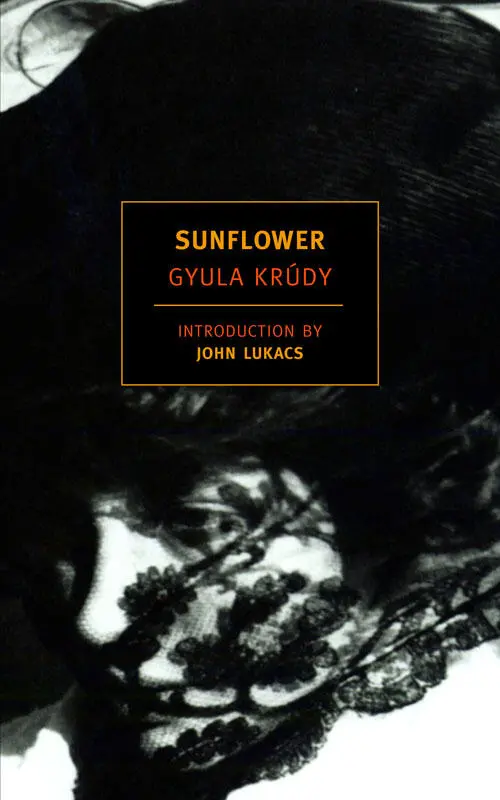
- Название:Sunflower
- Автор:
- Издательство:New York Review Books
- Жанр:
- Год:2007
- Город:New York
- ISBN:нет данных
- Рейтинг книги:4 / 5. Голосов: 1
-
Избранное:Добавить в избранное
- Отзывы:
-
Ваша оценка:
Sunflower: краткое содержание, описание и аннотация
Предлагаем к чтению аннотацию, описание, краткое содержание или предисловие (зависит от того, что написал сам автор книги «Sunflower»). Если вы не нашли необходимую информацию о книге — напишите в комментариях, мы постараемся отыскать её.
In
young Eveline leaves the city and returns to her country estate to escape the memory of her desperate love for the unscrupulous charmer Kálmán. There she encounters the melancholy Álmos-Dreamer, who is languishing for love of her, and is visited by the bizarre and beautiful Miss Maszkerádi, a woman who is a force of nature. The plot twists and turns; elemental myth mingles with sheer farce: Krúdy brilliantly illuminates the shifting contours and acid colors of the landscape of desire.
John Bátki’s outstanding translation of
is the perfect introduction to the world of Gyula Krúdy, a genius as singular as Robert Walser, Bruno Schulz, or Joseph Roth.
Sunflower — читать онлайн бесплатно полную книгу (весь текст) целиком
Ниже представлен текст книги, разбитый по страницам. Система сохранения места последней прочитанной страницы, позволяет с удобством читать онлайн бесплатно книгу «Sunflower», без необходимости каждый раз заново искать на чём Вы остановились. Поставьте закладку, и сможете в любой момент перейти на страницу, на которой закончили чтение.
Интервал:
Закладка:
The Colonel had by now lost all he had and stood in grim thought, his evening coat dangling crumpled like a circus attendant’s. The henchmen behind the croupier stood shoulder to shoulder, beaming with delight, nudging each other and casting malicious glances at the Colonel, as if they could think of nothing more amusing than a player who had been cleaned out. The spirit of camaraderie egged them on to cruel and inane jests. An old gentleman, absorbed in his calculations, received a playful tap on his bald pate. When he turned around, the culprit was already hiding under the table. But with all their clowning they maintained a deeply respectful and submissive attention to Mr. Zöld’s back.
“Fifty forints on the zero,” the Colonel yelled out, a drowning man’s call for help.
Mr. Zöld snatched back the ball as it spun out. Treacherous and evil was the look he directed at the ashen-faced Colonel.
“Let’s see the dough,” he said softly.
But the Colonel had no “dough.” He fumbled futilely through his wallet. He had not a penny, much less fifty forints.
“Let’s see the dough,” repeated Mr. Zöld. “You can’t play without it.”
“But I’m a Colonel,” roared the officer, straining his voice.
Mr. Zöld’s hand wave was pitying; the other players cast grumpy glances at their fleeced companion who was obstructing the progress of the game. (“It’s already the second time tonight.”)
Diamant took Kálmán by the elbow.
“Let’s go. We’ll only get in trouble here. I bet the Colonel will sign an I.O.U. and keep on playing. I’ve seen it happen plenty of times,” growled the fat, prematurely old Jew. “Look, it’s almost dawn; why don’t we go have some breakfast…I know a small tavern open all night right here on Franciscans’ Place. You’re my guest.”
With a reassuring wink, Mr. Diamant revealed a ten-forint banknote peeking from his vest pocket.
Where did he get the money? Possibly the landlady had pressed it furtively into the palm held out behind his back as she crossed the room, all violet-scented party-going briskness. Or perhaps the banknote had been found on the floor, under the chair of some frenzied gambler, by the eagle-eyed Mr. Diamant, who never loitered in vain around the card tables.
Ten forints was a lot of money. Enough to make the heartsick Kálmán cheer up, and nearly shake hands, as Mr. Diamant did, with the cagey old doorman who let them out through the secret passageway. (Only later did it occur to him that he had been received in this house like a lord while his money and credit had lasted, in the days when he would lightheartedly fling Eveline’s perfumed banknotes on a number on the green baize, confident that the kind maiden’s rosewood moneybox would be forever at his disposal. But Eveline had gone far away since then…At the gambling salon they soon noted his penury, no matter how Mr. Kálmán tried to hide it. The fiacre, naturally on credit, would still wait for him all night on Posta Street; he still bestowed the usual two-forint tip on the doorman, and with a blasé expression chewed on a thick Havana cigar, while observing the progress of the play. In the adjoining room, where he felt sure he was out of sight, he would ask winning players for a small, gentlemanly loan, in strictest confidence. However, Mr. Zöld’s hawkeye saw everything, and no longer was seat number ten reserved for him at the table.)
On the predawn street a tiny woman and a lanky gentleman were walking arm in arm, apparently taking their daily constitutional.
Diamant, who knew everyone in town, purred with satisfaction.
“This is what happens when you sell yourself to a woman. Mr. X gets married, but he can only take his dwarf wife out for fresh air in the dead of night…I remained a bachelor, although I had my chances…To marry like Zöld, that would have been easy.”
The morning light reflected from windows of the Inner City’s antiquated houses like lantern rays shining from the Rákos cemeteries. Former burghers of the Inner City, now turned to water and dust, were sneaking back into their old apartments. The light gilded the faded shop signs. Diamant pointed at the lit-up windows on high:
“That’s where they sleep, the good, the pure, the decent ones, the happy families, the untouched daughters. Ah, if I could have had the love of an honest woman just once! If only my fate had brought me an innocent, lily-white, heavenly creature, I’d now be going to the Jesuits’ red-brick church to give my thanks, instead of this…”
Diamant grabbed Kálmán’s arm, and spoke as emotionally as a romantic hero. (Kálmán eyed him incredulously: maybe his friend had had too much champagne — although Diamant for decades had been quaffing champagne like water.) His eyes were as doleful as a ghost’s, his voice dolorous as a cello sounding behind a curtain.
“My life’s been spent among women of ill repute. I was no lady-killer, no, I wasn’t even handsome, and what’s more, I never spent much on women. I just sat and smoked quietly and kept their company night and day. I’d give offhand answers, you’d never see me bend down to pick up their dropped jewelry or flowers; a glass of beer from me made them more delighted than a bottle of champagne bought by a count; some mornings I’d take them to the carnival peep show on a one-horse buggy, order hotdogs, have their fortunes told, things like that made them unforgettably grateful. At night I stood in the back at the nightclub, along with the applauding waiters, but the girls would still notice me. Every now and then I gave them a flower, and they’d dance all night wearing it in their hair and saved it in a glass of water in the morning. I offered them cheap Sport cigarettes, because I knew they didn’t really care what they smoked. I’d drop in at their rooms in the afternoon, like some relative paying a family visit. Then they’d tell me about family matters, unlucky love affairs, and show me the fiancé’s photo or love letters received from some simpleton. On rare occasions I’d let drop a word of advice, a mere suggestion. But mostly I smoked in silence, and solemnly listened to their Tarot readings. I pretended to believe all their superstitions, nodded sympathetically when they reviled a treacherous friend or expressed their disgust with the monotony of life. I’d put on my glasses — black horn-rims — when they consulted me about their contracts, and I coached them about making a statement when they were in trouble with the police. I never told them they were pretty, or that I loved them, I simply sat and sat, smoking, taking it all in, quietly, acting serene and wise. That’s how I possessed the diva and the flower girl. Neither my body nor my soul really craved them, for I’d always dreamed of something else, something unreachable.”
Thus spoke Diamant, and he pointed his cherrywood walking stick at the windows in the gray dawn light:
“There…up there…where the whole family sits at the fully laid table, cups of fresh coffee steaming on the red placemats, and where even before their ablutions the girls of the house smell of hyacinth, from the kiss exchanged with the potted plant on their windowsill, first thing in the morning. Their hands are white and translucent, just right for the little green can they use for watering their flowers. At times I felt a drop of water fall on my face…That was the entire extent of my acquaintance with pure, innocent maidenhood. Their polka-dot kerchiefs, the hair brushed straight back, those earlobes, those corals paling and blushing in turns, the down on the nape of the neck, cheeks cool as springwater, forehead full of godfearing faith, melancholy temples, dreamy curls, aloof noses and those resigned lips always shut tight, as if they would speak only once, and for the first time, on the wedding night — all this I never saw from up close, and could only imagine the flowery scent of their breath. Innocent, gentle, churchgoing, white-footed were the women whose acquaintance I’d always craved, and instead I got actresses and somersaulting jezebels. If only once a pure maiden’s palm had caressed my forehead, I would have been a different man. If only once, just once I’d have noticed that in the world outside it was Easter morning, and my heart full of love for a springtime woman — I would have walked a different path. Not once did a chaste woman smile at me, or take my hand, and inquire about the salvation of my soul…I merely stood on tiptoe behind dancing girls’ sagging petticoats. That’s why I never got anywhere in life. Soon I’ll be fifty and ready to die like a dog.”
Читать дальшеИнтервал:
Закладка:
Похожие книги на «Sunflower»
Представляем Вашему вниманию похожие книги на «Sunflower» списком для выбора. Мы отобрали схожую по названию и смыслу литературу в надежде предоставить читателям больше вариантов отыскать новые, интересные, ещё непрочитанные произведения.












Обсуждение, отзывы о книге «Sunflower» и просто собственные мнения читателей. Оставьте ваши комментарии, напишите, что Вы думаете о произведении, его смысле или главных героях. Укажите что конкретно понравилось, а что нет, и почему Вы так считаете.