Gyula Krudy - Sunflower
Здесь есть возможность читать онлайн «Gyula Krudy - Sunflower» весь текст электронной книги совершенно бесплатно (целиком полную версию без сокращений). В некоторых случаях можно слушать аудио, скачать через торрент в формате fb2 и присутствует краткое содержание. Город: New York, Год выпуска: 2007, Издательство: New York Review Books, Жанр: Классическая проза, на английском языке. Описание произведения, (предисловие) а так же отзывы посетителей доступны на портале библиотеки ЛибКат.
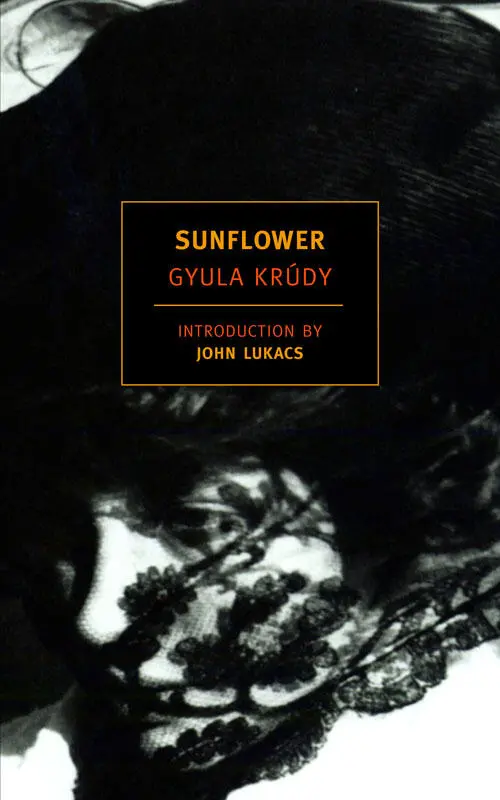
- Название:Sunflower
- Автор:
- Издательство:New York Review Books
- Жанр:
- Год:2007
- Город:New York
- ISBN:нет данных
- Рейтинг книги:4 / 5. Голосов: 1
-
Избранное:Добавить в избранное
- Отзывы:
-
Ваша оценка:
Sunflower: краткое содержание, описание и аннотация
Предлагаем к чтению аннотацию, описание, краткое содержание или предисловие (зависит от того, что написал сам автор книги «Sunflower»). Если вы не нашли необходимую информацию о книге — напишите в комментариях, мы постараемся отыскать её.
In
young Eveline leaves the city and returns to her country estate to escape the memory of her desperate love for the unscrupulous charmer Kálmán. There she encounters the melancholy Álmos-Dreamer, who is languishing for love of her, and is visited by the bizarre and beautiful Miss Maszkerádi, a woman who is a force of nature. The plot twists and turns; elemental myth mingles with sheer farce: Krúdy brilliantly illuminates the shifting contours and acid colors of the landscape of desire.
John Bátki’s outstanding translation of
is the perfect introduction to the world of Gyula Krúdy, a genius as singular as Robert Walser, Bruno Schulz, or Joseph Roth.
Sunflower — читать онлайн бесплатно полную книгу (весь текст) целиком
Ниже представлен текст книги, разбитый по страницам. Система сохранения места последней прочитанной страницы, позволяет с удобством читать онлайн бесплатно книгу «Sunflower», без необходимости каждый раз заново искать на чём Вы остановились. Поставьте закладку, и сможете в любой момент перейти на страницу, на которой закончили чтение.
Интервал:
Закладка:
Midnight would regularly find him at a gambling den, among the same set of pallid faces. The waiter, bright and merry, was quick to bring a cup of steaming black coffee, high hopes reflected in his sly eyes. The air of the halls was still fresh, the carpets unsoiled by cigar ash. Gentlemen with gleaming shirt fronts beamed, amiable and jolly, as befitting well-bred men about town. They shook hands ceremoniously, and traded pleasantries with the croupier, even though everyone knew he cheated. The hostess, freshly coiffed, diamonds in her earrings, extended her plump, soft hands to be kissed; her neck emanated a fresh, sweet scent. The footman continually opened the secret door upon the proper signal to let in more and more players who brought the latest news from coffee houses, theaters, restaurants and clubs in various parts of town. A lively and enviable hubbub animated the salons of this establishment. Lapels still sported the flower pinned there by a woman’s hand earlier in the evening. Everyone felt like being witty and pleasant — until the bell rang at the gaming table.
A dyed mustache, meticulous shave, pomaded strands of hair pasted across his bald skull like dark twigs on winter trees: this was the croupier. He wore a green hunting jacket and tight pants, like landed gentry on a city outing. He let the nail grow long on his little finger, and wore an oversize signet ring bought at a pawn shop. He was on familiar terms with everyone present, for that was the style of the house. His bulging frog’s eyes took in his guests from top to toe, the rock in his tiepin was the size of a pea, and he wore his watch chain short, in the manner of army officers. His platinum-capped false teeth smiled enigmatically behind blue lips. This man was never bothered by the thought that outdoors it might be springtime…He wore great big American shoes, was equipped with ear- and toothpicks in a silver case, a gilt-backed mustache brush, a silver cigar-cutter, a pocketknife with a handle fashioned from an antler, and matching morocco leather notebook, mirror, wallet and change purse; his back pocket hid a Browning automatic, his lapel sported an ivory edelweiss, the kind they sell in Austria; in his vest pocket reposed a hundred-crown gold coin and a case holding an amber mouthpiece for cigarillos and cigarettes. He puffed clouds of smoke from an A’Há brand Turkish cigarette with the relish of one who had just dined. Yes, he savored life to the fullest. Only his temples betrayed telltale signs: those ominously bulging veins that hinted he would not be around until the extreme limits of human longevity to quaff French champagne with his little finger sticking up next to his dyed mustache.
(Kálmán, in his mind still back in the neighborhood of the Museum Boulevard, imagined his nose detected, in the aroma of steaming black coffee, the ineffably sweet scent of a young lady’s lingerie. He paid less heed to this dubiously genteel crowd than he would to a street urchin lounging by a lamp-post on the corner. Eveline kept reverberating in his head, an incantation, a mantra protecting him from all danger.)
Before the mustached croupier set to work, he dug up a monocle from a vest pocket, the kind set in the eye socket by a gold spring. For he was a gentleman now. Why should he strain his facial musculature to balance a monocle? The glass lens rested effortlessly over his right eye, lending an air of prestige.
He had a penchant for French words in directing the game, much as a dance master conducting a quadrille. Had he chosen a political career, he would have achieved great success by pompously parroting the sententious slogans and pronouncements loved by the press. In fact he had been a small-town revenue officer in the Alföld lowlands before marrying the hostess, the infamous owner of several “champagne parlors” in Pest. Although the lady was somewhat over the hill, her connections were unimpeachable: she knew just about every spendthrift in town through the salons she had kept. The decision to run a gambling casino meant that Mr. Zöld would never again have to don a bureaucrat’s frock coat.
Nothing earthshaking was brought about by Mr. Zöld’s turning up in the capital. There was simply one more scoundrel in town, another chiseler who assumed the airs of a Hungarian country gentleman. Without batting an eyelid he would have forged a promissory note, without a twinge of conscience committed highway robbery, or done away with one or two customers, afterwards sleeping the untroubled sleep of the just, snoring ever so heartily. Pseudo-gentry of his kind, lording it in the capital, was becoming the vilest ingredient in the body of the Hungarian nation. Putting on aristocratic airs, they cheated and stole while complaining that you cannot prosper in Hungary because of the Jews. Mr. Zöld was a typical example of the con man who is forever blowing his own trumpet, sends out a pair of witless dueling seconds whenever he feels insulted, whose arrogant, aggressive glances darken the local horizon until he finally meets the person who cracks his skull.
In the midst of the assembled tailcoats and tuxedos there would turn up an overweight and prematurely old Jew who had once upon a time received illicit commissions from Guszti, tonight’s hostess, in the days when she still dealt in champagne and love for sale. Back then Diamant held another outlook on the world, when the stock market, cards and women had abundantly provided for life’s necessities. At nightclubs and gambling dens he had been the number one big spender, the kind who would send lavish bouquets to celebrated danseuses and who knew cab drivers and music hall doormen by their first names. He had been the very soul of conviviality, sparing no expense for a friendly get-together. However, his luck had turned. He grew gray-bristled, fat and bald. Asthmatic, he drank excessively, got into fights, owed the headwaiter, lost his seat on the stock exchange, his credit at the tailor, and finally, his friends; cards and horses stopped favoring him. Yet he accepted all this with equanimity, for he was a wise man. His Achilles’ heel was hearing about the good luck of men he judged his inferiors. Face flushed dark in scorn and anger, he would stop talking, puff on his cigar, and express his contempt with a dismissive gesture.
Diamant detested Mr. Zöld for having been a revenue officer, for having married Guszti, for running the roulette game and diverting a pittance for Diamant from the house’s winnings only at the wife’s intercession.
On these occasions Diamant had to lounge about in the salon until after the patrons departed at daybreak, when he would clearly overhear the conversation between man and wife in the next room:
“Listen, Zöld, we should give Diamant something,” she began.
“Let’im go jump in a lake,” the sporting man retorted.
“I think he owes rent money.”
“He can rob a bank,” suggested Mr. Zöld.
“But listen…” she persisted, and whispered the rest, inaudibly for Diamant’s vigilant ears. But the croupier’s shout rang out loud and clear:
“Why should I pay for your old boyfriend?”
Diamant, by his lonesome self, flicked his wrist in a resigned gesture but did not budge, assured that Mr. Zöld would soon emerge, yellow with bile, and wearily drop a few banknotes in the dawn intruder’s palm.
Diamant liked to converse with younger men who presumably respected his illustrious past. Therefore he joined Kálmán in the salon where the old manservant, a billiard marker back in Guszti’s younger days, now served ample libations of complimentary champagne.
“See, my young friend, your two basic types in Hungary are the count and the Jew. The rest don’t count. They’re a bunch of big zeros. And so is our landlord.” So opined the prematurely old, fat man, who had consumed the greatest number of oysters in Budapest. “Now the historical nobility behaved like simpletons. Always paid up before the loans were due, as if they needed to shore up their credit. Back in ’48, or whenever, they gave up their last holdings, the nobility’s privileges. They voluntarily degraded themselves into commoners, although if there’d been a single Jew in the company, he would have surely spoken up: ‘I’d rather die than let myself be persecuted…’ The Hungarian nobility settled the debts of the past without litigation, dispute or insisting on the highest bid — and what can a tribe expect, when it has voluntarily divested its privileges?”
Читать дальшеИнтервал:
Закладка:
Похожие книги на «Sunflower»
Представляем Вашему вниманию похожие книги на «Sunflower» списком для выбора. Мы отобрали схожую по названию и смыслу литературу в надежде предоставить читателям больше вариантов отыскать новые, интересные, ещё непрочитанные произведения.












Обсуждение, отзывы о книге «Sunflower» и просто собственные мнения читателей. Оставьте ваши комментарии, напишите, что Вы думаете о произведении, его смысле или главных героях. Укажите что конкретно понравилось, а что нет, и почему Вы так считаете.