Gyula Krudy - Sunflower
Здесь есть возможность читать онлайн «Gyula Krudy - Sunflower» весь текст электронной книги совершенно бесплатно (целиком полную версию без сокращений). В некоторых случаях можно слушать аудио, скачать через торрент в формате fb2 и присутствует краткое содержание. Город: New York, Год выпуска: 2007, Издательство: New York Review Books, Жанр: Классическая проза, на английском языке. Описание произведения, (предисловие) а так же отзывы посетителей доступны на портале библиотеки ЛибКат.
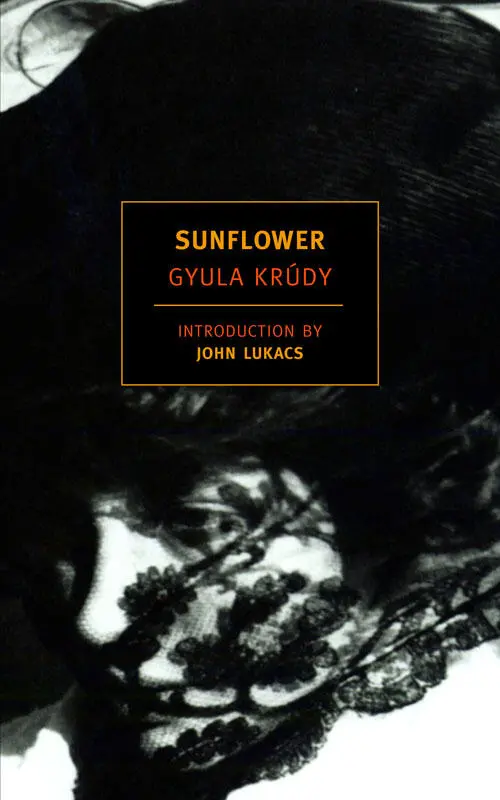
- Название:Sunflower
- Автор:
- Издательство:New York Review Books
- Жанр:
- Год:2007
- Город:New York
- ISBN:нет данных
- Рейтинг книги:4 / 5. Голосов: 1
-
Избранное:Добавить в избранное
- Отзывы:
-
Ваша оценка:
Sunflower: краткое содержание, описание и аннотация
Предлагаем к чтению аннотацию, описание, краткое содержание или предисловие (зависит от того, что написал сам автор книги «Sunflower»). Если вы не нашли необходимую информацию о книге — напишите в комментариях, мы постараемся отыскать её.
In
young Eveline leaves the city and returns to her country estate to escape the memory of her desperate love for the unscrupulous charmer Kálmán. There she encounters the melancholy Álmos-Dreamer, who is languishing for love of her, and is visited by the bizarre and beautiful Miss Maszkerádi, a woman who is a force of nature. The plot twists and turns; elemental myth mingles with sheer farce: Krúdy brilliantly illuminates the shifting contours and acid colors of the landscape of desire.
John Bátki’s outstanding translation of
is the perfect introduction to the world of Gyula Krúdy, a genius as singular as Robert Walser, Bruno Schulz, or Joseph Roth.
Sunflower — читать онлайн бесплатно полную книгу (весь текст) целиком
Ниже представлен текст книги, разбитый по страницам. Система сохранения места последней прочитанной страницы, позволяет с удобством читать онлайн бесплатно книгу «Sunflower», без необходимости каждый раз заново искать на чём Вы остановились. Поставьте закладку, и сможете в любой момент перейти на страницу, на которой закончили чтение.
Интервал:
Закладка:
And so Ákos Álmos-Dreamer, contemplating Eveline’s sleeping snow-white and tawny body, began to understand the Colonel and Mr. Burman, who had died for her sake. Ah yes, he, too, would gladly give his life if only Eveline forgave him the coarse, rude and unfeeling welcome he had contrived on her arrival at his house. But Eveline did not forget, did not relent, merely laughed at his threats, calmly faced the barrel of the shotgun he pointed at her, and simply shrugged off threats of deadly violence. She was not moved by Ákos Álmos-Dreamer on his knees, nor by his bitter sobs. Instead, she kicked like a mare attacked by wolves.
Ákos Álmos-Dreamer therefore ended up spending his nights alone, flanked by two candles in that great, grim hall that has ever since accommodated the occupant’s gloomier moods. The torments caused by this remarkable woman were easier to suffer when she was not in sight. He read the French Encyclopaedists, the history of England, and Fanny’s Posthumous Papers . These tomes still remain as he left them, the pages folded where the suffering man stopped reading. He fondled the loaded pistol and spent hours staring at the barrel. Later — during the second winter — he started to drink. At first, it was humble local wines that produced a light-headedness resembling early autumn’s feathery clouds, with undercurrents of melancholy like mist floating above a thinning stand of gorse. Later came the gold inlay of Tokay vintages that buried life’s unbearable torments within the triple coffins of Attila’s funeral — and this made him see ghosts. He turned into a well-known Hungarian type: the village squire who is drunk day and night.
And so Ákos Álmos-Dreamer lived a life as melancholy as the jack of spades. He could never forget his wife’s past. The many men who had figured in her life now stood like waxworks figures in the corners of the dour hall where Mr. Ákos doused with wine the fires of his body, the headless dragon thrashing in his soul.
He was stumped; he could not find the secret of winning his wife’s love, even though in his time, in the salad days of his dashing, nonchalant, resilient youth, when rain and snow and frost had been no obstacle, he had made a whole slew of women cry. Yes, he had kicked about their hearts, trampled upon their fragile innocence. Enjoying women’s gracious favors, he cavorted like a deaf hog in a field of corn, as the saying goes. He got tired of their embraces, their natural desires, their sonnet voices, their miseries. He would give his mustache a twirl, and one glance from him was enough to penetrate to the core of many a female’s fancy, although these white-stockinged village women lived in daily fear of damnation and hellfire. When he spoke, his voice went straight to the heart. His caresses were like rare silk. Those passionate kisses of his, impossible to forget. And now every night he strode, bent, aimless and totally disillusioned, back and forth past the portrait of Eveline he had had an itinerant artist paint on the sly — for the woman was so determined not to serve him she refused to pose for her portrait in oils. And he moaned and groaned like an epileptic:
“Why can’t you love me, my wife, my sweet angel?”
He paced under that framed face like a moon-sick child until one night it spoke up — the portrait did, or else its original had slithered into the room full of wine fumes:
“I’ll love you when you’re ready to die for me,” the voice cooed in answer to Ákos Álmos-Dreamer’s laments.
Subsequent nights advised Álmos-Dreamer about how to execute his suicide.
The island that sheltered from men’s eyes his beloved wife (like stolen treasure) was surrounded by the Tisza floodlands. In the distance lay The Birches, monotonous sandy hills barren of all thought, darkling furze thickets asleep on the horizon like so many trembling widows, the wild geese departing from this region under night’s dark tapestry like fleeing spirits honking their farewells in weird voices from the sad heights, as if summoning every unhappy person below.
“Ghee-gaw!” cry these enigmatic birds of other worlds and other shores.
That’s what these voices sound like to the marshdwelling fisherman in his lair, but one who loves life’s wonders will find all sorts of meaning in the voices emanating from the dark. Ákos Álmos-Dreamer awaited the wild geese to summon him into the blue yonder. He would depart from here like a drenched, dark, frost-winged wild goose and go far, far away… And once the gander is gone from the nest the female, too, would follow on the mysterious highways of the heavens. At sunrise, when it is still too dark, in high altitudes’ golden oceans the bird would swim after her mate, just like a sad, worry-worn swan.
“Ghee-gaw!” comes from the other world Lord Álmos-Dreamer’s cry, and Eveline, humbling herself, would obediently follow in his wake to the land of dreams.
Spring was on the way, the Tisza region full of witching vapors and miasmic exhalations. Sir Álmos-Dreamer spent a moonlit night in the boggy fen, with a clear view of the ladder stretching up on which souls like tiny dust motes climbed toward milky heaven. The spring night sparkled miraculously above the toady clods of earth. Fogs, mists, and plumes of fume floated up toward the heights like bygone beauties’ curves on dallying display for the moonbeam’s benefit. Now the water snake sheds its old skin, fish and lizards borrow their brightness from the moon and ancient, mute waterfowl vow eternal silence. The earth below splits open like a bivalve, and mysterious night betroths the seedling never yet seen by human eyes.
The time was here for Sir Ákos Álmos-Dreamer’s tragic demise.
Swamp fever, on the Tisza island, stole snakelike into his indestructible system, slithered down his throat and through his eyes like poison fumes, terminally deranging an already unbalanced psyche. His case baffled doctors: the so-called malaria, like most other Indian diseases, usually treated with quinine, took the form of delirium in Mr. Ákos Álmos-Dreamer. His actions, at least, indicate that the tragic gentleman went mad in his insular solitude.
One May night, after prolonged staring at a rufous moon that appeared to squat on the marsh’s edge, coming down on the furze thickets like visiting royalty among rustic wenches, the thought ripened: he must end his tortured existence. But first…
With the stealth of the insane he approached Eveline’s bedroom. That merciless lady always bolted the oaken door for the night, although her husband had quoted the Bible to her to prove she had no right to do so. Eveline looked away and shrugged. Who cares about the Bible?
But on this night, as if she had had a premonition (the way her little finger could sense changes in the weather), this extraordinary woman left the door ajar, and woke from a deep slumber to a heavy hand on the nape of her neck, a trembling, joyously quivering palm cleaving to the mound, not unlike the mons veneris, found in buxom women below their neck vertebrae and from where miraculous cables and telegraph wires signal the nuptial moment. An ancient minstrel song already calls the nape the most desirable and most vulnerable bastion of that splendid castle known as the female physique. Eveline had a neck equally suited to the necklace and the noose. Beauteous feminine necks, as self-possessed as if they led their own swanlike existence, and seemingly without the brain’s overlordship, execute their fairylike motions; they see and hear, speak, rise and humbly, submissively bend — such necks have been known to send the brains of many a man into his bootlegs.
Eveline suffered the caresses only until her dream had flown out the window. When the bird was gone, she hissed a question:
“Why did you wake me?”
Читать дальшеИнтервал:
Закладка:
Похожие книги на «Sunflower»
Представляем Вашему вниманию похожие книги на «Sunflower» списком для выбора. Мы отобрали схожую по названию и смыслу литературу в надежде предоставить читателям больше вариантов отыскать новые, интересные, ещё непрочитанные произведения.












Обсуждение, отзывы о книге «Sunflower» и просто собственные мнения читателей. Оставьте ваши комментарии, напишите, что Вы думаете о произведении, его смысле или главных героях. Укажите что конкретно понравилось, а что нет, и почему Вы так считаете.