Michael Shaara - The Killer Angels
Здесь есть возможность читать онлайн «Michael Shaara - The Killer Angels» весь текст электронной книги совершенно бесплатно (целиком полную версию без сокращений). В некоторых случаях можно слушать аудио, скачать через торрент в формате fb2 и присутствует краткое содержание. Жанр: Историческая проза, на английском языке. Описание произведения, (предисловие) а так же отзывы посетителей доступны на портале библиотеки ЛибКат.
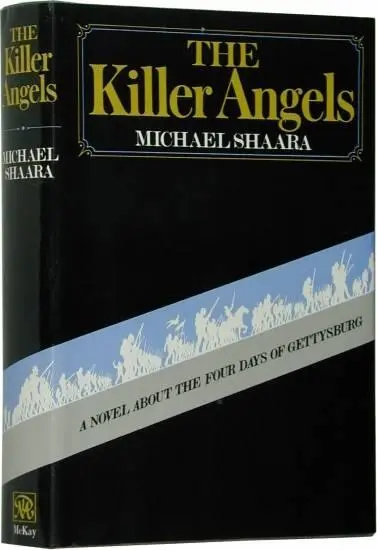
- Название:The Killer Angels
- Автор:
- Жанр:
- Год:неизвестен
- ISBN:нет данных
- Рейтинг книги:5 / 5. Голосов: 1
-
Избранное:Добавить в избранное
- Отзывы:
-
Ваша оценка:
The Killer Angels: краткое содержание, описание и аннотация
Предлагаем к чтению аннотацию, описание, краткое содержание или предисловие (зависит от того, что написал сам автор книги «The Killer Angels»). Если вы не нашли необходимую информацию о книге — напишите в комментариях, мы постараемся отыскать её.
Reading about the past is rarely so much fun as on these pages.
The Killer Angels — читать онлайн бесплатно полную книгу (весь текст) целиком
Ниже представлен текст книги, разбитый по страницам. Система сохранения места последней прочитанной страницы, позволяет с удобством читать онлайн бесплатно книгу «The Killer Angels», без необходимости каждый раз заново искать на чём Вы остановились. Поставьте закладку, и сможете в любой момент перейти на страницу, на которой закончили чтение.
Интервал:
Закладка:
THURSDAY, JULY 2, 1863 The Second Day
He hath loosed the fateful lightning…
1. FREMANTLE.
Awake in the dark, the stars still brightly shining, Fremantle, a slow riser, staggered into the dawn not quite knowing where he was. These people might conduct these things at a civilized hour. Three in the morning. Incredible.
He washed in dirty water. Came vaguely awake. War!
The army awakened around him. He could sense the red battle forming today, coming like the sun. His senses shocked him awake. He expected cannon at any moment.
He saw the first light of dawn a dusky rose in the east, the sun coming up from the direction of the enemy. He felt sleepily marvelous. He bid a cheery hello to Sorrel, Longstreet’s aide.
”Major Sorrel, sir, good morning! I say, could you direct me to the battle?”
Sorrel, a neat and natty person, smiled and bowed.
”Would you care for a bite to eat before the assault? We can serve Yankees done to order, before or after breakfast.”
Fremantle could not suppress a yawn, smothered it politely with his hand. “I suppose there is time for a bun or two. How’s General Longstreet this morning? My compliments, and I trust he slept well.”
”Doubt if he slept at all. He’s gone over to speak with General Lee.”
”Does the man ever sleep? Amazing. He rarely even sits down.”
Sorrel smiled. A bird, annoyed at being awakened early, began chattering in the tree above him. Other officers began stepping out into the dark of the morning. There was Ross, the fat Austrian with the Scotch name. He was all aglow in the powder-blue uniform of the Austrian Hussars, complete with shining silver chamberpot for the head, waving a blue plume. As he came closer Fremantle observed with alarm that the man was spotlessly groomed; even his mustache was waxed, the ends slim and sharp like wiggly rapiers.
Ross boomed happily, patting himself fat-handedly across the stomach. “C’est le sanglant appel-de Mars, eh, old chap?” He popped the slender Fremantle on the arm, unsettling him.
Fremantle said with distaste, “Early in the morning for that, old friend. Could you wait until after tea?”
The others were gathering around the breakfast table.
Scheibert, the beardless Prussian, moody, prim, was dressed all in white, white coat, floppy white hat, the inevitable glittering monocle. While most of the officers of the army could speak French, few could speak German, and Scheibert’s pride was continually offended, but he went on stubbornly using German military terms in conversation, was not understood, would not explain, sat fatly, whitely to the side, a rare sight, oddly comical in that company.
Lawley, the correspondent, seemed ill again and had not made up his mind whether or not to ride today. There were the three medical people-Maury, Cullen, Barksdale-and others of Longstreet’s staff: Latrobe, Goree, and the charming little Jew, Major Moses. They sat down to a splendid breakfast, and although Fremantle continued to wake up slowly, coming alive as the day came alive, warmly, brightly, with no clouds anywhere, the wind beginning to pick up and rustle the trees, the light beginning to sift down through the cool leaves, the dark branches, still Fremantle remained vaguely asleep.
The morning at war. Marvelous. Good men around a table. What a joy to be with the winners! All these men had nothing but contempt for the Yankees, whom they had beaten so often. There was even an air of regret at the table, a sense of seize the day, as if these bright moments of good fellowship before battle were numbered, that the war would soon be over, and all this would end, and we would all go back to the duller pursuits of peace. Fremantle enjoyed himself enormously. Southerners! They were Englishmen, by George. Fremantle was at home.
He ate hot eggs, warm bread, reveled in steaming tea, although the water from which the tea was made left an aftertaste in the mouth, afterthoughts in the brain: from what nearby barn? The men all chatted, joked. Fremantle was sorry to see breakfast end. But the sun was fully up.
Now once more he could expect the big thunder of cannon.
Must not miss it today. Sorrel promised to keep him informed. They rode together toward the lines, hoping for a good view.
So Fremantle came to Gettysburg, saw the bodies unburied in the fields, beginning to become offensive in the heat of the morning, poor chaps. They turned off to the right and rode up through a grove of trees to higher ground, and through the trees Fremantle could already see the blue ridge to the east, soft in the morning haze, where the Yankees were camped. But he could see no troops, no movement.
He felt his stomach tighten, his breath grow sharp. In the presence of the enemy! In range of the guns! He passed a battery of Southern artillery, mixed Napoleons and Parrots, served by wagons stamped USA.
Sorrel said, “We got most of our wagons from the enemy. Many of the guns. Their artillery is very good. But ours will get better.”
The Austrian, Ross, had ridden up beside them. One of the gunners, a lean, barefoot man in dusty brown, stared at him unbelievingly as he passed, then bawled in a piercing voice that carried all along the line, “Hey, mister. You in blue. What you do, man, you look like you swallowed some mice.”
Sorrel put his hand over his mouth. Ross stared back, uncomprehending.
Fremantle said cheerily, “The fellow is referring to the waxed mustache, old friend.”
Ross grumbled, twitched the mustache, stroked the ends lovingly, glowered. They rode to Lee’s headquarters, then beyond, up the ridge to where the Generals were meeting.
There was a gathering of officers, too many men. Sorrel suggested that if Fremantle wanted a good view, he should find a convenient tree. Fremantle wandered forward, with Lawley, through the cool green woods, to the same commanding position he had the day before, climbed the same wide oak. There below him, not fifty feet away, he recognized Longstreet, then Lee. The officers were in consultation.
Lee was standing with his back to the group, bareheaded, the white hair flicking in the breeze. He was gazing out toward the Union lines, which were clearly visible in the east. He put his field glasses to his eyes, looked, put them down, walked two or three paces south, turned, looked again, slowly walked back and forth. Longstreet was sitting on a camp stool, whittling slowly on a stick, making a point, sharpening the point, sharpening, sharpening. A. P. Hill, looking much healthier than the day before, was chatting with another officer, unidentified. Sitting next to Longstreet, on a stump, also whittling, was a tall slim man with an extraordinary face, eyes with a cold glint in them, erect in posture even as he sat, cutting a stick. Fremantle asked, impressed, “Who is that?”
Lawley: “That’s Hood. John Bell Hood. They call him ‘Sam,’ I think. He commands one of Longstreet’s divisions. From Texas, I believe.”
”Does his behavior in battle match his appearance?”
”He does his job,” Lawley said laconically.
”An interesting army,” Fremantle said. “Most interesting.”
Lee had turned, was saying something to Longstreet.
Longstreet shook his head. Hill came closer.
Lawley said, “The Yankees have dug in. But I don’t see any trenches anywhere here. That means we’ll attack.”
The “we” was inevitable, but Fremantle noticed it. He felt a part, almost a member, of this marvelous group of outnumbered men. Englishmen. They called themselves Americans, but they were transplanted Englishmen. Look at the names: Lee, Hill, Longstreet, Jackson, Stuart. And Lee was Church of England. Most of them were. All gentlemen.
Читать дальшеИнтервал:
Закладка:
Похожие книги на «The Killer Angels»
Представляем Вашему вниманию похожие книги на «The Killer Angels» списком для выбора. Мы отобрали схожую по названию и смыслу литературу в надежде предоставить читателям больше вариантов отыскать новые, интересные, ещё непрочитанные произведения.






Обсуждение, отзывы о книге «The Killer Angels» и просто собственные мнения читателей. Оставьте ваши комментарии, напишите, что Вы думаете о произведении, его смысле или главных героях. Укажите что конкретно понравилось, а что нет, и почему Вы так считаете.