Michael Shaara - The Killer Angels
Здесь есть возможность читать онлайн «Michael Shaara - The Killer Angels» весь текст электронной книги совершенно бесплатно (целиком полную версию без сокращений). В некоторых случаях можно слушать аудио, скачать через торрент в формате fb2 и присутствует краткое содержание. Жанр: Историческая проза, на английском языке. Описание произведения, (предисловие) а так же отзывы посетителей доступны на портале библиотеки ЛибКат.
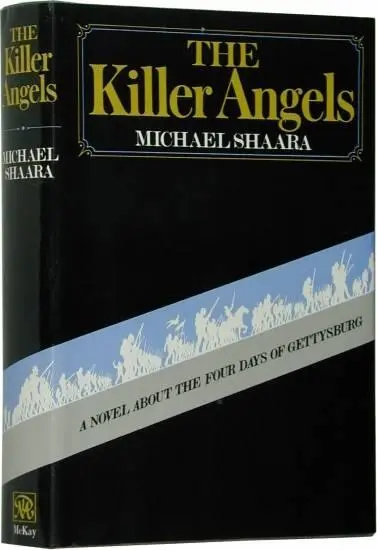
- Название:The Killer Angels
- Автор:
- Жанр:
- Год:неизвестен
- ISBN:нет данных
- Рейтинг книги:5 / 5. Голосов: 1
-
Избранное:Добавить в избранное
- Отзывы:
-
Ваша оценка:
The Killer Angels: краткое содержание, описание и аннотация
Предлагаем к чтению аннотацию, описание, краткое содержание или предисловие (зависит от того, что написал сам автор книги «The Killer Angels»). Если вы не нашли необходимую информацию о книге — напишите в комментариях, мы постараемся отыскать её.
Reading about the past is rarely so much fun as on these pages.
The Killer Angels — читать онлайн бесплатно полную книгу (весь текст) целиком
Ниже представлен текст книги, разбитый по страницам. Система сохранения места последней прочитанной страницы, позволяет с удобством читать онлайн бесплатно книгу «The Killer Angels», без необходимости каждый раз заново искать на чём Вы остановились. Поставьте закладку, и сможете в любой момент перейти на страницу, на которой закончили чтение.
Интервал:
Закладка:
He rode to the farmhouse and stopped in a crowd of horses and sat there. Rather not get down. Men were passing in and out, much conversation. A cloud of officers had clustered by the small lighted door, looking in. One glanced up, saw him, noted the star, turned, saluted quickly Buford wiggled a finger; the man came forward: a major. Other men were turning. Buford rode the horse almost to the door.
Buford said, “Who’s in command, and where do I find him?”
”Good evening, sir,” the major said. A very high voice.
A lisp? “The officer in command is General Howard, sir.
He may be found-“ “Don’t be a damn fool, Edgar,” another man said. He saluted Buford. “Begging your pardon, sir, but the truth is that General Hancock is in command, and if you’ll-“ Another major, skinny, grinning. The first major said angrily, “I must remind you, sir, that General Howard is the senior officer on the field.”
”But General Hancock has orders from General Meade himself.”
They argued, ignoring Buford. He looked down in wonder. Other officers voiced opinions. Oliver Howard was the commander of the Eleventh Corps. He had arrived this morning with Reynolds. He had fought on the right and been broken, just as he had been broken at Chancellorsville.
He was a one-armed man for whom Buford had no admiration. The majors confronted like wispy chickens; it was very strange. Behind them Buford saw suddenly a familiar face: John Gibbon, of Hancock’s corps. Infantry. A cold, silent man. His brothers fought for the other side.
Buford nodded. Gibbon nodded. A major was giving a lecture on military precedence: Howard could not be relieved except by written order or by Meade in person.
Gibbon came up and took the reins.
”Evenin’, John.”
Buford bowed.
”A hard day?”
”Long,” Buford admitted.
”Hancock’s inside, if you want to see him.” Gibbon led the horse out of the crowd. The argument went on behind them. Buford watched it with awe. Never get used to it, the mind of headquarters, not if I live a thousand years.
Gibbon said, “That’s been going on all night.”
”I gather Meade’s not here yet. Who’s in command?”
”Take your choice.” Gibbon grinned. But he was one of Hancock’s fanatics. Good soldier.
”I have to refit my outfit,” Buford said. “I need orders.”
”Hancock got here late this afternoon, just as Howard’s Corps was falling apart. They ran, them Dutchmen, just like they did at Chancellorsville. Hancock took command and reformed them on this hill, along with the First, and ever since then everybody’s been coining to him for orders, and not Howard, and he’s hopping mad. Kind of funny. He claims he’s senior officer.” Gibbon chuckled. “But Hancock has a verbal order from Meade. It’s all very funny.
Thing is, when Hancock’s on the field the men naturally turn that way. Old Howard’s really steamed.”
”I just want orders,” Buford said. “I’m kind of weary.”
He was thinking: need the long quiet again, want to get away from here. He dismounted, held briefly to the horse.
Gibbon called a man to take the reins. He said, “I’ll get your orders. Why don’t you wait out here?”
Buford sat on a rail. The arm was alive with pain. He said, “Is the army here?”
”Just about. All but Sedgewick. We’ve got Sykes and Geary and Sickles, along with Hancock. And Howard. Sedgewick will be here tomorrow, but he has a long march.”
”Good,” Buford said. He nodded, closed his eyes. Can relax now. He felt the beginning of sleep, even among the pain, the quiet dark coming, the soft rolling dreamless rest.
Gibbon said, “They’re all inside.”
Buford stirred, began to head toward the door. Gibbon said casually, “Why don’t you stay out here?”
Buford moved sleepily toward the door. Need one last order, then a good long sleep. The aides near the door were parting, but something in Gibbon’s voice caught him. He stopped, turned. Gibbon was there.
”Howard has made a complaint against you, John. He says you should have supported him on the right.”
Buford nodded dumbly, then blinked. He raised the pained arm. Gibbon said, “He lost half his strength. Most of them got taken prisoner. He’s mad as a hornet, lookin’ for somebody to blame it on. I think he’s picked you.”
Buford felt nothing for a moment, a sort of sodden silence all through his brain, then the anger began to rise like a metal wave, like a hot tide in the dark. Buford could say nothing. No words came. Gibbon said softly, “Stay out here, John. I’ll tell Hancock you’re here.”
He moved past Buford into the room. Buford blinked and blinked again and then began moving, pushing his way into the light, the smoke of the room. It was jammed with officers, all the brass. The anger made Buford dizzy. He tried to push his way through and the pain went all the way up his arm and into his chest and shocked him stiff. He could see faces: Sickles, the bully boy, the bright politician, a fat cigar clamped in a fat mouth, the man who was famous for having shot his wife’s lover. Geary and Sykes were sitting, brooding; that damned Howard was making a speech. And there was Hancock against a wall, writing a note, talking to aides, issuing orders. Buford’s vision blurred. The room was very hot and there was too much smoke. He had to push his way back out of the room into the open air. He kept saying aloud. God damn him. God damn him. He sat on a rail. In a moment he looked up and there was Hancock.
”How are you, John?”
Handsome face, watching. Buford focused. Hancock looked down with bright dark eyes. Buford said, “I’m all right.”
”Heard you were with John Reynolds when he died.”
”I was.”
”Tell me.”
Buford told him. Hancock would write the letter. Good, very good. Hancock was older since last time Buford saw him. Calm and cocky, damned good-looking man. Buford felt suddenly better. Cool, clean air.
Hancock said, “I’m sending the body back to his folks in Lancaster. They might appreciate a note from you.”
”I’ll send it.”
”How’s your division?”
Buford told him. Hancock was surprised. He hadn’t known Buford was that involved. Buford said, “We were involved.”
”Well, get yourself refitted. May need you in the morning.”
There was commotion behind him. A mass of aides were riding up. Somebody blew a discordant bugle. Hancock stood up, grinned. Buford noted: why, Hancock’s wearing a clean white shirt. Isn’t that amazing. Clean as a whistle.
Hancock said, “Here’s Meade.”
They all came out to meet him, the angry man with the squeaky voice. They gathered around him as he dismounted. Buford was pushed to the side. He heard Meade greet Hancock.
”Damn dark. I can’t see a damn thing.”
Hancock said he was very glad to see the General. Meade said, with great disgust, “Well, I hope to God this is good ground. General. Is it good ground?”
”Very good ground. General.”
”Well, by God it better be, because we’re going to have to fight here sure enough in the morning.”
Buford was pushed too far away. Meade went on into the house. Rocks of officers gathered at the windows. Buford had enough; he had his orders. He got back on his horse and rode slowly back toward the cemetery. He had not much strength left. He called for one of his aides, but the bucktoothed boy was dead, and the yellow-haired boy was dead, and the Sergeant was down and would never recover.
Buford stopped in the cemetery. He could not find the white angel. But he looked out across the town and he could see a great ocean of Rebel campfires, flooding the town, with fire burning all over those ridges to the west, flooding fire right up to the base of the hill. Buford took off his hat, looked up to the stars. He said to John Reynolds, “Well, John, we held the ground.” He wiped his eyes. He thought: have to get some more lieutenants. Then he rode off down the hill into the black beneath the trees.
Читать дальшеИнтервал:
Закладка:
Похожие книги на «The Killer Angels»
Представляем Вашему вниманию похожие книги на «The Killer Angels» списком для выбора. Мы отобрали схожую по названию и смыслу литературу в надежде предоставить читателям больше вариантов отыскать новые, интересные, ещё непрочитанные произведения.





Обсуждение, отзывы о книге «The Killer Angels» и просто собственные мнения читателей. Оставьте ваши комментарии, напишите, что Вы думаете о произведении, его смысле или главных героях. Укажите что конкретно понравилось, а что нет, и почему Вы так считаете.