Bernard Cornwell - The Winter King
Здесь есть возможность читать онлайн «Bernard Cornwell - The Winter King» весь текст электронной книги совершенно бесплатно (целиком полную версию без сокращений). В некоторых случаях можно слушать аудио, скачать через торрент в формате fb2 и присутствует краткое содержание. Год выпуска: 1997, Издательство: MacMillan Publishers, Жанр: Историческая проза, на английском языке. Описание произведения, (предисловие) а так же отзывы посетителей доступны на портале библиотеки ЛибКат.
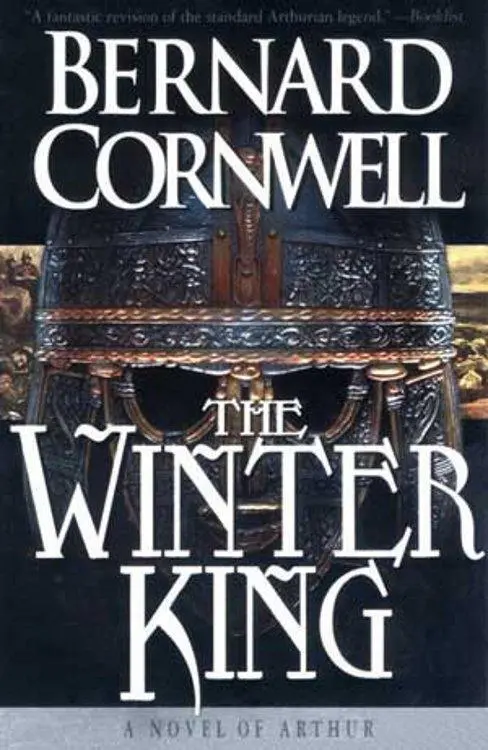
- Название:The Winter King
- Автор:
- Издательство:MacMillan Publishers
- Жанр:
- Год:1997
- ISBN:нет данных
- Рейтинг книги:4 / 5. Голосов: 1
-
Избранное:Добавить в избранное
- Отзывы:
-
Ваша оценка:
The Winter King: краткое содержание, описание и аннотация
Предлагаем к чтению аннотацию, описание, краткое содержание или предисловие (зависит от того, что написал сам автор книги «The Winter King»). Если вы не нашли необходимую информацию о книге — напишите в комментариях, мы постараемся отыскать её.
Fifth century Britain lies on the edge of darkness. Memories of Roman civilization are fading; the pagan Gods are retreating before the spread of Christianity; the Saxons are snapping and snarling at the borders. Only fragile bonds unite the unruly kingdoms of Britain against the invaders, bonds cemented by the vigour of the High King, Uther Pendragon. But the Pendragon is failing, and his heir is no strong leader but a child, born on a bitter winter night.
Only one man could keep Uther's throne safe,only he could hold the warring kingdoms together to face their true enemy, the Saxons. That man is Arthur: soldier, statesman, Merlin's protege, Uther's illegitimate son. But he has been banished, exiled by his own father to Brittany. Derfel, one of his spearmen, narrates the story of Arthur's return and of his quest for peace: embattled, bloody and, finally, triumphant.
The Winter King is a magnificent tale of the Dark Ages and the reality of war and political strife in a land where religion vied with magic for the souls of the people. It portrays Arthur the man rather than the legend, a military genius who, with a small band of warriors bound to him by loyalty and love, struggled to keep alive a flicker of civilization.
The Winter King — читать онлайн бесплатно полную книгу (весь текст) целиком
Ниже представлен текст книги, разбитый по страницам. Система сохранения места последней прочитанной страницы, позволяет с удобством читать онлайн бесплатно книгу «The Winter King», без необходимости каждый раз заново искать на чём Вы остановились. Поставьте закладку, и сможете в любой момент перейти на страницу, на которой закончили чтение.
Интервал:
Закладка:
“Can't you take Amhar and Loholt with you?” Ailleann asked me after a while. “They might make good soldiers.”
“I doubt their father thinks they're old enough,” I said.
“If he thinks about them at all. He sends them money. I wish he didn't.” She fingered her new brooch.
“The Christians in the town all say that Arthur is doomed.”
“Not yet, Lady.”
She smiled. “Not for a long time, Derfel. People underestimate Arthur. They see his goodness, hear his kindness, listen to his talk of justice, and none of them, not even you, knows what burns inside him.”
“Which is?”
“Ambition,” she said flatly, then thought for a second. “His soul,” she went on, 'is a chariot drawn by two horses; ambition and conscience, but I tell you, Derfel, the horse of ambition is in the right-hand harness and it will always out pull the other. And he's able, so very able.“ She smiled sadly. ”Just watch him, Derfel, when he seems doomed, when everything is at its darkest, and then he will astonish you. I've seen it before. He'll win, but then the horse of conscience will tug at its reins and Arthur will make his usual mistake of forgiving his enemies."
“Is that bad?”
“It isn't a question of bad or good, Derfel, but of practicality. We Irish know one thing above all others: an enemy forgiven is an enemy who will have to be fought over and over again. Arthur confuses morality with power, and he worsens the mix by always believing that people are inherently good, even the worst of them, and that is why, mark my words, he will never have peace. He longs for peace, he talks of peace, but his own trusting soul is the reason he will always have enemies. Unless Guinevere manages to put some flint into his soul? And she may. Do you know who she reminds me of?”
“I didn't think you'd met her,” I said.
“I never met the person she reminds me of either, but I hear things, and I do know Arthur very well. She sounds like his mother; very striking and very strong, and I suspect he will do anything to please her.”
“Even at the price of his conscience?”
Ailleann smiled at the question. “You should know, Derfel, that some women always want their men to pay an exorbitant price. The more the man pays, the greater the woman's worth, and I suspect Guinevere is a lady who values herself very highly. And so she should. So should we all.” She said the last words sadly, then rose from her chair. “Give him my love,” she told me as we walked back through the house,
'and tell him please to take his sons to war."
Arthur would not take them. “Give them another year,” he told me as we marched away next morning. He had dined with the twins and given them small gifts, but all of us had noted the sullenness with which Amhar and Loholt had received their father's affection. Arthur had noticed it too, which was why he was unnaturally dour as we marched west. “Children born to unwed mothers,” he said after a long silence,
'have parts of their souls missing."
“What about your soul, Lord?” I asked.
“I patch it every morning, Derfel, piece by piece.” He sighed. “I shall have to give time to Amhar and Loholt, and the Gods only know where I shall find it because in four or five months I shall be a father again. If I live,” he added bleakly.
So Lunete had been right and Guinevere was pregnant. “I'm happy for you, Lord,” I said, though I was thinking of Lunete's comment on how unhappy Guinevere was at her condition.
“I'm happy for me!” He laughed, his black mood abruptly vanquished. “And happy for Guinevere. It'll be good for her, and in ten years' time, Derfel, Mordred will be on the throne and Guinevere and I can find some happy place to rear our cattle, children and pigs! I shall be happy then. I shall train Llamrei to pull a cart and use Excalibur as a goad for my plough-oxen.”
I tried to imagine Guinevere as a farm wife, even as a rich farm wife, and somehow I could not conjure the image, but I kept my peace.
From Corinium we went to Glevum, then crossed the Severn and marched through Gwent's heartland. We made a fine sight, for Arthur deliberately rode with banners flying and his horsemen armoured for combat. We marched in that high style for we wanted to give the local people a new confidence. They had none now. Everyone assumed that Gorfyddyd would be victorious and even though it was harvest-time the countryside was sullen. We passed a threshing floor and the chanter was singing the Lament of Essylt instead of the usual cheerful song that gave rhythm to the flails. We also noted how every villa, house and cottage was strangely bare of anything valuable. Possessions were being hidden, buried probably, so that Gorfyddyd's invaders would not strip the populace bare. “The moles are getting rich again,” Arthur said sourly.
Arthur alone did not ride in his best armour. “Morfans has the scale armour,” he told me when I asked why he was wearing his spare coat of mail. Morfans was the ugly warrior who had befriended me at the feast that had followed Arthur's arrival at Caer Cadarn so many years before.
“Morfans?” I asked, astonished. “How did he earn such a gift?”
“It's not a gift, Derfel. Morfans is just borrowing it, and every day for the past week he has been riding close to Gorfyddyd's men. They think I'm already there, and maybe that has given them pause? So far, at least, we have no news of any attack.”
I had to laugh at the thought of Morfans's ugly face being concealed behind the cheek pieces of Arthur's helmet, and maybe the deception worked for when we joined King Tewdric at the Roman fort of Magnis the enemy had still not sallied from their strongholds in Powys's hills. Tewdric, dressed in his fine Roman armour, looked almost an old man. His hair had gone grey and there was a stoop in his carriage that had not been there when I had last seen him. He greeted the news about Aelle with a grunt, then made an effort to be more complimentary. “Good news,” he said curtly, then rubbed his eyes, 'though God knows Gorfyddyd never needed Saxon help to beat us. He has men to spare."
The Roman fort seethed. Armourers were making spearheads, and every pollard ash for miles had been stripped for shafts. Carts of newly harvested grain arrived hourly and the bakers' ovens burned as fierce as the blacksmiths' furnaces so that a constant pyre of smoke hung above the palisaded walls. Yet despite the new harvest the gathering army was hungry. Most of the spearmen were camped outside the walls, some were miles away, and there were constant arguments about the distribution of the hard-baked bread and dried beans. Other contingents complained of water fouled by the latrines of men camped upstream. There was disease, hunger and desertion; evidence that neither Tewdric nor Arthur had ever had to grapple with the problems of commanding an army so large. “But if we have difficulties,” Arthur said optimistically, 'imagine Gorfyddyd's troubles."
“I would rather have his problems than mine,” Tewdric said gloomily. My spearmen, still under Galahad's command, were camped eight miles to the north of Magnis where Agricola, Tewdric's commander, kept a close watch on the hills that marked the frontier between Gwent and Powys. I felt a pang of happiness at seeing their wolf-tail helmets again. After the defeatism of the countryside it was suddenly good to think that here, at least, were men who would never be beaten. Nimue came with me and my men clustered about her so she could touch their spearheads and sword blades to give them power. Even the Christians, I noted, wanted her pagan touch. She was doing Merlin's business, and because she was known to have come from the Isle of the Dead she was thought to be almost as powerful as her master.
Agricola received me inside a tent, the first I had ever seen. It was a wondrous affair with a tall central pole and four corner staffs holding up a linen canopy that filtered the sunlight so that Agricola's short grey hair looked oddly yellow. He was in his Roman armour and sitting at a table covered in scraps of parchment. He was a stern man and his greeting was perfunctory, though he did add a compliment about my men. “They're confident. But so are the enemy, and there are many more of them than there are of us.” His tone was grim.
Читать дальшеИнтервал:
Закладка:
Похожие книги на «The Winter King»
Представляем Вашему вниманию похожие книги на «The Winter King» списком для выбора. Мы отобрали схожую по названию и смыслу литературу в надежде предоставить читателям больше вариантов отыскать новые, интересные, ещё непрочитанные произведения.







Обсуждение, отзывы о книге «The Winter King» и просто собственные мнения читателей. Оставьте ваши комментарии, напишите, что Вы думаете о произведении, его смысле или главных героях. Укажите что конкретно понравилось, а что нет, и почему Вы так считаете.