Bernard Cornwell - The Winter King
Здесь есть возможность читать онлайн «Bernard Cornwell - The Winter King» весь текст электронной книги совершенно бесплатно (целиком полную версию без сокращений). В некоторых случаях можно слушать аудио, скачать через торрент в формате fb2 и присутствует краткое содержание. Год выпуска: 1997, Издательство: MacMillan Publishers, Жанр: Историческая проза, на английском языке. Описание произведения, (предисловие) а так же отзывы посетителей доступны на портале библиотеки ЛибКат.
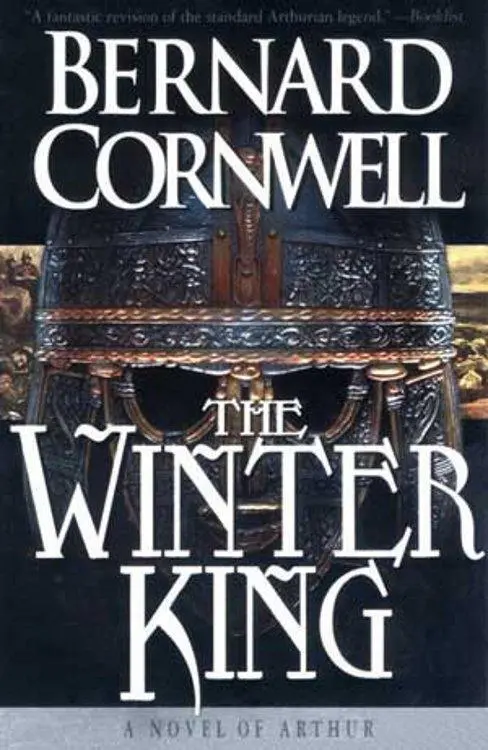
- Название:The Winter King
- Автор:
- Издательство:MacMillan Publishers
- Жанр:
- Год:1997
- ISBN:нет данных
- Рейтинг книги:4 / 5. Голосов: 1
-
Избранное:Добавить в избранное
- Отзывы:
-
Ваша оценка:
The Winter King: краткое содержание, описание и аннотация
Предлагаем к чтению аннотацию, описание, краткое содержание или предисловие (зависит от того, что написал сам автор книги «The Winter King»). Если вы не нашли необходимую информацию о книге — напишите в комментариях, мы постараемся отыскать её.
Fifth century Britain lies on the edge of darkness. Memories of Roman civilization are fading; the pagan Gods are retreating before the spread of Christianity; the Saxons are snapping and snarling at the borders. Only fragile bonds unite the unruly kingdoms of Britain against the invaders, bonds cemented by the vigour of the High King, Uther Pendragon. But the Pendragon is failing, and his heir is no strong leader but a child, born on a bitter winter night.
Only one man could keep Uther's throne safe,only he could hold the warring kingdoms together to face their true enemy, the Saxons. That man is Arthur: soldier, statesman, Merlin's protege, Uther's illegitimate son. But he has been banished, exiled by his own father to Brittany. Derfel, one of his spearmen, narrates the story of Arthur's return and of his quest for peace: embattled, bloody and, finally, triumphant.
The Winter King is a magnificent tale of the Dark Ages and the reality of war and political strife in a land where religion vied with magic for the souls of the people. It portrays Arthur the man rather than the legend, a military genius who, with a small band of warriors bound to him by loyalty and love, struggled to keep alive a flicker of civilization.
The Winter King — читать онлайн бесплатно полную книгу (весь текст) целиком
Ниже представлен текст книги, разбитый по страницам. Система сохранения места последней прочитанной страницы, позволяет с удобством читать онлайн бесплатно книгу «The Winter King», без необходимости каждый раз заново искать на чём Вы остановились. Поставьте закладку, и сможете в любой момент перейти на страницу, на которой закончили чтение.
Интервал:
Закладка:
“The Gods may forgive me,” Arthur said, 'but I don't. And now I pay Saxons to kill Britons.“ He shuddered at the very thought. ”I found myself wishing for Merlin last night,“ he said, 'to know that he would approve of what we are doing.”
“He would,” I said. Nimue might not have approved of sacrificing Ratae, but Nimue was always purer than Merlin. She understood the necessity of paying Saxons, but revolted at the thought of paying with British blood even if that blood did belong to our enemies.
“But it doesn't matter what Merlin thinks,” Arthur said angrily. “It wouldn't matter if every priest, Druid and hard in Britain agreed with me. To ask another man's blessing is simply to avoid taking the responsibility. Nimue is right, I shall be responsible for all the deaths in Ratae.”
“What else could you do?” I asked.
“You don't understand, Derfel,” Arthur accused me bitterly, though in truth he was accusing himself. “I always knew Aelle would want something more than gold. They're Saxons! They don't want peace, they want land! I knew that, why else would I have brought that poor man from Ratae? Before Aelle ever asked I was ready to give, and how many men will die for that foresight? Three hundred? And how many women taken into slavery? Two hundred? How many children? How many families will be broken apart? And for what? To prove I'm a better leader than Gorfyddyd? Is my life worth so many souls?”
“Those souls,” I said, 'will keep Mordred on his throne."
“Another oath!” Arthur said bitterly. “All these oaths that bind us! I am oath-bound to Uther to put his grandson on the throne, oath-bound to Leodegan to retake Henis Wyren.” He stopped abruptly and Sagramor looked at me with an alarmed face for it was the first either of us had ever heard about an oath to fight Diwrnach, the dread Irish King of Lleyn who had taken Leodegan's land. “Yet of all men,” Arthur said miserably, “I break oaths so easily. I broke the oath to Ban and I broke my oath to Ceinwyn. Poor Ceinwyn.” It was the first time any of us had ever heard him so openly lament that broken promise. I had thought Guinevere was a sun so bright in Arthur's firmament that she had dimmed Ceinwyn's paler lustre into invisibility, but it seemed the memory of Powys's Princess could still gall Arthur's conscience like a spur. Just as the thought of Ratae's doom galled him now. “Maybe I should send them a warning,” he said.
“And lose the hostages?” Sagramor asked.
Arthur shook his head. “I'll exchange myself for Balin and Lanval.” He was thinking of doing just that. I could tell. The agony of remorse was biting at him and he was seeking a way out of that tangle of conscience and duty, even at the price of his own life. “Merlin would laugh at me now,” he said.
“Yes,” I agreed, 'he would." Merlin's conscience, if he possessed one at all, was merely a guide to how lesser men thought, and thus served as a goad for Merlin to behave in the contrary manner. Merlin's conscience was a jest to amuse the Gods. Arthur's was a burden.
Now he stared at the mossy ground beneath the oak's shadow. The day was settling into twilight as Arthur's mind sank into gloom. Was he truly tempted to abandon everything? To ride to Aelle's fastness and exchange his existence for the lives of Ratae's souls? I think he was, but then the insidious logic of his ambition rose to overcome his despair like a tide flooding Ynys Trebes's bleak sands. “A hundred years ago,” he said slowly, 'this land had peace. It had justice. A man could clear land in the happy knowledge that his grandsons would live to till it. But those grandsons are dead, killed by Saxons or their own kind. If we do nothing then the chaos will spread until there's nothing left but prancing Saxons and their mad wizards. If Gorfyddyd wins he'll strip Dumnonia of its wealth, but if I win I shall embrace Powys like a brother. I hate what we are doing, but if we do it, then we can put things right." He looked up at us both.
“We are all of Mithras,” he said, 'so you can witness this oath made to Him.“ He paused. He was learning to hate oaths and their duties, but such was his state after that meeting with Aelle that he was willing to burden himself with a new one. ”Find me a stone, Derfel,“ he ordered. I kicked a stone out of the soil and brushed the earth from it, then, at Arthur's bidding, I scratched Aelle's name on the stone with the point of my knife. Arthur used his own knife to dig a deep hole at the foot of the oak, then stood. ”My oath is this,“ he said, 'that if I survive this battle with Gorfyddyd then I shall avenge the innocent souls I have condemned at Ratae. I will kill Aelle. I shall destroy him and his men. I shall feed them to the ravens and give their wealth to the children of Ratae. You two are my witnesses, and if I fail in this oath you are both released from all the bonds you owe me.” He dropped the stone into the hole and the three of us kicked earth over it. “May the Gods forgive me,” Arthur said, 'for the deaths I have just caused."
Then we went to cause some more.
We travelled to Gwent through Corinium. Ailleann still lived there and though Arthur saw his sons he did not receive their mother so that no word of any such meeting could hurt his Guinevere, though he did send me with a gift for Ailleann. She received me with kindness, but shrugged when she saw Arthur's present, a small brooch of enamelled silver depicting an animal very like a hare though with shorter legs and ears. It had come from the treasures of Sansum's shrine, though Arthur had punctiliously replaced the cost of the brooch with coins from his pouch. “He wishes he had something better to send you,” I said, delivering Arthur's message, 'but alas, the Saxons must have our best jewels these days."
“There was a time,” she said bitterly, 'when his gifts came from love, not guilt.“ Ailleann was still a striking woman, though her hair was now touched with grey and her eyes clouded with resignation. She was clothed in a long blue woollen dress and wore her hair in twin coils above her ears. She peered at the strange enamelled animal. ”What do you think it is?“ she asked me. ”It's not a hare. Is it a cat?"
“Sagramor says it's called a rabbit. He's seen them in Cappadocia, wherever that is.”
“You mustn't believe everything Sagramor tells you,” Ailleann chided me as she pinned the small brooch to her gown. “I have jewellery enough for a queen,” she added as she led me to the small courtyard of her Roman house, 'but I am still a slave."
“Arthur didn't free you?” I asked, shocked.
“He worries I would move back to Armorica. Or to Ireland, and so take the twins away from him.” She shrugged. “On the day the boys are of age Arthur will give me my freedom and do you know what I shall do? I shall stay right here.” She gestured me to a chair that stood in the shade of a vine. “You look older,” she said as she poured a straw-coloured wine from a wicker-wrapped flask. “I hear Lunete has left you?” she added as she handed me a horn beaker.
“We left each other, I think.”
“I hear she is now a Priestess of Isis,” Ailleann said mockingly. “I hear a lot from Durnovaria and dare not believe the half of it.”
“Such as what?” I asked.
“If you don't know, Derfel, then you're best left in ignorance.” She sipped the wine and grimaced at its taste. “So is Arthur. He never wants to hear bad news, only good. He even believes there is goodness in the twins.”
It shocked me to hear a mother speak of her sons in such a way. “I'm sure there is,” I said. She gave me a level, amused look. “The boys are no better, Derfel, than they ever were, and they were never good. They resent their father. They think they should be princes and so behave like princes. There is no mischief in this town which they don't begin or encourage, and if I try to control them they call me a whore.” She crumbled a fragment of cake and threw its scraps to some scavenging sparrows. A servant swept the courtyard's far side with a bundle of broom twigs until Ailleann ordered the man to leave us alone, then she asked me about the war and I tried to hide my pessimism about Gorfyddyd's huge army.
Читать дальшеИнтервал:
Закладка:
Похожие книги на «The Winter King»
Представляем Вашему вниманию похожие книги на «The Winter King» списком для выбора. Мы отобрали схожую по названию и смыслу литературу в надежде предоставить читателям больше вариантов отыскать новые, интересные, ещё непрочитанные произведения.


Обсуждение, отзывы о книге «The Winter King» и просто собственные мнения читателей. Оставьте ваши комментарии, напишите, что Вы думаете о произведении, его смысле или главных героях. Укажите что конкретно понравилось, а что нет, и почему Вы так считаете.