Bernard Cornwell - The Winter King
Здесь есть возможность читать онлайн «Bernard Cornwell - The Winter King» весь текст электронной книги совершенно бесплатно (целиком полную версию без сокращений). В некоторых случаях можно слушать аудио, скачать через торрент в формате fb2 и присутствует краткое содержание. Год выпуска: 1997, Издательство: MacMillan Publishers, Жанр: Историческая проза, на английском языке. Описание произведения, (предисловие) а так же отзывы посетителей доступны на портале библиотеки ЛибКат.
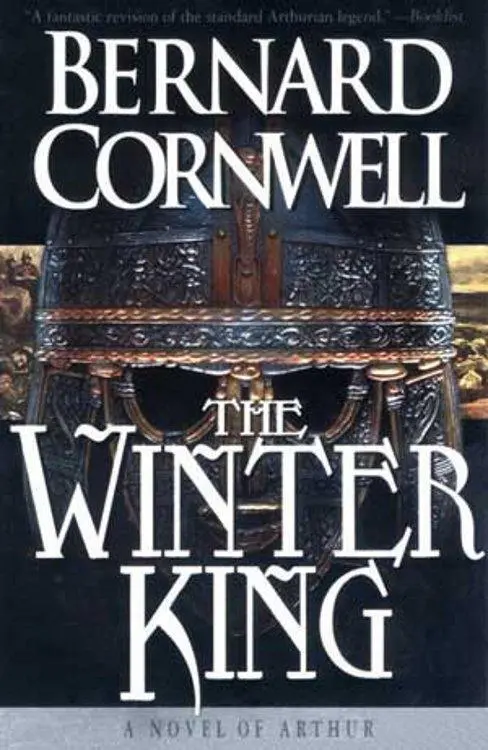
- Название:The Winter King
- Автор:
- Издательство:MacMillan Publishers
- Жанр:
- Год:1997
- ISBN:нет данных
- Рейтинг книги:4 / 5. Голосов: 1
-
Избранное:Добавить в избранное
- Отзывы:
-
Ваша оценка:
The Winter King: краткое содержание, описание и аннотация
Предлагаем к чтению аннотацию, описание, краткое содержание или предисловие (зависит от того, что написал сам автор книги «The Winter King»). Если вы не нашли необходимую информацию о книге — напишите в комментариях, мы постараемся отыскать её.
Fifth century Britain lies on the edge of darkness. Memories of Roman civilization are fading; the pagan Gods are retreating before the spread of Christianity; the Saxons are snapping and snarling at the borders. Only fragile bonds unite the unruly kingdoms of Britain against the invaders, bonds cemented by the vigour of the High King, Uther Pendragon. But the Pendragon is failing, and his heir is no strong leader but a child, born on a bitter winter night.
Only one man could keep Uther's throne safe,only he could hold the warring kingdoms together to face their true enemy, the Saxons. That man is Arthur: soldier, statesman, Merlin's protege, Uther's illegitimate son. But he has been banished, exiled by his own father to Brittany. Derfel, one of his spearmen, narrates the story of Arthur's return and of his quest for peace: embattled, bloody and, finally, triumphant.
The Winter King is a magnificent tale of the Dark Ages and the reality of war and political strife in a land where religion vied with magic for the souls of the people. It portrays Arthur the man rather than the legend, a military genius who, with a small band of warriors bound to him by loyalty and love, struggled to keep alive a flicker of civilization.
The Winter King — читать онлайн бесплатно полную книгу (весь текст) целиком
Ниже представлен текст книги, разбитый по страницам. Система сохранения места последней прочитанной страницы, позволяет с удобством читать онлайн бесплатно книгу «The Winter King», без необходимости каждый раз заново искать на чём Вы остановились. Поставьте закладку, и сможете в любой момент перейти на страницу, на которой закончили чтение.
Интервал:
Закладка:
“I want you to give Dumnonia and Gwent three moons of peace,” Arthur said.
“You're only buying peace?” Aelle roared the words and even Nimue was startled. The Saxon threw a gloved hand towards his war-band that squatted with their women, dogs and slaves beyond the shallow ditch. “What does an army do in peace? Tell me that! I promised them more than gold. I promised them land! I promised them slaves! I promised them weal has blood, and you give me peace?” He spat. “In the name of Thor, Arthur, I will give you peace, but the peace will be across your bones and my men will take turns with your wife. That's my peace!” He spat on the turf, then looked at me. “Tell your master, dog,” he said, 'that half my men have just arrived in boats. They have no harvest gathered and no means to feed their folk through winter. We cannot eat gold. If we don't take land and grain, then we starve. What good is peace to a starved man?"
I translated for Arthur, leaving out the more egregious insults.
A look of pain crossed Arthur's face. Aelle saw the look, translated it as weakness and so turned scornfully away. “I will give you two hours' start, vermin,” he called over his shoulder, 'then I shall pursue you."
“Ratae,” Arthur said, without even waiting for me to translate Aelle's threat. The Saxon turned back. He said nothing, but just stared into Arthur's face. The stench of his bearskin robe was appalling; a mix of sweat, dung and grease. He waited.
“Ratae,” Arthur said again. “Tell him it can be taken. Tell him it is full of all the things he desires. Tell him the land it guards will be his.”
Ratae was the fortress that protected Gorfyddyd's eastern most border with the Saxons and if Gorfyddyd lost that fortress then the Saxons moved twenty miles closer to Powys's heartland. I translated. It took me some time to identify Ratae to Aelle, but at last he understood. He was not happy for it seemed Ratae was a formidable Roman fortress that Gorfyddyd had strengthened with a massive earth wall.
Arthur explained that Gorfyddyd had taken the garrison's best spearmen to add to the army he had collected for his invasion of Gwent and Dumnonia. He did not need to explain that Gorfyddyd had only risked that move because of the peace he believed he had purchased from Aelle, a peace that Arthur was now outbidding. Arthur revealed that a Christian community at Ratae had built a monastery just outside the fort's earth walls and the comings and goings of the monks had worn a passage through the ramparts. The fortress commander, he explained, was one of Gorfyddyd's rare Christians and had given his blessing to the monastery.
“How does he know?” Aelle demanded of me.
“Tell him I have a man with me, a man from Ratae, who knows how the monastery can be approached and who is willing to serve as a guide. Tell him I ask only that the man be rewarded with his life.” I realized then who the stranger must be who had been walking with Hygwydd. I realized, too, that Arthur had known he would have to sacrifice Ratae even before he left Durnovaria. Aelle demanded to know more about the traitor and Arthur told how the man had deserted Powys and come to Dumnonia seeking revenge because his wife had abandoned him for one of Gorfyddyd's chieftains.
Aelle spoke with his council while the two wizards gibbered at Nimue. One of them pointed a human thigh bone at her, but Nimue merely spat. That gesture seemed to conclude their war of sorcery for the two wizards shuffled backwards as Nimue stood up and brushed her hands. Aelle's council haggled with us. At one point they insisted that we yield all the big war horses to them, but Arthur demanded all their war dogs in return, and finally, in the afternoon, the Saxons accepted the offer of Ratae and Arthur's gold. It was maybe the greatest hoard of gold ever paid from a Briton to a Saxon, but Aelle also insisted on taking two hostages who, he promised, would be released if the attack on Ratae did not prove to be a trap laid by Gorfyddyd and Arthur together. He chose at random, picking two of Arthur's warriors: Balin and Lanval.
That night we ate with the Saxons. I was curious to meet these men who were my birth-brothers and even feared I might feel some kinship with them, but in truth I found their company repellent. Their humour was coarse, their manners loutish and the smell of their fur-wrapped flesh sickening. Some of them mocked me by saying I resembled their King Aelle, but I could see no likeness between his flat hard features and what I believed my own face to be. Aelle finally snarled at my mockers to be silent, then gave me a cold stare before bidding me to invite Arthur's men to share an evening meal of huge cuts of roasted meat which we ate with gloved hands, gnawing into the scalding flesh until the bloody juices dripped from our beards. We gave them mead, they gave us ale. A few drunken fights started, but no one was killed. Aelle, like Arthur, stayed sober, though the Bretwalda's two wizards became foully drunk and after they fell asleep beside their own vomit Aelle explained that they were madmen in touch with the Gods. He possessed other priests, he said, who were sane, but the lunatics were thought to possess a special power that the Saxons might need. “We feared you would bring Merlin,” he explained.
“Merlin is his own master,” Arthur answered, 'but this is his priestess." He gestured at Nimue who stared one-eyed at the Saxon.
Aelle made a gesture that must have been his way of averting evil. He feared Nimue because of Merlin, and that was good to know. “But Merlin is in Britain?” Aelle asked fearfully.
“Some men say so,” I answered for Arthur, 'and some say not. Who knows? Maybe he is out there in the dark.“ I jerked my head towards the blackness beyond the fire-lit stones. Aelle used a spear-shaft to prod one of his mad wizards awake. The man yowled piteously, and Aelle seemed content that the sound would avert any mischief. The Bretwalda had hung Sansum's cross about his neck, while others of his men wore Ynys Wydryn's heavy gold torques. Later in the night, when most of the Saxons were snoring, some of their slaves told us the tale of Durocobrivis's fall, and how Prince Gereint had been taken alive and then tortured to death. The tale made Arthur weep. None of us had known Gereint well, but he had been a modest, unambitious man who had tried his best to hold back the growing Saxon forces. Some of the slaves begged us to take them away with us, but we dared not offend our hosts by granting the request. ”We shall come for you one day,“ Arthur promised the slaves. ”We shall come."
The Saxons left next afternoon. Aelle insisted we wait another whole night before leaving the Stones to make certain we did not follow him, and he took Balin, Lanval and the man from Powys with his war-band. Nimue, consulted by Arthur on whether Aelle would keep his word, nodded and said she had dreamed of the Saxon's compliance and of the safe return of our hostages. “But Ratae's blood is on your hands,” she said ominously.
We packed and made ready for our own journey, which would not begin until the next day's dawn. Arthur was never happy when forced to idleness and as evening came he asked that Sagramor and I walk with him to the southern woods. For a time it seemed that we wandered aimlessly, but at last Arthur stopped beneath a huge oak hung with long beards of grey lichen. “I feel dirty,” he said. “I failed to keep my oath to Benoic, now I am buying the death of hundreds of Britons.”
“You could not have saved Benoic,” I insisted.
“A land that buys poets instead of spearmen does not deserve to survive,” Sagramor added.
“Whether I could have saved it or not,” Arthur said, 'does not matter. I took an oath to Ban and did not keep it."
“A man whose house is burning to the ground does not carry water to his neighbour's fire,” Sagramor said. His black face, as impenetrably tough as Aelle's, had fascinated the Saxons. Many had fought against him in the last years and believed him to be some kind of demon summoned by Merlin, and Arthur had played on those fears by hinting that he would leave Sagramor to defend the new frontier. In truth Arthur would take Sagramor to Gwent, for he needed all his best men to fight Gorfyddyd. “You weren't able to keep your oath to Benoic,” Sagramor went on, 'so the Gods will forgive you." Sagramor had a robustly pragmatic view of Gods and man; it was one of his strengths.
Читать дальшеИнтервал:
Закладка:
Похожие книги на «The Winter King»
Представляем Вашему вниманию похожие книги на «The Winter King» списком для выбора. Мы отобрали схожую по названию и смыслу литературу в надежде предоставить читателям больше вариантов отыскать новые, интересные, ещё непрочитанные произведения.










Обсуждение, отзывы о книге «The Winter King» и просто собственные мнения читателей. Оставьте ваши комментарии, напишите, что Вы думаете о произведении, его смысле или главных героях. Укажите что конкретно понравилось, а что нет, и почему Вы так считаете.