Bernard Cornwell - The Winter King
Здесь есть возможность читать онлайн «Bernard Cornwell - The Winter King» весь текст электронной книги совершенно бесплатно (целиком полную версию без сокращений). В некоторых случаях можно слушать аудио, скачать через торрент в формате fb2 и присутствует краткое содержание. Год выпуска: 1997, Издательство: MacMillan Publishers, Жанр: Историческая проза, на английском языке. Описание произведения, (предисловие) а так же отзывы посетителей доступны на портале библиотеки ЛибКат.
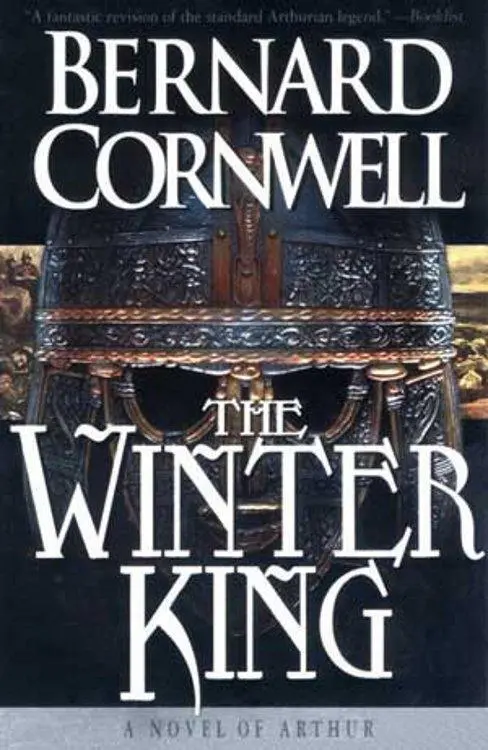
- Название:The Winter King
- Автор:
- Издательство:MacMillan Publishers
- Жанр:
- Год:1997
- ISBN:нет данных
- Рейтинг книги:4 / 5. Голосов: 1
-
Избранное:Добавить в избранное
- Отзывы:
-
Ваша оценка:
The Winter King: краткое содержание, описание и аннотация
Предлагаем к чтению аннотацию, описание, краткое содержание или предисловие (зависит от того, что написал сам автор книги «The Winter King»). Если вы не нашли необходимую информацию о книге — напишите в комментариях, мы постараемся отыскать её.
Fifth century Britain lies on the edge of darkness. Memories of Roman civilization are fading; the pagan Gods are retreating before the spread of Christianity; the Saxons are snapping and snarling at the borders. Only fragile bonds unite the unruly kingdoms of Britain against the invaders, bonds cemented by the vigour of the High King, Uther Pendragon. But the Pendragon is failing, and his heir is no strong leader but a child, born on a bitter winter night.
Only one man could keep Uther's throne safe,only he could hold the warring kingdoms together to face their true enemy, the Saxons. That man is Arthur: soldier, statesman, Merlin's protege, Uther's illegitimate son. But he has been banished, exiled by his own father to Brittany. Derfel, one of his spearmen, narrates the story of Arthur's return and of his quest for peace: embattled, bloody and, finally, triumphant.
The Winter King is a magnificent tale of the Dark Ages and the reality of war and political strife in a land where religion vied with magic for the souls of the people. It portrays Arthur the man rather than the legend, a military genius who, with a small band of warriors bound to him by loyalty and love, struggled to keep alive a flicker of civilization.
The Winter King — читать онлайн бесплатно полную книгу (весь текст) целиком
Ниже представлен текст книги, разбитый по страницам. Система сохранения места последней прочитанной страницы, позволяет с удобством читать онлайн бесплатно книгу «The Winter King», без необходимости каждый раз заново искать на чём Вы остановились. Поставьте закладку, и сможете в любой момент перейти на страницу, на которой закончили чтение.
Интервал:
Закладка:
“I'll tell him.”
“Goodbye, Lord Derfel,” Gudovan said, and I sensed he knew we would never meet again in this world. I tried to embrace the old man, but he waved me away for fear of betraying his emotions. Arthur was waiting at the sea gate where he stared westward across the marshes that were being storm-swept by great pale waves of rain. “This will be bad for the harvest,” he said bleakly. Lightning flickered above the Severn Sea.
“There was a storm like this after Uther died,” I said.
Arthur pulled his cloak tight around his body. “If Uther's son had lived…” he said, then fell silent rather than finish the thought. His mood was as dark and bleak as the weather.
“Uther's son could not have fought Gorfyddyd, Lord,” I said, 'nor Aelle."
“Nor Cadwy,” he added bitterly, 'nor Cerdic. So many enemies, Derfel."
“Then be glad you have friends, Lord.”
He acknowledged that truth with a smile, then turned to gaze northwards. “I worry about one friend,” he said softly. “I worry that Tewdric won't fight. He's tired of war, and I can't blame him for that. Gwent has suffered much worse than Dumnonia.” He looked at me and there were tears in his eyes, or maybe it was just the rain. “I wanted to do such great things, Derfel,” he said, 'such great things. And in the end it was I who betrayed them, wasn't it?"
“No, Lord,” I said firmly.
“Friends should speak the truth,” he chided me gently.
“You needed Guinevere,” I said, embarrassed to be speaking thus, 'and you were meant to be with her, else why would the Gods have brought her to the feasting hall on the night of your betrothal? It isn't for us, Lord, to read the minds of Gods, just to live our fate fully.“ He grimaced at that, for he liked to believe he was master of his own fate. ”You think we should all rush madly down the paths of destiny?"
“I think, Lord, that when fate grips you, you do well to put reason aside.”
“And I did,” he said quietly, then smiled at me. “Do you love someone, Derfel?” he asked.
“The only women I love, Lord, are not for me,” I answered in self-pity. He frowned, then shook his head in commiseration. “Poor Derfel,” he said softly and something about his tone made me look at him. Could he believe I had meant to include Guinevere among those women? I blushed and wondered what I should say, but Arthur had already turned to watch as Nimue came from the hall. “You must tell me about the Isle of the Dead sometime,” he said, 'when we have the time."
“I shall tell you, Lord, after your victory,” I said, 'when you need good tales to fill long winter evenings."
“Yes,” he said, 'after our victory." Though he did not sound hopeful. Gorfyddyd's army was so huge and ours so small.
But before we could fight Gorfyddyd we had to buy a Saxon's peace with God's money. And so we travelled towards Lloegyr.
We smelt Durocobrivis long before we came near the town. That smell came on our second day of travel and we were still a half-day's journey from the captured town, but the wind was in the east and it carried the sour reek of death and smoke far across the deserted farmlands. The fields were ready for harvest, but the people had fled in terror of the Saxons. At Cunetio, a small Roman-built town where we had spent the night, refugees filled the streets and their livestock had been crowded into hastily re-erected winter sheep pens. No one had cheered Arthur in Cunetio, and no wonder, for he was blamed for both the war's length and its disasters. Men grumbled that there had been peace under Uther and nothing but war under Arthur.
Arthur's horsemen led our silent column. They wore their armour, they carried spears and swords, but their shields were slung upside down and green branches were tied to their spear-tips as signs that we came in peace. Behind the vanguard marched Lanval's spearmen, and after them came two score of baggage mules that were loaded with Sansum's gold and with all the heavy leather shields that Arthur's horses wore in battle. A second smaller contingent of horsemen formed the rear guard Arthur himself walked with my wolf-tailed spearmen just behind his banner holder who rode with the leading group of horsemen. Arthur's black mare Llamrei was led by Hygwydd, his servant, and with him was a stranger I took to be another servant. Nimue walked with us and, like Arthur, tried to learn some Saxon from me, but neither was a good pupil. Nimue was soon bored by the coarse tongue while Arthur had too much on his mind, though he duly learned a few words: peace, land, spear, food, mother, father. I was to be his interpreter, the first of many times that I spoke for Arthur and returned his enemy's words. We met the enemy at midday as we descended a long gentle hill where woods grew on either side of the road. An arrow suddenly flickered from the trees and slashed into the turf just ahead of our leading man, Sagramor. He raised a hand and Arthur shouted at every man in the column to be still. “No swords!” he ordered. “Just wait!”
The Saxons must have been watching us all morning for they had assembled a small war-band to face us. Those men, sixty or seventy strong, trailed out of the trees behind their leader, a broad-chested man who walked beneath a chieftain's banner of deer-antlers from which hung shreds of tanned human skin. The chieftain had the Saxon's love of fur; a sensible affection for few things stop a sword stroke so well as a thick rich pelt. This man had a collar of heavy black fur about his neck and strips of fur around his upper arms and thighs. The rest of his clothing was leather or wool: a jerkin, trousers, boots, and a leather helmet crested with a tuft of black fur. At his waist hung a long sword, while in his hand was that favourite Saxon weapon, the broad-bladed axe.
“Are you lost, weal has he shouted. Wealhas was their word for us Britons. It means foreigners and has a derisive ring, just as our word Sais does for them. ”Or are you just tired of life?" He stood firmly in our road, feet apart, head up and with his axe resting on his shoulder. He had a brown beard and a mass of brown hair that jutted sharply out from under his helmet's rim. His men, some in iron helmets, some in leather, and almost all carrying axes, formed a shield-wall across the road. A few had huge leashed dogs, beasts the size of wolves, and of late, we had heard, the Sais had been using such dogs as weapons, releasing them against our shield-walls just a few seconds before they struck with axe and spear. The dogs frightened some of our men far more than the Saxons did.
I walked with Arthur, stopping a few paces short of the defiant Saxon. Neither of us carried spear or shield and our swords rested in their scabbards. “My Lord,” I said in Saxon, 'is Arthur, Protector of Dumnonia, who comes to you in peace."
“For the moment,” the man said, 'peace is yours, but only for the moment.“ He spoke defiantly, but he had been impressed by Arthur's name and he gave my Lord a long curious inspection before glancing back to me. ”Are you Saxon?" he asked.
“I was born one. Now I am British.”
“Can a wolf become a toad?” he asked with a scowl. “Why not become a Saxon again?”
“Because I am sworn to Arthur's service,” I said, 'and that service is to bring your King a great gift of gold."
“For a toad,” the man said, 'you howl well. I am Therdig.“ I had never heard of him. ”Your fame,“ I said, 'gives nightmares to our children.” He laughed. “Well spoken, toad. So who is our King?”
“Aelle,” I said.
“I didn't hear you, toad.”
I sighed. “The Bretwalda Aelle.”
“Well said, toad,” Therdig said. We Britons did not recognize the title Bretwalda, but I used it to placate the Saxon chief. Arthur, who understood nothing of our talk, patiently waited until I was ready to translate something. He had trust in those he appointed and would not hurry me or intervene.
Читать дальшеИнтервал:
Закладка:
Похожие книги на «The Winter King»
Представляем Вашему вниманию похожие книги на «The Winter King» списком для выбора. Мы отобрали схожую по названию и смыслу литературу в надежде предоставить читателям больше вариантов отыскать новые, интересные, ещё непрочитанные произведения.






Обсуждение, отзывы о книге «The Winter King» и просто собственные мнения читателей. Оставьте ваши комментарии, напишите, что Вы думаете о произведении, его смысле или главных героях. Укажите что конкретно понравилось, а что нет, и почему Вы так считаете.