Bernard Cornwell - The Winter King
Здесь есть возможность читать онлайн «Bernard Cornwell - The Winter King» весь текст электронной книги совершенно бесплатно (целиком полную версию без сокращений). В некоторых случаях можно слушать аудио, скачать через торрент в формате fb2 и присутствует краткое содержание. Год выпуска: 1997, Издательство: MacMillan Publishers, Жанр: Историческая проза, на английском языке. Описание произведения, (предисловие) а так же отзывы посетителей доступны на портале библиотеки ЛибКат.
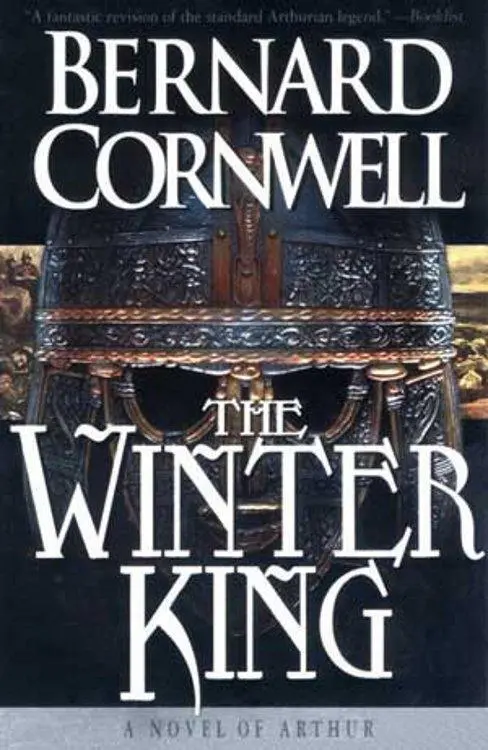
- Название:The Winter King
- Автор:
- Издательство:MacMillan Publishers
- Жанр:
- Год:1997
- ISBN:нет данных
- Рейтинг книги:4 / 5. Голосов: 1
-
Избранное:Добавить в избранное
- Отзывы:
-
Ваша оценка:
The Winter King: краткое содержание, описание и аннотация
Предлагаем к чтению аннотацию, описание, краткое содержание или предисловие (зависит от того, что написал сам автор книги «The Winter King»). Если вы не нашли необходимую информацию о книге — напишите в комментариях, мы постараемся отыскать её.
Fifth century Britain lies on the edge of darkness. Memories of Roman civilization are fading; the pagan Gods are retreating before the spread of Christianity; the Saxons are snapping and snarling at the borders. Only fragile bonds unite the unruly kingdoms of Britain against the invaders, bonds cemented by the vigour of the High King, Uther Pendragon. But the Pendragon is failing, and his heir is no strong leader but a child, born on a bitter winter night.
Only one man could keep Uther's throne safe,only he could hold the warring kingdoms together to face their true enemy, the Saxons. That man is Arthur: soldier, statesman, Merlin's protege, Uther's illegitimate son. But he has been banished, exiled by his own father to Brittany. Derfel, one of his spearmen, narrates the story of Arthur's return and of his quest for peace: embattled, bloody and, finally, triumphant.
The Winter King is a magnificent tale of the Dark Ages and the reality of war and political strife in a land where religion vied with magic for the souls of the people. It portrays Arthur the man rather than the legend, a military genius who, with a small band of warriors bound to him by loyalty and love, struggled to keep alive a flicker of civilization.
The Winter King — читать онлайн бесплатно полную книгу (весь текст) целиком
Ниже представлен текст книги, разбитый по страницам. Система сохранения места последней прочитанной страницы, позволяет с удобством читать онлайн бесплатно книгу «The Winter King», без необходимости каждый раз заново искать на чём Вы остановились. Поставьте закладку, и сможете в любой момент перейти на страницу, на которой закончили чтение.
Интервал:
Закладка:
He smiled again and stood up. “But we're not mice. We have some of the greatest warriors ever to lift a spear. We have champions!” The cheering began. "We can kill cats! And we know to skin them too!
But.“ That last word stopped the next cheer just as it began. ”But,“ Arthur went on, 'not if we wait here to be attacked. Wait here behind Magnis's walls and what happens? The enemy will march around us. Our homes, our wives, our children, our lands, our flocks and our new harvest become theirs, and all we become are mice in a trap. We must attack, and attack soon.”
Agricola waited for the Dumnonian cheers to die. “Attack where?” he asked sourly.
“Where they least expect it, Lord, in their strongest place. Lugg Vale. Straight up the cross! Straight to the heart!” He held up a hand to stop any cheering. “The vale is a narrow place,” he said, 'where no shield-line can be outflanked. The road fords the river north of the valley.“ He was frowning as he spoke, trying to remember a place he had seen only once in his life, but Arthur had a soldier's memory for terrain and only needed to see a place once. ”We would need to put men on the western hill to stop their archers raining arrows down, but once in the vale I swear we cannot be moved.“ Agricola objected. ”We can hold there,“ he agreed, 'but how do we fight our way in? They have two hundred spearmen there, maybe more, but even one hundred men can hold that valley all day. By the time we've fought to the vale's far end Gorfyddyd will have brought his horde down from Branogenium. Worse, the Blackshield Irish who garrison Coel's Hill can march south of the hills and take our rear. We might not be moved, Lord, but we'll be killed where we stand.”
“The Irish on Coel's Hill don't matter,” Arthur said carelessly. He was excited and could not stay still; he began pacing up and down the dais, explaining and cajoling. “Think, I beg you, Lord King' he spoke to Tewdric — 'what happens if we stay here. The enemy will come, we shall retreat behind impregnable walls and they will raid our lands. By midwinter we'll be alive, but will anyone else in Gwent or Dumnonia still live? No. Those hills south of Branogenium are Gorfyddyd's walls. If we breach those walls he has to fight us, and if he fights in Lugg Vale he is a defeated man.”
“His two hundred men in Lugg Vale will stop us,” Agricola insisted.
“They will vanish like the mist!” Arthur proclaimed confidently. “They are two hundred men who have never faced armoured horse in battle.”
Agricola shook his head. "The vale is barred by a wall of felled trees. Armoured horse will be stopped'
he paused to ram his fist into an upraised palm 'dead." He said the word flatly and the finality of his tone made Arthur sit. There was the smell of defeat in the hall. From outside the baths, where the blacksmiths worked day and night, I heard the hiss of a newly forged blade being quenched in water.
“Perhaps I might be permitted to speak?” The speaker was Meurig, Tewdric's son. He had a strangely high voice, almost petulant in its tone, and he was evidently short-sighted for he screwed up his eyes and cocked his head whenever he wanted to look at a man in the main part of the hall. “What I would like to ask,” he said when his father had given him permission to address the council, 'is why we fight at all?" He blinked rapidly when the question was asked.
No one answered. Maybe we were all too astonished at the question.
“Let me, permit me, allow me to explain,” Meurig said in a pedantic tone. He might have been young, but he possessed the confidence of a prince, though I found the false modesty with which he cloaked his pronouncements irritating. “We fight Gorfyd-dyd correct me if I am wrong out of our long-standing alliance with Dumnonia. That alliance has served us well, I doubt not, but Gorfyddyd, as I understand it, has no designs upon the Dumnonian throne.”
A growl came from we Dumnonians, but Arthur held up his hand for silence, then gestured for Meurig to continue. Meurig blinked and tugged at his cross. "I just wonder why we fight? What, if I might phrase it thus, is our casus belli?
“Cow's belly?” Culhwch shouted. Culhwch had seen me when I arrived and had crossed the hall to welcome me. Now he put his mouth close to my ear. “Bastards have got thin shields, Derfel,” he said, 'and they're looking for a way out."
Arthur stood again and spoke courteously to Meurig. “The cause of the war, Lord Prince, is your father's oath to preserve King Mordred's throne, and King Gorfyddyd's evident desire to take that throne from my King.”
Meurig shrugged. “But correct me, please, I beg you but as I understand these things Gorfyddyd does not seek to dethrone King Mordred.”
“You know that?” Culhwch shouted.
“There are indications,” Meurig said irritably.
“Bastards have been talking to the enemy,” Culhwch whispered in my ear. “Ever had a knife in the back, Derfel? Arthur's getting one now.”
Arthur stayed calm. “What indications?” he asked mildly.
King Tewdric had stayed silent as his son spoke, evidence that he had given his permission for Meurig to suggest, however delicately, that Gorfyddyd should be appeased rather than confronted, but now, looking old and tired, the King took control of the hall. “There are no indications, Lord, upon which I would want to depend my strategy. Nevertheless' and when Tewdric pronounced that word so emphatically we all knew Arthur had lost the debate' nevertheless Lord, I am convinced that we need not provoke Powys unnecessarily. Let us see whether we cannot have peace.” He paused, almost as if he feared the word would anger Arthur, but Arthur said nothing. Tewdric sighed. “Gorfyddyd fights,” he said slowly and carefully, 'because of an insult done to his family.“ Again he paused, fearing that his bluntness might have offended Arthur, but Arthur was never a man to evade responsibility and he nodded his reluctant agreement with Tewdric's frankness. ”While we,“ Tewdric continued, 'fight to keep the oath we gave to High King Uther. An oath by which we promised to preserve Mordred's throne. I, for one, will not break that oath.”
“Nor I!” Arthur said loudly.
“But what, Lord Arthur, if King Gorfyddyd has no designs on that throne?” King Tewdric asked. “If he means to keep Mordred as King, then why do we fight?”
There was uproar in the hall. We Dumnonians smelled treachery, the men of Gwent smelled an escape from the war, and for a time we shouted at each other until at last Arthur regained order by slapping his hand on the table. “The last envoy I sent to Gorfyddyd,” Arthur said, 'had his head sent back in a sack. Are you suggesting, Lord King, we send another?"
Tewdric shook his head. “Gorfyddyd is refusing to receive my envoys. They are turned back at the frontier. But if we wait here and let his army waste its efforts against our walls then I believe he will become discouraged and will then negotiate.” His men murmured agreement. Arthur tried one more time to dissuade Tewdric. He conjured a picture of our army rooted behind walls while Gorfyddyd's horde ravaged the newly harvested farms, but the men of Gwent would not be moved by his oratory or his passion. They only saw outflanked shield-walls and fields of dead men, and so they seized on their King's belief that peace would come if only they retreated into Magnis and let Gorfyddyd weary his men by battering its strong walls. They began to demand Arthur's agreement for their strategy and I saw the hurt on his face. He had lost. If he waited here then Gorfyddyd would demand his head. If he ran to Armorica he would live, but he would be abandoning Mordred and his own dream of a just, united Britain. The clamour in the hall grew louder, and it was then that Galahad stood and shouted for a chance to be heard.
Читать дальшеИнтервал:
Закладка:
Похожие книги на «The Winter King»
Представляем Вашему вниманию похожие книги на «The Winter King» списком для выбора. Мы отобрали схожую по названию и смыслу литературу в надежде предоставить читателям больше вариантов отыскать новые, интересные, ещё непрочитанные произведения.

Обсуждение, отзывы о книге «The Winter King» и просто собственные мнения читателей. Оставьте ваши комментарии, напишите, что Вы думаете о произведении, его смысле или главных героях. Укажите что конкретно понравилось, а что нет, и почему Вы так считаете.