Thomas Keneally - Schindler's Ark
Здесь есть возможность читать онлайн «Thomas Keneally - Schindler's Ark» весь текст электронной книги совершенно бесплатно (целиком полную версию без сокращений). В некоторых случаях можно слушать аудио, скачать через торрент в формате fb2 и присутствует краткое содержание. Город: London, Год выпуска: 1982, ISBN: 1982, Издательство: Hodder and Stoughton, Жанр: Историческая проза, на английском языке. Описание произведения, (предисловие) а так же отзывы посетителей доступны на портале библиотеки ЛибКат.
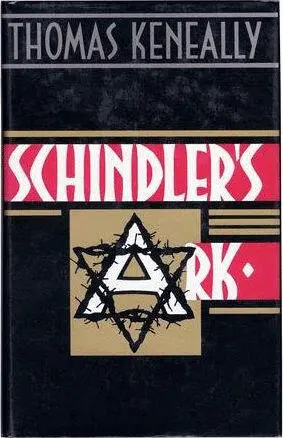
- Название:Schindler's Ark
- Автор:
- Издательство:Hodder and Stoughton
- Жанр:
- Год:1982
- Город:London
- ISBN:0-340-27838-2
- Рейтинг книги:4 / 5. Голосов: 1
-
Избранное:Добавить в избранное
- Отзывы:
-
Ваша оценка:
Schindler's Ark: краткое содержание, описание и аннотация
Предлагаем к чтению аннотацию, описание, краткое содержание или предисловие (зависит от того, что написал сам автор книги «Schindler's Ark»). Если вы не нашли необходимую информацию о книге — напишите в комментариях, мы постараемся отыскать её.
Schindler’s List
Working with the actual testimony of Schindler’s Jews, Thomas Keneally artfully depicts the courage and shrewdness of an unlikely savior, a man who is a flawed mixture of hedonism and decency and who, in the presence of unutterable evil, transcends the limits of his own humanity. From From
A mesmerizing novel based on the true story of Oskar Schindler, a German industralist who saved and succored more than 1000 Jews from the Nazis at enormous financial and emotional expense. How the German Oskar Schindler came to save more than one thousand Polish Jews during the Holocaust is one of the most fascinating stories of the century. Although millions are now learning about Schindler through Steven Spielberg’s recent Academy Award-winning film, his achievement first gained prominence with Keneally’s 1982 “facticious” novel (which is also the basis for the film). Keneally’s account is less melodramatic than the motion picture, and although he does not fully explain how a hedonistic German could have been so altered by the plight of the Jewish workers in his factory, he does make Schindler less enigmatic than the big-screen version. Ben Kingsley, one of the film's stars, reads in a calculatedly matter-of-fact tone, letting the story's power alone convey its complicated emotions. Highly recommended.
Michael Adams, Fairleigh Dickinson Univ. Lib., Madison, N.J.
Schindler's Ark — читать онлайн бесплатно полную книгу (весь текст) целиком
Ниже представлен текст книги, разбитый по страницам. Система сохранения места последней прочитанной страницы, позволяет с удобством читать онлайн бесплатно книгу «Schindler's Ark», без необходимости каждый раз заново искать на чём Вы остановились. Поставьте закладку, и сможете в любой момент перейти на страницу, на которой закончили чтение.
Интервал:
Закладка:
The previous Sunday a thirteen-year-old orphan thought he’d be safe because he had, at other roll calls, passed for a young man. But naked, he wasn’t able to argue away the childlikeness of his body. He had been told to dress and been marked down for the children’s group.
Now, as parents at the other end of the Appellplatz cried out for their rounded-up children and while the loudspeakers brayed forth a sentimental song called “Mammi, kauf mir ein Pferdchen” (mummy, buy me a pony), the boy simply passed from one group to another, moved with that infallible instinct which had once characterized the movement of the red-capped child in Plac Zgody. And as with Redcap, no one had seen him. He stood, a plausible adult among the others, as the hateful music roared and his heart sought to beat its way through his rib cage. Then, faking the cramps of diarrhea, he asked a guard to let him go to the latrine.
The long latrines lay beyond the men’s camp, and arriving there the boy stepped over the plank on which men sat while defecating. An arm either side of the pit, he lowered himself, trying to find knee- and toeholds in either wall. The stench blinded him, and flies invaded his mouth and ears and nostrils. As he entered the larger foulness and touched the bottom of the pit, he seemed to hear what he believed to be a hallucinatory murmur of voices behind the rage of flies. were they behind you? said one voice. And another said, Dammit, this is our place!
There were ten children in there with him. Amon’s report made use of the compound word Sonderbehandlung—Special Treatment.
It was a term that would become famous in later years, but this was the first time that Pemper had come across it. Of course, it had a sedative, even medical ring, but Mietek could tell by now that medicine was not involved.
A telegram Amon dictated that morning to be transmitted to Auschwitz gave more than a hint of its meaning. Amon explained that to make escape more difficult he had insisted that those selected for Special Treatment should drop any remnants of civilian clothing they still possessed at the rail siding and should put on striped prison clothes there. Since a great shortage of such garments prevailed, the stripes in which the Płaszów candidates for Special Treatment turned up at Auschwitz should be sent back at once to Concentration Camp Płaszów for reuse.
And all the children left in Płaszów, of whom the greatest number were those who shared the latrine with the tall orphan, hid out or impersonated adults until later searches discovered them and took them to the Ostbahn for the slow day’s journey 60 kilometers to Auschwitz. The cattle cars were used that way all through high summer, taking troops and supplies east to the stalemated lines near Lwów and, on the return trip, wasting time at sidings while SS doctors watched ceaseless lines of the naked run before them.
CHAPTER 29
Oskar, sitting in Amon’s office, the windows flung open to a breathless summer’s day, had the impression from the start that this meeting was a fake. Perhaps Madritsch and Bosch felt the same, for their gaze kept drifting away from Amon toward the limestone trolleys outside the window, toward any passing truck or wagon.
Only Untersturmführer Leo John, who took notes, felt the need to sit up straight and keep his top button done up. Amon had described it as a security conference. Though the Front had now been stabilized, he said, the advance of the Russian center to the suburbs of Warsaw had encouraged partisan activity all over the Government General. Jews who heard of it were encouraged to attempt escapes. They did not know, of course, Amon pointed out, that they were better off behind the wire than exposed to those Jew-killers among the Polish partisans. In any case, everyone had to beware of partisan attack from outside and, worst of all, of collusion between the partisans and the prisoners.
Oskar tried to imagine the partisans invading Płaszów, letting all the Poles and Jews pour out, making of them an instant army. It was a daydream, and who could believe it? But there was Amon, straining to convince them all that he believed it. It had a purpose, this little act. Oskar was sure of that.
Bosch said, “If the partisans are coming out to your place, Amon, I hope it’s not a night when I’ve been invited.”
“Amen, amen,” murmured Schindler.
After the meeting, whatever it meant, Oskar took Amon to his car, parked outside the Administration Building. He opened the trunk. Inside lay a richly tooled saddle worked with designs characteristic of the Zakopane region in the mountains south of Cracow. It was necessary for Oskar to keep priming Amon with such gifts even now that payment for the forced labor of DEF no longer went anywhere near Hauptsturmführer Goeth but, instead, was sent directly to the Cracow area representative of General Pohl’s Oranienburg headquarters.
Oskar offered to drive both Amon and his saddle down to the Commandant’s villa.
On such a blistering day, some of the trolley-pushers were showing a little less than the required zeal. But the saddle had mollified Amon, and in any case, it was no longer permitted for him to jump from a car and shoot people down in their tracks. The car rolled past the garrison barracks and came to the siding where a string of cattle cars stood. Oskar could tell, by the haze hanging above the cars and blending withand wavering in the heat rebounding from the roofs, that they were full. Even above the sound of the engine, you could hear the mourning from inside, the pleas for water.
Oskar braked his car and listened. This was permitted him, in view of the splendid multizłoty saddle in the trunk. Amon smiled indulgently at his sentimental friend. They’re partly Płaszów people, said Amon, and people from the work camp at Szebnie. And Poles and Jews from Montelupich. They’re going to Mauthausen, Amon said whimsically. They’re complaining now? They don’t know what complaint is….
The roofs of the cars were bronzed with heat. You have no objection, said Oskar, if I call out your fire brigade?
Amon gave a What-will-you-think-of-next? sort of laugh. He implied that he wouldn’t let anyone else summon the firemen, but he’d tolerate Oskar because Oskar was such a character and the whole business would make a good dinner-party anecdote.
But as Oskar sent Ukrainian guards to ring the bell for the Jewish firemen, Amon was bemused.
He knew that Oskar knew what Mauthausen meant. If you hosed the cars for people, you were making them promises about a future. And would not such promises constitute, in anyone’s code, a true cruelty? So disbelief mingled with tolerant amusement in Amon as the hoses were run out and jets of water fell hissing on the scalding cartops. Neuschel also came down from the office to shake his head and smile as the people inside the cars moaned and roared with gratitude. Grün, Amon’s bodyguard, stood chatting with Untersturmführer John and clapped his side and hooted as the water rained down. Even at full extension the hoses reached only halfway down the line of cars. Next, Oskar was asking Amon for the loan of a truck or wagon andofa few Ukrainians to drive into Zablocie and fetch the fire hoses from DEF. They were 200-meter hoses, Oskar said. Amon, for some reason, found that sidesplitting. “Of course I’ll authorize a truck,” said Amon. Amon was willing to do anything for the sake of the comedy of life.
Oskar gave the Ukrainians a note for Bankier and Garde. While they were gone, Amon was so willing to enter the spirit of the event that he permitted the doors of the cars to be opened and buckets of water to be passed in and the dead, with their pink, swollen faces, to be lifted out. And still, all around the railway siding stood amused SS officers and NCO’S. “What does he think he’s saving them from?”
Читать дальшеИнтервал:
Закладка:
Похожие книги на «Schindler's Ark»
Представляем Вашему вниманию похожие книги на «Schindler's Ark» списком для выбора. Мы отобрали схожую по названию и смыслу литературу в надежде предоставить читателям больше вариантов отыскать новые, интересные, ещё непрочитанные произведения.










Обсуждение, отзывы о книге «Schindler's Ark» и просто собственные мнения читателей. Оставьте ваши комментарии, напишите, что Вы думаете о произведении, его смысле или главных героях. Укажите что конкретно понравилось, а что нет, и почему Вы так считаете.