Thomas Keneally - Schindler's Ark
Здесь есть возможность читать онлайн «Thomas Keneally - Schindler's Ark» весь текст электронной книги совершенно бесплатно (целиком полную версию без сокращений). В некоторых случаях можно слушать аудио, скачать через торрент в формате fb2 и присутствует краткое содержание. Город: London, Год выпуска: 1982, ISBN: 1982, Издательство: Hodder and Stoughton, Жанр: Историческая проза, на английском языке. Описание произведения, (предисловие) а так же отзывы посетителей доступны на портале библиотеки ЛибКат.
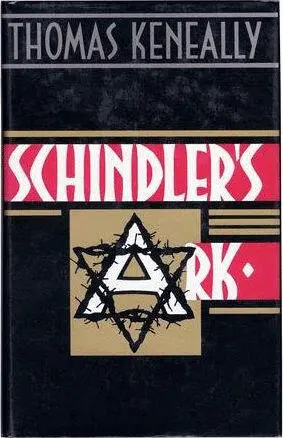
- Название:Schindler's Ark
- Автор:
- Издательство:Hodder and Stoughton
- Жанр:
- Год:1982
- Город:London
- ISBN:0-340-27838-2
- Рейтинг книги:4 / 5. Голосов: 1
-
Избранное:Добавить в избранное
- Отзывы:
-
Ваша оценка:
Schindler's Ark: краткое содержание, описание и аннотация
Предлагаем к чтению аннотацию, описание, краткое содержание или предисловие (зависит от того, что написал сам автор книги «Schindler's Ark»). Если вы не нашли необходимую информацию о книге — напишите в комментариях, мы постараемся отыскать её.
Schindler’s List
Working with the actual testimony of Schindler’s Jews, Thomas Keneally artfully depicts the courage and shrewdness of an unlikely savior, a man who is a flawed mixture of hedonism and decency and who, in the presence of unutterable evil, transcends the limits of his own humanity. From From
A mesmerizing novel based on the true story of Oskar Schindler, a German industralist who saved and succored more than 1000 Jews from the Nazis at enormous financial and emotional expense. How the German Oskar Schindler came to save more than one thousand Polish Jews during the Holocaust is one of the most fascinating stories of the century. Although millions are now learning about Schindler through Steven Spielberg’s recent Academy Award-winning film, his achievement first gained prominence with Keneally’s 1982 “facticious” novel (which is also the basis for the film). Keneally’s account is less melodramatic than the motion picture, and although he does not fully explain how a hedonistic German could have been so altered by the plight of the Jewish workers in his factory, he does make Schindler less enigmatic than the big-screen version. Ben Kingsley, one of the film's stars, reads in a calculatedly matter-of-fact tone, letting the story's power alone convey its complicated emotions. Highly recommended.
Michael Adams, Fairleigh Dickinson Univ. Lib., Madison, N.J.
Schindler's Ark — читать онлайн бесплатно полную книгу (весь текст) целиком
Ниже представлен текст книги, разбитый по страницам. Система сохранения места последней прочитанной страницы, позволяет с удобством читать онлайн бесплатно книгу «Schindler's Ark», без необходимости каждый раз заново искать на чём Вы остановились. Поставьте закладку, и сможете в любой момент перейти на страницу, на которой закончили чтение.
Интервал:
Закладка:
When the large hoses from DEF arrived and all the cars had been drenched, the joke took on new dimensions. Oskar, in his note to Bankier, had instructed that the manager also go into Oskar’s own apartment and fill a hamper with liquor and cigarettes, some good cheeses and sausages, and so on. Oskar now handed the hamper to the NCO at the rear of the train. It was an open transaction, and the man seemed a little embarrassed at the largesse, shoving it quickly into the rear van in case one of the officers of KL Płaszów reported him. Yet Oskar seemed to be in such curious favor with the Commandant that the NCO listened to him respectfully. “When you stop near stations,” said Oskar, “will you open the car doors?”
Years later, two survivors of the transport, Doctors Rubinstein and Feldstein, would let Oskar know that the NCO had frequently ordered the doors opened and the water buckets regularly filled on the tedious journey to Mauthausen. For most of the transport, of course, that was no more than a comfort before dying.
As Oskar moves along the string of cars, accompanied by the laughter of the SS, bringing a mercy which is in large part futile, it can be seen that he’s not so much reckless anymore but possessed. Even Amon can tell that his friend has shifted into a new gear. All this frenzy about getting the hoses as far as the farthest car, then bribing an SS man in full view of the SS personnel—it would take just a shift in degree or so in the laughter of Scheidt or John or Hujar to bring about a mass denunciation of Oskar, a piece of information the Gestapo could not ignore. And then Oskar would go into Montelupich and, in view of previous racial charges against him, probably on to Auschwitz. So Amon was horrified by the way Oskar insisted on treating those dead as if they were poor relations traveling third class but bound for a genuine destination.
Some time after two, a locomotive hauled the whole miserable string of cattle cars away toward the main line, and all the hoses could again be wound up. Schindler delivered Amon and his saddle to the Goeth villa. Amon could see that Oskar was still preoccupied and, for the first time in their association, gave his friend some advice about living. You have to relax, said Amon. You can’t go running after every trainload that leaves this place.
Adam Garde, engineer and prisoner of Emalia, also saw symptoms of this shift in Oskar. On the night of July 20, an SS man had come into Garde’s barracks and roused him. The Herr Direktor had called the guardhouse and said it was necessary to see engineer Garde, professionally, in his office.
Garde found Oskar listening to the radio, his face flushed, a bottle and two glasses in front of him on the table. Behind the desk these days was a relief map of Europe. It had never been there in the days of German expansion, but Oskar seemed to take a sharp interest in the shrinkage of the German Fronts. Tonight he had the radio tuned to the Deutschlandsender, not—as was usually the case—to the BBC. Inspirational music was being played, as it often was as prelude to important announcements.
Oskar seemed to be listening avidly. When Garde came in, he stood up and hustled the young engineer to a seat. He poured cognac and passed it hurriedly across the desk. “There’s been an attempt on Hitler’s life,” said Oskar.
It had been announced earlier in the evening, and the story then was that Hitler had survived. They’d promised that he would soon be speaking to the German people. But it hadn’t happened. Hours had passed and they hadn’t been able to produce him. And they kept playing a lot of Beethoven, the way they had when Stalingrad fell.
Oskar and Garde sat together for hours. A seditious event, a Jew and a German listening together—all night if necessary—to discover if the Führer had died. Adam Garde, of course, suffered that same breathless surge of hope. He noticed that Oskar kept gesturing limply, as if the possibility that the Leader was dead had unstrung his muscles. He drank devoutly and urged Garde to drink up. If it was true, said Oskar, then Germans, ordinary Germans like himself, could begin to redeem themselves.
Purely because someone close to Hitler had had the guts to remove him from the earth. It’s the end of the SS, said Oskar. Himmler will be in jail by morning.
Oskar blew clouds of smoke. Oh, my God, he said, the relief to see the end of this system!
The 10 P.M. news brought only the earlier statement. There had been an attempt on the Führer’s life but it had failed and the Führer would be broadcasting in a few minutes. When, as the hour passed, Hitler did not speak, Oskar turned to a fantasy which would be popular with many Germans as the war drew to a close. “Our troubles are over,” he said. “The world’s sane again. Germany can ally itself with the West against the Russians.”
Garde’s hopes were more modest. At worst, he hoped for a ghetto which was a ghetto in the old Franz Josef sense.
And as they drank and the music played, it seemed more and more reasonable that Europe would yield them that night the death vital to its sanity. They were citizens of the continent again; they were not the prisoner and the Herr Direktor. The radio’s promises to produce a message from the Führer recurred, and every time, Oskar laughed with increasing point.
Midnight came and they paid no attention anymore to the promises. Their very breath was lighter in this new post-Führer Cracow.
By morning, they surmised, there would be dancing in every square, and it would go unpunished. The Wehrmacht would arrest Frank in the Wawel and encircle the SS complex in Pomorska Street.
A little before 1 A.M., Hitler was heard broadcasting from Rastenberg. Oskar had been so convinced that that voice was a voice he would never need to hear again that for a few seconds he did not recognize the sound, in spite of its familiarity, thinking it just another temporizing Party spokesman. But Garde heard the speech from its first word, and knew whose voice it was. “My German comrades!” it began. “If I speak to you today, it is first in order that you should hear my voice and should know that I am unhurt and well, and, second, that you should know of a crime unparalleled in German history.”
The speech ended four minutes later with a reference to the conspirators. “This time we shall settle accounts with them in the manner to which we National Socialists are accustomed.”
Adam Garde had never quite bought the fantasy Oskar had been pushing all evening. For Hitler was more than a man: he was a system with ramifications. Even if he died, it was no guarantee the system would alter its character. Besides, it was not in the nature of a phenomenon such as Hitler to perish in the space of a single evening. But Oskar had been believing in the death with a feverish conviction for hours now, and when it turned out to be an illusion, it was young Garde who found himself cast as the comforter, while Oskar spoke with an almost operatic grief. “All our vision of deliverance is futile,” he said. He poured another glass of cognac each, then pushed the bottle across the desk, opening his cigarette box. “Take the cognac and some cigarettes and get some sleep,” he said. “We’ll have to wait a little longer for our freedom.”
In the confusion of the cognac, of the news and of its sudden reversal in the small hours, Garde did not think it strange that Oskar was talking about “our freedom,” as if they had an equivalent need, were both prisoners who had to wait passively to be liberated. But back in his bunk Garde thought, It’s amazing that Herr Direktor should have talked like that, like someone easily given to fantasies and fits of depression. Usually, he was so pragmatic.
Pomorska Street and the camps around Cracow crawled with rumors that late summer, of some imminent rearrangement of prisoners.
Читать дальшеИнтервал:
Закладка:
Похожие книги на «Schindler's Ark»
Представляем Вашему вниманию похожие книги на «Schindler's Ark» списком для выбора. Мы отобрали схожую по названию и смыслу литературу в надежде предоставить читателям больше вариантов отыскать новые, интересные, ещё непрочитанные произведения.












Обсуждение, отзывы о книге «Schindler's Ark» и просто собственные мнения читателей. Оставьте ваши комментарии, напишите, что Вы думаете о произведении, его смысле или главных героях. Укажите что конкретно понравилось, а что нет, и почему Вы так считаете.