Thomas Keneally - Schindler's Ark
Здесь есть возможность читать онлайн «Thomas Keneally - Schindler's Ark» весь текст электронной книги совершенно бесплатно (целиком полную версию без сокращений). В некоторых случаях можно слушать аудио, скачать через торрент в формате fb2 и присутствует краткое содержание. Город: London, Год выпуска: 1982, ISBN: 1982, Издательство: Hodder and Stoughton, Жанр: Историческая проза, на английском языке. Описание произведения, (предисловие) а так же отзывы посетителей доступны на портале библиотеки ЛибКат.
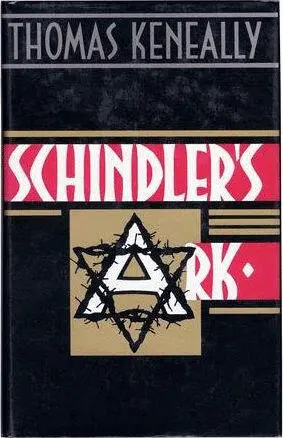
- Название:Schindler's Ark
- Автор:
- Издательство:Hodder and Stoughton
- Жанр:
- Год:1982
- Город:London
- ISBN:0-340-27838-2
- Рейтинг книги:4 / 5. Голосов: 1
-
Избранное:Добавить в избранное
- Отзывы:
-
Ваша оценка:
Schindler's Ark: краткое содержание, описание и аннотация
Предлагаем к чтению аннотацию, описание, краткое содержание или предисловие (зависит от того, что написал сам автор книги «Schindler's Ark»). Если вы не нашли необходимую информацию о книге — напишите в комментариях, мы постараемся отыскать её.
Schindler’s List
Working with the actual testimony of Schindler’s Jews, Thomas Keneally artfully depicts the courage and shrewdness of an unlikely savior, a man who is a flawed mixture of hedonism and decency and who, in the presence of unutterable evil, transcends the limits of his own humanity. From From
A mesmerizing novel based on the true story of Oskar Schindler, a German industralist who saved and succored more than 1000 Jews from the Nazis at enormous financial and emotional expense. How the German Oskar Schindler came to save more than one thousand Polish Jews during the Holocaust is one of the most fascinating stories of the century. Although millions are now learning about Schindler through Steven Spielberg’s recent Academy Award-winning film, his achievement first gained prominence with Keneally’s 1982 “facticious” novel (which is also the basis for the film). Keneally’s account is less melodramatic than the motion picture, and although he does not fully explain how a hedonistic German could have been so altered by the plight of the Jewish workers in his factory, he does make Schindler less enigmatic than the big-screen version. Ben Kingsley, one of the film's stars, reads in a calculatedly matter-of-fact tone, letting the story's power alone convey its complicated emotions. Highly recommended.
Michael Adams, Fairleigh Dickinson Univ. Lib., Madison, N.J.
Schindler's Ark — читать онлайн бесплатно полную книгу (весь текст) целиком
Ниже представлен текст книги, разбитый по страницам. Система сохранения места последней прочитанной страницы, позволяет с удобством читать онлайн бесплатно книгу «Schindler's Ark», без необходимости каждый раз заново искать на чём Вы остановились. Поставьте закладку, и сможете в любой момент перейти на страницу, на которой закончили чтение.
Интервал:
Закладка:
Oskar, leaning back in the driver’s seat of his BMW, the windows up and a handkerchief clamped over his mouth and nose, thought how they must be burning the Spiras with all the rest. He’d been astounded when they’d executed all the ghetto policemen and their families last Christmas, as soon as Symche Spira had finished directing the dismantling of the ghetto. They had brought them all, and their wives and children, up here on a gray afternoon and shot them as the cold sun vanished. They’d shot the most faithful (spira and Zellinger) as well as the most grudging. Spira and bashful Mrs. Spira and the ungifted Spira children whom Pfefferberg had patiently tutored—they’d all stood naked within a circle of rifles, shivering against each other’s flanks, Spira’s Napoleonic OD uniform now just a heap of clothing for recycling, flung down at the fort entrance. And Spira still assuring everyone that it could not happen.
That execution had shocked Oskar because it showed that there was no obedience or obeisance a Jew could make to guarantee survival. And now they were burning the Spiras as anonymously, as ungratefully, as they had executed them. Even the Gutters! It had happened after a dinner at Amon’s the year before. Oskar had gone home early, but later heard what had happened after he left. John and Neuschel had started in on Bosch. They thought he was squeamish. He’d made a fuss about being a veteran of the trenches. But they had not seen him perform any executions.
They kept it going for hours—the joke of the evening. In the end, Bosch had ordered David Gutter and his son roused in their barracks and Mrs. Gutter and the Gutter girl fetched from theirs.
Again, it was a matter of faithful servants.
David Gutter had been the last president of the Judenrat and had cooperated in everything—had never gone to Pomorska Street and tried to start any argument over the scope of the SS Aktions or the size of transports sent to Bełżec. Gutter had signed everything and thought every demand reasonable. Besides that, Bosch had used Gutter as an agent inside and outside Płaszów, sending him up to Cracow with truckloads of newly upholstered furniture or pocketfuls of jewelry to sell on the black market. And Gutter had done it because he was a scoundrel anyhow, but mainly because he believed it would make his wife and children immune. At two o’clock that polar morning, a Jewish policeman, Zauder, a friend of Pfefferberg’s and of Stern’s, later to be shot by Pilarzik during one of that officer’s drunken rampages, but on duty at the women’s gate that night, heard it—Bosch ordering the Gutters into position in a depression in the ground near the women’s camp. The children pleading, but David and Mrs. Gutter taking it calmly, knowing there was no argument. And now as Oskar watched, all of that evidence—the Gutters, the Spiras, the rebels, the priests, the children, the pretty girls found on Aryan papers—all of it was returning to that mad hill to be obliterated in case the Russians came to Płaszów and made too much of it. Care, said Oranienburg in a letter to Amon, is to be taken with the future disposal of all bodies, and for that purpose they were sending a representative of a Hamburg engineering firm to survey the site for crematoria. In the meantime, the dead were to be kept, awaiting retrieval, at well-marked burial sites.
When, on that second visit, Oskar saw the extent of the fires on Chujowa Górka, his first impulse was to stay in the car, that sane German mechanism, and drive home. Instead he went calling on friends of his in the workshop, and then visited Stern’s office. He thought that with all that grit falling on the windows, it wasn’t out of the question that people inside Płaszów would consider suicide. Yet he was the one who seemed depressed. He didn’t ask any of his usual questions, such as “All right, Herr Stern, if God made man in His image, which race is most like Him? Is a Pole more like Him than a Czech?” There was none of that whimsy today. Instead he growled, “What does everyone think?” Stern told him that the prisoners were like prisoners. They did their work and hoped for survival.
“I’m going to get you out,” Oskar grunted all at once. He put a balled fist on the desk. “I’m going to get you all out.”
“All?” asked Stern. He couldn’t help himself. Such massive Biblical rescues didn’t suit the era.
“You, anyhow,” said Oskar. “Y.”
CHAPTER 28
In Amon’s office in the Administration Building there were two typists. One was a young German woman, a Frau Kochmann; the other, a studious young prisoner, Mietek Pemper. Pemper would one day become secretary to Oskar, but in the summer of ‘44 he worked with Amon, and like anyone else in that situation was not too sanguine about his chances.
He first came into close contact with Amon as accidentally as had Helen Hirsch, the maid. Pemper was summoned to Amon’s office after someone had recommended him to the Commandant. The young prisoner was a student of accounting, a touch typist, and could take dictation in both Polish and German shorthand. His powers of memory were said to be a byword. So, a prisoner of his skills, Pemper found himself in Płaszów’s main office with Amon, and would also sometimes take dictation from Amon at the villa.
The irony was that Pemper’s photographic memory would in the end, more than the memory of any other prisoner, bring about the hanging of Amon in Cracow. But Pemper did not believe such an era would come. In 1944, if he’d had to guess who’d be the most likely victim of his near-perfect recall, he would have had to say Mietek Pemper himself.
Pemper was meant to be the backup typist. For confidential documents, Amon was to use Frau Kochmann, a woman not nearly as competent as Mietek and slow at dictation. Sometimes Amon would break the rule and let young Pemper take confidential dictation. And Mietek, even while he sat across Amon’s desk with the pad on his knee, could not stop contradictory suspicions from distracting him. The first was that all these inside reports and memoranda, whose details he was retaining, would make him a prime witness on the remote day when he and Amon stood before a tribunal. The other suspicion was that Amon would, in the end, have to erase him as one later would a classified tape.
Nonetheless, Mietek prepared each morning not only his own sets of typing paper, carbons, and duplicates, but a dozen for the German girl. After the girl had done her typing, Pemper would pretend to destroy the carbons, but in fact would keep and read them. He kept no written records, but he had had this reputation for memory since school days. He knew that if that tribunal ever met, if he and Amon sat in the body of the court, he would astound the Commandant with the precise dating of his evidence.
Pemper saw some astonishing classified documents. He read, for example, memoranda on the flogging of women. Camp commanders were to be reminded that it should be done to maximum effect. It was demeaning to involve SS personnel, and therefore Czech women were to be flogged by Slovak women, Slovaks by Czechs. Russians and Poles were to be bracketed for the same purposes.
Commandants were to use their imagination in exploiting other national and cultural differences.
Another bulletin reminded them that they did not hold in their own persons the right to impose the death sentence. Commandants could seek authorization by telegram or letter to the Reich Security Main Office. Amon had done this in the spring with two Jews who’d escaped from the subcamp at Wieliczka and whom he proposed to hang. A telegram of permission had returned from Berlin, signed, Pemper noticed, by Dr. Ernst Kaltenbrunner, Chief of the Reich Security Main Office.
Now, in April, Pemper read a memorandum from Gerhard Maurer, the Labor Allocation Chief of General Glücks’s Section D.
Читать дальшеИнтервал:
Закладка:
Похожие книги на «Schindler's Ark»
Представляем Вашему вниманию похожие книги на «Schindler's Ark» списком для выбора. Мы отобрали схожую по названию и смыслу литературу в надежде предоставить читателям больше вариантов отыскать новые, интересные, ещё непрочитанные произведения.












Обсуждение, отзывы о книге «Schindler's Ark» и просто собственные мнения читателей. Оставьте ваши комментарии, напишите, что Вы думаете о произведении, его смысле или главных героях. Укажите что конкретно понравилось, а что нет, и почему Вы так считаете.