Thomas Keneally - Schindler's Ark
Здесь есть возможность читать онлайн «Thomas Keneally - Schindler's Ark» весь текст электронной книги совершенно бесплатно (целиком полную версию без сокращений). В некоторых случаях можно слушать аудио, скачать через торрент в формате fb2 и присутствует краткое содержание. Город: London, Год выпуска: 1982, ISBN: 1982, Издательство: Hodder and Stoughton, Жанр: Историческая проза, на английском языке. Описание произведения, (предисловие) а так же отзывы посетителей доступны на портале библиотеки ЛибКат.
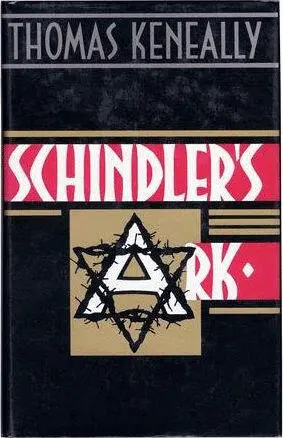
- Название:Schindler's Ark
- Автор:
- Издательство:Hodder and Stoughton
- Жанр:
- Год:1982
- Город:London
- ISBN:0-340-27838-2
- Рейтинг книги:4 / 5. Голосов: 1
-
Избранное:Добавить в избранное
- Отзывы:
-
Ваша оценка:
Schindler's Ark: краткое содержание, описание и аннотация
Предлагаем к чтению аннотацию, описание, краткое содержание или предисловие (зависит от того, что написал сам автор книги «Schindler's Ark»). Если вы не нашли необходимую информацию о книге — напишите в комментариях, мы постараемся отыскать её.
Schindler’s List
Working with the actual testimony of Schindler’s Jews, Thomas Keneally artfully depicts the courage and shrewdness of an unlikely savior, a man who is a flawed mixture of hedonism and decency and who, in the presence of unutterable evil, transcends the limits of his own humanity. From From
A mesmerizing novel based on the true story of Oskar Schindler, a German industralist who saved and succored more than 1000 Jews from the Nazis at enormous financial and emotional expense. How the German Oskar Schindler came to save more than one thousand Polish Jews during the Holocaust is one of the most fascinating stories of the century. Although millions are now learning about Schindler through Steven Spielberg’s recent Academy Award-winning film, his achievement first gained prominence with Keneally’s 1982 “facticious” novel (which is also the basis for the film). Keneally’s account is less melodramatic than the motion picture, and although he does not fully explain how a hedonistic German could have been so altered by the plight of the Jewish workers in his factory, he does make Schindler less enigmatic than the big-screen version. Ben Kingsley, one of the film's stars, reads in a calculatedly matter-of-fact tone, letting the story's power alone convey its complicated emotions. Highly recommended.
Michael Adams, Fairleigh Dickinson Univ. Lib., Madison, N.J.
Schindler's Ark — читать онлайн бесплатно полную книгу (весь текст) целиком
Ниже представлен текст книги, разбитый по страницам. Система сохранения места последней прочитанной страницы, позволяет с удобством читать онлайн бесплатно книгу «Schindler's Ark», без необходимости каждый раз заново искать на чём Вы остановились. Поставьте закладку, и сможете в любой момент перейти на страницу, на которой закончили чтение.
Интервал:
Закладка:
He got back to the Administration Building, climbed the stairs to Stern’s office and, finding Rebecca, asked her to marry him. Urgency, Rebecca was pleased and concerned to notice, had entered the business now.
That evening, in the dead woman’s dress, he visited his mother again and the council of chaperones in Hut 57. They awaited only the arrival of a rabbi. But if rabbis came, they remained only a few days on their way to Auschwitz—not long enough for people requiring the rites of kiddushin and nissuin to locate them and ask them, before they stepped into the furnace, for a final exercise of their priesthood.
Josef married Rebecca on a Sunday night of fierce cold in February. There was no rabbi. Mrs. Bau, Josef’s mother, officiated. They were Reformed Jews, so that they could do without a ketubbah written in Aramaic. In the workshop of Wulkan the jeweler someone had made up two rings out of a silver spoon Mrs. Bau had had hidden in the rafters. On the barracks floor, Rebecca circled Josef seven times and Josef crushed glass—a spent light bulb from the Construction Office—beneath his heel.
The couple had been given the top bunk of the tier. For the sake of privacy, it had been hung with blankets. In darkness Josef and Rebecca climbed to it, and all around them the earthy jokes were running. At weddings in Poland there was always a period of truce when profane love was given its chance to speak. If the wedding guests didn’t wish to voice the traditional double entendres themselves, they could bring in a professional wedding jester. Women who might in the Twenties and Thirties have sat up at weddings making disapproving faces at the risqu’e hired jester and the belly-laughing men, only now and then permitting themselves, as mature women, to be overcome with amusement, stepped tonight into the place of all the absent and dead wedding jesters of southern Poland.
Josef and Rebecca had not been together more than ten minutes on the upper bunk when the barracks lights came on. Looking through the blankets, Josef saw Untersturmführer Scheidt patrolling the canyons of bunks. The same old fearful sense of destiny overcame Josef. They’d found he was missing from his barracks, of course, and sent one of the worst of the officers to look for him in his mother’s hut. Amon had been blinded to him that day outside the villa only so that Scheidt, who was quick on the trigger, could come and kill him on his wedding night!
He knew too that all the women were compromised—his mother, his bride, the witnesses, the ones who’d uttered the most exquisitely embarrassing jokes. He began murmuring apologies, pleas to be forgiven. Rebecca told him to be quiet. She took down the screen of blankets. At this time of night, she reasoned, Scheidt wasn’t going to climb to a top bunk unless provoked. The women on the lower bunks were passing their small straw-filled pillows to her. Josef might well have orchestrated the courtship, but he was now the child to be concealed. Rebecca pushed him hard up into the corner of the bunk and covered him with pillows. She watched Scheidt pass below her, leave the barracks by its back door. The lights went out. Among a last spatter of dark, earthy jokes, the Baus were restored to their privacy.
Within minutes, the sirens began to sound. Everyone sat up in the darkness. The noise meant to Bau that yes, they were determined to stamp out this ritual marriage. They had found his empty bunk over in the men’s quarters and were now seriously hunting him.
In the dark aisle, the women were milling. They knew it too. From the top bunk he could hear them saying it. His old-fashioned love would kill them all. The barracks Alteste, who’d been so decent about the whole thing, would be shot first once the lights came on and they found a bridegroom there in token female rags.
Josef Bau grabbed his clothes. He kissed his wife perfunctorily, slid to the floor, and ran from the hut. In the darkness outside, the wail of the sirens pierced him. He ran in dirty snow, with his jacket and old dress bundled up under his armpits. When the lights came on, he would be seen by the towers. But he had the berserk idea that he could beat the lights over the fence, that he could even climb it between the alternations of its current. Once back in the men’s camp, he could make up some story about diarrhea, about having gone to the latrines and collapsed on the floor, being brought back to consciousness by the noise of sirens.
But even if electrocuted, he understood as he sprinted, he could not then confess what woman he was visiting. Racing for the fatal wire, he did not understand that there would have to be a classroomlike scene on the Appellplatz and that Rebecca would be made, one way or another, to step forward.
In the fence between the men’s and women’s camps in Płaszów ran nine electrified strands. Josef Bau launched himself high, so that his feet would find purchase on the third of the strands and his hands, at the stretch, might reach the second from the top. He imagined himself then as racing over the strands with a ratlike quickness. In fact he landed in the mesh of wire and simply hung there. He thought the coldness of the metal in his hands was the first message of the current. But there was no current.
There were no lights. Josef Bau, stretched on the fence, did not speculate on the reason there wasn’t any voltage. He got to the top and vaulted into the men’s camp. You’re a married man, he told himself. He slid into the latrines by the washhouses. “A frightful diarrhea. Herr Oberscharführer.”
He stood gasping in the stench. Amon’s blindness on the day of the flowers… the consummation, waited forwith an untoward patience, twice interrupted… Scheidt and the sirens… a problem with the lights and the wire—staggering and gagging, he wondered if he could support the ambiguity of his life. Like others, he wanted a more definite rescue. He wandered out to be one of the last to join the lines in front of his hut. He was trembling, but sure the Alteste would cover up for him. “Yes, Herr Untersturmführer, I gave Häftling Bau permission to visit the latrines.”
They weren’t looking for him at all. They were looking for three young Zionists who’d escaped in a truckload of product from the upholstery works, where they made Wehrmacht mattresses out of sea grass.
CHAPTER 27
On April 28, 1944, Oskar—by looking sideways at himself in a mirror—was able to tell that his waist had thickened for his thirty-sixth birthday. But at least today, when he embraced the girls, no one bothered to denounce him. Any informer among the German technicians must have been demoralized, since the SS had let Oskar out of Pomorska and Montelupich, both of them centers supposed impregnable to influence.
To mark the day, Emilie sent the usual greetings from Czechoslovakia, and Ingrid and Klonowska gave him gifts. His domestic arrangements had scarcely changed in the four and a half years he had spent in Cracow. Ingrid was still a consort, Klonowska a girlfriend, Emilie an understandably absent wife. Whatever grievances and bewilderment each suffered goes unrecorded, but it would become obvious in this, his thirty-seventh, year that some coolness had entered his relations with Ingrid; that Klonowska, always a loyal friend, was content with a merely sporadic liaison; and that Emilie still considered their marriage indissoluble. For the moment, they gave their presents and kept their counsel.
Others took a hand in the celebration. Amon permitted Henry Rosner to bring his violin to Lipowa Street in the evening under the guard of the best baritone in the Ukrainian garrison.
Amon was, at this stage, very pleased with his association with Schindler. In return for his continuing support for the Emalia camp, Amon had one day recently requested and got the permanent use of Oskar’s Mercedes—not the jalopy Oskar had bought from John for a day, but the most elegant car in the Emalia garage.
Читать дальшеИнтервал:
Закладка:
Похожие книги на «Schindler's Ark»
Представляем Вашему вниманию похожие книги на «Schindler's Ark» списком для выбора. Мы отобрали схожую по названию и смыслу литературу в надежде предоставить читателям больше вариантов отыскать новые, интересные, ещё непрочитанные произведения.










Обсуждение, отзывы о книге «Schindler's Ark» и просто собственные мнения читателей. Оставьте ваши комментарии, напишите, что Вы думаете о произведении, его смысле или главных героях. Укажите что конкретно понравилось, а что нет, и почему Вы так считаете.