Thomas Keneally - Schindler's Ark
Здесь есть возможность читать онлайн «Thomas Keneally - Schindler's Ark» весь текст электронной книги совершенно бесплатно (целиком полную версию без сокращений). В некоторых случаях можно слушать аудио, скачать через торрент в формате fb2 и присутствует краткое содержание. Город: London, Год выпуска: 1982, ISBN: 1982, Издательство: Hodder and Stoughton, Жанр: Историческая проза, на английском языке. Описание произведения, (предисловие) а так же отзывы посетителей доступны на портале библиотеки ЛибКат.
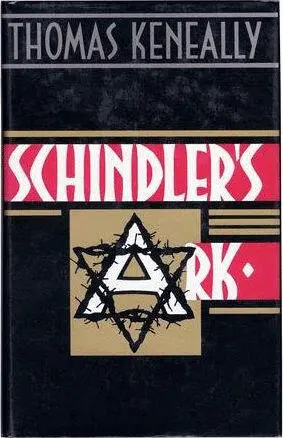
- Название:Schindler's Ark
- Автор:
- Издательство:Hodder and Stoughton
- Жанр:
- Год:1982
- Город:London
- ISBN:0-340-27838-2
- Рейтинг книги:4 / 5. Голосов: 1
-
Избранное:Добавить в избранное
- Отзывы:
-
Ваша оценка:
Schindler's Ark: краткое содержание, описание и аннотация
Предлагаем к чтению аннотацию, описание, краткое содержание или предисловие (зависит от того, что написал сам автор книги «Schindler's Ark»). Если вы не нашли необходимую информацию о книге — напишите в комментариях, мы постараемся отыскать её.
Schindler’s List
Working with the actual testimony of Schindler’s Jews, Thomas Keneally artfully depicts the courage and shrewdness of an unlikely savior, a man who is a flawed mixture of hedonism and decency and who, in the presence of unutterable evil, transcends the limits of his own humanity. From From
A mesmerizing novel based on the true story of Oskar Schindler, a German industralist who saved and succored more than 1000 Jews from the Nazis at enormous financial and emotional expense. How the German Oskar Schindler came to save more than one thousand Polish Jews during the Holocaust is one of the most fascinating stories of the century. Although millions are now learning about Schindler through Steven Spielberg’s recent Academy Award-winning film, his achievement first gained prominence with Keneally’s 1982 “facticious” novel (which is also the basis for the film). Keneally’s account is less melodramatic than the motion picture, and although he does not fully explain how a hedonistic German could have been so altered by the plight of the Jewish workers in his factory, he does make Schindler less enigmatic than the big-screen version. Ben Kingsley, one of the film's stars, reads in a calculatedly matter-of-fact tone, letting the story's power alone convey its complicated emotions. Highly recommended.
Michael Adams, Fairleigh Dickinson Univ. Lib., Madison, N.J.
Schindler's Ark — читать онлайн бесплатно полную книгу (весь текст) целиком
Ниже представлен текст книги, разбитый по страницам. Система сохранения места последней прочитанной страницы, позволяет с удобством читать онлайн бесплатно книгу «Schindler's Ark», без необходимости каждый раз заново искать на чём Вы остановились. Поставьте закладку, и сможете в любой момент перейти на страницу, на которой закончили чтение.
Интервал:
Закладка:
So she had followed the man down to Goeth’s villa. But before going into the salon, she first visited the stinking cellar—this was in Goeth’s first residence, and the cellar had been dug down into the boundaries of an ancient Jewish graveyard. Down amid the grave soil, Rebecca’s friend Helen Hirsch had been nursing bruises. You have a problem, Helen admitted. But just do the job and see. That’s all you can do. Some people he likes a professional manner from, some people he doesn’t. And I’ll give you cake and sausage when you come. But don’t just take food; ask me first. Some people take food without asking, and I don’t know what I have to cover up for.
Amon did accept Rebecca’s professional manner, presenting his fingers and chatting in German. It could have been the Hotel Cracovia again, and Amon a crisp-shirted, overweight young German tycoon come to Cracow to sell textiles or steel or chemicals. There were, however, two aspects to these meetings that detracted from their air of timeless geniality. The Commandant always kept his service revolver at his right elbow, and frequently one or the other of the dogs drowsed in the salon. She had seen them, on the Appellplatz, tear the flesh of engineer Karp. Yet sometimes, as the dogs snuffled in sleep and she and Amon compared notes on prewar visits to the spa at Carlsbad, the roll-call horrors seemed remote and beyond belief. One day she felt confident enough to ask him why the revolver was always at his elbow. His answer chilled the back of her neck as she bent over his hand. “That’s in case you ever nick me,” he told her.
If she ever needed proof that a chat about spas was all the same to Amon as an act of madness, she had it the day she entered the hallway and saw him dragging her friend Helen Hirsch out of the salon by the hair—Helen striving to keep her balance and her auburn hair coming out by the roots, and Amon, if he lost his grip one second, regaining it the next in his giant, well-tended hands. And further proof came on the evening she entered the salon and one of those dogs—Rolf or Ralf— materialized, leaped at her, and, holding her by the shoulders, opened its jaw on her breast. She looked across the room and saw Amon lolling on the sofa and smiling. “Stop shaking, you stupid girl,” he told her, “or I won’t be able to save you from the hound.”
During the time she tended the Commandant’s hands, he would shoot his shoeshine boy for faulty work; hang his fifteen-year-old orderly, Poldek Deresiewicz, from the ringbolts in his office because a flea had been found on one of the dogs; and execute his servant Lisiek for lending a dróźka and horse to Bosch without first checking. Yet twice a week, the pretty orphan entered the salon and philosophically took the beast by the hand.
She met Josef Bau one gray morning when he stood outside the Bauleitung holding up a blueprint frame toward the low autumn cloud. His thin body seemed overburdened by the weight. She asked if she could help him. “No,” he said. “I’m just waiting for the sunshine.” “Why?” she asked. He explained how his transparency drawings for a new building were clamped in the frame beside sensitized blueprint paper. If the sun, he said, were only to shine harder, a mysterious chemical union would transfer the drawing from the transparency to the blueprint. Then he said, “Why don’t you be my magical sunshine?”
Pretty girls weren’t used to delicacy from boys in Płaszów. Sexuality there took its harsh impetus from the volleys heard on Chujowa Górka, the executions on the Appellplatz. Imagine a day, for instance, when a chicken is found among the work party returning from the cable factory on Wieliczka. Amon is ranting on the Appellplatz, for the chicken was discovered lying in a bag in front of the camp gate during a spot check. Whose bag was it? Amon wants to know. Whose chicken? Since no one on the Appellplatz will admit anything, Amon takes a rifle from an SS man and shoots the prisoner at the head of the line. The bullet, passing through the body, also fells the man behind. No one speaks, though. “How you love one another!” roars Amon, and prepares to execute the next man in line. A boy of fourteen steps out of the line. He is shuddering and weeping. He can say who brought the chicken in, he tells the Herr Commandant. “Who, then?” The boy points to one of the two dead men. “That one!” the boy screams. Amon astonishes the entire Appellplatz by believing the boy, and puts his head back and laughs with the sort of classroom incredulity teachers like to exhibit. These people… can’t they understand now why they’re all forfeit?
After an evening like that, in the hours of free movement between 7 and 9 P.M. most prisoners felt that there was no time for leisurely courtship. The lice plaguing your groin and armpits made a mockery of formality. Young males mounted girls without ceremony. In the women’s camp they sang a song which asked the virgin why she’d bound herself up with string and for whom she thought she was saving herself. The atmosphere was not as desperate at Emalia. In the enamel workshop, niches had been designed among the machinery on the factory floor to permit lovers to meet at greater length. There was only a theoretical segregation in the cramped barracks. The absence of daily fear, the fuller ration of daily bread made for a little less frenzy. Besides, Oskar still maintained that he would not let the SS garrison go inside the prison without his permission.
One prisoner recalls wiring installed in Oskar’s office in case any SS official did demand entry to the barracks. While the SS man was on his way downstairs, Oskar could punch a button connected to a bell inside the camp. It warned men and women, first, to stub out the illicit cigarettes supplied daily by Oskar. (“Go to my apartment,” he would tell someone on the factory floor almost daily, “and fill this cigarette case.” He would wink significantly.) The bell also warned men and women to get back to their appointed bunks. To Rebecca, it was something close to a shock, a remembrance of a vanished culture, to meet in Płaszów a boy who courted as if he’d met her in a patisserie in the Rynek.
Another morning when she came downstairs from Stern’s office, Josef showed her his work desk. He was drawing plans for yet more barracks. What’s your barrack number, and who’s your barrack Alteste? She let him know with the correct reluctance. She had seen Helen Hirsch dragged down the hallway by the hair and would die if she accidentally jabbed the cuticle of Amon’s thumb. Yet this boy had restored her to coyness, to girlhood. I’ll come and speak to your mother, he promised. I don’t have a mother, said Rebecca. Then I’ll speak to the Alteste.
That was how the courting began—with the permission of elders and as if there were world enough and time. Because he was such a fantastical and ceremonious boy, they did not kiss. It was, in fact, under Amon’s roof that they first managed a proper embrace. It was after a manicure session. Rebecca had got hot water and soap from Helen and crept up to the top floor, vacant because of renovations pending, to wash her blouse and her change of underwear. Her washtub was her mess can. It would be needed tomorrow to hold her soup.
She was working away on that small bucket of suds when Josef appeared. Why are you here? she asked him. I’m measuring for my drawings, for the renovations, he told her. And why are you here yourself? You can see, she told him. And please don’t talk too loudly.
He danced around the room, flashing the tape measure up walls and along moldings. Do it carefully, she told him, anxious because she was aware of Amon’s exacting standards.
While I’m here, he told her, I might as well measure you. He ran the tape along her arms and down her back from the nape of her neck to the small of her spine. She did not resist the way his thumb touched her, marking her dimensions. But when they had embraced each other thoroughly for a while, she ordered him out. This was no place for a languorous afternoon.
Читать дальшеИнтервал:
Закладка:
Похожие книги на «Schindler's Ark»
Представляем Вашему вниманию похожие книги на «Schindler's Ark» списком для выбора. Мы отобрали схожую по названию и смыслу литературу в надежде предоставить читателям больше вариантов отыскать новые, интересные, ещё непрочитанные произведения.











Обсуждение, отзывы о книге «Schindler's Ark» и просто собственные мнения читателей. Оставьте ваши комментарии, напишите, что Вы думаете о произведении, его смысле или главных героях. Укажите что конкретно понравилось, а что нет, и почему Вы так считаете.