Thomas Keneally - Schindler's Ark
Здесь есть возможность читать онлайн «Thomas Keneally - Schindler's Ark» весь текст электронной книги совершенно бесплатно (целиком полную версию без сокращений). В некоторых случаях можно слушать аудио, скачать через торрент в формате fb2 и присутствует краткое содержание. Город: London, Год выпуска: 1982, ISBN: 1982, Издательство: Hodder and Stoughton, Жанр: Историческая проза, на английском языке. Описание произведения, (предисловие) а так же отзывы посетителей доступны на портале библиотеки ЛибКат.
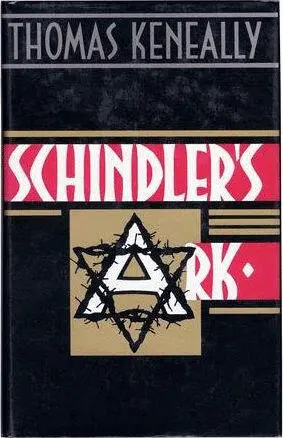
- Название:Schindler's Ark
- Автор:
- Издательство:Hodder and Stoughton
- Жанр:
- Год:1982
- Город:London
- ISBN:0-340-27838-2
- Рейтинг книги:4 / 5. Голосов: 1
-
Избранное:Добавить в избранное
- Отзывы:
-
Ваша оценка:
Schindler's Ark: краткое содержание, описание и аннотация
Предлагаем к чтению аннотацию, описание, краткое содержание или предисловие (зависит от того, что написал сам автор книги «Schindler's Ark»). Если вы не нашли необходимую информацию о книге — напишите в комментариях, мы постараемся отыскать её.
Schindler’s List
Working with the actual testimony of Schindler’s Jews, Thomas Keneally artfully depicts the courage and shrewdness of an unlikely savior, a man who is a flawed mixture of hedonism and decency and who, in the presence of unutterable evil, transcends the limits of his own humanity. From From
A mesmerizing novel based on the true story of Oskar Schindler, a German industralist who saved and succored more than 1000 Jews from the Nazis at enormous financial and emotional expense. How the German Oskar Schindler came to save more than one thousand Polish Jews during the Holocaust is one of the most fascinating stories of the century. Although millions are now learning about Schindler through Steven Spielberg’s recent Academy Award-winning film, his achievement first gained prominence with Keneally’s 1982 “facticious” novel (which is also the basis for the film). Keneally’s account is less melodramatic than the motion picture, and although he does not fully explain how a hedonistic German could have been so altered by the plight of the Jewish workers in his factory, he does make Schindler less enigmatic than the big-screen version. Ben Kingsley, one of the film's stars, reads in a calculatedly matter-of-fact tone, letting the story's power alone convey its complicated emotions. Highly recommended.
Michael Adams, Fairleigh Dickinson Univ. Lib., Madison, N.J.
Schindler's Ark — читать онлайн бесплатно полную книгу (весь текст) целиком
Ниже представлен текст книги, разбитый по страницам. Система сохранения места последней прочитанной страницы, позволяет с удобством читать онлайн бесплатно книгу «Schindler's Ark», без необходимости каждый раз заново искать на чём Вы остановились. Поставьте закладку, и сможете в любой момент перейти на страницу, на которой закончили чтение.
Интервал:
Закладка:
The inspection started at the Madritsch clothing factory. This was Płaszów’s showplace. During 1943, it had produced Wehrmacht uniforms at a monthly rate of better than twenty thousand. But the question was whether Herr Madritsch would do better to forget Płaszów, to spend his capital on expanding his more efficient and better-supplied Polish factories in Podgórze and Tarnow. The ramshackle conditions of Płaszów were no encouragement to Madritsch or any other investor to install the sort of machinery a sophisticated factory would need.
The official party had just begun its inspection when all the lights in all the workshops went out, the power circuit broken by friends of Itzhak Stern’s in the Płaszów generator shed. To the handicaps of drink and indigestion which Oskar had imposed on the gentlemen of the Armaments Inspectorate were now added the limitations of bad light. The inspection went ahead by flashlight, in fact, and the machinery on the benches remained inoperative and therefore less of a provocation to the inspectors’ professional feelings.
As General Schindler squinted along the beam of a flashlight at the presses and lathes in the metalworks, 30,000 Płaszówians, restless in tiered bunks, waited on his word.
Even on the overladen lines of the Ostbahn, they knew, the higher technology of Auschwitz was but a few hours’ journey west. They understood that they could not expect from General Schindler compassion as such. Production was his specialty. For him, Production was meant to be an overriding value.
Because of Schindler’s dinner and the power failure, says the myth, the people of Płaszów were saved. It is a generous fable, because in fact only a tenth of Płaszów people would be alive at the end. But Stern and others would later celebrate the story, and most of its details are probably true. For Oskar always had recourse to liquor when puzzled as to how to treat officials, and he would have liked the trickery of plunging them into darkness. “You have to remember,” said a boy whom Oskar would later save, “that Oskar had a German side but a Czech side too. He was the good soldier Schweik. He loved to foul up the system.”
It is ungracious to the myth to ask what the exacting Amon Goeth thought when the lights went out. Maybe, even on the level of literal event, he was drunk or dining elsewhere. The question is whether Płaszów survived because General Schindler was deceived by dim light and alcohol-dimmed vision, or whether it continued because it was such an excellent holding center for those weeks when the great terminus at Auschwitz-Birkenau was overcrowded. But the story says more of people’s expectations of Oskar than it does of the frightful compound of Płaszów or the final end of most of its inmates.
And while the SS and the Armaments Inspectorate considered the future of Płaszów, Josef Bau—a young artist from Cracow, whom Oskar would in the end come to know well—was falling into conspicuous and unconditional love with a girl named Rebecca Tannenbaum. Bau worked in the Construction Office as a draftsman. He was a solemn boy with an artist’s sense of destiny. He had, so to speak, escaped into Płaszów, because he had never held the correct ghetto papers. Since he had had no trade of use to the ghetto factories, he had been hidden by his mother and by friends. During the liquidation in March 1943, he’d escaped out of the walls and attached himself to the tail of a labor detail going to Płaszów. For in Płaszów there was a new industry which had had no place in the ghetto. Construction. In the same somber two-winged building in which Amon had his office, Josef Bau worked on blueprints. He was a protégé of Itzhak Stern’s, and Stern had mentioned him to Oskar as an accomplished draftsman and as a boy who had, potentially at least, skills as a forger.
He was lucky not to come into too much contact with Amon, because he displayed the air of genuine sensibility which had, before today, caused Amon to reach for his revolver. Bau’s office was on the far side of the building from Amon’s. Some prisoners worked on the ground floor, with offices near the Commandant’s. There were the purchasing officers; the clerks; Mietek Pemper, the stenographer. They faced not only a daily risk of an unexpected bullet but, more certainly than that, assaults on their sense of outrage. Mundek Korn, for example, who had been a buyer for a string of Rothschild subsidiaries before the war and who now bought the fabrics, sea grass, lumber, and iron for the prison workshops, had to work not only in the Administration Building but in the same wing where Amon had his office. One morning Korn looked up from his desk and saw through the window, across Jerozolimska Street and by the SS barracks, a boy of twenty or so years, a Cracovian of his acquaintance, urinating against the base of one of the stacks of lumber there. At the same time he saw white-shirted arms and two ham fists appear through the bathroom window at the end of the wing. The right hand held a revolver. There were two quick shots, at least one of which entered the boy’s head and drove him forward against the pile of cut wood. When Korn looked once more at the bathroom window, one white-shirted arm and free hand were engaged in closing the window.
On Korn’s desk that morning were requisition forms signed with Amon’s open-voweled but not deranged scrawl. His gaze ranged from the signature to the unbuttoned corpse at the box of lumber. Not only did he wonder if he had seen what he had seen. He sensed the seductive concept inherent in Amon’s methods. That is, the temptation to agree that if murder was no more than a visit to the bathroom, a mere pulse in the monotony of form signing, then perhaps all death should now be accepted— with whatever despair—as routine.
It does not seem that Josef Bau was exposed to such radical persuasion. He missed too the purge of the administrative staff on the ground floor right and center. It had begun when Josef Neuschel, Goeth’s protégé, complained to the Commandant that a girl in the office had acquired a rind of bacon. Amon had come raging down the corridor from his office. “You’re all getting fat!” he had screamed. He had divided the office staff into two lines then. It had been, to Korn, like a scene from the Podgórze High School: the girls in the other line so familiar to him, daughters of families he’d grown up with, Podgórze families. It could have been that a teacher was sorting them out into those who would visit the Kosciuszko Monument and those for the museum at the Wawel. In fact, the girls in the other line were taken straight from their desks to Chujowa Górka and, for the decadence of that bacon rind, gunned down by one of Pilarzik’s squads.
Though Josef Bau was not involved in such office turmoil, no one could have said that he was leading a sheltered life in Płaszów. But it had been less perilous than the experience of the girl of his choice. Rebecca Tannenbaum was an orphan, though in the clannish life of Jewish Cracow, she had not been bereft of kindly aunts and uncles. She was nineteen, sweet-faced, and neatly built. She could speak German well and made pleasant and generous conversation. Recently she’d begun to work in Stern’s office behind the Administration Building, away from the most immediate environs of the Commandant’s berserk interference. But her job in the Construction Office was only half her labor. She was a manicurist. She treated Amon weekly; she tended the hands of Untersturmführer Leo John, those of Dr. Blancke and of his lover, the harsh Alice Orlowski. Taking Amon’s hands, she had found them long and well made, with tapering fingers—not a fat man’s hands at all; certainly not those of a savage.
When a prisoner had first come to her and told her that the Herr Commandant wanted to see her, she had begun to run away, fleeing among the desks and down the back stairs. The prisoner had followed and cried after her, “For God’s sake, don’t! He’ll punish me if I don’t bring you back.”
Читать дальшеИнтервал:
Закладка:
Похожие книги на «Schindler's Ark»
Представляем Вашему вниманию похожие книги на «Schindler's Ark» списком для выбора. Мы отобрали схожую по названию и смыслу литературу в надежде предоставить читателям больше вариантов отыскать новые, интересные, ещё непрочитанные произведения.










Обсуждение, отзывы о книге «Schindler's Ark» и просто собственные мнения читателей. Оставьте ваши комментарии, напишите, что Вы думаете о произведении, его смысле или главных героях. Укажите что конкретно понравилось, а что нет, и почему Вы так считаете.