Thomas Keneally - Schindler's Ark
Здесь есть возможность читать онлайн «Thomas Keneally - Schindler's Ark» весь текст электронной книги совершенно бесплатно (целиком полную версию без сокращений). В некоторых случаях можно слушать аудио, скачать через торрент в формате fb2 и присутствует краткое содержание. Город: London, Год выпуска: 1982, ISBN: 1982, Издательство: Hodder and Stoughton, Жанр: Историческая проза, на английском языке. Описание произведения, (предисловие) а так же отзывы посетителей доступны на портале библиотеки ЛибКат.
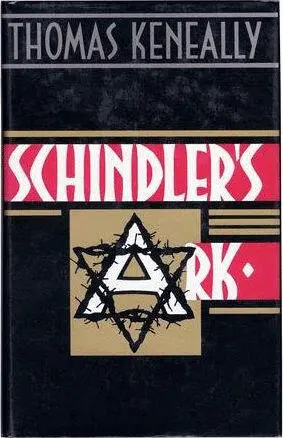
- Название:Schindler's Ark
- Автор:
- Издательство:Hodder and Stoughton
- Жанр:
- Год:1982
- Город:London
- ISBN:0-340-27838-2
- Рейтинг книги:4 / 5. Голосов: 1
-
Избранное:Добавить в избранное
- Отзывы:
-
Ваша оценка:
Schindler's Ark: краткое содержание, описание и аннотация
Предлагаем к чтению аннотацию, описание, краткое содержание или предисловие (зависит от того, что написал сам автор книги «Schindler's Ark»). Если вы не нашли необходимую информацию о книге — напишите в комментариях, мы постараемся отыскать её.
Schindler’s List
Working with the actual testimony of Schindler’s Jews, Thomas Keneally artfully depicts the courage and shrewdness of an unlikely savior, a man who is a flawed mixture of hedonism and decency and who, in the presence of unutterable evil, transcends the limits of his own humanity. From From
A mesmerizing novel based on the true story of Oskar Schindler, a German industralist who saved and succored more than 1000 Jews from the Nazis at enormous financial and emotional expense. How the German Oskar Schindler came to save more than one thousand Polish Jews during the Holocaust is one of the most fascinating stories of the century. Although millions are now learning about Schindler through Steven Spielberg’s recent Academy Award-winning film, his achievement first gained prominence with Keneally’s 1982 “facticious” novel (which is also the basis for the film). Keneally’s account is less melodramatic than the motion picture, and although he does not fully explain how a hedonistic German could have been so altered by the plight of the Jewish workers in his factory, he does make Schindler less enigmatic than the big-screen version. Ben Kingsley, one of the film's stars, reads in a calculatedly matter-of-fact tone, letting the story's power alone convey its complicated emotions. Highly recommended.
Michael Adams, Fairleigh Dickinson Univ. Lib., Madison, N.J.
Schindler's Ark — читать онлайн бесплатно полную книгу (весь текст) целиком
Ниже представлен текст книги, разбитый по страницам. Система сохранения места последней прочитанной страницы, позволяет с удобством читать онлайн бесплатно книгу «Schindler's Ark», без необходимости каждый раз заново искать на чём Вы остановились. Поставьте закладку, и сможете в любой момент перейти на страницу, на которой закончили чтение.
Интервал:
Закладка:
Multiply Stern’s summary by the 1,700 large and small forced-labor camps of Poland, and then you had a tapestry to stun the world!
Sedlacek and Oskar wanted more than that of Stern. On the morning after the Amon-Oskar binge, Oskar dragged his heroic liver back out to Płaszów before office-opening time. In between the suggestions of tolerance Oskar had tried to drop into Amon’s ear the night before, he’d also got a written permit to take two “brother industrialists” on a tour of this model industrial community. Oskar brought the two into the gray Administration Building that morning and demanded the services of Häftling (prisoner) Itzhak Stern for a tour of the camp. Sedlacek’s friend Babar had some sort of miniature camera, but he carried it openly in his hand. It was almost possible to believe that if an SS man had challenged him, he would have welcomed the chance to stand and boast for five minutes about this little gadget he’d got on a recent business trip to Brussels or Stockholm.
As Oskar and the visitors from Budapest emerged from the Administration Building, Oskar took the thin, clerkly Stern by the shoulder. His friends would be happy to see the workshops and the living quarters, said Oskar. But if there was anything Stern thought they were missing out on, he was just to bend down and tie his shoestring.
On Goeth’s great road paved with fractured gravestones, they moved past the SS barracks. Here, almost at once, prisoner Stern’s shoestring needed tying. Sedlacek’s associate snapped the teams hauling truckloads of rock up from the quarry, while Stern murmured, “Forgive me, gentlemen.” Yet he took his time with the tying so that they could look down and read the monumental fragments. Here were the gravestones of Bluma Gemeinerowa (1859-1927); of Matylde Liebeskind, deceased at the age of 90 in 1912; of Helena Wachsberg, who died in childbirth in 1911; of Rozia Groder, a thirteen-year-old who had passed on in 1931; of Sofia Rosner and Adolf Gottlieb, who had died in the reign of Franz Josef. Stern wanted them to see that the names of the honorable dead had been made into paving stones.
Moving on, they passed the Puffhaus, the SS and Ukrainian brothel staffed by Polish girls, before reaching the quarry, the excavations running back into the limestone cliff. Stern’s shoelaces required reef knots here; he wanted this recorded. They destroyed men at this rock face, working them on the hammers and wedges. None of the scarred men of the quarry parties showed any curiosity about their visitors this morning. Ivan, Amon Goeth’s Ukrainian driver, was on duty here, and the supervisor was a bullet-headed German criminal named Erik.
Erik had already demonstrated a capacity for murdering families, having killed his own mother, father, sister. He might by now have been hanged or at least been put in a dungeon if the SS had not realized that there were worse criminals still than patricides and that Erik should be employed as a stick to beat them with. As Stern had mentioned in his report, a Cracow physician named Edward Goldblatt had been sent here from the clinic by SS Dr. Blancke and his Jewish protégé, Dr. Leon Gross. Erik loved to see a man of culture and speciality enter the quarry and report soft-handed for work, and the beatings began in Goldblatt’s case with the first display of uncertainty in handling the hammer and spikes. Over a period of days, Erik and sundry SS and Ukrainian enlisted men beat Goldblatt. The doctor was forced to work with a ballooning face, now half again its normal size, with one eye sealed up. No one knew what error of quarry technique set Erik to give Dr. Goldblatt his final beating.
Long after the doctor lost consciousness, Erik permitted him to be carried to the Krankenstube, where Dr. Leon Gross refused to admit him. With this medical sanction Erik and an SS enlisted man continued to kick the dying Goldblatt as he lay, rejected for treatment, on the threshold of the hospital. Stern bent and tied his shoelace at the quarry because, like Oskar and some others in the Płaszów complex, he believed in a future of judges who might ask, Where—in a word—did this act occur?
Oskar was able to give his colleagues an overview of the camp, taking them up to Chujowa Górka and the Austrian mound, where the bloodied wheelbarrows used to transport the dead to the woods stood unabashedly at the mouth of the fort. Already thousands were buried down there in mass graves in or on the verges of those eastern pinewoods. When the Russians came from the east, that wood with its population of victims would fall to them before living and half-dying Płaszów.
As for Płaszów as an industrial wonder, it was bound to disappoint any serious observer.
Amon, Bosch, Leo John, Josef Neuschel all thought it a model city on the ground that it was making them rich. It would have shocked them to find that one of the reasons their sweet billet in Płaszów continued was not any delight on the part of the Armaments Inspectorate with the economic miracles they were performing.
In fact the only economic miracles within Płaszów were the personal fortunes made by Amon and his clique. It was a surprise to any calm outsider that war contracts came to the workshops of Płaszów at all, considering that their plant was so poor and old-fashioned. But shrewd Zionist prisoners inside Płaszów put pressure on convinced outsiders, people like Oskar and Madritsch, who could in turn put pressure on the Armaments Inspectorate. On the ground that the hunger and sporadic murders of Płaszów were still to be preferred to the assured annihilations of Auschwitz and Bełżec, Oskar was willing to sit down with the purchasing officers and engineers of General Schindler’s Arms Inspectorate.
These gentlemen would make faces and say, “Come on, Oskar! Are you serious?” But in the end they would find contracts for Amon Goeth’s camp, orders for shovels manufactured from the collected scrap iron of Oskar’s Lipowa Street factory, orders for funnels turned out of offcuts of tin from a jam factory in Podgórze. The chances of full delivery of the shovels and their handles ever being made to the Wehrmacht were small. Many of Oskar’s friends among the officers of the Armaments Inspectorate understood what they were doing, that prolonging the life of the slave-labor camp of Płaszów was the same thing as prolonging the life of a number of the slaves. With some of them it stuck in the craw, because they knew what a crook Goeth was, and their serious and old-fashioned patriotism was affronted by Amon’s sybaritic life out there in the countryside.
The divine irony of Forced Labor Camp Płaszów—that some of the slaves were conspiring for their own purposes to maintain Amon’s kingdom— can be seen in the case of Roman Ginter. Ginter, former entrepreneur and now one of the supervisors in the metalworks from which Rabbi Levartov had already been rescued, was summoned to Goeth’s office one morning and, as he closed the door, took the first of a number of blows. While he beat Ginter, Amon raged incoherently. Then he dragged him out-of-doors and down the steps to a stretch of wall by the front entrance. May I ask something? said Ginter against the wall, spitting out two teeth, offhandedly, lest Amon think him an actor, a self-pitier. You bastard, roared Goeth, you haven’t delivered the handcuffs I ordered! My desk calendar tells me that, you pig’s-ass. But Herr Commandant, said Ginter, I beg to report that the order for handcuffs was filled yesterday. I asked Herr Oberscharführer Neuschel what I should do with them and he told me to deliver them to your office, which I did.
Amon dragged bleeding Ginter back to the office and called the SS man Neuschel. Why, yes, said young Neuschel. Look in your second-top drawer on the left, Herr Commandant. Goeth looked and found the manacles. I almost killed him, he complained to his young and not-so-gifted Viennese protégé.
Читать дальшеИнтервал:
Закладка:
Похожие книги на «Schindler's Ark»
Представляем Вашему вниманию похожие книги на «Schindler's Ark» списком для выбора. Мы отобрали схожую по названию и смыслу литературу в надежде предоставить читателям больше вариантов отыскать новые, интересные, ещё непрочитанные произведения.










Обсуждение, отзывы о книге «Schindler's Ark» и просто собственные мнения читателей. Оставьте ваши комментарии, напишите, что Вы думаете о произведении, его смысле или главных героях. Укажите что конкретно понравилось, а что нет, и почему Вы так считаете.