Thomas Keneally - Schindler's Ark
Здесь есть возможность читать онлайн «Thomas Keneally - Schindler's Ark» весь текст электронной книги совершенно бесплатно (целиком полную версию без сокращений). В некоторых случаях можно слушать аудио, скачать через торрент в формате fb2 и присутствует краткое содержание. Город: London, Год выпуска: 1982, ISBN: 1982, Издательство: Hodder and Stoughton, Жанр: Историческая проза, на английском языке. Описание произведения, (предисловие) а так же отзывы посетителей доступны на портале библиотеки ЛибКат.
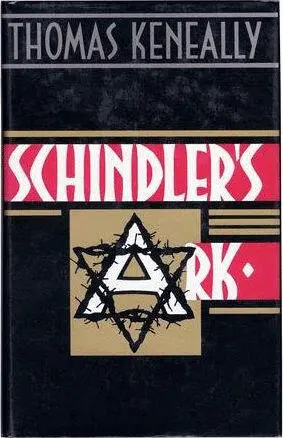
- Название:Schindler's Ark
- Автор:
- Издательство:Hodder and Stoughton
- Жанр:
- Год:1982
- Город:London
- ISBN:0-340-27838-2
- Рейтинг книги:4 / 5. Голосов: 1
-
Избранное:Добавить в избранное
- Отзывы:
-
Ваша оценка:
Schindler's Ark: краткое содержание, описание и аннотация
Предлагаем к чтению аннотацию, описание, краткое содержание или предисловие (зависит от того, что написал сам автор книги «Schindler's Ark»). Если вы не нашли необходимую информацию о книге — напишите в комментариях, мы постараемся отыскать её.
Schindler’s List
Working with the actual testimony of Schindler’s Jews, Thomas Keneally artfully depicts the courage and shrewdness of an unlikely savior, a man who is a flawed mixture of hedonism and decency and who, in the presence of unutterable evil, transcends the limits of his own humanity. From From
A mesmerizing novel based on the true story of Oskar Schindler, a German industralist who saved and succored more than 1000 Jews from the Nazis at enormous financial and emotional expense. How the German Oskar Schindler came to save more than one thousand Polish Jews during the Holocaust is one of the most fascinating stories of the century. Although millions are now learning about Schindler through Steven Spielberg’s recent Academy Award-winning film, his achievement first gained prominence with Keneally’s 1982 “facticious” novel (which is also the basis for the film). Keneally’s account is less melodramatic than the motion picture, and although he does not fully explain how a hedonistic German could have been so altered by the plight of the Jewish workers in his factory, he does make Schindler less enigmatic than the big-screen version. Ben Kingsley, one of the film's stars, reads in a calculatedly matter-of-fact tone, letting the story's power alone convey its complicated emotions. Highly recommended.
Michael Adams, Fairleigh Dickinson Univ. Lib., Madison, N.J.
Schindler's Ark — читать онлайн бесплатно полную книгу (весь текст) целиком
Ниже представлен текст книги, разбитый по страницам. Система сохранения места последней прочитанной страницы, позволяет с удобством читать онлайн бесплатно книгу «Schindler's Ark», без необходимости каждый раз заново искать на чём Вы остановились. Поставьте закладку, и сможете в любой момент перейти на страницу, на которой закончили чтение.
Интервал:
Закладка:
Wachtmeister Oswald Bosko, who had earlier had control of the ghetto perimeter, was, in contrast, a man of ideas. It had become impossible for him to work within the SS scheme, passing a bribe here, a forged paper there, placing a dozen children under the patronage of his rank while a hundred more were marched out the ghetto gate. Bosko had absconded from his police station in Podgórze and vanished into the partisan forests of Niepolomice. In the People’s Army he would try to expiate the callow enthusiasm he’d felt for Nazism in the summer of 1938. Dressed as a Polish farmer, he’d be recognized in the end in a village west of Cracow and shot for treason. Bosko would therefore become a martyour. Bosko had gone to the forest because he had no other option. He lacked the financial resources with which Oskar greased the system. But it accorded with the natures of both men that one be found with nothing but a cast-off rank and uniform, that the other would make certain he had cash and trade goods. It is not to praise Bosko or denigrate Schindler that one says that if ever Oskar suffered martyrdom, it would be by accident, because some business he was transacting had turned sour on him. But there were people who still drew breath—the Wohlfeilers, the Danziger brothers, Lamus—because Oskar worked that way. Because Oskar worked that way, the unlikely camp of Emalia stood in Lipowa Street, and there, on most days, a thousand were safe from seizure, and the SS stayed outside the wire. No one was beaten there, and the soup was thick enough to sustain life. In proportion to their natures, the moral disgust of both Party members, Bosko and Schindler, was equal, even if Bosko manifested his by leaving his empty uniform on a coat hanger in Podgórze, while Oskar put on his big Party pin and went to deliver high-class liquor to mad Amon Goeth in Płaszów.
It was late afternoon, and Oskar and Goeth sat in the salon of Goeth’s white villa. Goeth’s girlfriend Majola looked in, a small-boned woman, a secretary at the Wagner factory in town. She did not spend her days amid the excesses of Płaszów. She had sensitive manners, and this delicacy helped a rumor to emerge that Majola had threatened not to sleep with Goeth if he continued arbitrarily gunning people down. But no one knew whether that was the truth or just one of those therapeutic interpretations which arise in the minds of prisoners desperate to make the earth habitable.
Majola did not stay long with Amon and Oskar that afternoon. She could tell there would be a drinking session. Helen Hirsch, the pale girl in black who was Amon’s maid, brought them the necessary accompaniments—cakes, canap’es, sausage. She reeled with exhaustion. Last night Amon had beaten her for preparing food for Majola without his permission; this morning he had made her run up and down the villa’s three flights of stairs fifty times on the double because of a flyspeck on one of the paintings in the corridor. She had heard certain rumors about Herr Schindler but had not met him until now. This afternoon she took no comfort from the sight of these two big men, seated either side of the low table, fraternal and in apparent concord. There was nothing here to interest her, for the certainty of her own death was a first premise. She thought only about the survival of her young sister, who worked in the camp’s general kitchen. She kept a sum of money hidden in the hope that it would effect her sister’s survival. There was no sum, she believed, no deal, that could influence her own prospects.
So they drank through the camp’s twilight and into the dark. Long after the prisoner Tosia Lieberman’s nightly rendition of Brahms’s “Lullaby” had calmed the women’s camp and insinuated itself between the timbers of the men’s, the two big men sat on. Their prodigious livers glowed hot as furnaces. And at the right hour, Oskar leaned across the table and, acting out of an amity which, even with this much cognac aboard, did not go beyond the surface of the skin… Oskar, leaning toward Amon and cunning as a demon, began to tempt him toward restraint.
Amon took it well. It seemed to Oskar that he was attracted by the thought of moderation—a temptation worthy of an emperor. Amon could imagine a sick slave on the trolleys, a returning prisoner from the cable factory, staggering—in that put-upon way one found so hard to tolerate—under a load of clothing or lumber picked up at the prison gate. And the fantasy ran with a strange warmth in Amon’s belly that he would forgive that laggard, that pathetic actor. As Caligula might have been tempted to see himself as Caligula the Good, so the image of Amon the Good exercised the Commandant’s imagination for a time. He would, in fact, always have a weakness for it. Tonight, his blood running golden with cognac and nearly all the camp asleep beyond his steps, Amon was more definitely seduced by mercy than by the fear of reprisal. But in the morning he would remember Oskar’s warning and combine it with the day’s news that Russian threats were developing on the Front at Kiev. Stalingrad had been an inconceivable distance from Płaszów. But the distance to Kiev was imaginable.
For some days after Oskar’s bout with Amon, news came to Emalia that the dual temptation was having its result with the Commandant. Dr. Sedlacek, going back to Budapest, would report to Samu Springmann that Amon had given up, for the time being at least, arbitrarily murdering people. And gentle Samu, among the diverse cares he had in the list of places from Dachau and Drancy in the west to Sobibor and Bełżec in the east, hoped for a time that the hole at Płaszów had been plugged.
But the allure of clemency vanished quickly.
If there was a brief respite, those who were to survive and give testimony of their days in Płaszów would not be aware of it. The summary assassinations would seem continual to them. If Amon did not appear on his balcony this morning or the next, it did not mean he would not appear the morning after that. It took much more than Goeth’s temporary absence to give even the most deluded prisoner some hope of a fundamental change in the Commandant’s nature. And then, in any case, there he would be, on the steps in the Austrian-style cap he wore to murders, looking through his binoculars for a culprit.
Dr. Sedlacek would return to Budapest not only with overly hopeful news of a reform in Amon but with more reliable data on the camp at Płaszów. One afternoon a guard from Emalia turned up at Płaszów to summon Stern to Zablocie. Once Stern arrived at the front gate, he was led upstairs into Oskar’s new apartment. There Oskar introduced him to two men in good suits. One was Sedlacek; the other a Jew—equipped with a Swiss passport—who introduced himself as Babar. “My dear friend,” Oskar told Stern, “I want you to write as full a report on the situation in Płaszów as you can manage in an afternoon.” Stern had never seen Sedlacek or Babar before this and thought that Oskar was being indiscreet. He bent over his hands, murmuring that before he undertook a task like that he would like a word in private with the Herr Direktor.
Oskar used to say that Itzhak Stern could never make a straight statement or request unless it arrived smuggled under a baggage of talk of the Babylonian Talmud and purification rites. But now he was more direct. “Tell me, please, Herr Schindler,” he asked, “don’t you believe this is a dreadful risk?”
Oskar exploded. Before he got control of himself, the strangers would have heard him in the other room. “Do you think I’d ask you, if there was a risk?” Then he calmed and said, “There’s always risk, as you know better than I. But not with these two men. These two are safe.”
In the end, Stern spent all afternoon on his report. He was a scholar and accustomed to writing in exact prose. The rescue organization in Budapest, the Zionists in Istanbul would receive from Stern a report they could rely on.
Читать дальшеИнтервал:
Закладка:
Похожие книги на «Schindler's Ark»
Представляем Вашему вниманию похожие книги на «Schindler's Ark» списком для выбора. Мы отобрали схожую по названию и смыслу литературу в надежде предоставить читателям больше вариантов отыскать новые, интересные, ещё непрочитанные произведения.












Обсуждение, отзывы о книге «Schindler's Ark» и просто собственные мнения читателей. Оставьте ваши комментарии, напишите, что Вы думаете о произведении, его смысле или главных героях. Укажите что конкретно понравилось, а что нет, и почему Вы так считаете.