Thomas Keneally - Schindler's Ark
Здесь есть возможность читать онлайн «Thomas Keneally - Schindler's Ark» весь текст электронной книги совершенно бесплатно (целиком полную версию без сокращений). В некоторых случаях можно слушать аудио, скачать через торрент в формате fb2 и присутствует краткое содержание. Город: London, Год выпуска: 1982, ISBN: 1982, Издательство: Hodder and Stoughton, Жанр: Историческая проза, на английском языке. Описание произведения, (предисловие) а так же отзывы посетителей доступны на портале библиотеки ЛибКат.
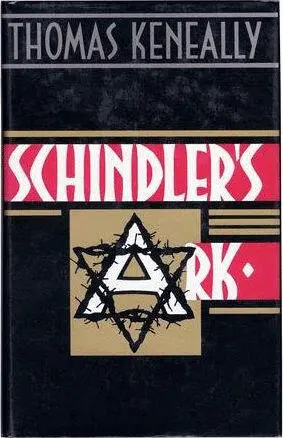
- Название:Schindler's Ark
- Автор:
- Издательство:Hodder and Stoughton
- Жанр:
- Год:1982
- Город:London
- ISBN:0-340-27838-2
- Рейтинг книги:4 / 5. Голосов: 1
-
Избранное:Добавить в избранное
- Отзывы:
-
Ваша оценка:
Schindler's Ark: краткое содержание, описание и аннотация
Предлагаем к чтению аннотацию, описание, краткое содержание или предисловие (зависит от того, что написал сам автор книги «Schindler's Ark»). Если вы не нашли необходимую информацию о книге — напишите в комментариях, мы постараемся отыскать её.
Schindler’s List
Working with the actual testimony of Schindler’s Jews, Thomas Keneally artfully depicts the courage and shrewdness of an unlikely savior, a man who is a flawed mixture of hedonism and decency and who, in the presence of unutterable evil, transcends the limits of his own humanity. From From
A mesmerizing novel based on the true story of Oskar Schindler, a German industralist who saved and succored more than 1000 Jews from the Nazis at enormous financial and emotional expense. How the German Oskar Schindler came to save more than one thousand Polish Jews during the Holocaust is one of the most fascinating stories of the century. Although millions are now learning about Schindler through Steven Spielberg’s recent Academy Award-winning film, his achievement first gained prominence with Keneally’s 1982 “facticious” novel (which is also the basis for the film). Keneally’s account is less melodramatic than the motion picture, and although he does not fully explain how a hedonistic German could have been so altered by the plight of the Jewish workers in his factory, he does make Schindler less enigmatic than the big-screen version. Ben Kingsley, one of the film's stars, reads in a calculatedly matter-of-fact tone, letting the story's power alone convey its complicated emotions. Highly recommended.
Michael Adams, Fairleigh Dickinson Univ. Lib., Madison, N.J.
Schindler's Ark — читать онлайн бесплатно полную книгу (весь текст) целиком
Ниже представлен текст книги, разбитый по страницам. Система сохранения места последней прочитанной страницы, позволяет с удобством читать онлайн бесплатно книгу «Schindler's Ark», без необходимости каждый раз заново искать на чём Вы остановились. Поставьте закладку, и сможете в любой момент перейти на страницу, на которой закончили чтение.
Интервал:
Закладка:
Maurer wanted Amon to tell him how many Hungarians could be held temporarily at Płaszów. They were meant ultimately to go to the German Armament Works, DAW, which was a subsidiary of Krupp making artillery-shell fuses in the enormous complex at Auschwitz. Given that Hungary had only recently been taken over as a German Protectorate, these Hungarian Jews and dissidents were in a better state of health than those who had had years of ghettoization and prison life. They were therefore a windfall for the factories of Auschwitz.
Unfortunately, accommodation at DAW was not yet ready for them, and if the commandant of Płaszów would take up to 7,000, pending the proper arrangements, Section D would be extremely grateful.
Goeth’s answer, either seen or typed by Pemper, was that Płaszów was up to capacity and that there was no building space left inside the electric fences. However, Amon could accept up to 10,000 transit prisoners if (a) he were permitted to liquidate the unproductive element inside the camp; and (b) he were at the same time to impose double bunking. Maurer wrote in reply that double bunking could not be permitted in summer for fear of typhus, and that ideally, according to the regulations, there should be a minimum 3 cubic meters of air per person.
But he was willing to authorize Goeth to undertake the first option. Section D would advise Auschwitz-Birkenau—or at least, the extermination wing of that great enterprise—to expect a shipment of reject prisoners from Płaszów. At the same time, Ostbahn transport would be arranged with cattle cars, of course, run up the spur from the main line to the very gate of Płaszów.
Amon therefore had to conduct a sorting-out process inside his camp.
With the blessing of Maurer and Section D, he would in a day abolish as many lives as Oskar Schindler was, by wit and reckless spending, harboring in Emalia. Amon named his selection session Die Gesundheitaktion, the Health Action.
He managed it as one would manage a country fair. When it began, on the morning of Sunday, May 7, the Appellplatz was hung with banners: “FOR EVERY PRISONER, APPROPRIATE WORK!” Loudspeakers played ballads and Strauss and love songs. Beneath them was set a table where Dr. Blancke, the SS physician, sat with Dr. Leon Gross and a number of clerks. Blancke’s concept of “health” was as eccentric as that of any doctor in the SS. He had rid the prison clinic of the chronically ill by injecting benzine into their bloodstreams. These injections could not by anyone’s definition be called mercy killings. The patient was seized by convulsions which ended in a choking death after a quarter of an hour. Marek Biberstein, once president of the Judenrat and now, after his two-year imprisonment in Montelupich Street, a citizen of Płaszów, had suffered heart failure and been brought to the Krankenstube. Before Blancke could get to him with a benzine syringe, Dr. Idek Schindel, uncle of that Genia whose distant figure had galvanized Schindler two years before, had come to Biberstein’s bedside with a number of colleagues. One had injected a more merciful dose of cyanide.
Today, flanked by the filing cabinets of the entire prison population, Blancke would deal with the prisoners a barracks at a time, and when he finished with one battery of cards it would be taken away and replaced by the next.
As they reached the Appellplatz, prisoners were told to strip. They were lined up naked and run back and forth in front of the doctors. Blancke and Leon Gross, the collaborating Jewish physician, would make notations on the card, point at this prisoner, call on that one to verify his name. Back the prisoners would run, the physicians looking for signs of disease or muscular weakness. It was an odd and humiliating exercise. Men with dislocated backs (pfefferberg, for example, whose back Hujar had thrown out with the blow of a whip handle); women with chronic diarrhea, red cabbage rubbed into their cheeks to give them color—all of them running for their lives and understanding that it was so. Young Mrs. Kinstlinger, who’d sprinted for Poland at the Berlin Olympics, knew that all that had been just a game. This was the true contest. With your stomach turning and your breath thin, you ran—beneath the throb of the lying music—for your golden life. No prisoner found out the results until the following Sunday when, under the same banners and band music, the mass of inmates was again assembled. As names were read out and the rejects of the Gesundheitaktion were marched to the eastern end of the square, there were cries of outrage and bewilderment. Amon had expected a riot and had sought the help of the Wehrmacht garrison of Cracow, who were on standby in case of a prisoner uprising. Nearly 300 children had been discovered during the inspection the previous Sunday, and as they were now dragged away, the protests and wailings of parents were so loud that most of the garrison, together with Security Police detachments called in from Cracow, had to be thrown into the cordon separating the two groups. This confrontation lasted for hours, the guards forcing back surges of demented parents and telling the usual lies to those who had relatives among the rejects. Nothing had been announced, but everyone knew that those down there had failed the test and had no future. Blurred by waltzes and comic songs from the loudspeakers, a pitiable babel of messages was shouted from one group to the other. Henry Rosner, himself in torment, his son, Olek, in fact hidden somewhere in the camp, had the bizarre experience of facing a young SS man who, with tears in his eyes, denounced what was happening and made a pledge to volunteer for the Eastern Front. But officers shouted that unless people showed a little discipline, they would order their men to open fire. Perhaps Amon hoped that a justifiable outbreak of shooting would further reduce the overcrowding.
At the end of the process, 1,400 adults and 268 children stood, hedged in by weapons, at the eastern rim of the Appellplatz, ready for fast shipment to Auschwitz. Pemper would see and memorize the figures, which Amon would consider disappointing. Though it was not the number for which Amon had hoped, it would create immediate room for a large temporary intake of Hungarians.
In Dr. Blancke’s card-file system, the children of Płaszów had not been as precisely registered as the adults. Many of them chose to spend both these Sundays in hiding, both they and their parents knowing instinctively that their age and the absence of their names and other details from the camp’s documentation would make them obvious targets of the selection process.
Olek Rosner hid in the ceiling of a hut on the second Sunday. There were two other children with him all day above the rafters, and all day they kept the discipline of silence, all day held their bladders among the lice and the little packages of prisoners’ belongings and the rooftop rats. For the children knew as well as any adult that the SS and the Ukrainians were wary of the spaces above the ceiling. They believed them typhus-ridden, and had been informed by Dr. Blancke that it took but a fragment of louse feces in a crack in your skin to bring on epidemic typhus. Some of Płaszów’s children had been housed for months near the men’s prison in the hut marked ACHTUNG TYPHUS.
This Sunday, for Olek Rosner, Amon’s health Aktion was far more perilous than typhus-bearing lice. Other children, some of the 268 separated out of the mass that day, had in fact begun the Aktion in hiding. Each Płaszów child, with that same toughness of mind, had chosen a favorite hiding place. Some favored depressions beneath huts, some the laundry, some a shed behind the garage. Many of these hideouts had been discovered either this Sunday or last, and no longer offered refuge.
A further group had been brought without suspicion to the Appellplatz. There were parents who knew this or that NCO. It was as Himmler had once complained, for even SS Oberscharführers who did not flinch in the act of execution had their favorites, as if the place were a school playground. If there was a question about the children, some parents thought, you could appeal to an SS man who knew you.
Читать дальшеИнтервал:
Закладка:
Похожие книги на «Schindler's Ark»
Представляем Вашему вниманию похожие книги на «Schindler's Ark» списком для выбора. Мы отобрали схожую по названию и смыслу литературу в надежде предоставить читателям больше вариантов отыскать новые, интересные, ещё непрочитанные произведения.








Обсуждение, отзывы о книге «Schindler's Ark» и просто собственные мнения читателей. Оставьте ваши комментарии, напишите, что Вы думаете о произведении, его смысле или главных героях. Укажите что конкретно понравилось, а что нет, и почему Вы так считаете.