Thomas Keneally - Schindler's Ark
Здесь есть возможность читать онлайн «Thomas Keneally - Schindler's Ark» весь текст электронной книги совершенно бесплатно (целиком полную версию без сокращений). В некоторых случаях можно слушать аудио, скачать через торрент в формате fb2 и присутствует краткое содержание. Город: London, Год выпуска: 1982, ISBN: 1982, Издательство: Hodder and Stoughton, Жанр: Историческая проза, на английском языке. Описание произведения, (предисловие) а так же отзывы посетителей доступны на портале библиотеки ЛибКат.
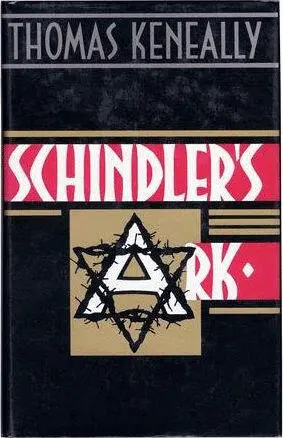
- Название:Schindler's Ark
- Автор:
- Издательство:Hodder and Stoughton
- Жанр:
- Год:1982
- Город:London
- ISBN:0-340-27838-2
- Рейтинг книги:4 / 5. Голосов: 1
-
Избранное:Добавить в избранное
- Отзывы:
-
Ваша оценка:
Schindler's Ark: краткое содержание, описание и аннотация
Предлагаем к чтению аннотацию, описание, краткое содержание или предисловие (зависит от того, что написал сам автор книги «Schindler's Ark»). Если вы не нашли необходимую информацию о книге — напишите в комментариях, мы постараемся отыскать её.
Schindler’s List
Working with the actual testimony of Schindler’s Jews, Thomas Keneally artfully depicts the courage and shrewdness of an unlikely savior, a man who is a flawed mixture of hedonism and decency and who, in the presence of unutterable evil, transcends the limits of his own humanity. From From
A mesmerizing novel based on the true story of Oskar Schindler, a German industralist who saved and succored more than 1000 Jews from the Nazis at enormous financial and emotional expense. How the German Oskar Schindler came to save more than one thousand Polish Jews during the Holocaust is one of the most fascinating stories of the century. Although millions are now learning about Schindler through Steven Spielberg’s recent Academy Award-winning film, his achievement first gained prominence with Keneally’s 1982 “facticious” novel (which is also the basis for the film). Keneally’s account is less melodramatic than the motion picture, and although he does not fully explain how a hedonistic German could have been so altered by the plight of the Jewish workers in his factory, he does make Schindler less enigmatic than the big-screen version. Ben Kingsley, one of the film's stars, reads in a calculatedly matter-of-fact tone, letting the story's power alone convey its complicated emotions. Highly recommended.
Michael Adams, Fairleigh Dickinson Univ. Lib., Madison, N.J.
Schindler's Ark — читать онлайн бесплатно полную книгу (весь текст) целиком
Ниже представлен текст книги, разбитый по страницам. Система сохранения места последней прочитанной страницы, позволяет с удобством читать онлайн бесплатно книгу «Schindler's Ark», без необходимости каждый раз заново искать на чём Вы остановились. Поставьте закладку, и сможете в любой момент перейти на страницу, на которой закончили чтение.
Интервал:
Закладка:
As Pemper stumbled up the road to the Administration Building, he remembered a letter Amon had had him type earlier that summer. It had been addressed to Amon’s father, the Viennese publisher, and was full of filial concern for an allergy which had troubled the old man that spring. Amon hoped that it had lifted by now. The reason Pemper remembered that letter out of all the others was that half an hour before he’d been called into Amon’s office to take it down, the Commandant had dragged a girl filing clerk outside and executed her. The juxtaposition of the letter and the execution proved to Pemper that, for Amon, murder and allergies were events of equal weight. And if you told a tractable stenographer to leave a space for his name, it was a matter of course that he left it.
Pemper sat at the typewriter for more than an hour, but in the end left the space for himself. Not to do that would be even more suddenly fatal. There had been a rumor among Stern’s friends that Schindler had some movement of people in mind, some rescue or other, but tonight rumors from Zablocie meant nothing anymore. Mietek typed;
Mietek left in each report the space for his own death. And all his remembrance of the Commandant’s criminal carbons which he’d so industriously memorized—all that was made futile by the space he left.
When both typescripts were word-perfect, he returned to the villa. Amon kept him waiting by the French windows while he himself sat in the parlor reading the documents. Pemper wondered if his own body would be displayed with some declamatory lettering: “SO DIE ALL JEWISH BOLSHEVISTS!”
At last Amon appeared at the windows. “You may go to bed,” he said.
“Herr Commandant?”
“I said, you may go to bed.”
Pemper went. He walked less steadily now. After what he had seen, Amon could not let him live. But perhaps the Commandant believed there would be leisure to kill him later. In the meantime, life for a day was still life.
The space, as it proved, was for an elderly prisoner who, by unwise dealings with men like John and Hujar, had let it be known he had a cache of diamonds somewhere outside the camp. While Pemper sank into the sleep of the reprieved, Amon had the old man summoned to the villa, offered him his life for the diamonds’ location, was shown the place, and, of course, executed the old man and added his name to the reports to Koppe and Oranienburg—to his humble claim of having snuffed out the spark of rebellion.
CHAPTER 30
The orders, labeled OKH (Army HIGH COMMAND), already sat on Oskar’s desk. Because of the war situation, the Director of Armaments told Oskar, KL Płaszów and therefore the Emalia camp were to be disbanded. Prisoners from Emalia would be sent to Płaszów, awaiting relocation. Oskar himself was to fold his Zablocie operation as quickly as possible, retaining on the premises only those technicians necessary for dismantling the plant. For further instructions, he should apply to the Evacuation Board, OKH, Berlin.
Oskar’s initial reaction was a cool rage.
He resented the tone, the sense of a distant official trying to absolve him from further concern. There was a man in Berlin who, not knowing of the black-market bread that bound Oskar and his prisoners together, thought it was reasonable for a factory owner to open the gate and let the people be taken. But the worst arrogance was that the letter did not define “relocation.” Governor General Frank was more honest than that and had made a notorious speech a little earlier in the year. “When we ultimately win the war, then as far as I’m concerned, Poles, Ukrainians, and all that rabble idling around here can be made into mincemeat, into anything you like.” Frank had the courage to put an accurate name to the process. In Berlin, they wrote “relocation” and believed themselves excused.
Amon knew what “relocation” meant and, during Oskar’s next visit to Płaszów, freely told him so. All Płaszów men would be sent to Gróss-Rosen. The women would go to Auschwitz. Gróss-Rosen was a vast quarry camp in Lower Silesia. The German Earth and Stone Works, an SS enterprise with branches throughout Poland, Germany, and the conquered territories, consumed the prisoners of Gróss-Rosen. The processes at Auschwitz were, of course, more direct and modern.
When the news of the abolition of Emalia reached the factory floor and ran through the barracks, some Schindler people thought it was the end of all sanctuary. The Perlmans, whose daughter had come out of Aryan cover to plead for them, packed their blankets and talked philosophically to their bunk neighbors. Emalia has given us a year’s rest, a year’s soup, a year’s sanity. Perhaps it might be enough. But they expected to die now. It was apparent from their voices.
Rabbi Levartov was resigned too. He was going back to unfinished business with Amon. Edith Liebgold, who’d been recruited by Bankier for the night shift in the first days of the ghetto, noticed that although Oskar spent hours talking solemnly with his Jewish supervisors, he did not come up to people and make dizzying promises. Perhaps he was as baffled and diminished by these orders from Berlin as the rest. So he wasn’t quite the prophet he’d been the night she’d first come here more than three years ago.
Just the same, at the end of summer, as his prisoners packed their bundles and were marched back to Płaszów, there was a rumor among them that Oskar had spoken of buying them back. He had said it to Garde; he had said it to Bankier. You could almost hear him saying it—that level certainty, the paternal rumble of the throat. But as you went up Jerozolimska Street, past the Administration Building, staring in newcomer’s disbelief at the hauling gangs from the quarry, the memory of Oskar’s promises was very nearly just another burden.
The Horowitz family were back in Płaszów. Their father, Dolek, had last year maneuvered them to Emalia, but here they were back. The six-year-old boy, Richard; the mother, Regina. Niusia, eleven now, was again sewing bristles onto brush paddles and watching, from the high windows, the trucks roll up to the Austrian hill fort, and the black cremation smoke rise over the hill. As Płaszów was when she had left it last year, so it continued. It was impossible for her to believe that it would ever end. But her father believed that Oskar would make a list of people and extricate them. Oskar’s list, in the mind of some, was already more than a mere tabulation. It was a List. It was a sweet chariot which might swing low.
Oskar raised the idea of taking Jews away from Cracow with him one night at Amon’s villa. It was a still night at the end of summer. Amon seemed pleased to see him. Because of Amon’s health—both Doctors Blancke and Gross warning him that if he didn’t cut his eating and drinking he would die—there had not been so many visitors to the villa of late.
They sat together, drinking at Amon’s new rate of moderation. Oskar sprang the news on him. He wanted to move his factory to Czechoslovakia. He wanted to take his skilled workers with him. He might need other skills from among the Płaszów workers too.
He would seek the help of the Evacuation Board in finding an appropriate site, somewhere down in Moravia, and of the Ostbahn in making the shift southwest from Cracow. He let Amon know that he’d be very grateful for any support. The mention of gratitude always excited Amon. Yes, he said, if Oskar could get all the cooperation he needed from the boards involved, Amon would then allow a list of people to be drawn up.
When that was settled, Amon wanted a game of cards. He liked blackjack, a version of the French vingt-et-un. It was a hard game for junior officers to fake losing without being obvious. It did not permit of too much sycophancy. It was therefore true sport, and Amon preferred it. Besides, Oskar wasn’t interested in losing this evening. He would be paying enough to Amon for that list.
Читать дальшеИнтервал:
Закладка:
Похожие книги на «Schindler's Ark»
Представляем Вашему вниманию похожие книги на «Schindler's Ark» списком для выбора. Мы отобрали схожую по названию и смыслу литературу в надежде предоставить читателям больше вариантов отыскать новые, интересные, ещё непрочитанные произведения.








Обсуждение, отзывы о книге «Schindler's Ark» и просто собственные мнения читателей. Оставьте ваши комментарии, напишите, что Вы думаете о произведении, его смысле или главных героях. Укажите что конкретно понравилось, а что нет, и почему Вы так считаете.