Thomas Keneally - Schindler's Ark
Здесь есть возможность читать онлайн «Thomas Keneally - Schindler's Ark» весь текст электронной книги совершенно бесплатно (целиком полную версию без сокращений). В некоторых случаях можно слушать аудио, скачать через торрент в формате fb2 и присутствует краткое содержание. Город: London, Год выпуска: 1982, ISBN: 1982, Издательство: Hodder and Stoughton, Жанр: Историческая проза, на английском языке. Описание произведения, (предисловие) а так же отзывы посетителей доступны на портале библиотеки ЛибКат.
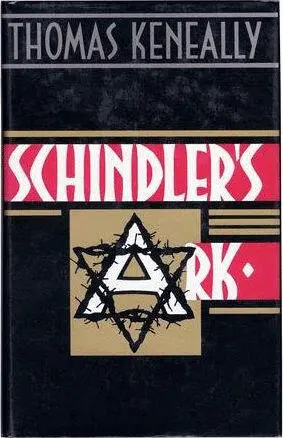
- Название:Schindler's Ark
- Автор:
- Издательство:Hodder and Stoughton
- Жанр:
- Год:1982
- Город:London
- ISBN:0-340-27838-2
- Рейтинг книги:4 / 5. Голосов: 1
-
Избранное:Добавить в избранное
- Отзывы:
-
Ваша оценка:
Schindler's Ark: краткое содержание, описание и аннотация
Предлагаем к чтению аннотацию, описание, краткое содержание или предисловие (зависит от того, что написал сам автор книги «Schindler's Ark»). Если вы не нашли необходимую информацию о книге — напишите в комментариях, мы постараемся отыскать её.
Schindler’s List
Working with the actual testimony of Schindler’s Jews, Thomas Keneally artfully depicts the courage and shrewdness of an unlikely savior, a man who is a flawed mixture of hedonism and decency and who, in the presence of unutterable evil, transcends the limits of his own humanity. From From
A mesmerizing novel based on the true story of Oskar Schindler, a German industralist who saved and succored more than 1000 Jews from the Nazis at enormous financial and emotional expense. How the German Oskar Schindler came to save more than one thousand Polish Jews during the Holocaust is one of the most fascinating stories of the century. Although millions are now learning about Schindler through Steven Spielberg’s recent Academy Award-winning film, his achievement first gained prominence with Keneally’s 1982 “facticious” novel (which is also the basis for the film). Keneally’s account is less melodramatic than the motion picture, and although he does not fully explain how a hedonistic German could have been so altered by the plight of the Jewish workers in his factory, he does make Schindler less enigmatic than the big-screen version. Ben Kingsley, one of the film's stars, reads in a calculatedly matter-of-fact tone, letting the story's power alone convey its complicated emotions. Highly recommended.
Michael Adams, Fairleigh Dickinson Univ. Lib., Madison, N.J.
Schindler's Ark — читать онлайн бесплатно полную книгу (весь текст) целиком
Ниже представлен текст книги, разбитый по страницам. Система сохранения места последней прочитанной страницы, позволяет с удобством читать онлайн бесплатно книгу «Schindler's Ark», без необходимости каждый раз заново искать на чём Вы остановились. Поставьте закладку, и сможете в любой момент перейти на страницу, на которой закончили чтение.
Интервал:
Закладка:
Sussmuth had in his office a list of sites suitable to receive plants evacuated from the war zone. Near Oskar’s hometown of Zwittau, on the edge of a village called Brinnlitz, was a great textile plant owned by the Viennese brothers Hoffman. They’d been in butter and cheese in their home city, but had come to the Sudetenland behind the legions (just as Oskar had gone to Cracow) and become textile magnates. An entire annex of their plant lay idle, used as a storehouse for obsolete spinning machines. A site like that was served from the rail depot at Zwittau, where Schindler’s brother-in-law was in charge of the freight yard. And a railway loop ran close to the gates. The brothers are profiteers, said Sussmuth, smiling. They have some local party backing—the County Council and the District Leader are in their pockets. But you have Colonel Lange behind you.
I will write to Berlin at once, Sussmuth promised, and recommend the use of the Hoffman annex.
Oskar knew the Germanic village of Brinnlitz from his childhood. Its racial character was in its name, since the Czechs would have called it Brnenec, just as a Czech Zwittau would have become Zvitava. The Brinnlitz citizens would not fancy a thousand or more Jews in their neighborhood. The Zwittau people, from whom some of Hoffman’s workers were recruited, would not like it either, this contamination, so late in the war, of their rustic-industrial backwater.
In any case, Oskar drove down to take a quick look at the site. He did not approach Hoffman Brothers’ front office, since that would give the tougher Hoffman brother, the one who chaired the company, too much warning. But he was able to wander into the annex without being challenged. It was an old-fashioned two-story industrial barracks built around a courtyard. The ground floor was high-ceilinged and full of old machines and crates of wool. The upper floor must have been intended as offices and for lighter equipment. Its floor would not stand the weight of the big pressing machines. Downstairs would do for the new workshops of DEF, as offices and, in one corner, the Herr Direktor’s apartment. Upstairs would be barracks for the prisoners.
He was delighted with the place. He drove back to Cracow yearning to get started, to spend the necessary money, to talk to Madritsch again. For Sussmuth could find a site for Madritsch too—perhaps even floor space in Brinnlitz.
When he got back, he found that an Allied bomber, shot down by a Luftwaffe fighter, had crashed on the two end barracks in the backyard prison. Its blackened fuselage sat crookedly across the wreckage of the flattened huts. Only a small squad of prisoners had been left behind in Emalia to wind up production and maintain the plant. They had seen it come down, flaming. There had been two men inside, and their bodies had burned. The Luftwaffe people who came to take them away had told Adam Garde that the bomber was a Stirling and that the men were Australian. One, who was holding the charred remnants of an English Bible, must have crashed with it in his hand. Two others had parachuted in the suburbs. One had been found, dead of wounds, still in his harness. The partisans had got to the other one first and were hiding him somewhere.
What these Australians had been doing was dropping supplies to the partisans in the primeval forest east of Cracow.
If Oskar had wanted some sort of confirmation, this was it. That men should come all this way from unimaginable little towns in the Australian Outback to hasten the end in Cracow. He put a call through at once to the official in charge of rolling stock in the office of Ostbahn President Gerteis and invited him to dinner to talk about DEF’S potential need of flatcars.
A week after Oskar spoke to Sussmuth, the gentlemen of the Berlin Armaments Board instructed the Governor of Moravia that Oskar’s armaments company was to be allocated the annex of Hoffman’s spinning mill in Brinnlitz. The Governor’s bureaucrats could do nothing more, Sussmuth told Oskar by telephone, than slow the paperwork down. But Hoffman and other Party men in the Zwittau area were already conferring and passing resolutions against Oskar’s intrusion into Moravia. The Party Kreisleiter in Zwittau wrote to Berlin complaining that Jewish prisoners from Poland would be a peril to the health of Moravian Germans. Spotted fever would very likely appear in the region for the first time in modern history, and Oskar’s small armaments factory, of dubious value to the war effort, would also attract Allied bombers, with resultant damage to the important Hoffman mills. The population of Jewish criminals in the proposed Schindler camp would outweigh the small and decent population of Brinnlitz and be a cancer on the honest flank of Zwittau.
A protest of that kind didn’t have a chance, since it went straight to the office of Erich Lange in Berlin. Appeals to Troppau were quashed by honest Sussmuth. Nonetheless, the posters went up on walls in Oskar’s hometown: “KEEP THE JEWISH CRIMINALS OUT.”
And Oskar was paying. He was paying the Evacuation Committee in Cracow to help speed up the permits for the transfer of his machinery. The Department of the Economy in Cracow had to be encouraged to provide the clearances of bank holdings. Currency wasn’t favored these days, so he paid in goods—in kilos of tea, in pairs of leather shoes, in carpets, in coffee, in canned fish. He spent his afternoons in the little streets off the market square of Cracow haggling at staggering prices for whatever the bureaucrats desired. Otherwise, he was sure, they would keep him waiting till his last Jew had gone to Auschwitz.
It was Sussmuth who told him that people from Zwittau were writing to the Armaments Inspectorate accusing Oskar of black-marketeering. If they’re writing to me, said Sussmuth, you can bet the same letters are going to the police chief of Moravia, Obersturmführer Otto Rasch. You should introduce yourself to Rasch and show him what a charming fellow you are.
Oskar had known Rasch when he was SS police chief of Katowice. Rasch was, by happy chance, a friend of the chairman of Ferrum AG at Sosnowiec, from which Oskar had bought his steel. But in rushing down to Brno to head off informers, Oskar didn’t rely on anything as flimsy as mutual friendships. He took a diamond cut in the brilliant style which, somehow, he introduced into the meeting. When it crossed the table and ended on Rasch’s side of the desk, it secured Oskar’s Brno front.
Oskar later estimated that he spent 100,000 RM.—NEARLY $40,000—to grease the transfer to Brinnlitz. Few of his survivors would ever find the figure unlikely, though there were those who shook their heads and said, “No, more! It would have to have been more than that.”
He had drawn up what he called a preparatory list and delivered it to the Administration Building. There were more than a thousand names on it—the names of all the prisoners of the backyard prison camp of Emalia, as well as new names. Helen Hirsch’s name was freshly on the list, and Amon was not there to argue about it. And the list would expand if Madritsch agreed to go to Moravia with Oskar. So Oskar kept working on Titsch, his ally at Julius Madritsch’s ear. Those Madritsch prisoners who were closest to Titsch knew the list was under compilation, that they could have access to it. Titsch told them without any ambiguity: You must get on it. In all the reams of Płaszów paperwork, Oskar’s dozen pages of names were the only pages with access to the future.
But Madritsch still could not decide whether he wanted an alliance with Oskar, whether he would add his 3,000 to the total.
There is again a haziness suitable to a legend about the precise chronology of Oskar’s list. The haziness doesn’t attach to the existence of the list—a copy can be seen today in the archives of the Yad Vashem. There is no uncertainty as we shall see about the names remembered by Oskar and Titsch at the last minute and attached to the end of the official paper. The names on the list are definite. But the circumstances encourage legends. The problem is that the list is remembered with an intensity which, by its very heat, blurs. The list is an absolute good. The list is life. All around its cramped margins lies the gulf.
Читать дальшеИнтервал:
Закладка:
Похожие книги на «Schindler's Ark»
Представляем Вашему вниманию похожие книги на «Schindler's Ark» списком для выбора. Мы отобрали схожую по названию и смыслу литературу в надежде предоставить читателям больше вариантов отыскать новые, интересные, ещё непрочитанные произведения.





Обсуждение, отзывы о книге «Schindler's Ark» и просто собственные мнения читателей. Оставьте ваши комментарии, напишите, что Вы думаете о произведении, его смысле или главных героях. Укажите что конкретно понравилось, а что нет, и почему Вы так считаете.