Thomas Keneally - Schindler's Ark
Здесь есть возможность читать онлайн «Thomas Keneally - Schindler's Ark» весь текст электронной книги совершенно бесплатно (целиком полную версию без сокращений). В некоторых случаях можно слушать аудио, скачать через торрент в формате fb2 и присутствует краткое содержание. Город: London, Год выпуска: 1982, ISBN: 1982, Издательство: Hodder and Stoughton, Жанр: Историческая проза, на английском языке. Описание произведения, (предисловие) а так же отзывы посетителей доступны на портале библиотеки ЛибКат.
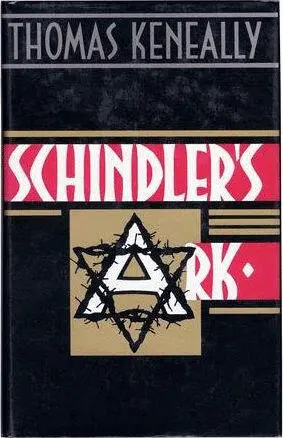
- Название:Schindler's Ark
- Автор:
- Издательство:Hodder and Stoughton
- Жанр:
- Год:1982
- Город:London
- ISBN:0-340-27838-2
- Рейтинг книги:4 / 5. Голосов: 1
-
Избранное:Добавить в избранное
- Отзывы:
-
Ваша оценка:
Schindler's Ark: краткое содержание, описание и аннотация
Предлагаем к чтению аннотацию, описание, краткое содержание или предисловие (зависит от того, что написал сам автор книги «Schindler's Ark»). Если вы не нашли необходимую информацию о книге — напишите в комментариях, мы постараемся отыскать её.
Schindler’s List
Working with the actual testimony of Schindler’s Jews, Thomas Keneally artfully depicts the courage and shrewdness of an unlikely savior, a man who is a flawed mixture of hedonism and decency and who, in the presence of unutterable evil, transcends the limits of his own humanity. From From
A mesmerizing novel based on the true story of Oskar Schindler, a German industralist who saved and succored more than 1000 Jews from the Nazis at enormous financial and emotional expense. How the German Oskar Schindler came to save more than one thousand Polish Jews during the Holocaust is one of the most fascinating stories of the century. Although millions are now learning about Schindler through Steven Spielberg’s recent Academy Award-winning film, his achievement first gained prominence with Keneally’s 1982 “facticious” novel (which is also the basis for the film). Keneally’s account is less melodramatic than the motion picture, and although he does not fully explain how a hedonistic German could have been so altered by the plight of the Jewish workers in his factory, he does make Schindler less enigmatic than the big-screen version. Ben Kingsley, one of the film's stars, reads in a calculatedly matter-of-fact tone, letting the story's power alone convey its complicated emotions. Highly recommended.
Michael Adams, Fairleigh Dickinson Univ. Lib., Madison, N.J.
Schindler's Ark — читать онлайн бесплатно полную книгу (весь текст) целиком
Ниже представлен текст книги, разбитый по страницам. Система сохранения места последней прочитанной страницы, позволяет с удобством читать онлайн бесплатно книгу «Schindler's Ark», без необходимости каждый раз заново искать на чём Вы остановились. Поставьте закладку, и сможете в любой момент перейти на страницу, на которой закончили чтение.
Интервал:
Закладка:
Some of those whose names appeared on the list say that there was a party at Goeth’s villa, a reunion of SS men and entrepreneurs to celebrate the times they’d had there. Some even believe that Goeth was there, but since the SS did not release on bail, that is impossible. Others believe that the party was held at Oskar’s own apartment above his factory. Oskar had for more than two years given excellent parties there. One Emalia prisoner remembers the early hours of 1944 when he was on night watch duty and Oskar had wandered down from his apartment at one o’clock, escaping the noise upstairs and bringing with him two cakes, two hundred cigarettes, and a bottle for his friend the watchman.
At the Płaszów graduation party, wherever it took place, the guests included Dr. Blancke, Franz Bosch, and, by some reports, Oberführer Julian Scherner, on vacation from his partisan-hunting. Madritsch was there too, and Titsch. Titsch would later say that at it Madritsch informed Oskar for the first time that he would not be going to Moravia with him. “I’ve done everything I can for the Jews,” Madritsch told him. It was a reasonable claim; he would not be persuaded although he said Titsch had been at him for days.
Madritsch was a just man. Later he would be honored as such. He simply did not believe that Moravia would work. If he had, the indications are that he would have attempted it.
What else is known about the party is that an urgency operated there, because the Schindler list had to be handed in that evening. This is an element in all the versions of the story survivors tell. The survivors could tell and expand upon it only if they had heard it in the first place from Oskar, a man with a taste for embellishing a story. But in the early 1960’s, Titsch himself attested to the substantial truth of this one. Perhaps the new and temporary Commandant of Płaszów, a Hauptsturmführer Büscher, had said to Oskar, “Enough fooling around, Oskar! We have to finalize the paperwork and the transportation.” Perhaps there was some other form of deadline imposed by the Ostbahn, by the availability of transport. At the end of Oskar’s list, therefore, Titsch now typed in, above the official signatures, the names of Madritsch prisoners. Almost seventy names were added, written in by Titsch from his own and Oskar’s memories. Among them were those of the Feigenbaum family—the adolescent daughter who suffered from incurable bone cancer; the teen-age son Lutek with his shaky expertise in repairing sewing machines. Now they were all transformed, as Titsch scribbled, into skilled munitions workers. There was singing in the apartment, loud talk and laughter, a fog of cigarette smoke, and, in a corner, Oskar and Titsch quizzing each other over people’s names, straining for a clue to the spelling of Polish patronyms.
In the end, Oskar had to put his hand on Titsch’s wrist. We’re over the limit, he said. They’ll balk at the number we already have. Titsch continued to strain for names, and tomorrow morning would wake damning himself because one had come to him too late. But now he was at the limit, wrung out by this work. It was blasphemously close to creating people anew just by thinking of them. He did not begrudge doing it. It was what it said of the world—that was what made the heavy air of Schindler’s apartment so hard for Titsch to breathe.
The list was vulnerable, however, through the personnel clerk, Marcel Goldberg.
Büscher, the new Commandant, who was there merely to wind the camp down, himself could not have cared, within certain numerical limits, who went on the list. Therefore Goldberg had the power to tinker with its edges. It was known to prisoners already that Goldberg would take bribes. The Dresners knew it. Juda Dresner—uncle of red Genia, husband of the Mrs. Dresner who’d once been refused a hiding place in a wall, and father of Janek and of young Danka—Juda Dresner knew it. “He paid Goldberg,” the family would simply say to explain how they got on the Schindler list. They never knew what was given. Wulkan the jeweler presumably got himself, his wife, his son on the list in the same way.
Poldek Pfefferberg was told about the list by an SS NCO named Hans Schreiber.
Schreiber, a young man in his mid-twenties, had as evil a name as any other SS man in Płaszów, but Pfefferberg had become something of a mild favorite of his in that way that was common to relationships—throughout the system—between individual prisoners and SS personnel. It had begun one day when Pfefferberg, as a group leader in his barracks, had had responsibility for window cleaning. Schreiber inspected the glass and found a smudge, and began browbeating Poldek in the style that was often a prelude to execution. Pfefferberg lost his temper and told Schreiber that both of them knew the windows were perfectly polished and if Schreiber wanted a reason to shoot him, he ought to do it without any more delay.
The outburst had, in a contradictory way, amused Schreiber, who afterward occasionally used to stop Pfefferberg and ask him how he and his wife were, and sometimes even gave Poldek an apple for Mila. In the summer of 1944, Poldek had appealed to him desperately to extricate Mila from a trainload of women being sent from Płaszów to the evil camp at Stutthof on the Baltic. Mila was already in the lines boarding the cattle cars when Schreiber came waving a piece of paper and calling her name. Another time, a Sunday, he turned up drunk at Pfefferberg’s barracks and, in front of Poldek and a few other prisoners, began to weep for what he called “the dreadful things” he had done in Płaszów. He intended, he said, to expiate them on the Eastern Front. In the end, he would.
Now he told Poldek that Schindler had a list and that Poldek should do everything he could to get on it. Poldek went down to the Administration Building to beg Goldberg to add his name and Mila’s to the list. Schindler had in the past year and a half often visited Poldek in the camp garage and had always promised rescue.
Poldek had, however, become such an accomplished welder that the garage supervisors, who needed for their lives’ sake to produce high-standard work, would never let him go. Now Goldberg sat with his hand on the list—he had already added his own name to it—and this old friend of Oskar’s, once a frequent guest in the apartment in Straszewskiego, expected to have himself written down for sentiment’s sake. “Do you have any diamonds?” Goldberg asked Pfefferberg.
“Are you serious?” asked Poldek.
“For this list,” said Goldberg, a man of prodigious and accidental power, “it takes diamonds.”
Now that the Viennese music lover Hauptsturmführer Goeth was in prison, the Rosner brothers, musicians to the court, were free to work their way onto the list. Dolek Horowitz also, who had earlier got his wife and children out to Emalia, now persuaded Goldberg to include him, his wife, his son, his young daughter. Horowitz had always worked in the central warehouse of Płaszów and had managed to put some small treasure away. Now it was paid to Marcel Goldberg.
Among those included in the list were the Bejski brothers, Uri and Moshe, officially described as machine fitter and draftsman. Uri had a knowledge of weapons, and Moshe a gift for forging documents. The circumstances of the list are so clouded that it is not possible to say whether they were included for these talents or not.
Josef Bau, the ceremonious bridegroom, would at some stage be included, but without his knowing it. It suited Goldberg to keep everyone in the dark about the list. Given his nature, it is possible to assume that if Bau made any personal approach to Goldberg it could only have been on the basis that his mother, his wife, himself should all be included. He would not find out until too late that he alone would be listed for Brinnlitz. As for Stern, the Herr Direktor had included him from the beginning. Stern was the only father confessor Oskar ever had, and Stern’s suggestions had a great authority with him. Since October 1, no Jewish prisoner had been allowed out of Płaszów either to march to the cable factory or for any other purpose. At the same time, the trusties in the Polish prison had begun to put guards on the barracks to stop Jewish prisoners from trading with the Poles for bread. The price of illegal bread reached a level it would be hard to express in złoty. In the past you could have bought a loaf for your second coat, 250 gm. for a clean undershirt. Now—as with Goldberg—it took diamonds.
Читать дальшеИнтервал:
Закладка:
Похожие книги на «Schindler's Ark»
Представляем Вашему вниманию похожие книги на «Schindler's Ark» списком для выбора. Мы отобрали схожую по названию и смыслу литературу в надежде предоставить читателям больше вариантов отыскать новые, интересные, ещё непрочитанные произведения.








Обсуждение, отзывы о книге «Schindler's Ark» и просто собственные мнения читателей. Оставьте ваши комментарии, напишите, что Вы думаете о произведении, его смысле или главных героях. Укажите что конкретно понравилось, а что нет, и почему Вы так считаете.