Thomas Keneally - Schindler's Ark
Здесь есть возможность читать онлайн «Thomas Keneally - Schindler's Ark» весь текст электронной книги совершенно бесплатно (целиком полную версию без сокращений). В некоторых случаях можно слушать аудио, скачать через торрент в формате fb2 и присутствует краткое содержание. Город: London, Год выпуска: 1982, ISBN: 1982, Издательство: Hodder and Stoughton, Жанр: Историческая проза, на английском языке. Описание произведения, (предисловие) а так же отзывы посетителей доступны на портале библиотеки ЛибКат.
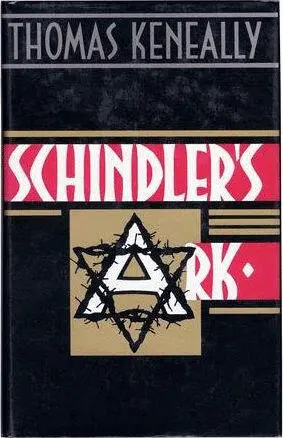
- Название:Schindler's Ark
- Автор:
- Издательство:Hodder and Stoughton
- Жанр:
- Год:1982
- Город:London
- ISBN:0-340-27838-2
- Рейтинг книги:4 / 5. Голосов: 1
-
Избранное:Добавить в избранное
- Отзывы:
-
Ваша оценка:
Schindler's Ark: краткое содержание, описание и аннотация
Предлагаем к чтению аннотацию, описание, краткое содержание или предисловие (зависит от того, что написал сам автор книги «Schindler's Ark»). Если вы не нашли необходимую информацию о книге — напишите в комментариях, мы постараемся отыскать её.
Schindler’s List
Working with the actual testimony of Schindler’s Jews, Thomas Keneally artfully depicts the courage and shrewdness of an unlikely savior, a man who is a flawed mixture of hedonism and decency and who, in the presence of unutterable evil, transcends the limits of his own humanity. From From
A mesmerizing novel based on the true story of Oskar Schindler, a German industralist who saved and succored more than 1000 Jews from the Nazis at enormous financial and emotional expense. How the German Oskar Schindler came to save more than one thousand Polish Jews during the Holocaust is one of the most fascinating stories of the century. Although millions are now learning about Schindler through Steven Spielberg’s recent Academy Award-winning film, his achievement first gained prominence with Keneally’s 1982 “facticious” novel (which is also the basis for the film). Keneally’s account is less melodramatic than the motion picture, and although he does not fully explain how a hedonistic German could have been so altered by the plight of the Jewish workers in his factory, he does make Schindler less enigmatic than the big-screen version. Ben Kingsley, one of the film's stars, reads in a calculatedly matter-of-fact tone, letting the story's power alone convey its complicated emotions. Highly recommended.
Michael Adams, Fairleigh Dickinson Univ. Lib., Madison, N.J.
Schindler's Ark — читать онлайн бесплатно полную книгу (весь текст) целиком
Ниже представлен текст книги, разбитый по страницам. Система сохранения места последней прочитанной страницы, позволяет с удобством читать онлайн бесплатно книгу «Schindler's Ark», без необходимости каждый раз заново искать на чём Вы остановились. Поставьте закладку, и сможете в любой момент перейти на страницу, на которой закончили чтение.
Интервал:
Закладка:
This journey of a hundred miles took nearly two days; when the doors opened, it was early morning on the second day. They were at the Zwittau depot. They dismounted and were marched through a town not yet awake, a town frozen in the late Thirties. Even the graffiti on the walls—”KEEP THE JEWS OUT OF BRINNLITZ”—LOOKED strangely prewar to them. They had been living in a world where their very breath was begrudged. It seemed almost endearingly naive for the people of Zwittau to begrudge them a mere location. Three or four miles out into the hills, following a rail siding, they came to the industrial hamlet of Brinnlitz, and saw ahead in thin morning light the solid bulk of the Hoffman annex transformed into Arbeitslager (labor Camp) Brinnlitz, with watchtowers, a wire fence encircling it, a guard barracks inside the wire, and beyond that the gate to the factory and the prisoners’ dormitories.
As they marched in through the outer gate, Oskar appeared from the factory courtyard, wearing a Tyrolean hat.
CHAPTER 33
This camp, like Emalia, had been equipped at Oskar’s expense. According to the bureaucratic theory, all factory camps were built at the owner’s cost. It was thought that any industrialist got sufficient incentive from the cheap prison labor to justify a small expenditure on wire and lumber. In fact, Germany’s darling industrialists, such as Krupp and Farben, built their camps with materials donated from SS enterprises andwitha wealth of labor lent to them. Oskar was no darling and got nothing. He had been able to pry some wagonloads of SS cement out of Bosch at what Bosch would have considered a discount black-market price. From the same source he got two to three tons of gasoline and fuel oil for use in the production and delivery of his goods. He had brought some of the camp fencing wire from Emalia.
But around the bare premises of the Hoffman annex, he was required to provide high-tension fences, latrines, a guard barracks for 100 SS personnel, attached SS offices, a sickroom, and kitchens. Adding to the expense, Sturmbannführer Hassebroeck had already been down from Gróss-Rosen for an inspection and gone away with a supply of cognac and porcelainware, and what Oskar described as “tea by the kilogram.” Hassebroeck had also taken away inspection fees and compulsory Winter Aid contributions levied by Section D, and no receipt had been given. “His car had a considerable capacity for these things,” Oskar would later declare. He had no doubt in October 1944 that Hassebroeck was already doctoring the Brinnlitz books.
Inspectors sent directly by Oranienburg had also to be satisfied. As for the goods and equipment of DEF, much of it still in transit, it would require 250 freight cars before it had all arrived. It was astounding, said Oskar, how in a crumbling state, Ostbahn officials could, if properly encouraged, find such a number of rail cars.
And the unique aspect of all this, of Oskar himself, jaunty in his mountain hat, as he emerged from that frosty courtyard, is that unlike Krupp and Farben and all the other entrepreneurs who kept Jewish slaves, he had no serious industrial intention at all. He had no hopes of production; there were no sales graphs in his head. Though four years ago he had come to Cracow to get rich, he now had no manufacturing ambitions left.
It was a hectic industrial situation there in Brinnlitz. Many of the presses, drills, and lathes had not yet arrived, and new cement floors would have to be poured to take their weight. The annex was still full of Hoffman’s old machinery. Even so, for these 800 supposed munitions workers who had just moved through the gate, Oskar was paying 7.50 RM. each day per skilled worker, 6 RM. per laborer. This would amount to nearly $14,000 U.S. each week for male labor; when the women arrived, the bill would top $18,000. Oskar was therefore committing a grand business folly, but celebrated it in a Tyrolean hat.
Some of Oskar’s attachments had shifted too. Mrs. Emilie Schindler had come from Zwittau to live with him in his downstairs apartment. Brinnlitz, unlike Cracow, was too close to home to permit her to excuse their separation. For a Catholic like her, it was now a matter of either formalizing the rift or living together again. There seemed to be at least a tolerance between them, a thorough mutual respect. At first sight she might have looked like a marital cipher, an abused wife who did not know how to get out. Some of the men wondered at first what she would think when she found the sort of factory Oskar kept, the sort of camp. They did not know yet that Emilie would make her own discrete contribution, that it would be based not on conjugal obedience but on her own ideas.
Ingrid had come with Oskar to Brinnlitz to work in the new plant, but she had taken lodgings outside the camp and was there only for office hours. There was a definite cooling in that relationship, and she would never live with Oskar again. But she would show no animosity, and throughout the coming months Oskar would frequently visit her in her apartment. The racy Klonowska, that chic Polish patriot, stayed behind in Cracow, but again there was no apparent bitterness. Oskar would have contact with her during visits to Cracow, and she would again help him when the SS caused trouble. The truth was that though his attachments to Klonowska and Ingrid were winding down in the most fortunate way, without any bitterness, it would have been a mistake to believe that he was turning conjugal.
He told the men, that day of their arrival, that the women could be confidently expected. He believed they would arrive after scarcely more delay than there had been with the men. The women’s journey would, however, be different. After a short trip from Płaszów, their locomotive backed them, with some hundreds of other Płaszów women, through the arched gatehouse of Auschwitz-Birkenau. When the car doors opened, they found themselves in that immense concourse bisecting the camp, and practiced SS men and women, speaking calmly, began to grade them. The sorting of the people went on with a terrifying detachment. When a woman was slow in moving, she was hit with a truncheon, but the blow had no personal edge to it. It was all a matter of getting the numbers through. For the SS sections at the railside of Birkenau, it was all dutiful tedium. They had already heard every plea, every story. They knew every dodge anyone was ever likely to pull.
Under the floodlights, the women numbly asked each other what it meant. But even in their daze, their shoes already filling with the mud that was Birkenau’s element, they were aware of SS women pointing to them, and telling uniformed doctors who showed any interest, “Schindlergruppe!” And the spruce young physicians would turn away and leave them alone for a time.
Feet sticking in the mud, they were marched to the delousing plant and stripped by order of tough young SS women with truncheons in their hands. Mila Pfefferberg was troubled by rumors of the type most prisoners of the Reich had by now heard—that some shower nozzles gave out a killing gas.
These, she was delighted to find, gave mere icy water.
After their wash, some of them expected to be tattooed. They knew as much as that about Auschwitz. The SS tattooed your arm if they wanted to use you. If they intended to feed you into the machine, however, they did not bother. The same train that had brought the women of the list had brought also some 2,000 others who, not being Schindlerfrauen, were put through the normal selections. Rebecca Bau, excluded from the Schindler list, had passed and been given a number, and Josef Bau’s robust mother had also won a tattoo in that preposterous Birkenau lottery. Another Płaszów girl, fifteen years old, had looked at the tattoo she’d been given and been delighted that it had two fives, a three, and two sevens—numbers enshrined in the Tashlag, or Jewish calendar. With a tattoo, you could leave Birkenau and go to one of the Auschwitz labor camps, where there was at least a chance.
Читать дальшеИнтервал:
Закладка:
Похожие книги на «Schindler's Ark»
Представляем Вашему вниманию похожие книги на «Schindler's Ark» списком для выбора. Мы отобрали схожую по названию и смыслу литературу в надежде предоставить читателям больше вариантов отыскать новые, интересные, ещё непрочитанные произведения.










Обсуждение, отзывы о книге «Schindler's Ark» и просто собственные мнения читателей. Оставьте ваши комментарии, напишите, что Вы думаете о произведении, его смысле или главных героях. Укажите что конкретно понравилось, а что нет, и почему Вы так считаете.