Thomas Keneally - Schindler's Ark
Здесь есть возможность читать онлайн «Thomas Keneally - Schindler's Ark» весь текст электронной книги совершенно бесплатно (целиком полную версию без сокращений). В некоторых случаях можно слушать аудио, скачать через торрент в формате fb2 и присутствует краткое содержание. Город: London, Год выпуска: 1982, ISBN: 1982, Издательство: Hodder and Stoughton, Жанр: Историческая проза, на английском языке. Описание произведения, (предисловие) а так же отзывы посетителей доступны на портале библиотеки ЛибКат.
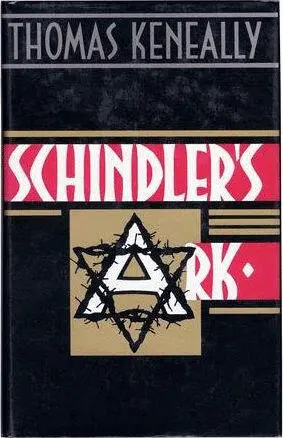
- Название:Schindler's Ark
- Автор:
- Издательство:Hodder and Stoughton
- Жанр:
- Год:1982
- Город:London
- ISBN:0-340-27838-2
- Рейтинг книги:4 / 5. Голосов: 1
-
Избранное:Добавить в избранное
- Отзывы:
-
Ваша оценка:
Schindler's Ark: краткое содержание, описание и аннотация
Предлагаем к чтению аннотацию, описание, краткое содержание или предисловие (зависит от того, что написал сам автор книги «Schindler's Ark»). Если вы не нашли необходимую информацию о книге — напишите в комментариях, мы постараемся отыскать её.
Schindler’s List
Working with the actual testimony of Schindler’s Jews, Thomas Keneally artfully depicts the courage and shrewdness of an unlikely savior, a man who is a flawed mixture of hedonism and decency and who, in the presence of unutterable evil, transcends the limits of his own humanity. From From
A mesmerizing novel based on the true story of Oskar Schindler, a German industralist who saved and succored more than 1000 Jews from the Nazis at enormous financial and emotional expense. How the German Oskar Schindler came to save more than one thousand Polish Jews during the Holocaust is one of the most fascinating stories of the century. Although millions are now learning about Schindler through Steven Spielberg’s recent Academy Award-winning film, his achievement first gained prominence with Keneally’s 1982 “facticious” novel (which is also the basis for the film). Keneally’s account is less melodramatic than the motion picture, and although he does not fully explain how a hedonistic German could have been so altered by the plight of the Jewish workers in his factory, he does make Schindler less enigmatic than the big-screen version. Ben Kingsley, one of the film's stars, reads in a calculatedly matter-of-fact tone, letting the story's power alone convey its complicated emotions. Highly recommended.
Michael Adams, Fairleigh Dickinson Univ. Lib., Madison, N.J.
Schindler's Ark — читать онлайн бесплатно полную книгу (весь текст) целиком
Ниже представлен текст книги, разбитый по страницам. Система сохранения места последней прочитанной страницы, позволяет с удобством читать онлайн бесплатно книгу «Schindler's Ark», без необходимости каждый раз заново искать на чём Вы остановились. Поставьте закладку, и сможете в любой момент перейти на страницу, на которой закончили чтение.
Интервал:
Закладка:
Now living in Vienna, the man does not want his real name used.
People in the camp below had also heard that first execution on the hill now profanely nicknamed “Prick Hill.” Some told themselves that it was partisans being shot up there, intractable Marxists or crazy nationalists. It was another country up there. If you obeyed the ordinances within the wire, you need never visit it. But the more clearheaded of Schindler’s workers, marched up Wieliczka Street past the cable factory and over to Zablocie to work at DEF—THEY knew why prisoners from Montelupich were being shot at the Austrian hill fort, why the SS did not seem alarmed if the truckloads were seen arriving or the noise was heard throughout Płaszów. The reason was that the SS did not look on the prison population as ultimate witnesses. If there had been concern about a time in court, a mass of future testimony, they would have taken the women deeper into the woods. The conclusion to be drawn, Oskar decided, was not that Chujowa Górka was a separate world from Płaszów, but that all of them, those brought to the mound fort by truck and those behind the wire down the hill, were under sentence. The first morning Commandant Goeth stepped out his front door and murdered a prisoner at random, there was a tendency to see this also, like the first execution on Chujowa Górka, as a unique event, discrete from what would become the customary life of the camp. In fact, of course, the killings on the hill would soon prove to be habitual, and so would Amon’s morning routine. Wearing a shirt and riding breeches and boots on which his orderly had put a high shine, he would emerge on the steps of his temporary villa. (they were renovating a better place for him down at the other end of the camp perimeter.) As the season wore on he would appear without his shirt, for he loved the sun. But for the moment he stood in the clothes in which he had eaten breakfast, a pair of binoculars in one hand and a sniper’s rifle in the other. He would scan the camp area, the work at the quarry, the prisoners pushing or hauling the quarry trucks on the rails which passed by his door. Those glancing up could see the smoke from the cigarette which he held clamped between his lips, the way a man smokes without hands when he is too busy to put down the tools of his trade. Within the first few days of the camp’s life he appeared thus at his front door and shot a prisoner who did not seem to be pushing hard enough at a cart loaded with limestone. No one knew Amon’s precise reason for settling on that prisoner—
Amon certainly did not have to document his motives. With one blast from the doorstep, the man was plucked from the group of pushing and pulling captives and hurled sideways in the road. The others stopped pushing, of course, their muscles frozen in expectation of a general slaughter. But Amon waved them on, frowning, as if to say that he was pleased for the moment with the standard of work he was getting from them.
Apart from such excesses with prisoners, Amon was also breaking one of the promises he’d made to the entrepreneurs. Oskar got a telephone call from Madritsch—Madritsch wanted them both to complain. Amon had said he would not interfere in the business of the factories. At least, he was not interfering from within. But he held up shifts by detaining the prison population for hours on the Appellplatz (parade ground) at roll call. Madritsch mentioned a case in which a potato had been found in a given hut, and therefore every prisoner from that barracks had to be publicly flogged in front of the thousands of inmates. It is no fast matter to have a few hundred people drag their pants and underwear down, their shirts or dresses up, and treat each of them to twenty-five lashes. It was Goeth’s rule that the flogged prisoner call out the numbers for the guidance of the Ukrainian orderlies who did the flogging. If the victim lost track of the count, it was to begin again. Commandant Goeth’s roll calls on the Appellplatz were full of just such time-consuming trickery.
Therefore shifts would arrive hours late at the Madritsch clothing factory inside the Płaszów camp, and an hour later still at Oskar’s place in Lipowa Street. They would arrive shocked, too, unable to concentrate, muttering stories of what Amon or John or Scheidt or some other officer had done that morning. Oskar complained to an engineer he knew at the Armaments Inspectorate. It’s no use complaining to the police chiefs, said the engineer. They’re not involved in the same war we are. What I ought to do, said Oskar, is keep the people on the premises. Make my own camp.
The idea amused the engineer. Where would you put them, old man? he asked. You don’t have much room.
If I can acquire the space, said Oskar, would you write a supporting letter?
When the engineer agreed, Oskar called an elderly couple named Bielski who lived in Stradom Street. He wondered if they would consider an offer for the land abutting his factory. He drove across the river to see them. They were delighted by his manner. Because he had always been bored by the rituals of haggling, he began by offering them a boom-time price. They gave him tea and, in a state of high excitement, called their lawyer to draw up the papers while Oskar was still on the premises. From their apartment, Oskar drove out, as a courtesy, and told Amon that he intended to make a subcamp of Płaszów in his own factory yard. Amon was quite taken with the idea. “If the SS generals approve,” he said, “you can expect my cooperation. As long as you don’t want my musicians or my maid.”
The next day a full-scale appointment was arranged with Oberführer Scherner at Pomorska Street. Somehow both Amon and General Scherner knew that Oskar could be made to foot the whole bill for a new camp. They could detect that when Oskar pushed the industrial argument—”I want my workers on the premises so that their labor can be more fully exploited”—he was at the same time pushing some other intimate craze of his in which expense was no question. They thought of him as a good enough fellow who’d been stricken with a form of Jew-love as with a virus. It was a corollary to SS theory that the Jewish genius so pervaded the world, could achieve such magical effects, that Herr Oskar Schindler was to be pitied as much as was a prince turned into a frog. But he would have to pay for his disease.
The requirements of Obergruppenführer Friedrich-Wilhelm Krüger, police chief of the Government General and superior of Scherner and Czurda, were based on the regulations set down by the Concentration Camp Section of General Oswald Pohl’s SS Main Administrative and Economic Office, even though as yet Płaszów was run independently of Pohl’s bureau. The basic stipulations for an SS Forced Labor Subcamp involved the erection of fences nine feet tall, of watchtowers at given intervals according to the length of the camp perimeter, of latrines, barracks, a clinic, a dental office, a bathhouse and delousing complex, a barbershop, a food store, a laundry, a barracks office, a guard block of somewhat better construction than the barracks themselves, and all the accessories. What had occurred to Amon, Scherner, and Czurda was that Oskar, as was only proper, would meet the expenses either out of economic motives or because of the cabalistic enchantment he lay under. And even though they would make Oskar pay, his proposal suited them. There was still a ghetto in Tarnow, forty-five miles east, and when it was abolished the population would need to be absorbed into Płaszów. Likewise the thousands of Jews now arriving at Płaszów from the shtetls of southern Poland. A subcamp in Lipowa Street would ease that pressure.
Amon also understood, though he would never say it aloud to the police chiefs, that there would be no need to supply a Lipowa Street camp too precisely with the minimum food requirements as laid down in General Pohl’s directive. Amon—who could hurl thunderbolts from his doorstep without meeting protest, who believed in any case in the official idea that a certain attrition should take place in Płaszów—was already selling a percentage of the prison rations on the open market in Cracow through an agent of his, a Jew named Wilek Chilowicz, who had contacts with factory managements, merchants, and even restaurants in Cracow.
Читать дальшеИнтервал:
Закладка:
Похожие книги на «Schindler's Ark»
Представляем Вашему вниманию похожие книги на «Schindler's Ark» списком для выбора. Мы отобрали схожую по названию и смыслу литературу в надежде предоставить читателям больше вариантов отыскать новые, интересные, ещё непрочитанные произведения.












Обсуждение, отзывы о книге «Schindler's Ark» и просто собственные мнения читателей. Оставьте ваши комментарии, напишите, что Вы думаете о произведении, его смысле или главных героях. Укажите что конкретно понравилось, а что нет, и почему Вы так считаете.