Thomas Keneally - Schindler's Ark
Здесь есть возможность читать онлайн «Thomas Keneally - Schindler's Ark» весь текст электронной книги совершенно бесплатно (целиком полную версию без сокращений). В некоторых случаях можно слушать аудио, скачать через торрент в формате fb2 и присутствует краткое содержание. Город: London, Год выпуска: 1982, ISBN: 1982, Издательство: Hodder and Stoughton, Жанр: Историческая проза, на английском языке. Описание произведения, (предисловие) а так же отзывы посетителей доступны на портале библиотеки ЛибКат.
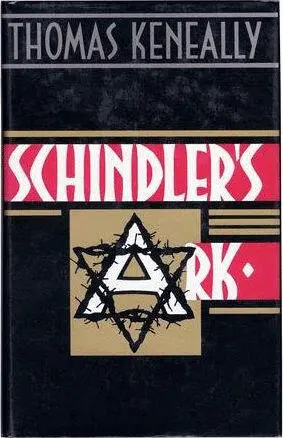
- Название:Schindler's Ark
- Автор:
- Издательство:Hodder and Stoughton
- Жанр:
- Год:1982
- Город:London
- ISBN:0-340-27838-2
- Рейтинг книги:4 / 5. Голосов: 1
-
Избранное:Добавить в избранное
- Отзывы:
-
Ваша оценка:
Schindler's Ark: краткое содержание, описание и аннотация
Предлагаем к чтению аннотацию, описание, краткое содержание или предисловие (зависит от того, что написал сам автор книги «Schindler's Ark»). Если вы не нашли необходимую информацию о книге — напишите в комментариях, мы постараемся отыскать её.
Schindler’s List
Working with the actual testimony of Schindler’s Jews, Thomas Keneally artfully depicts the courage and shrewdness of an unlikely savior, a man who is a flawed mixture of hedonism and decency and who, in the presence of unutterable evil, transcends the limits of his own humanity. From From
A mesmerizing novel based on the true story of Oskar Schindler, a German industralist who saved and succored more than 1000 Jews from the Nazis at enormous financial and emotional expense. How the German Oskar Schindler came to save more than one thousand Polish Jews during the Holocaust is one of the most fascinating stories of the century. Although millions are now learning about Schindler through Steven Spielberg’s recent Academy Award-winning film, his achievement first gained prominence with Keneally’s 1982 “facticious” novel (which is also the basis for the film). Keneally’s account is less melodramatic than the motion picture, and although he does not fully explain how a hedonistic German could have been so altered by the plight of the Jewish workers in his factory, he does make Schindler less enigmatic than the big-screen version. Ben Kingsley, one of the film's stars, reads in a calculatedly matter-of-fact tone, letting the story's power alone convey its complicated emotions. Highly recommended.
Michael Adams, Fairleigh Dickinson Univ. Lib., Madison, N.J.
Schindler's Ark — читать онлайн бесплатно полную книгу (весь текст) целиком
Ниже представлен текст книги, разбитый по страницам. Система сохранения места последней прочитанной страницы, позволяет с удобством читать онлайн бесплатно книгу «Schindler's Ark», без необходимости каждый раз заново искать на чём Вы остановились. Поставьте закладку, и сможете в любой момент перейти на страницу, на которой закончили чтение.
Интервал:
Закладка:
Dr. Alexander Biberstein, now a Płaszów prisoner himself, found that the daily ration varied between 700 and 1,100 calories. At breakfast a prisoner received a half-liter of black ersatz coffee, tasting of acorns, and a lump of rye bread weighing 175g, an eighth of one of the round loaves collected by barracks mess orderlies each morning at the bakery. Hunger being such a disruptive force, each mess orderly cut up the loaf with his back to the others and called, “Who wants this piece? Who wants this one?” At midday a soup was distributed—carrots, beets, sago substitute. Some days it had a fuller body than on others. Better food came in with the work parties who returned each evening. A small chicken could be carried under a coat, a French roll down a trouser leg. Yet Amon tried to prevent this by having the guards search returning details at dusk in front of the Administration Building. He did not want the work of natural wastage to be frustrated, nor the ideological wind to be taken out of his food dealings through Chilowicz. Since, therefore, he did not indulge his own prisoners, he felt that if Oskar chose to take a thousand Jews, he could indulge them at his own expense, without too regular a supply of bread and beets from the storerooms of Płaszów.
That spring, it was not only the police chiefs of the Cracow region whom Oskar had to talk to. He went into his backyard, persuading the neighbors. Beyond the two shabby huts constructed of Jereth’s pineboard, he came to the radiator factory run by Kurt Hoderman. It employed a horde of Poles and about 100 Płaszów inmates. In the other direction was Jereth’s box factory, supervised by the German engineer Kuhnpast. Since the Płaszów people were such a small part of their staff, they didn’t take to the idea with any passion, but they weren’t against it. For Oskar was offering to house their Jews 50 meters from work instead of 5 kilometers.
Next Oskar moved out into the neighborhood to talk to engineer Schmilewski at the Wehrmacht garrison office a few streets away. He employed a squad of Płaszów prisoners. Schmilewski had no objections. His name, with Kuhnpast’s and Hoderman’s, was appended to the application Schindler sent off to Pomorska Street.
SS surveyors visited Emalia and conferred with surveyor Steinhauser, an old friend of Oskar’s from the Armaments Inspectorate. They stood and frowned at the site, as surveyors will, and asked questions about drainage. Oskar had them all into his office upstairs for a morning coffee and a cognac, and then everyone parted amiably. Within a few days the application to establish a Forced Labor Subcamp in the factory backyard was accepted.
That year DEF would enjoy a profit of 15.8 million Reichsmarks. It might be thought that the 300,000 RM. Oskar now spent on building materials for the Emalia camp was a large but not fatal overhead. The truth was though that he was only beginning to pay.
Oskar sent a plea to the Bauleitung, or Construction Office, of Płaszów for the help of a young engineer named Adam Garde. Garde was still working on the barracks of Amon’s camp and, after leaving instructions for the barracks builders, would be marched under individual guard from Płaszów to Lipowa Street to supervise the setting up of Oskar’s compound. When Garde first turned up in Zablocie, he found two rudimentary huts already occupied by close to 400 prisoners. There was a fence patrolled by an SS squad, but the inmates told Garde that Oskar did not let the SS into the encampment or onto the factory floor, except, of course, when senior inspectors came to look over the place.
Oskar, they said, kept the small SS garrison of the Emalia factory well liquored and happy with their lot. Garde could see that the Emalia prisoners themselves were content between the shrinking fragile boards of their two huts, the men’s and the women’s. Already they called themselves Schindlerjuden, using the term in a mood of cautious self-congratulation, the way a man recovering from a heart attack might describe himself as a lucky beggar.
They’d already dug some primitive latrines, which engineer Garde, much as he approved the impulse behind the work, could smell from the factory entrance. They washed at a pump in the DEF yard.
Oskar asked him to come up to the office and look at the plans. Six barracks for up to 1,200 people. The cookhouse at this end, the SS barracks—Oskar was temporarily accommodating the SS in a part of the factory—beyond the wire at the far end. I want a really first-rate shower block and laundry, Oskar told him. I have the welders who can put it together under your direction. Typhus, he growled, half-smiling at Garde. None of us wants typhus. The lice are already biting in Płaszów. We need to be able to boil clothes.
Adam Garde was delighted to go to Lipowa Street each day. Two engineers had already been punished at Płaszów for their diplomas, but at DEF experts were still experts. One morning, as his guard was marching him up Wieliczka Street toward Zablocie, a black limousine materialized, braking hard at their heels. From it emerged Untersturmführer Goeth. He had that restless look about him.
One prisoner, one guard, he observed.
What does it mean? The Ukrainian begged to inform the Herr Commandant that he had orders to escort this prisoner each morning to Herr Oskar Schindler’s Emalia. They both hoped, Garde and the Ukrainian, that the mention of Oskar’s name would give them immunity. One guard, one prisoner? asked the Commandant again, but he was appeased and got back into his limousine without resolving the matter in any radical way.
Later in the day he approached Wilek Chilowicz, who besides being his agent was also chief of the Jewish camp police—or “firemen,” as they were called. Symche Spira, recently the Napoleon of the ghetto, still lived there and spent each day supervising the searching out and the digging up of the diamonds, gold, and cash hidden away and unrecorded by people who were now ashes on the pine needles of Bełżec. In Płaszów, however, Spira had no power, the center of prison power being Chilowicz. No one knew where Chilowicz’ authority came from. Perhaps Willi Kunde had mentioned his name to Amon; perhaps Amon had recognized and liked his style. But all at once, here he was chief of firemen in Płaszów, hander-out of the caps and armbands of authority in that debased kingdom and, like Symche, limited enough in imagination to equate his power with that of tsars.
Goeth approached Chilowicz and said that he had better send Adam Garde to Schindler full-time and get it over with. We have engineers to burn, said Goeth with distaste. He meant that engineering had been a soft option for Jews who weren’t allowed into the medical faculties of the Polish universities. First, though, said Amon, before he goes to Emalia, he has to finish the work on my conservatory.
This news came to Adam Garde in his barracks, at his place in the four-tiered bunks of Hut 21. He would be delivered to Zablocie at the end of a trial. He would be building at Goeth’s back door, where, as Reiter and Grünberg might have told him, the rules were unpredictable.
In the midst of his work for the Commandant, a large beam was lifted to its place in the rooftree of Amon’s conservatory. As he worked, Adam Garde could hear the Commandant’s two dogs, named Rolf and Ralf, names from a newspaper cartoon—except that Amon had permitted them in the past week to rip the breast from a female prisoner suspected of idling. Amon himself, with his half-completed technical education, would return again and again to take a professional stance and watch the roof beams lifted by pulley. He came to ask questions when the center beam was being slotted into place. It was an immense length of heavy pine, and across it Goeth called his question. Adam Garde could not catch the meaning and put his hand to his ear. Again Goeth asked it, and worse than not hearing it, Garde could not understand it. “I don’t understand, Herr Commandant,” he admitted. Amon grabbed the rising beam with both long-fingered hands, dragged back the end of it, and swung it toward the engineer. Garde saw the massive timber spinning toward his head and understood that it was a mortal instrument. He lifted his right hand and the beam took it, shattering the knuckles and the metacarpals and hurling him to the ground. When Garde could see again through the fog of pain and nausea, Amon had turned and walked away. Perhaps he would come again tomorrow for a satisfactory answer….
Читать дальшеИнтервал:
Закладка:
Похожие книги на «Schindler's Ark»
Представляем Вашему вниманию похожие книги на «Schindler's Ark» списком для выбора. Мы отобрали схожую по названию и смыслу литературу в надежде предоставить читателям больше вариантов отыскать новые, интересные, ещё непрочитанные произведения.











Обсуждение, отзывы о книге «Schindler's Ark» и просто собственные мнения читателей. Оставьте ваши комментарии, напишите, что Вы думаете о произведении, его смысле или главных героях. Укажите что конкретно понравилось, а что нет, и почему Вы так считаете.