Thomas Keneally - Schindler's Ark
Здесь есть возможность читать онлайн «Thomas Keneally - Schindler's Ark» весь текст электронной книги совершенно бесплатно (целиком полную версию без сокращений). В некоторых случаях можно слушать аудио, скачать через торрент в формате fb2 и присутствует краткое содержание. Город: London, Год выпуска: 1982, ISBN: 1982, Издательство: Hodder and Stoughton, Жанр: Историческая проза, на английском языке. Описание произведения, (предисловие) а так же отзывы посетителей доступны на портале библиотеки ЛибКат.
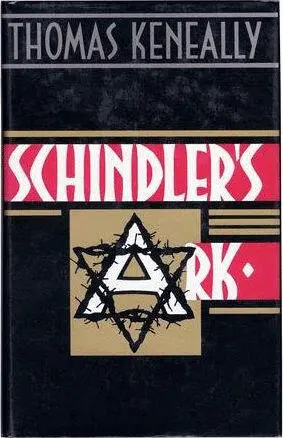
- Название:Schindler's Ark
- Автор:
- Издательство:Hodder and Stoughton
- Жанр:
- Год:1982
- Город:London
- ISBN:0-340-27838-2
- Рейтинг книги:4 / 5. Голосов: 1
-
Избранное:Добавить в избранное
- Отзывы:
-
Ваша оценка:
Schindler's Ark: краткое содержание, описание и аннотация
Предлагаем к чтению аннотацию, описание, краткое содержание или предисловие (зависит от того, что написал сам автор книги «Schindler's Ark»). Если вы не нашли необходимую информацию о книге — напишите в комментариях, мы постараемся отыскать её.
Schindler’s List
Working with the actual testimony of Schindler’s Jews, Thomas Keneally artfully depicts the courage and shrewdness of an unlikely savior, a man who is a flawed mixture of hedonism and decency and who, in the presence of unutterable evil, transcends the limits of his own humanity. From From
A mesmerizing novel based on the true story of Oskar Schindler, a German industralist who saved and succored more than 1000 Jews from the Nazis at enormous financial and emotional expense. How the German Oskar Schindler came to save more than one thousand Polish Jews during the Holocaust is one of the most fascinating stories of the century. Although millions are now learning about Schindler through Steven Spielberg’s recent Academy Award-winning film, his achievement first gained prominence with Keneally’s 1982 “facticious” novel (which is also the basis for the film). Keneally’s account is less melodramatic than the motion picture, and although he does not fully explain how a hedonistic German could have been so altered by the plight of the Jewish workers in his factory, he does make Schindler less enigmatic than the big-screen version. Ben Kingsley, one of the film's stars, reads in a calculatedly matter-of-fact tone, letting the story's power alone convey its complicated emotions. Highly recommended.
Michael Adams, Fairleigh Dickinson Univ. Lib., Madison, N.J.
Schindler's Ark — читать онлайн бесплатно полную книгу (весь текст) целиком
Ниже представлен текст книги, разбитый по страницам. Система сохранения места последней прочитанной страницы, позволяет с удобством читать онлайн бесплатно книгу «Schindler's Ark», без необходимости каждый раз заново искать на чём Вы остановились. Поставьте закладку, и сможете в любой момент перейти на страницу, на которой закончили чтение.
Интервал:
Закладка:
Lest he be seen as deformed and unfit, engineer Garde avoided favoring his shattered hand on the way to the Krankenstube (infirmary).
Carried normally, it weighed at his side, a bladder of torment. He let Dr. Hilfstein talk him into accepting a plaster cast. So he continued to supervise the construction of the conservatory and each day marched to the Emalia works, hoping that the long sleeve of his coat helped conceal the cast. When he was unsure about this, he cut his hand free of the thing. Let the hand mend crookedly. He wanted to ensure his transfer to Schindler’s subcamp by presenting an unmaimed appearance. Within a week, carrying a shirt and some books in a bundle, he was marched to Lipowa Street for good.
CHAPTER 23
Among prisoners who knew, there was already competition to get into Emalia. Prisoner Dolek Horowitz, a purchasing officer inside the Płaszów camp, knew that he would not be allowed to go to Schindler’s place himself. But he had a wife and two children.
Richard, the younger of the children, woke up early these spring mornings as the earth gave off its last winter humor in mist, got down from his mother’s bunk in the women’s quarters, and ran down the hillside to the men’s camp, his mind on the coarse morning bread. He had to be with his father for morning roll call on the Appellplatz. His path took him past Chilowicz’ Jewish Police post and, even on foggy mornings, within sight of two watchtowers. But he was safe because he was known. He was a Horowitz child. His father was considered invaluable by Herr Bosch, who in turn was a drinking companion of the Commandant’s. Richard’s unself-conscious freedom of movement derived from his father’s expertise; he moved charmed under the eyes in the towers, finding his father’s barracks and climbing to his cot and waking him with questions. Why is there mist in the mornings and not in the afternoons? Will there be trucks? Will it take long on the Appellplatz today? Will there be floggings?
Through Richard’s morning questions, Dolek Horowitz had it borne in on him that Płaszów was unfit even for privileged children. Perhaps he could contact Schindler—Schindler came out here now and then and walked around the Administration Building and the workshops, under the guise of doing business, to leave small gifts and exchange news with old friends like Stern and Roman Ginter and Poldek Pfefferberg. When Dolek did not seem to be able to make contact this way, it struck him that perhaps Schindler could be approached through Bosch. Dolek believed they met a lot. Not out here so much, but perhaps in offices in town and at parties. You could tell they were not friends, but were bound together by dealings, by mutual favors.
It was not only, and perhaps not mainly, Richard whom Dolek wanted to get into Schindler’s compound. Richard could diffuse his terror in clouds of questions. It was his ten-year-old daughter, Niusia, who no longer asked questions; who was just another thin child past the age of frankness; who—from a window in the brushworks shop where she sewed the bristles into the wooden backs—saw the daily truckloads arriving at the Austrian hill fort and carried her terror insupportably, the way adults will, unable to climb onto a parental chest and transfer the fear. To soothe her hunger in Płaszów, Niusia had taken to smoking onion leaves in newspaper wrappings. The solid rumors about Emalia were that such precocious methods weren’t necessary there. So Dolek appealed to Bosch during one of his tours of the clothing warehouse. He presumed on Bosch’s earlier kindnesses, he said, to beg him to talk to Herr Schindler. He repeated his pleadings and repeated the children’s names again, so that Bosch, whose memory was eroded by schnapps, might still remember. Herr Schindler is probably my best friend, said Bosch. He’d do anything for me.
Dolek expected little from the talk. His wife, Regina, had no experience of making shells or enamelware. Bosch himself never mentioned the request again. Yet within the week they marched out on the next Emalia list, cleared by Commandant Goeth in return for a little envelope of jewelry.
Niusia looked like a thin, reserved adult in the women’s barracks at Emalia, and Richard moved as he had in Płaszów, everyone knowing him in the munitions section and the enamel shops, the guards accepting his familiarity. Regina kept expecting Oskar to come up to her in the enamel factory and say, “So you’re Dolek Horowitz’ wife?” Then the only question would be how to frame her thanks. But he never did. She was delighted to find that she was not very visible at Lipowa Street, and neither was her daughter. They understood that Oskar knew who they were, since he often chatted with Richard by name. They knew, too, by the altered nature of Richard’s questions, the extent of what they had been given.
The Emalia camp had no resident commandant to tyrannize the inmates. There were no permanent guards. The garrison was changed every two days, two truckloads of SS and Ukrainians coming up to Zablocie from Płaszów to take over the security of the subcamp. The Płaszów soldiers liked their occasional duty at Emalia. The Herr Direktor’s kitchens, more primitive even than Płaszów’s, turned out better meals.
Since the Herr Direktor started raging and making phone calls to Oberführer Scherner if any guard, instead of just patrolling the perimeter, entered the camp, the garrison kept to their side of the fence. Duty in Zablocie was pleasurably dull.
Except for inspection by senior SS men, the prisoners who worked at DEF rarely got a close view of their guards. One barbed-wire passageway took the inmates to their work in the enamel plant; another ran to the door of the munitions section. Those Emalia Jews who worked at the box factory, the radiator plant, the garrison office were marched to work and back by Ukrainians—different Ukrainians every second day. No guard had the time to develop a fatal grudge against a prisoner.
Therefore, though the SS may have set the limits to the life people led in Emalia, Oskar set its tone. The tone was one of fragile permanence. There were no dogs. There were no beatings. The soup and the bread were better and more plentiful than in Płaszów—about 2,000 calories a day, according to a doctor who worked in Emalia as a factory hand. The shifts were long, often twelve hours, for Oskar was still a businessman with war contracts to fill and a conventional desire for profit. It must be said, though, that no shift was arduous and that many of his prisoners seem to have believed at the time that their labor was making a contribution in measurable terms to their survival.
According to accounts Oskar presented after the war to the Joint Distribution Committee, he spent 1,800,000 złoty ($360,000) on food for the Emalia camp. Cosmetic entries could be found, written off to similar expenditure, in the books of Farben and Krupp—though nowhere near as high a percentage of the profit as in Oskar’s accounts. The truth is, though, that no one collapsed and died of overwork, beatings, or hunger in Emalia. Whereas at I. G. Farben’s Buna plant alone, 25,000 prisoners out of a work force of 35,000 would perish at their labor.
Long afterward, Emalia people would call the Schindler camp a paradise. Since they were by then widely scattered, it cannot have been a description they decided on after the fact. The term must have had some currency while they were in Emalia. It was, of course, only a relative paradise, a heaven by contrast with Płaszów. What it inspired in its people was a sense of almost surreal deliverance, something preposterous which they didn’t want to look at too closely for fear it would evaporate. New DEF hands knew of Oskar only by report. They did not want to put themselves in the Herr Direktor’s path or risk speaking to him.
Читать дальшеИнтервал:
Закладка:
Похожие книги на «Schindler's Ark»
Представляем Вашему вниманию похожие книги на «Schindler's Ark» списком для выбора. Мы отобрали схожую по названию и смыслу литературу в надежде предоставить читателям больше вариантов отыскать новые, интересные, ещё непрочитанные произведения.









Обсуждение, отзывы о книге «Schindler's Ark» и просто собственные мнения читателей. Оставьте ваши комментарии, напишите, что Вы думаете о произведении, его смысле или главных героях. Укажите что конкретно понравилось, а что нет, и почему Вы так считаете.