Thomas Keneally - Schindler's Ark
Здесь есть возможность читать онлайн «Thomas Keneally - Schindler's Ark» весь текст электронной книги совершенно бесплатно (целиком полную версию без сокращений). В некоторых случаях можно слушать аудио, скачать через торрент в формате fb2 и присутствует краткое содержание. Город: London, Год выпуска: 1982, ISBN: 1982, Издательство: Hodder and Stoughton, Жанр: Историческая проза, на английском языке. Описание произведения, (предисловие) а так же отзывы посетителей доступны на портале библиотеки ЛибКат.
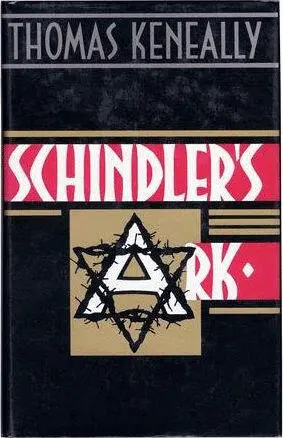
- Название:Schindler's Ark
- Автор:
- Издательство:Hodder and Stoughton
- Жанр:
- Год:1982
- Город:London
- ISBN:0-340-27838-2
- Рейтинг книги:4 / 5. Голосов: 1
-
Избранное:Добавить в избранное
- Отзывы:
-
Ваша оценка:
Schindler's Ark: краткое содержание, описание и аннотация
Предлагаем к чтению аннотацию, описание, краткое содержание или предисловие (зависит от того, что написал сам автор книги «Schindler's Ark»). Если вы не нашли необходимую информацию о книге — напишите в комментариях, мы постараемся отыскать её.
Schindler’s List
Working with the actual testimony of Schindler’s Jews, Thomas Keneally artfully depicts the courage and shrewdness of an unlikely savior, a man who is a flawed mixture of hedonism and decency and who, in the presence of unutterable evil, transcends the limits of his own humanity. From From
A mesmerizing novel based on the true story of Oskar Schindler, a German industralist who saved and succored more than 1000 Jews from the Nazis at enormous financial and emotional expense. How the German Oskar Schindler came to save more than one thousand Polish Jews during the Holocaust is one of the most fascinating stories of the century. Although millions are now learning about Schindler through Steven Spielberg’s recent Academy Award-winning film, his achievement first gained prominence with Keneally’s 1982 “facticious” novel (which is also the basis for the film). Keneally’s account is less melodramatic than the motion picture, and although he does not fully explain how a hedonistic German could have been so altered by the plight of the Jewish workers in his factory, he does make Schindler less enigmatic than the big-screen version. Ben Kingsley, one of the film's stars, reads in a calculatedly matter-of-fact tone, letting the story's power alone convey its complicated emotions. Highly recommended.
Michael Adams, Fairleigh Dickinson Univ. Lib., Madison, N.J.
Schindler's Ark — читать онлайн бесплатно полную книгу (весь текст) целиком
Ниже представлен текст книги, разбитый по страницам. Система сохранения места последней прочитанной страницы, позволяет с удобством читать онлайн бесплатно книгу «Schindler's Ark», без необходимости каждый раз заново искать на чём Вы остановились. Поставьте закладку, и сможете в любой момент перейти на страницу, на которой закончили чтение.
Интервал:
Закладка:
Poldek hurried out through the stable again, and by alternative passageways reached the hospital courtyard. Like disregarded flags of surrender, bloodied bedding hung from the balconies of both the upper floors. On the cobblestones was a pile of victims. They lay, some of them, with their heads split open, their limbs twisted. They were not, of course, the terminal patients of Doctors B and H. They were people who had been detained here during the day and then executed. Some of them must have been imprisoned upstairs, shot, then tumbled into the yard. Always thereafter, when questioned about the corpses in the ghetto hospital yard, Poldek would say 60 to 70, though he had no time to count that tangled pyramid. Cracow being a provincial town and Poldek having been raised as a very sociable child in Podgórze and then in the Centrum, visiting with his mother the affluent and distinguished people of the city, he recognized in that heap familiar faces: old clients of his mother’s; people who had asked him about school at the Kosciuszko High School, got precocious answers in reply, and fed him cake and candy for his looks and charm. Now they were shamefully exposed and jumbled in that blood-red courtyard.
Somehow it did not occur to Pfefferberg to look for the bodies of his wife and the H’s. He sensed why he had been placed there. He believed unshakably in better years to come, years of just tribunals. He had that sense of being a witness which Schindler had experienced on the hill beyond Rekawka.
He was distracted by the sight of a crowd of people in Wegierska Street beyond the courtyard. They moved toward the Rekawka gate with the dull but not desperate languor of factory workers on a Monday morning, or even of supporters of a defeated football team. Among this wave of people he noticed neighbors from Józefińska Street. He walked out of the yard, carrying like a weapon up his sleeve his memory of it all. What had happened to Mila? Did any of them know? She’d already left, they said. The Sonderkommando’s been through. She’d already be out the gate, on her way to the place.
To Płaszów.
He and Mila, of course, had had a contingency plan for an impasse like this. If one of them ended up in Płaszów, it would be better for the other to attempt to stay out. He knew that Mila had her gift for unobtrusiveness, a good gift for prisoners; but also she could be racked by extraordinary hunger. He’d be her supplier from the outside. He was sure these things could be managed. It was no easy decision, though—the bemused crowds, barely guarded by the SS, now making for the south gate and the barbed-wire factories of Płaszów were an indication of where most people, probably quite correctly, considered that long-term safety lay.
The light, though late now, was sharp, as if snow were coming on. Poldek was able to cross the road and enter the empty apartments beyond the pavement. He wondered whether they were in fact empty or full of ghetto dwellers concealed cunningly or naively—those who believed that wherever the SS took you, it led in the end to the extermination chambers.
Poldek was looking for a first-class hiding place. He came by back passages to the lumberyard on Józefińska. Lumber was a scarce commodity. There were no great structures of cut timber to hide behind. The place that looked best was behind the iron gates at the yard entrance. Their size and blackness seemed a promise of the coming night. Later he would not be able to believe that he’d chosen them with such enthusiasm.
He hunched in behind the one that was pushed back against the wall of the abandoned office. Through the crack left between the gate and the gatepost, he could see up Józefińska in the direction he’d come from. Behind that freezing iron leaf he watched the slice of cold evening, a luminous gray, and pulled his coat across his chest. A man and his wife hurried past, rushing for the gate, dodging among the dropped bundles, the suitcases labeled with futile large letters. KLEINFELD, they proclaimed in the evening light. LEHRER, BAUME, WEINBERG, SMOLAR, STRUS, ROSENTHAL, BIRMAN, ZEITLIN.
Names against which no receipts would be issued. “Heaps of goods laden with memories,” the young artist Josef Bau had written of such scenes. “Where are my treasures?”
From beyond this battleground of fallen luggage he could hear the aggressive baying of dogs. Then into Józefińska Street, striding on the far pavement, came three SS men, one of them dragged along by a canine flurry which proved to be two large police dogs. The dogs hauled their handler into No. 41 Józefińska, but the other two men waited on the pavement. Poldek had paid most of his attention to the dogs. They looked like a cross between Dalmatians and German shepherds. Pfefferberg still saw Cracow as a genial city, and dogs like that looked foreign, as if they’d been brought in from some other and harsher ghetto. For even in this last hour, among the litter of packages, behind an iron gate, he was grateful for the city and presumed that the ultimate frightfulness was always performed in some other, less gracious place. This last assumption was wiped away in the next half-minute. The worst thing, that is, occurred in Cracow. Through the crack of the gate, he saw the event which revealed that if there was a pole of evil it was not situated in Tarnow, Czestochowa, Lwów or Warsaw, as you thought. It was at the north side of Józefińska Street a hundred and twenty paces away. From 41 came a screaming woman and a child. One dog had the woman by the cloth of her dress, the flesh of her hip. The SS man who was the servant of the dogs took the child and flung it against the wall. The sound of it made Pfefferberg close his eyes, and he heard the shot which put an end to the woman’s howling protest.
Just as Pfefferberg would think of the pile of bodies in the hospital yard as 60 or 70, he would always testify that the child was two or three years of age.
Perhaps before she was even dead, certainly before he himself even knew he had moved, as if the decision had came from some mettlesome gland behind his forehead, Pfefferberg gave up the freezing iron gate, since it would not protect him from the dogs, and found himself in the open yard. He adopted at once the military bearing he’d learned in the Polish Army. He emerged from the lumberyard like a man on a ceremonial assignment, and bent and began lifting the bundles of luggage out of the carriageway and heaping them against the walls of the yard. He could hear the three SS men approaching; the dogs’ snarling breath was palpable, and the whole evening was stretched to breaking by the tension in their leashes. When he believed they were some ten paces off, he straightened and permitted himself, playing the biddable Jew of some European background, to notice them. He saw that their boots and riding breeches were splashed with blood, but they were not abashed to appear before other humans dressed that way. The officer in the middle was tallest. He did not look like a murderer; there was a sensitivity to the large face and a subtle line to the mouth.
Pfefferberg in his shabby suit clicked his cardboard heels in the Polish style and saluted this tall one in the middle. He had no knowledge of SS ranks and did not know what to call the man. “Herr,” he said. “Herr Commandant!”
It was a term his brain, under threat of its extinction, had thrown forth with electric energy. It proved to be the precise word, for the tall man was Amon Goeth in the full vitality of his afternoon, elated at the day’s progress and as capable of instant and instinctive exercises of power as Poldek Pfefferberg was of instant and instinctive subterfuge.
“Herr Commandant, I respectfully report to you that I received an order to put all the bundles together to one side of the road so that there will be no obstruction of the thoroughfare.”
Читать дальшеИнтервал:
Закладка:
Похожие книги на «Schindler's Ark»
Представляем Вашему вниманию похожие книги на «Schindler's Ark» списком для выбора. Мы отобрали схожую по названию и смыслу литературу в надежде предоставить читателям больше вариантов отыскать новые, интересные, ещё непрочитанные произведения.









Обсуждение, отзывы о книге «Schindler's Ark» и просто собственные мнения читателей. Оставьте ваши комментарии, напишите, что Вы думаете о произведении, его смысле или главных героях. Укажите что конкретно понравилось, а что нет, и почему Вы так считаете.