Thomas Keneally - Schindler's Ark
Здесь есть возможность читать онлайн «Thomas Keneally - Schindler's Ark» весь текст электронной книги совершенно бесплатно (целиком полную версию без сокращений). В некоторых случаях можно слушать аудио, скачать через торрент в формате fb2 и присутствует краткое содержание. Город: London, Год выпуска: 1982, ISBN: 1982, Издательство: Hodder and Stoughton, Жанр: Историческая проза, на английском языке. Описание произведения, (предисловие) а так же отзывы посетителей доступны на портале библиотеки ЛибКат.
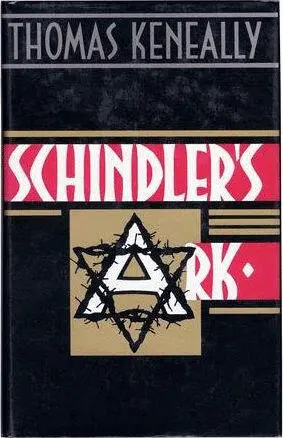
- Название:Schindler's Ark
- Автор:
- Издательство:Hodder and Stoughton
- Жанр:
- Год:1982
- Город:London
- ISBN:0-340-27838-2
- Рейтинг книги:4 / 5. Голосов: 1
-
Избранное:Добавить в избранное
- Отзывы:
-
Ваша оценка:
Schindler's Ark: краткое содержание, описание и аннотация
Предлагаем к чтению аннотацию, описание, краткое содержание или предисловие (зависит от того, что написал сам автор книги «Schindler's Ark»). Если вы не нашли необходимую информацию о книге — напишите в комментариях, мы постараемся отыскать её.
Schindler’s List
Working with the actual testimony of Schindler’s Jews, Thomas Keneally artfully depicts the courage and shrewdness of an unlikely savior, a man who is a flawed mixture of hedonism and decency and who, in the presence of unutterable evil, transcends the limits of his own humanity. From From
A mesmerizing novel based on the true story of Oskar Schindler, a German industralist who saved and succored more than 1000 Jews from the Nazis at enormous financial and emotional expense. How the German Oskar Schindler came to save more than one thousand Polish Jews during the Holocaust is one of the most fascinating stories of the century. Although millions are now learning about Schindler through Steven Spielberg’s recent Academy Award-winning film, his achievement first gained prominence with Keneally’s 1982 “facticious” novel (which is also the basis for the film). Keneally’s account is less melodramatic than the motion picture, and although he does not fully explain how a hedonistic German could have been so altered by the plight of the Jewish workers in his factory, he does make Schindler less enigmatic than the big-screen version. Ben Kingsley, one of the film's stars, reads in a calculatedly matter-of-fact tone, letting the story's power alone convey its complicated emotions. Highly recommended.
Michael Adams, Fairleigh Dickinson Univ. Lib., Madison, N.J.
Schindler's Ark — читать онлайн бесплатно полную книгу (весь текст) целиком
Ниже представлен текст книги, разбитый по страницам. Система сохранения места последней прочитанной страницы, позволяет с удобством читать онлайн бесплатно книгу «Schindler's Ark», без необходимости каждый раз заново искать на чём Вы остановились. Поставьте закладку, и сможете в любой момент перейти на страницу, на которой закончили чтение.
Интервал:
Закладка:
“Please, Roman,” said the doctor, meaning that the old man should unclench his body. He believed the Sonderkommando was coming within the hour. Dr. H felt, but resisted, a temptation to let him in on the secret. Dr. B had been liberal with the dosage. A few seconds of breathlessness and a minor amazement would be no new or intolerable sensation to old Roman. When the nurse came with four medicine glasses, none of them even asked her what she was bringing them. Dr. H would never know if any of them understood. He turned away and looked at his watch. He feared that when they drank it, some noise would begin, something worse than the normal hospital gasps and gaggings. He heard the nurse murmuring, “Here’s something for you.” He heard an intake of breath. He didn’t know if it was patient or nurse. The woman is the hero of this, he thought.
When he looked again, the nurse was waking the kidney patient, the sleepy musician, and offering him the glass. From the far end of the ward, Dr. B looked on in a clean white coat.
Dr. H moved to old Roman and took his pulse. There was none. In a bed at the far end of the ward, the musician forced the almond-smelling mixture down.
It was all as gentle as H had hoped. He looked at them—their mouths agape, but not obscenely so, their eyes glazed and immune, their heads back, their chins pointed at the ceiling—with the envy any ghetto dweller would feel for escapees.
CHAPTER 21
Poldek Pfefferberg shared a room on the second floor of a nineteenth-century house at the end of Józefińska Street. Its windows looked down over the ghetto wall at the Vistula, where Polish barges passed upstream and down in ignorance of the ghetto’s last day and SS patrol boats puttered as casually as pleasure craft. Here Pfefferberg waited with his wife, Mila, for the Sonderkommando to arrive and order them out into the street. Mila was a small, nervous girl of twenty-two, a refugee from Łódź whom Poldek had married in the first days of the ghetto. She came from generations of physicians, her father having been a surgeon who had died young in 1937, her mother a dermatologist who, during an Aktion in the ghetto of Tarnow last year, had suffered the same death as Rosalia Blau of the epidemic hospital, being cut down by automatic fire while standing among her patients.
Mila had lived a sweet childhood, even in Jew-baiting Łódź, and had begun her own medical education in Vienna the year before the war. She had met Poldek when Łódź people were shipped down to Cracow in 1939. Mila had found herself billeted in the same apartment as the lively Poldek Pfefferberg.
Now he was already, like Mila, the last of his family. His mother, who had once redecorated Schindler’s Straszewskiego Street apartment, had been shipped with his father to the ghetto of Tarnow. From there, it would be discovered in the end, they were taken to Bełżec and murdered. His sister and brother-in-law, on Aryan papers, had vanished in the Pawiak prison in Warsaw. He and Mila had only each other. There was a temperamental gulf between them: Poldek was a neighborhood boy, a leader, an organizer; the type who, when authority appeared and asked what in God’s name was happening, would step forward and speak up. Mila was quieter, rendered more so by the unspeakable destiny that had swallowed her family. In a peaceable era, the mix between them would have been excellent. She was not only clever but wise; she was a quiet center. She had a gift for irony, and Poldek Pfefferberg often needed her to restrain his torrents of oratory. Today, however, on this impossible day, they were in conflict. Though Mila was willing, should the chance come, to leave the ghetto, even to entertain a mental image of herself and Poldek as partisans in the forest, she feared the sewers. Poldek had used them more than once as a means of leaving the ghetto, even though the police were sometimes to be found at one end or the other. His friend and former lecturer, Dr. H, had also mentioned the sewers recently as an escape route which might not be guarded on the day the Sonderkommando moved in. The thing would be to wait for the early winter dusk. The door of the doctor’s house was mere meters from a manhole cover. Once down in there, you took the left-hand tunnel, which brought you beneath the streets of nonghetto Podgórze to an outlet on the embankment of the Vistula near the Zatorska Street canal. Yesterday Dr. H had given him the definite news. The doctor and his wife would attempt the sewer exit, and the Pfefferbergs were welcome to join them. Poldek could not at that stage commit Mila and himself. Mila had a fear, a reasonable one, that the SS might flood the sewers with gas or might resolve the matter anyhow by arriving early at the Pfefferbergs’ room at the far end of Józefińska Street.
It was a slow, tense day up in the attic room, waiting to find out which way to jump. Neighbors must also have been waiting. Perhaps some of them, not wanting to deal with the delay, had marched up the road already with their packages and hopeful suitcases, for in a way it was a mix of sounds fit to draw you down the stairs—violent noise dimly heard from blocks away, and here a silence in which you could hear the ancient, indifferent timbers of the house ticking away the last and worst hours of your tenancy. At murky noon Poldek and Mila chewed on their brown bread, the 300g each they had in stock. The recurrent noises of the Aktion swept up to the corner of Wegierska, a long block away, and then, toward midafternoon, receded again. There was near-silence then. Someone tried uselessly to flush the recalcitrant toilet on the first-floor landing. It was nearly possible at that hour to believe that they had been overlooked.
The last dun afternoon of their life in No. 2 Józefińska refused, in spite of its darkness, to end. The light, in fact, was poor enough, thought Poldek, for them to try for the sewer earlier than dusk. He wanted, now that it was quiet, to go and consult with Dr. H.
Please, said Mila. But he soothed her.
He would keep off the streets, moving through the network of holes that connected one building with another. He piled up the reassurances. The streets at this end seemed to be clear of patrols. He would evade the occasional OD or wandering SS man at the intersections, and be back within five minutes. Darling, darling, he told her, I have to check with Dr. H.
He went down the back stairs and into the yard through the hole in the stable wall, not emerging into the open street until he’d reached the Labor Office. There he risked crossing the broad carriageway, entering the warrens of the triangular block of houses opposite, meeting occasional groups of confused men conveying rumors and discussing options in kitchens, sheds, yards, and corridors. He came out into Krakusa Street just across from the doctor’s place. He crossed unnoticed by a patrol working down near the southern limit of the ghetto, three blocks away, in the area where Schindler had witnessed his first demonstration of the extremities of Reich racial policy.
Dr. H’s building was empty, but in the yard Poldek met a dazed middle-aged man who told him that the Sonderkommando had already visited the place and that the doctor and his wife had first hidden, then gone for the sewers. Perhaps it’s the right thing to do, said the man. They’ll be back, the SS. Poldek nodded; he knew now the tactics of the Aktion, having already survived so many.
He went back the way he’d come and again was able to cross the road. But he found No. 2 empty, Mila vanished with their baggage, all doors opened, all rooms vacant. He wondered if in fact they were not all hidden down at the hospital—Dr. H and his wife, Mila. Perhaps the H’s had called for her out of respect for her anxiety and her long medical lineage.
Читать дальшеИнтервал:
Закладка:
Похожие книги на «Schindler's Ark»
Представляем Вашему вниманию похожие книги на «Schindler's Ark» списком для выбора. Мы отобрали схожую по названию и смыслу литературу в надежде предоставить читателям больше вариантов отыскать новые, интересные, ещё непрочитанные произведения.











Обсуждение, отзывы о книге «Schindler's Ark» и просто собственные мнения читателей. Оставьте ваши комментарии, напишите, что Вы думаете о произведении, его смысле или главных героях. Укажите что конкретно понравилось, а что нет, и почему Вы так считаете.