Thomas Keneally - Schindler's Ark
Здесь есть возможность читать онлайн «Thomas Keneally - Schindler's Ark» весь текст электронной книги совершенно бесплатно (целиком полную версию без сокращений). В некоторых случаях можно слушать аудио, скачать через торрент в формате fb2 и присутствует краткое содержание. Город: London, Год выпуска: 1982, ISBN: 1982, Издательство: Hodder and Stoughton, Жанр: Историческая проза, на английском языке. Описание произведения, (предисловие) а так же отзывы посетителей доступны на портале библиотеки ЛибКат.
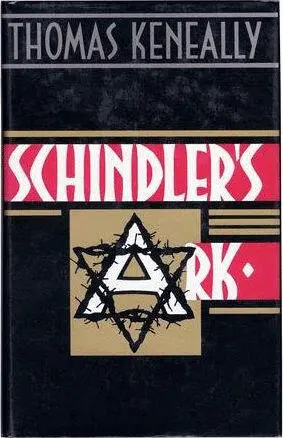
- Название:Schindler's Ark
- Автор:
- Издательство:Hodder and Stoughton
- Жанр:
- Год:1982
- Город:London
- ISBN:0-340-27838-2
- Рейтинг книги:4 / 5. Голосов: 1
-
Избранное:Добавить в избранное
- Отзывы:
-
Ваша оценка:
Schindler's Ark: краткое содержание, описание и аннотация
Предлагаем к чтению аннотацию, описание, краткое содержание или предисловие (зависит от того, что написал сам автор книги «Schindler's Ark»). Если вы не нашли необходимую информацию о книге — напишите в комментариях, мы постараемся отыскать её.
Schindler’s List
Working with the actual testimony of Schindler’s Jews, Thomas Keneally artfully depicts the courage and shrewdness of an unlikely savior, a man who is a flawed mixture of hedonism and decency and who, in the presence of unutterable evil, transcends the limits of his own humanity. From From
A mesmerizing novel based on the true story of Oskar Schindler, a German industralist who saved and succored more than 1000 Jews from the Nazis at enormous financial and emotional expense. How the German Oskar Schindler came to save more than one thousand Polish Jews during the Holocaust is one of the most fascinating stories of the century. Although millions are now learning about Schindler through Steven Spielberg’s recent Academy Award-winning film, his achievement first gained prominence with Keneally’s 1982 “facticious” novel (which is also the basis for the film). Keneally’s account is less melodramatic than the motion picture, and although he does not fully explain how a hedonistic German could have been so altered by the plight of the Jewish workers in his factory, he does make Schindler less enigmatic than the big-screen version. Ben Kingsley, one of the film's stars, reads in a calculatedly matter-of-fact tone, letting the story's power alone convey its complicated emotions. Highly recommended.
Michael Adams, Fairleigh Dickinson Univ. Lib., Madison, N.J.
Schindler's Ark — читать онлайн бесплатно полную книгу (весь текст) целиком
Ниже представлен текст книги, разбитый по страницам. Система сохранения места последней прочитанной страницы, позволяет с удобством читать онлайн бесплатно книгу «Schindler's Ark», без необходимости каждый раз заново искать на чём Вы остановились. Поставьте закладку, и сможете в любой момент перейти на страницу, на которой закончили чтение.
Интервал:
Закладка:
He called Hujar. The NCO returned uneasily. He thought he was going to be told to take the girl’s advice. The girl did too. Shoot her, Amon told Hujar. There was, of course, a pause while Hujar digested the order. Shoot her, Amon repeated. Hujar took the girl’s elbow to lead her away to some place of private execution. Here! said Amon. Shoot her here! On my authority, said Amon.
Hujar knew how it was done. He gripped her by the elbow, pushed her a little to his front, took the Mauser from his holster, and shot her in the back of the neck.
The sound appalled everyone on the work site, except—it seemed—the executioners and the dying Miss Diana Reiter herself. She knelt and looked up once. It will take more than that, she was saying. The knowingness in her eyes frightened Amon, justified him, elevated him. He had no idea and would not have believed that these reactions had clinical labels. He believed, in fact, that he was being awarded the inevitable exaltation that follows an act of political, racial, and moral justice. Even so, a man paid for that, for by evening the fullness of this hour would be followed by such emptiness that he would need, to avoid being blown away like a husk, to augment his size and permanence by food, liquor, contact with a woman.
Apart from these considerations, the shooting of this Diana Reiter, the cancelling of her Western European diploma, had this practical value: that no erector of huts or roads in Płaszów would consider himself essential to the task—that if Miss Diana Reiter could not save herself with all her professional skill, the only chance of the others was prompt and anonymous labor. Therefore the women lugging frames up from the Cracow-Płaszów railway station, the quarry teams, the men assembling the huts all worked with an energy appropriate to what they’d learned from Miss Reiter’s assassination.
As for Hujar and his colleagues, they knew now that instantaneous execution was to be the permitted style of Płaszów.
CHAPTER 20
Two days after the visit of the factory heads to Płaszów, Schindler turned up at Commandant Goeth’s temporary office in the city, bringing with him the compliments of a bottle of brandy. The news of Diana Reiter’s assassination had by this time reached the front office of Emalia and was the sort of item that confirmed Oskar in his intention to keep his factory outside Płaszów.
The two big men sat opposite each other and there was a mutual knowingness in them too, just as there had been in the brief relationship between Amon and Miss Reiter. What they knew was that each of them was in Cracow to make a fortune; that therefore Oskar would pay for favors. At that level Oskar and the Commandant understood each other well. Oskar had the characteristic salesman’s gift of treating men he abhorred as if they were spiritual brothers, and it would deceive the Herr Commandant so completely that Amon would always believe Oskar a friend.
But from the evidence of Stern and others it is obvious that, from the time of their earlier contacts, Oskar abominated Goeth as a man who went to the work of murder as calmly as a clerk goes to his office. Oskar could speak to Amon the administrator, Amon the speculator, but knew at the same time that nine-tenths of the Commandant’s being lay beyond the normal rational processes of humans. The business and social connections between Oskar and Amon worked well enough to tempt the supposition that Oskar was somehow and despite himself fascinated by the evil of the man. In fact, no one who knew Oskar at this time or later saw a sign of any such enthrallment. Oskar despised Goeth in the simplest and most passionate terms. His contempt would grow without limit, and his career would dramatically demonstrate it. Just the same, the reflection can hardly be avoided that Amon was Oskar’s dark brother, was the berserk and fanatic executioner Oskar might, by some unhappy reversal of his appetites, have become.
With a bottle of brandy between them, Oskar explained to Amon why it was impossible for him to move into Płaszów. His plant was too substantial to be shifted. He believed his friend Madritsch intended to move his Jewish workers in, but Madritsch’s machinery was more easily transferred—it was basically a series of sewing machines. There were different problems involved in moving heavy metal presses, each of which, as a sophisticated machine will, had developed special quirks. His skilled workers had become accustomed to these quirks. But on a new factory floor the machines would display an entirely new set of eccentricities. There’d be delays; the settling-in period would take longer than it would for his esteemed friend Julius Madritsch. The Untersturmführer would understand that with important war contracts to fulfill, DEF could not spare such a lapse of time. Herr Beckmann, who had the same sort of problem, was firing all his Jews over at the Corona works. He didn’t want the fuss of the Jews marching out from Płaszów to the factory in the morning and back in the evenings.
Unfortunately, he, Schindler, had hundreds more skilled Jewish workers than Beckmann did. If he got rid of them, Poles would have to be trained in their place and there would again be a production delay, an even greater one than if he accepted Goeth’s attractive offer and moved into Płaszów.
Amon secretly thought that Oskar might be worried that a move into Płaszów would impinge on any sweetly running little deals he had going in Cracow. The Commandant therefore hurried to reassure Herr Schindler that there’d be no interference in the management of the enamel factory. “It’s purely the industrial problems that worry me,” said Schindler piously. He didn’t want to inconvenience the Commandant, but he would be grateful, and he was sure the Armaments Inspectorate would also be grateful, if DEF were permitted to stay in its present location.
Among men like Goeth and Oskar, the word “gratitude” did not have an abstract meaning. Gratitude was a payoff. Gratitude was liquor and diamonds. I understand your problems, Herr Schindler, said Amon. I shall be happy, once the ghetto is liquidated, to provide a guard to escort your workers from Płaszów to Zablocie.
Itzhak Stern, coming to Zablocie one afternoon on business for the Progress factory, found Oskar depressed and sensed in him a dangerous feeling of impotence. After Klonowska had brought in the coffee, which the Herr Direktor drank as always with a shot of cognac, Oskar told Stern that he’d been to Płaszów again: ostensibly to look at the facilities; in fact to gauge when it would be ready for the Ghettomenschen. “I took a count,” said Oskar. He’d counted the terraced barracks on the far hill and found that if Amon intended to cram 200 women into each, as was likely, there was now room for some 6,000 women up there in the top compound. The men’s sector down the hill did not have so many finished buildings, but at the rate things were done in Płaszów it could be finished in days. Everyone on the factory floor knows what’s going to happen, said Oskar. And it’s no use keeping the night shift on the premises here, because after this one, there’ll be no ghetto to go back to. All I can tell them, said Oskar, taking a second slug of cognac, is that they shouldn’t try to hide unless they’re sure of the hiding place. He’d heard that the pattern was to tear the ghetto apart after it had been cleared. Every wall cavity would be probed, every attic carpet taken up, every niche revealed, every cellar plumbed.
All I can tell them, said Oskar, is not to resist.
So it happened oddly that Stern, one of the targets of the coming Aktion, sat comforting Herr Direktor Schindler, a mere witness.
Oskar’s attention to his Jewish laborers was being diffused, tempted away by the wider tragedy of the ghetto’s coming end. Płaszów was a labor institution, said Stern. Like all institutions, it could be outlived. It wasn’t like Bełżec, where they made death in the same manner in which Henry Ford made cars. It was degrading to have to line up for Płaszów on orders, but it wasn’t the end of things. When Stern had finished arguing, Oskar put both thumbs under the beveled top of his desk and seemed for a few seconds to want to tear it off. You know, Stern, he said, that that’s damn well not good enough! It is, said Stern. It’s the only course.
Читать дальшеИнтервал:
Закладка:
Похожие книги на «Schindler's Ark»
Представляем Вашему вниманию похожие книги на «Schindler's Ark» списком для выбора. Мы отобрали схожую по названию и смыслу литературу в надежде предоставить читателям больше вариантов отыскать новые, интересные, ещё непрочитанные произведения.












Обсуждение, отзывы о книге «Schindler's Ark» и просто собственные мнения читателей. Оставьте ваши комментарии, напишите, что Вы думаете о произведении, его смысле или главных героях. Укажите что конкретно понравилось, а что нет, и почему Вы так считаете.