Nicola Griffith - Hild
Здесь есть возможность читать онлайн «Nicola Griffith - Hild» весь текст электронной книги совершенно бесплатно (целиком полную версию без сокращений). В некоторых случаях можно слушать аудио, скачать через торрент в формате fb2 и присутствует краткое содержание. Город: New York, Год выпуска: 2013, ISBN: 2013, Издательство: Farrar, Straus and Giroux, Жанр: Историческая проза, на английском языке. Описание произведения, (предисловие) а так же отзывы посетителей доступны на портале библиотеки ЛибКат.
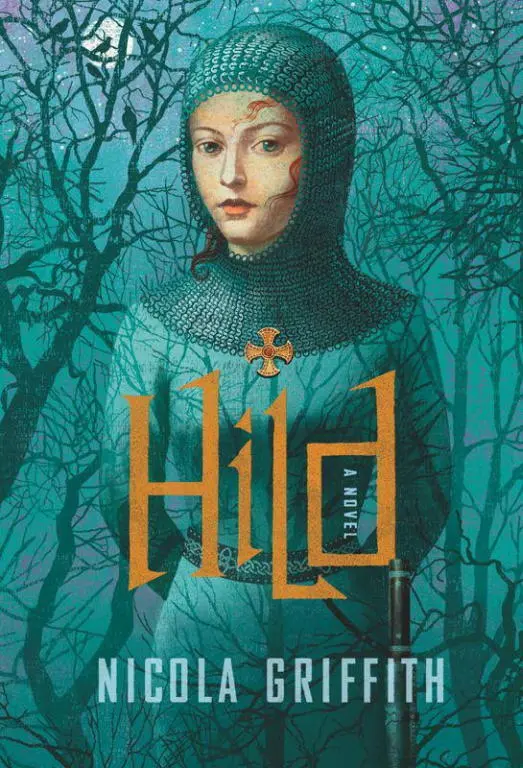
- Название:Hild
- Автор:
- Издательство:Farrar, Straus and Giroux
- Жанр:
- Год:2013
- Город:New York
- ISBN:978-0-374-28087-1
- Рейтинг книги:5 / 5. Голосов: 1
-
Избранное:Добавить в избранное
- Отзывы:
-
Ваша оценка:
Hild: краткое содержание, описание и аннотация
Предлагаем к чтению аннотацию, описание, краткое содержание или предисловие (зависит от того, что написал сам автор книги «Hild»). Если вы не нашли необходимую информацию о книге — напишите в комментариях, мы постараемся отыскать её.
But now she has only the powerful curiosity of a bright child, a will of adamant, and a way of seeing the world—of studying nature, of matching cause with effect, of observing her surroundings closely and predicting what will happen next—that can seem uncanny, even supernatural, to those around her.
Her uncle, Edwin of Northumbria, plots to become overking of the Angles, ruthlessly using every tool at his disposal: blood, bribery, belief. Hild establishes a place for herself at his side as the king’s seer. And she is indispensable—unless she should ever lead the king astray. The stakes are life and death: for Hild, for her family, for her loved ones, and for the increasing numbers who seek the protection of the strange girl who can read the world and see the future.
Hild is a young woman at the heart of the violence, subtlety, and mysticism of the early Middle Ages—all of it brilliantly and accurately evoked by Nicola Griffith’s luminous prose. Working from what little historical record is extant, Griffith has brought a beautiful, brutal world—and one of its most fascinating, pivotal figures, the girl who would become St. Hilda of Whitby—to vivid, absorbing life.
Hild — читать онлайн бесплатно полную книгу (весь текст) целиком
Ниже представлен текст книги, разбитый по страницам. Система сохранения места последней прочитанной страницы, позволяет с удобством читать онлайн бесплатно книгу «Hild», без необходимости каждый раз заново искать на чём Вы остановились. Поставьте закладку, и сможете в любой момент перейти на страницу, на которой закончили чтение.
Интервал:
Закладка:
Morud glanced at Hild, but she was used to the gesiths forgetting she was a woman unless it suited her for them to remember.
Later, she and Coelfrith walked east along the north bank of the fast-flowing beck, their shadows falling long before them. The ridge of Becca Bank, half a league long, followed the water. The ditch was rock-cut in places, and the rock had been used to buttress the north slope of the bank. They scrambled to the top of the rise.
He pointed to the south bank and another dike, almost as long, following the water at about fifty paces. “It’s a funnel.”
“Like a fish weir,” she said. Any invading army leaving the road to head west into the heart of the kingdom would be hemmed in, caught between the two lines, and slaughtered.
She squatted and laid her hand on the stone, staring down at the rushing water. An unsuspecting war band would startle when the spears flew. They would try to cross the beck to escape. They would drown. If Ceredig had marched half a day earlier, had had time to get to Aberford, even without the stockade. If Edwin hadn’t stolen the march. If her father hadn’t been poisoned like a dog.
Their fire burnt small and hot. A white, bright moon showed the picket line and the pale gleam of Cygnet’s shoulder as she shifted.
Grimhun was telling the tale of the seafarer from the lost land of the west. He couldn’t play the lyre, but he had a fine voice for the chant: the cry of a lonely gull, the slap of the water against the rudderless boat drifting, drifting in the mist. The brothers Berht took the verses of the seals. Coelfrith stared into the fire, face set in his habitual worried frown. Eadric dozed. Morud listened—Hild was sure he understood Anglisc well—and Cian whittled, pausing every now and again to tilt the wood to the fire or the moon.
Hild watched the delicate flex of his wrist. His rings glittered. The hairs on his fingers glowed like bronze wire one minute, silver the next. This way and that. He seemed to be taking unusual care with his little knife, flick, flick, pare. The wood was dense and twisted, a root of some kind, an old one. The shavings looked black.
The day dawned cool, with mare’s tails glowing pink in the not-yet-risen sun. Coelfrith and Eadric rode back to Caer Loid. Before they were out of sight Hild was calling Morud and Cian to her.
To the north and west, between the heartland of Elmet and the River Wharfe, lay the Whinmoor. Lonely land, said Morud, populated only by hare and partridge and peregrine, and the kind of wild men whom no one took in.
So they rode south and east, along the low-lying limestone escarpment that formed the eastern boundary of the Loid. The soil was well drained and loamy, crisscrossed with springs and becks and streams. Rich land. Everywhere on the gentle green slopes they saw sheep, like drifts of dirty cloud, but every flock was whistled away long before they reached hailing distance: The wink of sun on their rings and bits and hilts was visible for miles.
At the first Anglisc farm they accepted the farmer’s offer of ale and bread. Cian talked to the man and his son—a boy of five or six whose eyes stretched at the sight of Cian’s mail shirt and sword. When the woman of the house and her daughter brought out three leather cups, Hild motioned for a startled Morud to accept. They ate under a huge elm at the south end of a little coppice. Cian thanked their hosts—Ceadwulf and his wife, Saxfryth—and told them that Edwin king was by the Aire, rebuilding Ceredig’s hall, and would welcome them there on the night of the full moon.
“A feast!” the boy said.
“A feast,” Cian said. “With meat and mead and scop’s song.”
“Though I doubt the king’s ale can match this brew,” said Hild with a smile for the wife. In truth it was thin stuff, but the wife blushed prettily at praise from a woman wearing royal blue and more gold than she’d dreamt of in all the world. “And that’s a fine twill, beautifully dyed.”
Saxfryth smoothed her overdress proudly. “Nothing like yours, lady.”
Indeed, Hild’s dress was the rich, summer-afternoon-sky blue of royalty, a spin-patterned diamond twill, with neck and hems worked in scarlet and gold. She watched Saxfryth glance from the clothes to the glitter of their tethered horses’ headstalls, to their finger rings and the tiny agates sewn onto her veil band, and slowly understand the depth of the wealth before her. She grew rigid on her three-legged stool.
“Saxfryth. Look at me.” The woman lifted her head slowly. “I am Hild, daughter of Hereric.” Hild slid the yellow-stone ring from her little finger and held it out.
“Lady!”
“Take it.” The woman did. “Try it.” It fit the ring finger of her right hand. She moved it slightly, to catch the sun, then folded the hand in her lap, with the other curled around it protectively.
“Your men will come to Caer Loid Coit. Every man with a spear will come before the full moon. You will show that token and I will see that Edwin king knows of the hospitality offered today to his niece and seer.”
They rode, through a light shirr of rain, over five or six hides of cleared land surrounded by oak and elm. Two milch goats and a kid, stripping the weeds by the track, lifted their heads but did not pause in their endless side-slide chew. A bull—full-muscled, dark brown, sleek as a seal in the rain—glared from his own stone-walled pasture, beyond which stood a large sty with a half-filled water trough cut from elm. The pigs would be grubbing in the wood for early mast.
They began to see people: the men tall, the women rounded, and everywhere wealh and Anglisc working side by side, wearing the same competent tabby weave with good strong leather belts and sturdy shoes. The rain was so light most hadn’t bothered with their hoods. The place reeked of peace and prosperity.
Morud led the way across a little stone bridge of finely cut limestone, Roman work. They passed a deep track leading into the wood—clearly more than a woodcutter’s path—and after a moment’s thought Hild called Morud to her. “Run up that track. Find the priest or his wife. Tell them to fade into the wood for a fortnight or two, never mind the rain, and to take anything they value with them. They should bury the altar stone if they hope to come back.”
Not even the Crow would break his Christ’s holy stone, but he would drag it away and then the Loid priest would have nothing to come back to and no livelihood.
At Aberford two days later, the rain was coming down like rods of glass from an iron lid of a sky, and it was Cian and Hild who were gathering their reins to ride back to the king, and Coelfrith, drenched, standing by her knee. This time there was more than a score of men clearing the ditches and refacing the banks—even some boys carrying water and a handful of women relighting cooking fires under rough shelters.
“I’ll tell the king you’ll be back by the full moon,” she said.
“Before.” He pulled his cloak tight and peered east through the rain.
“Coelfrith.”
“Um?”
“Leave the locals to their work. They have my token. They have wool to card and grain to thresh, pigs to feed and wood to gather.”
“The king needs Aberford to—”
“The king wants the Elmetsætne to come gently, horses to the outstretched hand. Leave them to their work.”
She nodded to Morud, crouched under one of the shelters out of the worst of the rain. He flipped up his hood—she wasn’t sure when he’d acquired it—and stepped into the downpour. Cygnet snorted. Hild patted her neck. She said to Coelfrith, “Don’t worry so much. Grimhun can do as he promised. I’ll tell the king you have Aberford well in hand.”
Читать дальшеИнтервал:
Закладка:
Похожие книги на «Hild»
Представляем Вашему вниманию похожие книги на «Hild» списком для выбора. Мы отобрали схожую по названию и смыслу литературу в надежде предоставить читателям больше вариантов отыскать новые, интересные, ещё непрочитанные произведения.




Обсуждение, отзывы о книге «Hild» и просто собственные мнения читателей. Оставьте ваши комментарии, напишите, что Вы думаете о произведении, его смысле или главных героях. Укажите что конкретно понравилось, а что нет, и почему Вы так считаете.