Nicola Griffith - Hild
Здесь есть возможность читать онлайн «Nicola Griffith - Hild» весь текст электронной книги совершенно бесплатно (целиком полную версию без сокращений). В некоторых случаях можно слушать аудио, скачать через торрент в формате fb2 и присутствует краткое содержание. Город: New York, Год выпуска: 2013, ISBN: 2013, Издательство: Farrar, Straus and Giroux, Жанр: Историческая проза, на английском языке. Описание произведения, (предисловие) а так же отзывы посетителей доступны на портале библиотеки ЛибКат.
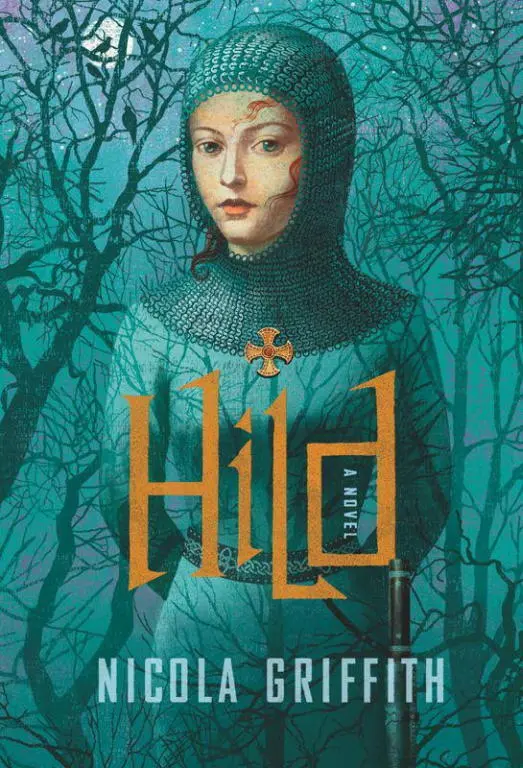
- Название:Hild
- Автор:
- Издательство:Farrar, Straus and Giroux
- Жанр:
- Год:2013
- Город:New York
- ISBN:978-0-374-28087-1
- Рейтинг книги:5 / 5. Голосов: 1
-
Избранное:Добавить в избранное
- Отзывы:
-
Ваша оценка:
Hild: краткое содержание, описание и аннотация
Предлагаем к чтению аннотацию, описание, краткое содержание или предисловие (зависит от того, что написал сам автор книги «Hild»). Если вы не нашли необходимую информацию о книге — напишите в комментариях, мы постараемся отыскать её.
But now she has only the powerful curiosity of a bright child, a will of adamant, and a way of seeing the world—of studying nature, of matching cause with effect, of observing her surroundings closely and predicting what will happen next—that can seem uncanny, even supernatural, to those around her.
Her uncle, Edwin of Northumbria, plots to become overking of the Angles, ruthlessly using every tool at his disposal: blood, bribery, belief. Hild establishes a place for herself at his side as the king’s seer. And she is indispensable—unless she should ever lead the king astray. The stakes are life and death: for Hild, for her family, for her loved ones, and for the increasing numbers who seek the protection of the strange girl who can read the world and see the future.
Hild is a young woman at the heart of the violence, subtlety, and mysticism of the early Middle Ages—all of it brilliantly and accurately evoked by Nicola Griffith’s luminous prose. Working from what little historical record is extant, Griffith has brought a beautiful, brutal world—and one of its most fascinating, pivotal figures, the girl who would become St. Hilda of Whitby—to vivid, absorbing life.
Hild — читать онлайн бесплатно полную книгу (весь текст) целиком
Ниже представлен текст книги, разбитый по страницам. Система сохранения места последней прочитанной страницы, позволяет с удобством читать онлайн бесплатно книгу «Hild», без необходимости каждый раз заново искать на чём Вы остановились. Поставьте закладку, и сможете в любой момент перейти на страницу, на которой закончили чтение.
Интервал:
Закладка:
“Yes, my lord, it should. And you should not wait. But overkings don’t take kindly to being pushed. So let me be the one. I have just the weight to tip the balance. That wool,” she said to Hild. She turned back to Osric. “Elmet shorted the wool tribute.”
It took him a moment—so slow!—but then he smiled. Short tribute was an insult. No king could ignore an insult. The smile widened his face and slitted his eyes, and with his sharp bright teeth glittering in the torchlight he looked less like a badger than a broad-headed stoat smelling the hens.
Breguswith smiled back and Hild was certain her mother pressed her knee to Osric’s under the board. “News best delivered by a woman who doesn’t stand to profit from it. Delivered to the queen, who will drop it in the king’s ear at the right moment. Be ready.”
But Elmet was not Lindsey, peopled by a rich trading nation of soft-handed merchants, and Edwin was a man of greater cunning and ambition than his cousin. He would gather Elmet to Northumbria with care, to hold for life: not only his but his heirs’, and theirs in turn. He would build a kingdom to last longer than song itself.
The moon waned and waxed and waned again, and the Winterfylleth moon was past the quarter when Coelfrith began to supervise the loading of the king’s wagons.
It was strange weather: a leaf turn earlier than anyone remembered followed by blue skies and biting cold. The leaves should have blazed in the sun, but they hung dully, like dead brown hands. Strangest of all was the wind. The wealh loading the wagons were chased by whippets of wind that blew one way then another, no rhyme or reason.
Wight weather, said the kitchen wealh. From the warm side of the kitchen doorway’s leather curtain, they watched the maid, sleeveless and with that staff she often had by her, lift her face just as a silent rush of shiny, black-edged clouds swarmed like silverfish across the sky. They shook their heads: The long-dead kings of Elmet and the Old North were stirring and planning mischief for Edwin Snakebeard.
Snakebeard knew it, agreed the baker and the cook—who stood, as befitted their rank, at the front, with a view of the goings-on. “For one thing,” said the baker, a man with thinning sandy hair and burns on his wiry forearms, “they’re yoking oxen—young oxen, mind—to the wagons for the trip out, but taking extra horses for the trip back. That means sacrifices. And he’s taking twoscore gesiths—but no women.” The maid didn’t count.
“You don’t need a war band to fight dead men,” said the cook, which astonished almost everyone, for the cook was not one to talk much, except with her hands. “Just the maid and her four pets.”
“Five,” piped up the basting boy, who’d had it from Arddun’s nephew, the message runner. “The brothers Berht, Eadric the Brown, Grimhun, and Cian Boldcloak.”
“Boldcloak’s not the maid’s pet!” said the baker’s lass with scorn, for the basting boy was newly arrived from the west and sorely ignorant. “I had it from Gwladus, the maid’s bodywoman. The maid and Boldcloak grew up together, like brother and sister!” The cook and the baker exchanged looks, but the lass didn’t notice, seeing only the chance to humiliate the new boy with her superior knowledge. “Don’t you know the song, how she gave him a secret knife and he used it to save the king’s life?”
A groom led out a string of horses: gesith mounts, with glittering headstalls and tooled leather girths.
“The pets going are all baptised,” the baker said. “The Crow’s hand, no doubt. And he’s taking five priests. Five. Elmet wood is full of wights.”
Behind him everyone crossed themselves deliciously.
“The maid’s from Elmet, long ago,” said the baker’s lass.
“I heard she’s half hægtes,” said the basting boy. “Or half etin!”
The lass snorted. “She’s twice royal so twice as tall! Everyone knows that.”
“What about Boldcloak, then?” said the boy. “He’s tall.”
At which point the cook slapped the back of his head with her meaty hand, the baker’s lass took the opportunity to elbow him in the ribs, and the undercook said, “At least Lintlaf will get a rest, poor man.” Knowing looks were exchanged. Gwladus, who of course went where the maid went, had expressed a certain unhappiness at the young gesith’s inclusion, so he was staying behind and, for a while, he would be free of grit in his gruel, beetles in his bedcloak.
“The Loides won’t,” said the baker. Osric’s men were all to take whips, which didn’t bode well for the wealth of Elmet.
They watched Coelfrith’s underreeve, a half wealh called Pyr, instructing the yardfolk to handle the sacks more carefully. As he walked away, the foreman flipped his fingers at Pyr’s back, and the yardfolk threw the sacks with renewed force.
“That’s a month’s worth of twice-baked bread,” said the baker. “And mead. More mead than even twoscore gesiths could drink in a fortnight. There’ll be feasting with the sacrifice.”
“Aye,” said the cook. “But feasting with who? Sacrifice to what? It’s a strange party. Strange weather. Strange days.”
As Hild had known it would, the rain started when the king’s party had made it barely a mile down the road from Goodmanham and hadn’t stopped even for a heartbeat since. She didn’t care. This felt like the first time on the war trail but better. This time she rode next to Cian—who wore his new cloak of red-and-black checks, densely woven from the little Gwynedd sheep that had run the West Welsh mountains since the time of the redcrests—with her four gesiths behind. Back on the second wagon, it was Gwladus, not Onnen, who rode with everything Hild could possibly need for a fortnight on the road. For once she didn’t have to sleep on hard ground, rolled in her cloak and hand on her seax. She didn’t have to share a bed with her mother or dream bitter dreams. She didn’t even spend every moment in dread of the king: He and Paulinus were wrapped in some plan on which they had not asked her counsel. Though she could guess what it was. Edwin wanted to win the Anglisc Elmetsætne without bloodshed; he wanted to be acknowledged rightful heir, not murdering usurper. Paulinus wanted to see every wealh priest driven into the river. Clearly the king had a use for her or she wouldn’t be here, but for now she was happy.
Usually wagons followed the old Roman road to Aberford and Berewith, where Ceredig, after Hereric’s death, had marched with his Loides to meet Edwin’s invading Anglisc, before fleeing to his ill-fated refuge in Craven. But after a conference with Paulinus, Edwin had ordered the party to strike west on the wood road to Caer Loid Coit, Ceredig’s hall at the heart of Elmet by the great River Aire.
The endless rain had turned what had been little more than a track into a sucking mess of mud and wheel-clogging leaves. Drivers cursed, oxen heaved, axles creaked—and two broke, but they were surrounded by the elm wood; axles were easy to replace.
The elm wood woke something in Hild. She found herself breathing faster, pausing mid-word and listening past the drip of rain and snort of men and beasts. Perhaps it was that no children ran alongside the horse, shouting, begging for an apple, a lump of bread, a meat pasty; no anxious local lords or their ladies were sent to ensure royal comfort.
They saw no wealh—no Loides, Hild reminded herself. By the time the royal party crossed a faint track to a settlement in the trees, its inhabitants had long since vanished, along with their pigs and dogs and iron cook pots. They did see Anglisc. Three times they crossed great clearings centred on sturdy homesteads, too modest to be called halls, flanked by outbuildings, with firewood neatly stacked, goats tethered, pigs penned, and watchful farmer and sons leaning on their spears, nodding at the tufa, which seemed boastful and tawdry in this dripping wood.
Читать дальшеИнтервал:
Закладка:
Похожие книги на «Hild»
Представляем Вашему вниманию похожие книги на «Hild» списком для выбора. Мы отобрали схожую по названию и смыслу литературу в надежде предоставить читателям больше вариантов отыскать новые, интересные, ещё непрочитанные произведения.



Обсуждение, отзывы о книге «Hild» и просто собственные мнения читателей. Оставьте ваши комментарии, напишите, что Вы думаете о произведении, его смысле или главных героях. Укажите что конкретно понравилось, а что нет, и почему Вы так считаете.