Nicola Griffith - Hild
Здесь есть возможность читать онлайн «Nicola Griffith - Hild» весь текст электронной книги совершенно бесплатно (целиком полную версию без сокращений). В некоторых случаях можно слушать аудио, скачать через торрент в формате fb2 и присутствует краткое содержание. Город: New York, Год выпуска: 2013, ISBN: 2013, Издательство: Farrar, Straus and Giroux, Жанр: Историческая проза, на английском языке. Описание произведения, (предисловие) а так же отзывы посетителей доступны на портале библиотеки ЛибКат.
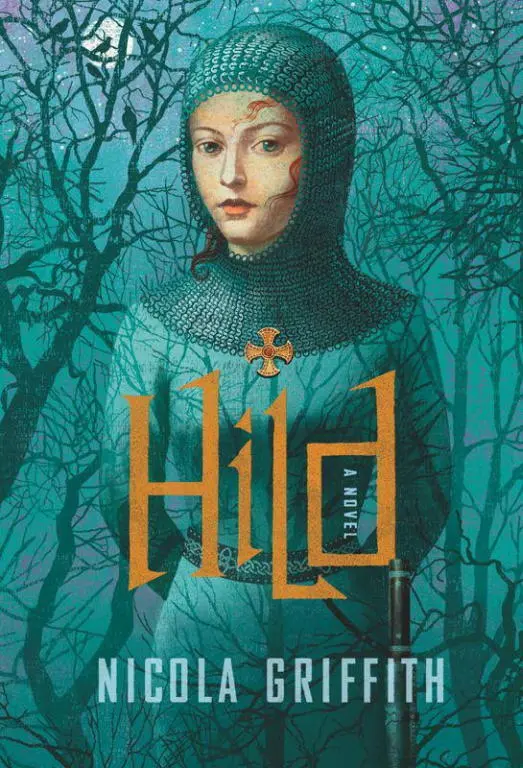
- Название:Hild
- Автор:
- Издательство:Farrar, Straus and Giroux
- Жанр:
- Год:2013
- Город:New York
- ISBN:978-0-374-28087-1
- Рейтинг книги:5 / 5. Голосов: 1
-
Избранное:Добавить в избранное
- Отзывы:
-
Ваша оценка:
Hild: краткое содержание, описание и аннотация
Предлагаем к чтению аннотацию, описание, краткое содержание или предисловие (зависит от того, что написал сам автор книги «Hild»). Если вы не нашли необходимую информацию о книге — напишите в комментариях, мы постараемся отыскать её.
But now she has only the powerful curiosity of a bright child, a will of adamant, and a way of seeing the world—of studying nature, of matching cause with effect, of observing her surroundings closely and predicting what will happen next—that can seem uncanny, even supernatural, to those around her.
Her uncle, Edwin of Northumbria, plots to become overking of the Angles, ruthlessly using every tool at his disposal: blood, bribery, belief. Hild establishes a place for herself at his side as the king’s seer. And she is indispensable—unless she should ever lead the king astray. The stakes are life and death: for Hild, for her family, for her loved ones, and for the increasing numbers who seek the protection of the strange girl who can read the world and see the future.
Hild is a young woman at the heart of the violence, subtlety, and mysticism of the early Middle Ages—all of it brilliantly and accurately evoked by Nicola Griffith’s luminous prose. Working from what little historical record is extant, Griffith has brought a beautiful, brutal world—and one of its most fascinating, pivotal figures, the girl who would become St. Hilda of Whitby—to vivid, absorbing life.
Hild — читать онлайн бесплатно полную книгу (весь текст) целиком
Ниже представлен текст книги, разбитый по страницам. Система сохранения места последней прочитанной страницы, позволяет с удобством читать онлайн бесплатно книгу «Hild», без необходимости каждый раз заново искать на чём Вы остановились. Поставьте закладку, и сможете в любой момент перейти на страницу, на которой закончили чтение.
Интервал:
Закладка:
“So will you ask to go with Eadfrith to Gwynedd?”
“Why?” He feinted with his shield but Hild didn’t blink.
“Because you’re a gesith and there might be glory.”
“Glory,” he said. The healing bite on his jaw darkened very slightly; he leapt in the air, sword high, but Hild wasn’t there when he landed.
They were both breathing harder now.
“What’s wrong with glory?” She shifted her grip slightly, watching, watching. His new shield seemed heavier than his old one. She could find a way to use that. “You’re a sworn gesith.”
“Sworn to the king, not his son,” he said.
Hild stabbed with the end of her staff at his face and, fast as a tiddler squirting from its nest, again at his knee. She almost got him. “You’re slow with your pretty new shield.”
“It’s yew.”
Hild nodded. Denser, springier, harder than lime. Good for a shield wall. Good against axes and thrusting spears. She feinted. He feinted. They circled. The robin flew off, offended.
“Besides,” Cian said, “there won’t be fighting. You heard the king. It will be all talk talk talk. That’s why he’s sending Eadfrith. Cadwallon will bend the knee.”
“He might not.” Those warps were not yet ready to be woven into the same tapestry.
He didn’t respond. She blinked hard and shook her head, as though she had something in her eye. But he knew her too well and didn’t take the bait. She would have to distract him some other way.
“Cadwallon hates Edwin king.”
“He’s always hated the king. What does it matter? You know the songs: Cadwallon’s word turns corners no one else can see. He’ll smile and bow while we’re there, and lead an army when we’re not looking. But it’s just Gwynedd.”
“Just Gwynedd? Land of heroes! Remember Gwyrys: Bull of the host, oppressor of the battle of princes .”
“We’re all Anglisc now.” His attention never wavered.
“You had your first sword from Ceredig of Elmet!”
“He’s dead. To be wealh is to be dead or a slave.”
“Cadwallon is a king. Not a slave, not dead.”
He shrugged. He made it look easy, despite the sword, despite the shield. Wouldn’t he ever get tired?
“Do you remember those little streams in the dell at Goodmanham?”
“No.”
“Yes, you do. By the boggy place, where the hægtes frog lived.”
He smiled. “I didn’t believe you.”
“You did.”
“Did not.”
“Did.”
They both laughed, but didn’t stop circling.
“Besides, they weren’t streams,” he said, “they were trickles. Not much bigger than the sweat running down your face.”
Now she wanted to wipe her face with her shoulder. Oh, he was clever. “Trickles, then. Little, harmless—on their own. But if they joined together, they’d cut through that soft bank in a week.” She tried a lunge followed by a swift uppercut. Nearly. “Penda’s Mercian trickle has already joined the Saxon trickle of Cwichelm and Cynegils—”
“And if Gwynedd joins them they’ll wash us all away. Yes.” He lifted his sword high and back, and his shield over his body. “But they won’t join Mercia.”
Hild retreated, unsure of his intent. “They might. Because Cadwallon hates Edwin king.”
Cian advanced. “Aye, he hates like a wealh.” Cut. “And like a wealh he won’t say so to an Anglisc face.” Cut. Backhand cut. “And any vow he makes will be a worthless wealh vow.” Thrust.
He sounded hard, bored, careless. A stranger. And he kept coming. She swung hard, right, left, but the shield was always there and the oak and painted yew thumped dully.
His lips skinned back. The vein in his neck throbbed. He swung hard, at her ribs, edge-on. She only just deflected it. He kept coming. She backed away.
“Cian…”
He wasn’t listening. She swung at his head, at his legs, even at his wrist. But it was a big shield, and he didn’t seem tired at all.
He came on like the tide, relentless, eyes hard and blank as blue slate. She stabbed, she swung, she stepped back and back.
Her back was against a tree. Nowhere to go. He raised his sword.
The world slowed. A dragonfly glinted to her left. She could see each back-and-forth of its see-through wings, as though the air they beat was as thick as honey.
He was so close: sweat inching its way over the great vein in his neck; his tunic dark with it, and his hair. Did her hair, too, turn that shade, dark wet chestnut, at the temple? He smelt as tangy as new cheese.
“I win,” he said, and the world turned again with its usual speed. He grinned and lowered his shield. “You looked as though you expected to wake in the hall of Woden.”
She laughed, harsh and metallic with relief. She wanted to shout and hug him but settled for pushing herself off the tree with a writhe of her spine and giving him a friendly thump across his rump with her staff.
They sat by the river, by the smooth slope of an otter slide and a fallen alder rotting into pinkish punk. She dabbled her feet in the water. He sat cross-legged, whittling a fist-size lump of pale fawn birch.
She breathed the rich scent of the dark water, the reeds, the glossy mud.
She said, “I thought you’d gone mad.” He didn’t say anything, the way only he could: an easy silence, no hurry to know. “The things you said, your face.”
He looked up. “We were fighting.”
“What you said about wealh. Did you mean it?”
“We were fighting.” He turned the nub of wood in his hands. It was the beginnings of a duck.
“It sounded true.”
“I’d say I wanted to fuck your mother if it would make you blink.” Now it was her turn to say nothing while he whittled. Perhaps she wasn’t as good at it as he was: He cut too deep.
He sighed and threw the birch in the river.
“Perhaps I did mean it.” He sheathed his knife. “In the shield wall I must be one of many, one of the same. Anglisc, not wealh. To the man on my right my mother is the lady of Mulstanton; to the man on my left, I’m a thegn’s foster-son. We’re all king’s gesith.”
“Don’t hate her,” she said. “She’s your mother.”
He threw a pebble into the river.
“Is her word worthless? Was Ceredig’s? He gave you your sword—”
“A wooden sword.”
“—as he would any prince of the blood at that age. A sword from the hand of a king.”
“A prince of the blood…” He aimed to sound careless. “Yet my mother never spoke of it.”
They had grown up closer than most brothers and sisters, played together naked as eels. He would know if she lied outright.
“She didn’t need to: He gave you the sword.”
“But not in public.”
“Does it need to be witnessed for it to be real here?” She tapped his breastbone with two fingers. It made a round sound, like a drum. A strong sound. She leaned back on her hands. “You had your first sword direct from the hand of a king, and your mother was a royal cousin. Royal, of the blood of Coel Hen. The same blood as Cadwallon. Go with Eadfrith to Gwynedd. Look your royal cousin in the eye. See again a king in a king’s hall—a king from a line ancient when my people were over the sea. And when Eadfrith—or Osfrith if he’s not so married by then—is sent to Craven to take it from Dunod, go there, too. Meet your people—the warriors, the kings, the bards at their harps.”
“Perhaps I will.” He threw another pebble. “But it will still be all talk talk talk. They’re even sending priests. Priests don’t fight.”
Hild shook her head. “Paulinus is a Roman bishop. Fursey says wealh bishops and Roman bishops are like cats and dogs. The one will always hiss and the other bark. The wealh bishops will never kiss the Crow’s Roman ring, not even if Cadwallon bends the knee to the king. Paulinus wants Cadwallon to fight and die. Otherwise he can’t be overbishop of the isle, to Edwin’s overking.” Kings picked the chief priest who then picked the underpriests. It was how it had always been. The name of the god didn’t matter.
Читать дальшеИнтервал:
Закладка:
Похожие книги на «Hild»
Представляем Вашему вниманию похожие книги на «Hild» списком для выбора. Мы отобрали схожую по названию и смыслу литературу в надежде предоставить читателям больше вариантов отыскать новые, интересные, ещё непрочитанные произведения.


Обсуждение, отзывы о книге «Hild» и просто собственные мнения читателей. Оставьте ваши комментарии, напишите, что Вы думаете о произведении, его смысле или главных героях. Укажите что конкретно понравилось, а что нет, и почему Вы так считаете.